Tag Archives: CNBC

Analysis: ‘Why U.S. Malls Are Disappearing’ (Video)

Shopping malls in the U.S. were already in decline before the Covid-19 pandemic as consumers shifted away from traditional brick-and-mortar stores to e-commerce. The outbreak has only exacerbated the challenges at malls as social distancing has placed restrictions on stores, movie theaters and restaurants.

So what will become of malls in America after the pandemic ends? Shopping malls across the U.S. have been reeling as restaurant and retail tenants struggle to keep their doors open. Data compiled by Coresight Research shows about a quarter of U.S. malls could close over the next three to five years, accelerating a trend that began before the pandemic.

Simon Property Group — the nation’s biggest mall owner — said earlier this month that its fourth-quarter revenue dropped by 24% on a year-over-year basis to $1.1 billion. However, some analysts think Simon — with its portfolio of A-rated malls and a healthy balance sheet — will benefit as distressed malls operated by its rivals close their doors. The company is also expected to see gains from new additions like hotels and luxury residences.

“Unfortunately there are a lot of centers that don’t fit that high profile and that have lost their competitive edge,” said Piper Sandler analyst Alexander Goldfarb. “The thing about Simon is they’ve been really focused on maintaining it, and that’s both been through a combination of culling the lower productive centers as well as making sure that they keep investing in their top centers.”

Simon Property Group CEO David Simon said the company is also getting a lift from increasing traffic at some of its locations and from tenants paying their rent on time. Malls are a big tax driver for the communities they serve and employ lots of people locally. Watch the video above to find out more about the struggles U.S. malls face and what could become of them after the pandemic ends.

Climate Change: The Challenges For Carbon Capture Technologies

Elon Musk, Microsoft and oil giants like BP, Occidental and Exxon Mobil are investing in carbon capture technologies. Carbon Engineering and Climeworks are two start-ups that have built machines to suck CO2 straight out of the atmosphere in a process known as direct air capture. But the technology faces a number of challenges, one of which is that there’s currently no market for the captured CO2. As a result, some companies are selling their captured CO2 to oil companies, which use it to produce even more oil.

Retirement: How To Get To $75K/Yr In Passive Income

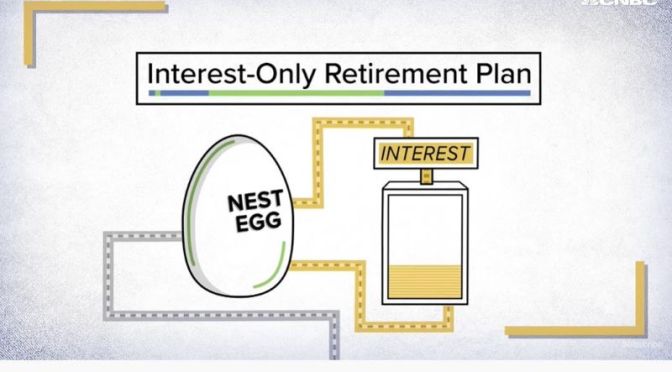
If you can save enough money now, you can fund your retirement by living off of your returns without draining your nest egg. Luckily, with time and dedication, you can make it happen. The official retirement age for most Americans is 67 years old. But that number largely matters for Social Security benefits. If you want to retire early, however, you will need a plan that relies primarily on your own savings and investments. CNBC crunched the numbers, and we can tell you how much you need to save now to safely get $75,000 of passive income every year in retirement. First, some ground rules. The numbers assume you will retire at 45, have no money in savings now and plan to save a substantial amount of income to reach your goal. For investing, we assume an annual 4% return when you are saving. We do not factor in inflation, taxes or any additional income you may get from Social Security and your 401(k). In retirement, we use the “4% rule,” which is a general principle that says you can comfortably withdraw 4% of your portfolio every year. It is important to note with the recent market volatility, there is a risk you’ll have to lower your spending percentage in the future. Check out this video to get a full breakdown of the numbers.

Analysis: Rise Of 7-Eleven Convenience Stores

7-Eleven, home of the 64-ounce Double Gulp and the Pina Colada Slurpee, has helped revolutionize the way we shop at convenience stores. In March 2019, the 90-year-old brand launched its first Evolution Store. Featuring fresh food options and specialty alcohol, the new store concept is aimed at a new generation of consumers. And with consumer behavior changing due to Covid-19, the convenience store industry could be on the verge of a profound change.

Investigation: Why The Emergency ‘911 System’ Is Broken’ (CNBC Video)

More than 80% of calls to 911 come from a cellphone and often from a high-rise. But the over 5,000 locally run 911 centers, or public safety answering points (PSAP) aren’t easily able to track those callers. Fixing the system could save more than 10,000 lives and $97 billion per year according to the FCC.

Major companies like Apple, Google, Motorola and startups like RapidSOS have tried to fill the technology gap, but so far, that’s not enough. Watch the video to understand the conundrum of a large and fragmented national system that is run and funded locally, and how the federal government may be its only hope for a complete overhaul. “We’re talking about diversity of equipment connecting across these IP networks in a very complex manner,” said Capt. Mel Maier of the Oakland County Sheriff’s Office in Michigan.

“And if there are proprietary interfaces anywhere in between there, they’re not going to be able to talk. … Our technology is continually trying to catch up and playing catch up.” A number of companies including Apple, Motorola and start-ups are trying to fill the technology gap. RapidSOS is a data integration platform that has been adopted free of charge in about 4,800 PSAPs. According to the company, it covers about 92% of the country and assists in 150 million emergencies per year.

“We’re just scratching the surface of the amount of data that we could be using,” said Michael Martin, CEO of RapidSOS. “We’re passing precise location for most 911 calls now. But you can imagine all the capabilities, like in a fire if your building could talk or if your device could detect a heart attack and immediately transmit that through.” According to Maier, who is also chairman of the Public Safety Next Generation 9-1-1 Coalition, the tech industry can’t do it on its own.

He says carriers also have a responsibility, especially when it comes to addressing the altitude problem. But in the end, he says, the federal government is needed. He’s hoping Congress will pass legislation for $15 billion toward a complete overhaul. In July, a $1.5 trillion infrastructure bill that included $12 billion toward 911 passed the House but stalled in the Senate.

Inside Views: ‘The Money Behind Professional Poker Players’ (Video)

Poker is a game of extreme variance. Professional poker players can go stretches without winning or placing at a level that earns any cash. The wins, however, can make up for the droughts with players earning thousands to millions of dollars depending on the game or tournament entered. Considering poker is an inconsistent sport, players look to offset the risk involved. This is done through staking, where an “investor” will pay a player’s way through tournaments for a piece of the action.

Analysis: Can ‘Restoration Hardware – RH’ Become A Global Luxury Brand?

COVID-19 has dealt a harsh blow to countless retailers, many of which were already struggling. However, RH, formerly Restoration Hardware, is doing rather well. The company’s stock price had cratered in March 2020 and struggled in early April, as forced lockdowns endangered retail. But by December 2020, shares had rebounded and risen more than 110 percent since the beginning of the year. RH is now ambitiously trying to turn it into a global luxury brand providing an array of services.

Business Analysis: ‘Work From Home’ & The Rise Of Williams Sonoma (Video)

In the midst of the pandemic, Williams-Sonoma has stood out as a company, its stock price reaching a new all-time high in January 2021, despite many businesses declining. Paired with its strength in e-commerce, the company’s ongoing success is due in large part to consumers staying at home more than ever before. Still, the company faces potential headwinds as the shift to online shopping impacts home furnishing sales and rivals like online furniture retailer Wayfair increase their market share. As a retailer known for its brick-and-mortar locations, can the brand keep up its success?

Covid Vaccine: ‘What Went Wrong With U.S. Rollout’

The U.S. coronavirus rollout has been anything but smooth. States are reporting limited supply of vaccines, leading them to delay appointments and close clinics to the public. Some states lack staff and essential resources to get the job done. With little guidance from the previous White House administration on how to effectively administer vaccines, it’s up to states and local health officials to get the job done. President Joe Biden announced the administration will buy 200 million more vaccines and institute a national vaccine program to vaccinate 100 million doses in his first 100 days. But can it be done? Here’s what went wrong with the U.S. coronavirus vaccine rollout and how a new White House plans to turn things around.

Analysis: ‘Can Prefab Homes Fix U.s. Affordable Housing Crisis?’ (Video)

The affordable housing crisis in the United States continues to be a problem and it’s only getting worse. And in places like San Francisco, where construction costs are some of the highest in the world, overcoming the housing shortage seems impossible. However, one solution is gaining traction that could dramatically reduce the cost and time to build new housing – factory-built apartments.