

NPR’s Tamara Keith and Amy Walter of the Cook Political Report join Judy Woodruff to discuss the latest political news, including the differences between President Trump and former Vice President Joe Biden on climate change and what the Trump campaign’s willingness to hold large indoor rallies says about Trump’s perspective on the pandemic.
Tag Archives: Climate Change
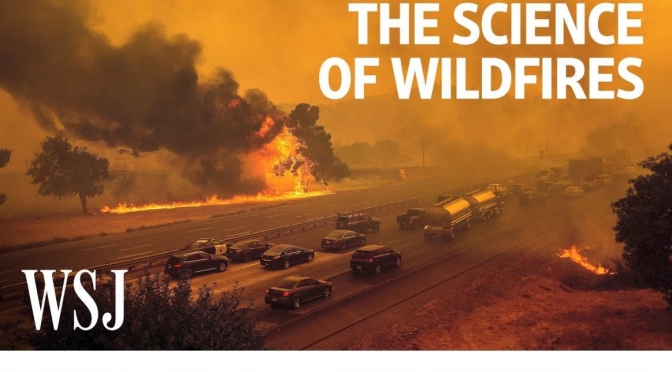
New Environment Videos: “The Science Of Wildfires”
Global satellite data indicate wildfires are becoming bigger and more intense. WSJ talks with NASA’s Doug Morton to understand the science behind what’s making the planet more flammable and making fires harder to control.
Noah Berger/Associated Press

Top New Science Podcasts: Arctic Sea Ice Under Seige, Climate Change Past Clues

Staff Writer Paul Voosen talks with host Sarah Crespi about how Arctic sea ice is under attack from above and below—not only from warming air, but also dangerous hot blobs of ocean water.
Next, Damien Fordham, a professor and global change ecologist at the University of Adelaide, talks about how new tools for digging into the past are helping catalog what happened to biodiversity and ecosystems during different climate change scenarios in the past. These findings can help predict the fate of modern ecosystems under today’s human-induced climate change. And in our books segment, Kiki Sanford talks with author Carl Bergstrom about his new book: Calling Bullshit: The Art of Skepticism in a Data-Driven World.
Global News: Flattening The Climate Curve, Lifting Lockdowns & Arrest Of Africa’s Most Wanted Man
 A selection of three essential articles read aloud from the latest issue of The Economist. This week, the chance to flatten the climate curve, when, why and how to lift coronavirus lockdowns (9:25) and the arrest of Africa’s most wanted man (17:25).

Top New Science Podcasts: Australian Fires, Isaac Asimov’s Robots And The Coronavirus (Nature)
 Listen to the latest from the world of science, with Benjamin Thompson and Nick Howe. This week, establishing climate change’s role in Australian bushfires, and revisiting Isaac Asimov’s thoughts robots.
In this episode:
00:46 Behind the bushfires
Researchers are working to establish the role that climate change is playing in the bushfires that are raging across Australia. News Feature: The race to decipher how climate change influenced Australia’s record fires; Editorial: Australia: show the world what climate action looks like
10:02 Research Highlights
The debate around how Vesuvius claimed its victims, and an ancient mummy speaks. Research Highlight: Vitrified brains and baked bones tell the story of Vesuvius deaths; Research Article: Howard et al.
12:21 Asimov’s legacy
This year marks the centenary of Isaac Asimov’s birth. We reflect on the impact of his writing on the field of robotics. Essay: Isaac Asimov: centenary of the great explainer
21:00 News Chat
The latest on a new virus from Wuhan in China, and social scientists’ battle with bots. News: Coronavirus: latest news on spreading infection; News: Social scientists battle bots to glean insights from online chatter
Science Podcasts: Stress Turns Hair Grey, Giant Sloths, Fake Whiskeys And Climate Change (Nature)
Hear the latest science news, brought to you by Nick Howe and Benjamin Thompson. This week, why stress makes mice turn grey, and how to think about climate change.
In this episode:
00:45 Going grey
Anecdotal evidence has long suggested stress as a cause of grey hair. Now, a team of researchers have showed experimental evidence to suggest this is the case. Research Article: Zhang et al.; News & Views: How the stress of fight or flight turns hair white
08:39 Research Highlights
Ancient bones suggest that giant ground sloths moved in herds, plus an atomic way to check for whiskey fakes. Research Highlight: A bone bed reveals mass death of herd of giant ground sloths; Research Highlight: Nuclear-bomb carbon unmasks fraudulent luxury whisky
10:40 Climate optimism
To tackle climate change, the former UN secretary for climate change argues that the biggest change needs to be mindset. Comment: Paris taught me how to do what is necessary to combat climate change
18:09 News Chat
The latest on a new virus from Wuhan in China, and insights from ancient African genomes. News: China virus latest: first US case confirmed; Research Article: Lipson et al.

Nature & Science Videos: Glacial Lakes In Nepal (National Geographic)
See what challenges face a team of scientists gathering core sediment samples from a glacial lake in the Himalayas.
Boomers Travel: 2019 Study Finds Over Fifty Percent Of Travelers Concerned With Climate Change & Overcrowding
From “MMGY Global’s 2019–2020 Portrait of American Travelers”:
- Overtourism: Sixty percent (60%) of American travelers believe tourism overcrowding will have a significant impact on destinations they choose to visit within the next 5–10 years.
- Climate Change: Forty-eight percent (48%) of travelers agree that climate change will have a significant influence on what destinations they want to visit in the next 5–10 years.

 Boomers Daily