Tag Archives: City Design

Analysis: Saudi Arabia’s Hyper-Planned “Line City”

The Line is a proposed smart linear city in Saudi Arabia in Neom, Tabuk, currently under construction, which is designed to have no cars, streets or carbon emissions.

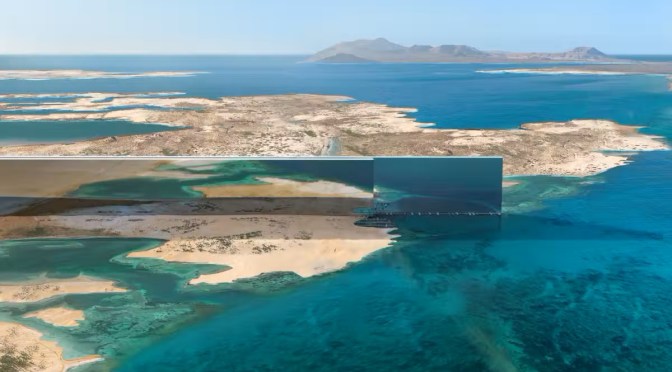
 The Line is being described as a one-building vertical city outfitted with exterior mirrors, big enough to house 9 million people — along with everything they need, from parks and waterfalls to flying taxis and robot maids. There are even plans to include an artificial moon for residents to gaze upon.

With its proposed width of only 656 feet, The Line will rely primarily on its height to encompass its residents and a host of modern trappings, such as a high-speed rail to connect sections of the 106-mile city. Saudi Arabian officials claim The Line will be otherwise devoid of roads, cars or emissions and will be powered strictly by clean energy (although details have not been released). Here are a few of most notable proposed features of The Line:

  • vertically layered homes, offices, public parks and public schools.
  • year-round climate control of all indoor and outdoor spaces.
  • high-speed rail that will transport residents from end-to-end in 20 minutes.
  • a five-minute walk to all amenities.
  • accessibility to parks and natural elements within a two-minute walk.
Technology: Designing & Building Smarter Cities

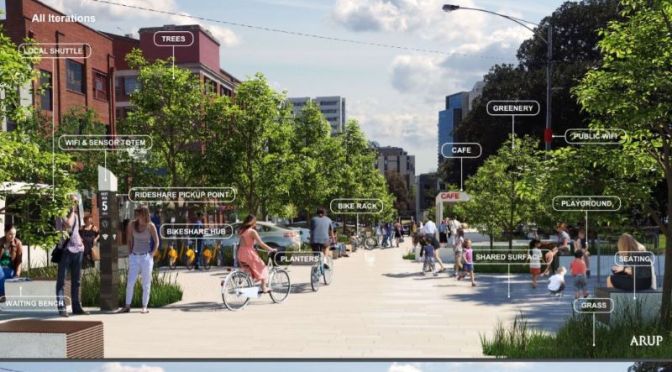
How are you connected on the street where you live, the street where you do business, the street you share with neighbors? But how could a smarter street improve your life?

Video timeline: 00:00 Building Smarter Cities 00:14 Next Evolution 00:36 ERC Partners

Could technology help guide disabled pedestrians, eliminate traffic bottlenecks, enhance trash collection and pest control, improve emergency services, protect people from environmental and health threats. “Smart Streetscapes,” a new National Science Foundation Engineering Research Center, aims to create livable, safe, and inclusive communities. Learn more on NSF’s “The Discovery Files.”

City Design: ‘Coolsingel’ In Rotterdam, Netherlands

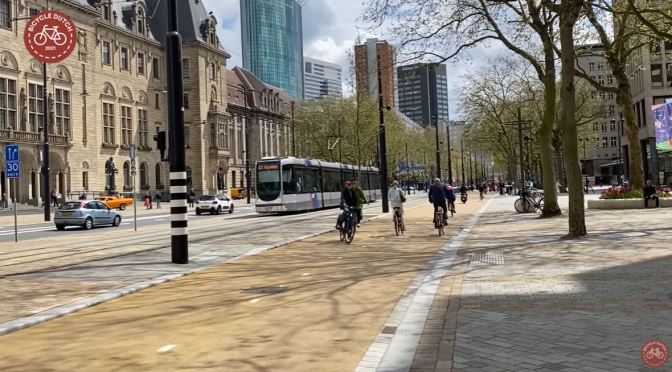
The Coolsingel is an important main street in the city centre of Rotterdam in the Netherlands. Cars used to have four travel lanes. After the reconstruction only two lanes remained. Most of the space is now used for walking, cycling and public transport. More information in the blog post: https://bicycledutch.wordpress.com/?p…

Urban Design: ‘One-Minute City’ Pursued In Sweden

…Sweden is pursuing a hyperlocal variation, on a national scale. A plan piloted by Swedish national innovation body Vinnova and design think tank ArkDes focuses attention on what Dan Hill, Vinnova’s director of strategic design, calls the “one-minute city.”

A vision for a decentralized urban area that allows residents to meet their daily needs within a quarter-hour walk or bike from their homes, the concept has been pursued as a means of cutting greenhouse emissions and boosting livability in a host of global cities — especially Paris, where Mayor Anne Hidalgo has embraced the model as a blueprint for the French capital’s post-Covid recovery

Read Master Plan

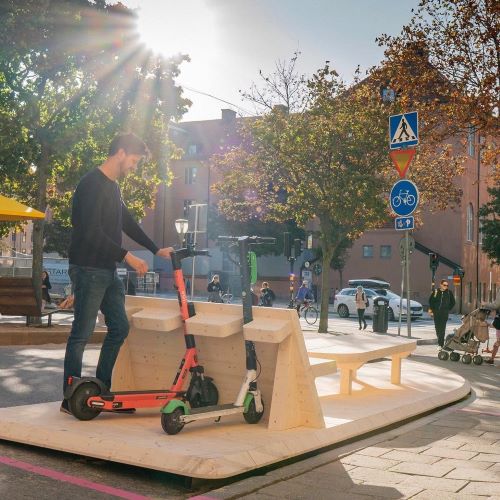
Called Street Moves, the initiative allows local communities to become co-architects of their own streets’ layouts. Via workshops and consultations, residents can control how much street space is used for parking, or for other public uses. It’s already rolled out experimentally at four sites in Stockholm, with three more cities about to join up. The ultimate goal is hugely ambitious: a rethink and makeover of every street in the country over this decade, so that “every street in Sweden is healthy, sustainable and vibrant by 2030,” according to Street Moves’ own materials.

Read more

The Future Of Cities: “BiodiverCity” In Malaysia – “Urban Lilypad Islands”

BiodiverCity is conceived as an Urban Mosaic of three diverse islands, and a set of urban design guidelines for mixing programs, addressing pedestrian and mobility networks, building sustainably and harvesting resources. The three islands bring together mixed-use districts, establishing habitat connectivity and supporting edge ecologies in reserves, parks, corridors and urban plazas.

The Channels, BiodiverCity’s first island, is constructed in three complementary phases: in Phase 1, Active Destinations include a wave pool and technology park; in Phase 2, a Civic Heart establishes governance and research institutions in the area; and in Phase 3, a Cultural Coast builds upon the heritage and vibrant creative energy of Penang’s George Town to create a regional and international draw.

As the heart of the district, the Channels’ 500-acre digital park includes spaces for research, development and local business opportunities. The Mangroves, BiodiverCity’s second and central island dedicated to businesses, is organized around a network of sheltered urban wetlands, creating suitable environments for its namesake Mangrove forests—an important natural infrastructure that doubles as effective powerhouses for sequestering more than four times as much carbon as a typical forest.

At the center of the Mangroves, the Bamboo Beacon hosts meetings, conferences and major events—broadcasting the knowledge developed in BiodiverCity out to the world. The buildings in BiodiverCity will be designed to perform efficiently and will to a large extent be constructed by low-carbon materials such as bamboo and Malaysian timber in combination with green concrete, a sustainable alternative comprised of industrial waste and recycled materials. By encouraging green roofs, facades, public and private open spaces, the islands can form a nearly continuous habitat mosaic feeding back into the forests, beaches, riparian zones and estuaries at the island’s edges.

The Laguna, BiodiverCity’s westernmost island, is an oasis for ecological living, organized around a central marina. Eight smaller islands form a miniature archipelago, where floating, stilted and terraced housing takes advantage of the natural setting of Tanjung Gertak Sanggul.

Source by BIG – Bjarke Ingels Group.