

From a Yatzer.com online review:
 The visuals make up most of the book’s volume, with David De Vleeschauwer’s photography magically working on various levels: on the one hand, artfully conveying the splendour and beauty of all the featured remote landscapes, and on the other, focusing on minute details that we usually pay no attention to: such details are isolated and enlarged as if to make us stop and look for a while. Each location is also paired with a hotel or guesthouse review, together with snippets of information about the area and how to actually get there.
  Above all, ‘Remote Places to Stay’ is all about humans and the sheer variety of lifestyles that are possible, as through its evocative photography and well-written texts, we are able to uncover small, hidden corners of the world where life flows in a different tempo altogether.
“In an age of acceleration, nothing is so cherished as slowness,” writes essayist and novelist Pico Iyer in his reflective preface for the book Remote Places to Stay — an exceptional hardcover featuring 22 of the world’s remotest travel destinations. The book is the brainchild of Debbie Pappyn and David De Vleeschauwer, a pair of devoted travellers that is also behind the popular travel blog Classe Touriste.
To read more: https://www.yatzer.com/remote-places-stay

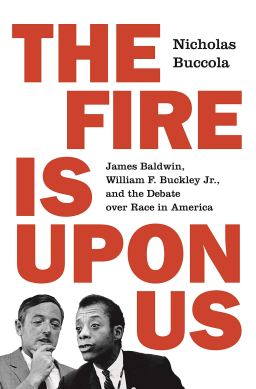 In 1965, James Baldwin, by then internationally famous, faced off against William F. Buckley Jr., one of the leading voices of American conservatism, in a debate hosted by the Cambridge Union in England. The debate proposition before the house was: “The American dream is at the expense of the American Negro.”
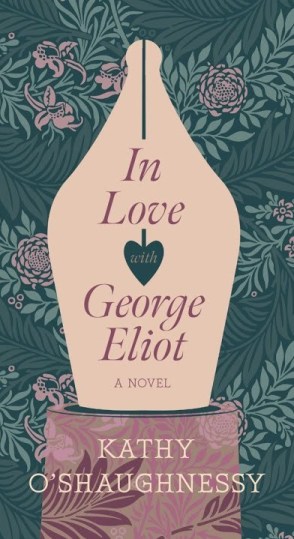 Kathy O’Shaughnessy talks to Mariella about her novel charting the life of George Eliot.


 “I suppose I started off with a fairly literal view of the world,” he says. “But, quite early on, it became clear to me that there was much more going on than simply the picture I was seeing; that the natural world had an agenda of its own; that it was going to live out life, regardless of how we viewed it and how we used it; and, indeed, regardless of the fancy metaphors that we used.”
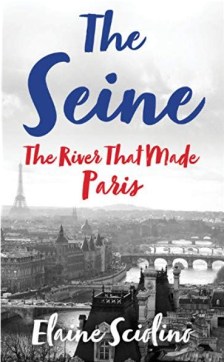 Sciolino’s keen eye and vivid prose bring the river to life as she discovers its origins on a remote plateau of Burgundy, where a pagan goddess healed pilgrims at an ancient temple. She follows the Seine to Le Havre, where it meets the sea. Braiding memoir, travelogue, and history through the Seine’s winding route, Sciolino offers a love letter to Paris and the river at its heart and invites readers to explore its magic.
 In “Unto This Last and Other Essays on Art and Political Economy” (1860), which gives the exhibition its title, Ruskin “sees” interconnected social injustices. He attacks economic inequality. Later, he sets out to establish a utopian community in working-class Sheffield, England. In one gallery we see his influence on “progressive thinkers worldwide.” Gandhi said that reading “Unto This Last” in 1904 transformed his life and ideas.
 ‘If you can paint one leaf,” John Ruskin once declared, “you can paint the world.” And in “Unto This Last: Two Hundred Years of John Ruskin”—the hypnotically potent (though flawed) exhibition at the Yale Center for British Art marking the bicentennial of his birth—we see how wonderfully he kept trying.
 The acclaimed biographer Edmund Morris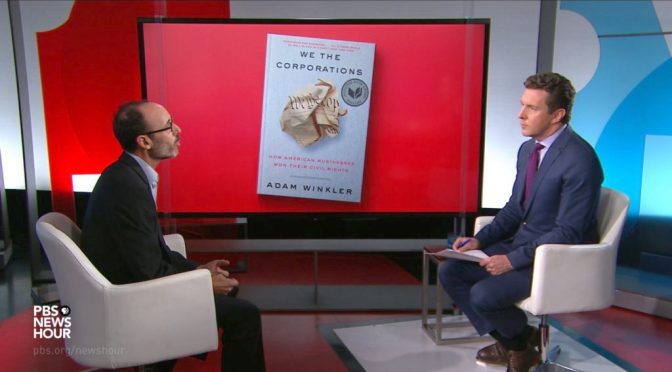
 Adam Winkler, author of our October pick for the NewsHour-New York Times book club, Now Read This, joins William Brangham to discuss “We the Corporations,” and William announces the November book selection.
 This week in Science,
  Boomers Daily