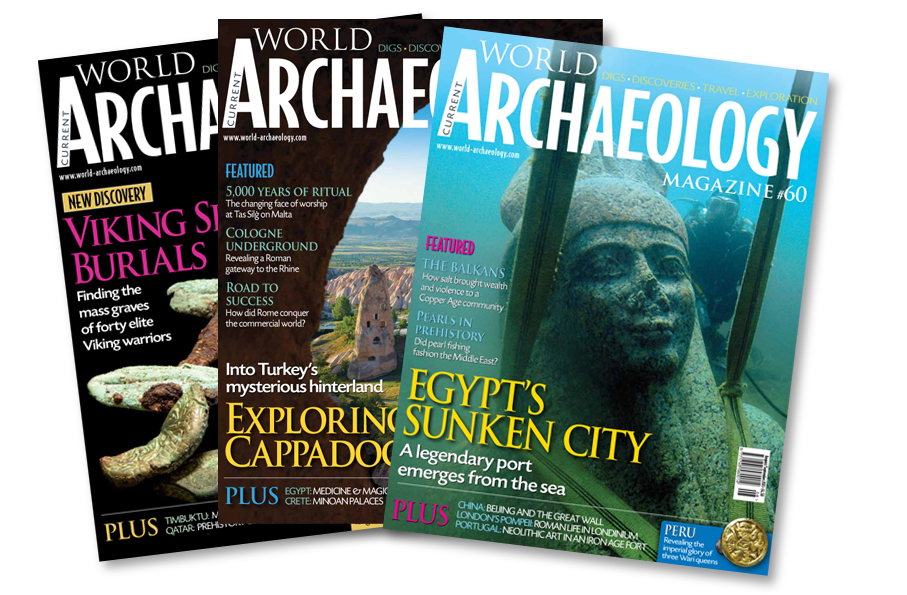
WORLD ARCHAEOLOGY (July 18, 2024): The latest issude features ‘Pompeii’ – The biggest dig in a generation; AI and Archaeology – Reconstructing ancient landscapes; Creatures of The Nile – What animals did for Ancient Egypt…
The biggest dig at Pompeii in a generation is working to expose nearly an entire block of the ancient city. Archaeologists are making astonishing discoveries that shed powerful new light on life and death in the shadow of Vesuvius, as…
Ancient Egypt owed many debts to the creatures that lived in and beside the Nile. Both wild and domesticated animals offered an abundance of food, raw materials, and inspiration. But…
What can artificial intelligence bring to archaeology? Maurizio Forte introduces recent work dedicated to reconstructing ancient landscapes, and weighs some of the risks and rewards.
The discovery of an unsuspected family link to Christiansborg Castle, Ghana, led to a project examining a forgotten aspect of the transatlantic slave trade. Rachel Ama Asaa Engmann introduces us…
Science Magazine – February 29, 2024: The new issue features ‘Protoplanetary Disk’ – Ultraviolet radiation drives rapid mass loss; What awaits scientist who take the witness stand; Nitrogen sneaks into carbon’s reaction; Endocannabinoids help shape spatial representation…
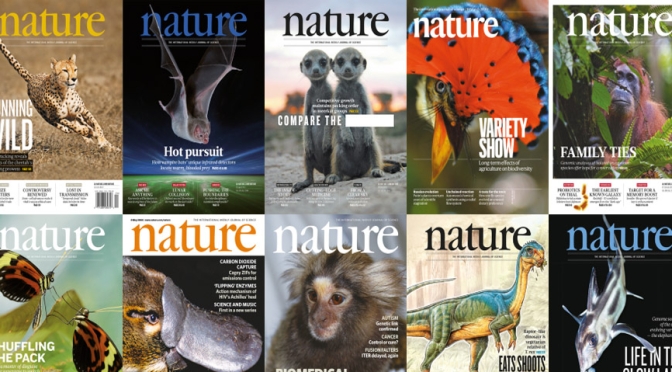
Nature Magazine – December 6, 2023:The latest issue cover features Internal Clocks – Blood proteins reveal age of human organs to help track health and disease…
The massive buried structures at Gunung Padang in Indonesia would be much older than Egypt’s great pyramids — if they’re even human constructions at all.
Ancient humans painted scenes in Indonesian caves more than 45,000 years ago, but their art is disappearing rapidly. Researchers are trying to discover what’s causing the damage and how to stop it — before the murals are gone forever.
New Scientist (December 5, 2023) – Stonehenge was built between 3000 and 2000 BC and is one of the world’s most famous prehistoric monuments. Each year, the site attracts thousands of visitors during the summer and winter solstices.
Whether used for ceremonial, astronomical or spiritual events, Stonehenge remains a subject of intrigue. Now, using the latest scientific technologies such as radiocarbon dating and 3D laser scanning, archaeologists are understanding how this colossal stone circle was built and what its purpose was, as well as gaining new insight into how our Stone Age human ancestors lived.
New studies even suggest some of the stones could align with the moon during rare lunar events.
4,000-year-old cuneiform tablets illuminate the personal lives of Mesopotamian businesswomen
By DURRIE BOUSCAREN
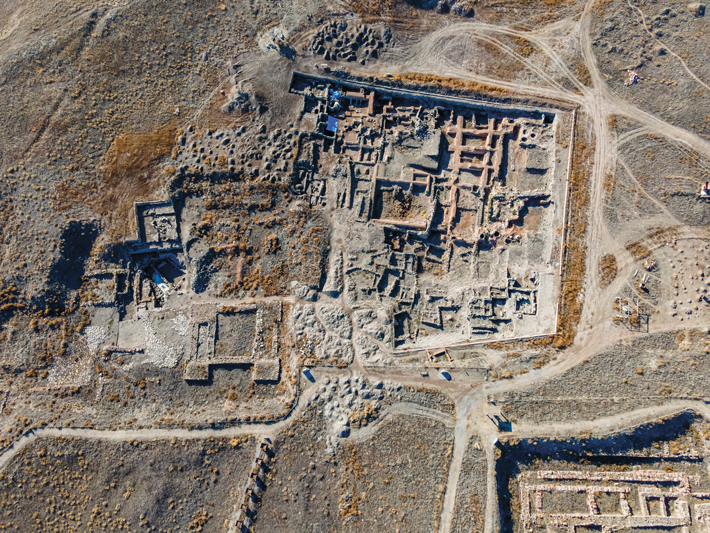
Excavations at the ancient Anatolian city of Kanesh in Turkey have revealed a district where merchants from the distant Mesopotamian city of Assur in Iraq lived and worked. Some 23,000 cuneiform tablets, mostly dating from about 1900 to 1840 B.C., have been found in the merchants’ personal archives in Kanesh.
The parents of an Assyrian woman named Zizizi were furious. Like many of their neighbors’ children, their daughter had dutifully wed an Assyrian merchant. Sometime around the year 1860 B.C., she had traveled with him to the faraway Anatolian city of Kanesh in modern-day Turkey, where he traded textiles. But her husband passed away and, instead of returning to her family, Zizizi chose to marry a local.
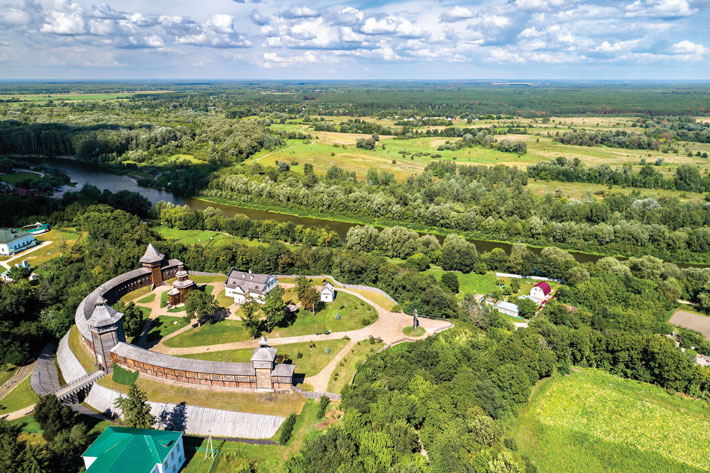
Archaeologists have spent decades excavating the remnants of the Cossack capital of Baturyn in north-central Ukraine. Based on the excavation’s findings, the Ukrainian government has reconstructed the town’s citadel—including the wooden Church of the Resurrection, defensive walls, rampart, and moat—which was destroyed by Russian soldiers in 1708.
In 1708, Peter the Great destroyed Baturyn, a bastion of Cossack independence and culture
By DANIEL WEISS
On November 2, 1708, thousands of Russian troops acting on the orders of Czar Peter I, known as Peter the Great, stormed Baturyn, the Cossack capital in north-central Ukraine. The Cossack leader, or hetman, Ivan Mazepa—who had been a loyal vassal of the czar until not long before—had departed with much of his army several days earlier to join forces with the Swedish king Charles XII, Peter’s opponent in the Great Northern War (1700–1721). The fortified core of Baturyn consisted of a citadel on a high promontory overlooking the Seim River and a larger adjoining fortress densely packed with buildings, above which soared the brick Cathedral of the Holy Trinity. The citadel and fortress were each surrounded by defensive walls, earthen ramparts, and moats whose sides were lined with logs. Although they sustained heavy losses, the Russian forces managed to seize Baturyn, which proved to be a key victory.
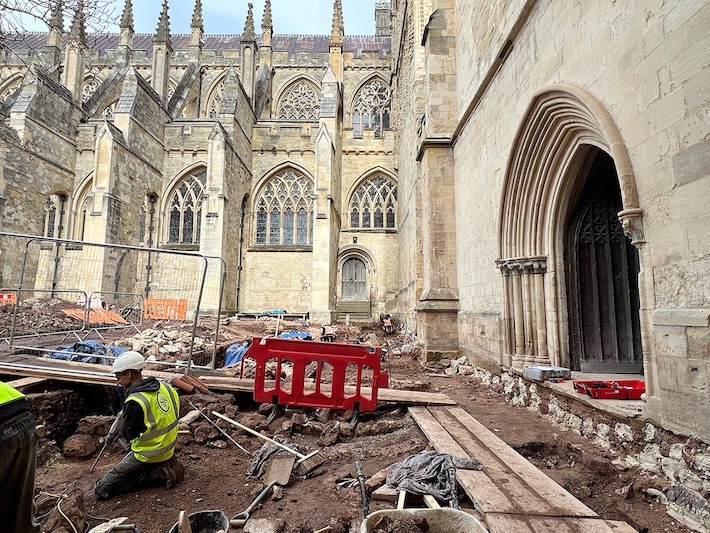
(BBC News reports that traces of a Roman street and timber buildings were uncovered in southwest England at the site of the cloister garden at Exeter Cathedral during an investigation ahead of the construction of a new cloister gallery.
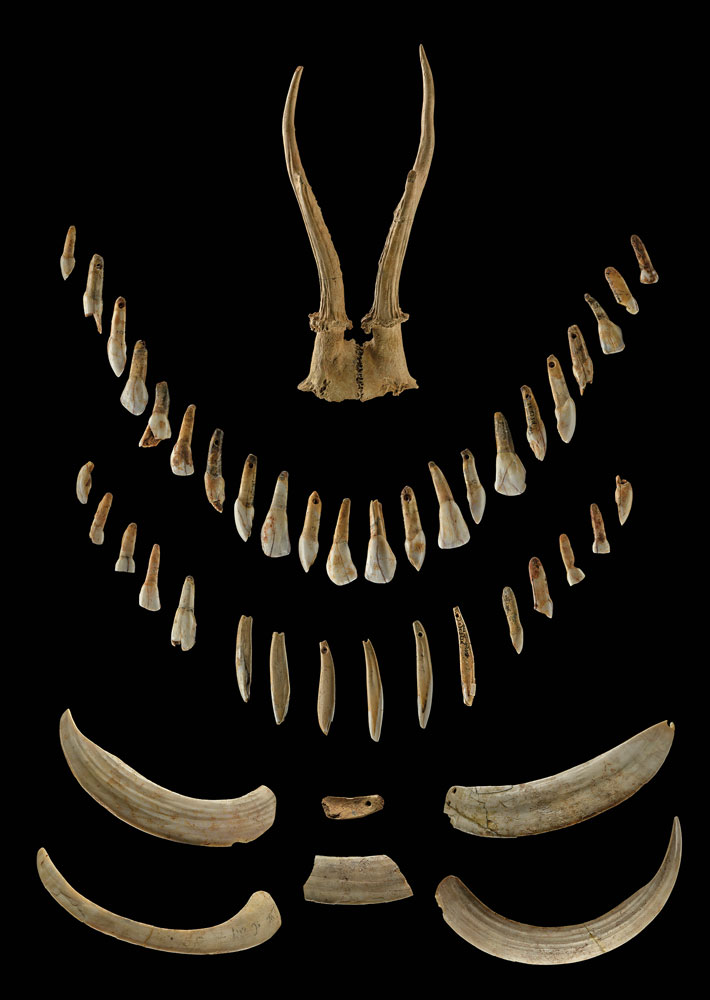
An impressive selection of grave goods including roe deer antlers (top) that could have been worn as a headdress and boars’ teeth (middle) and tusks (above) with holes drilled in them enabling them to be suspended from an animal skin were found in a 9,000-year-old shaman’s burial.
Bad Dürrenberg is a modest spa town in eastern Germany, perched on a bluff overlooking the Saale River. On a Friday afternoon in 1934, workers were laying pipe to supply the spa’s fountain with water when they came across red-tinted earth.
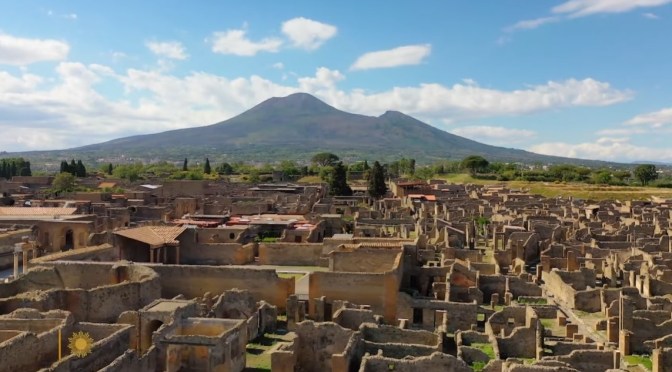
CBS Sunday Morning (March 12, 2023) – Nearly 2,000 years ago, the erupting Mt. Vesuvius covered the bustling Roman metropolis of Pompeii in volcanic ash. Archaeologists are still uncovering buried portions of the city, piecing together a tantalizing puzzle about life before the disaster.
Pompeii is a vast archaeological site in southern Italy’s Campania region, near the coast of the Bay of Naples. Once a thriving and sophisticated Roman city, Pompeii was buried under meters of ash and pumice after the catastrophic eruption of Mount Vesuvius in 79 A.D. The preserved site features excavated ruins of streets and houses that visitors can freely explore..
News, Views and Reviews For The Intellectually Curious














 Boomers Daily