
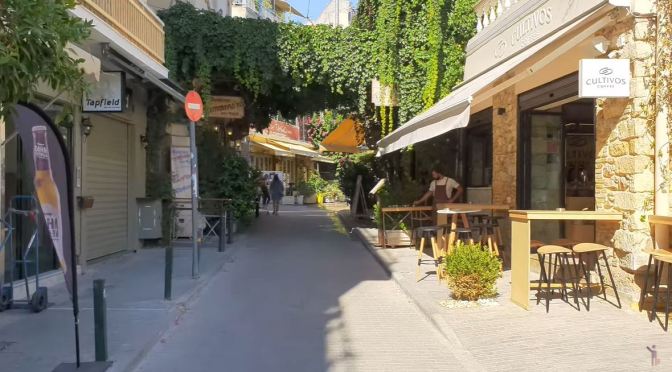
Athens is the capital of Greece. It was also at the heart of Ancient Greece, a powerful civilization and empire. The city is still dominated by 5th-century BC landmarks, including the Acropolis, a hilltop citadel topped with ancient buildings like the colonnaded Parthenon temple. The Acropolis Museum, along with the National Archaeological Museum, preserves sculptures, vases, jewelry and more from Ancient Greece.
Tag Archives: 4K Videos
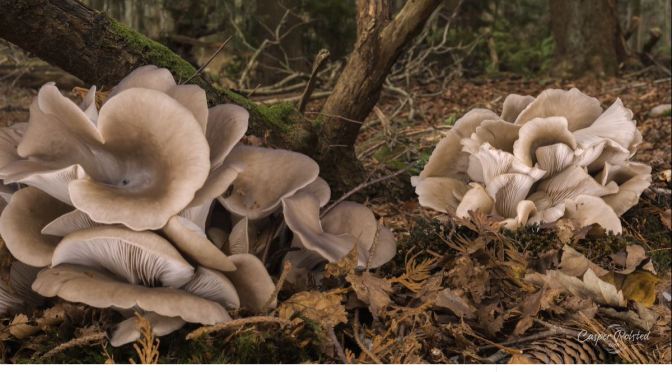
Timelapse Views: ‘Oyster Mushrooms’ In Denmark
Filmed and Edited by: Casper Rolsted
Immerse yourself in the exciting world of mushrooms. Shot in the most beautiful forests in Denmark. See and listen to this timelapse film in a quiet place where you will not be disturbed. Headphones are highly recommended.
Only in silence can we hear the song of nature.
FUNGI
Fungi are living organisms that are made up of larger cells with a cell nucleus which contains all the genetic material. Fungi are thus what we call eukaryotic organisms, which is one of the three domains of biology: animals (Animalia), plants (Plantae) and fungi (Fungi). The rest of the eukaryotic organisms, which do not fit into these three kingdoms, are called protists.
Fungi is a kingdom with about 144,000 known and described species of organisms. But it is estimated that there may be between 2.2 million and 3.8 million total species. They can be single celled or very complex multicellular organisms. The fungi kingdom includes yeasts, rusts, smuts, mildews, molds, and mushrooms. Fungi are among the most widely distributed organisms on Earth and they are of very big environmental and medical importance.
MUSHROOMS
Mushrooms are the fruiting bodies that some fungi produce – typically above ground on the soil or on decaying wood or other food sources. Mushroom varies in size, shape, color, and longevity. Some mushrooms are microscopic and completely invisible to the unaided eye while others are gigantic structures.
The fine threads under-ground that makes up the main body of the fungi is called mycelium. The mycelium stretches out beneath the mushroom in search of water and food.
Unlike a plant, a fungus can’t make its own food by using energy from the sun. Instead, the fungus produces enzymes which are released by the mycelium and break down dead plants and animals. This organic matter is then absorbed through the mycelium and used by the fungus for growth.
The mushrooms, because of their size, are easily seen in fields and forests and consequently were the only fungi known before the invention of the microscope.
OYSTER MUSHROOMS
Oyster mushrooms is the common name for the species Pleurotus ostreatus. The funghi normally grow naturally on and near trees in temperate and subtropic forests. They are found around the world including in the UK and Ireland, most of mainland Europe, Asia, and parts of North America. Unlike many fungi, these mushrooms are not seasonal and can be found all year round.
Oyster mushrooms are one of the most widely consumed mushrooms in the world and are grown commercially in many countries. They aren’t just tasty; they can be really healthy to eat. They contain antioxidants and are high in several vitamins and minerals. They even have the potential to lower cholesterol levels, slow the spread of cancer and decrease inflammation in the body.
Oyster mushrooms get their name from their oyster or shell shaped cap that grow in tiers or clusters. They have a very short or non-existent stem. The color is typically light grey or greyish-brown. Oyster mushrooms are medium to large in size with caps averaging from 5 to 25 centimeters in diameter.
Oyster mushrooms use powerful enzymes to break down and eat hardwood. Oyster mushrooms are one of the few carnivorous mushrooms. The mycelia of oyster mushrooms secrete a powerful toxin to stuns passing microscopic nematode, which are small roundworms. The fungi use their sprawling fibers to seek out and enter the mouths of these microscopic nematodes and suck out their guts. This gives the fungi nitrogen for growth.
FOLLOW MY WORK
YouTube.com/CasperRolsted?sub_confirmation=1
Instagram.com/CasperRolsted
Facebook.com/CasperRolsted
Photographer, Editor and Sound Designer: Casper Rolsted
Terralapse.com
Timelapsefilm.dk
Naturalsilence.org
CasperRolsted.com

Tours: The Alhambra Palace, Granada, Spain (4K)
Alhambra, palace and fortress of the Moorish monarchs of Granada, Spain. The name Alhambra, signifying in Arabic “the red,” is probably derived from the reddish colour of the tapia (rammed earth) of which the outer walls were built.
Constructed on a plateau that overlooks the city of Granada, the Alhambra was built chiefly between 1238 and 1358, in the reigns of Ibn al-Aḥmar, founder of the Naṣrid dynasty, and his successors. The splendid decorations of the interior are ascribed to Yūsuf I (died 1354). After the expulsion of the Moors in 1492, much of the interior was effaced and the furniture was ruined or removed. Charles V, who ruled in Spain as Charles I (1516–56), rebuilt portions in the Renaissance style and destroyed part of the Alhambra in order to build an Italianate palace designed by Pedro Machuca in 1526. In 1812 some of the towers were blown up by a French force under Horace-François-Bastien Sébastiani during the Peninsular War (War of Independence), and the rest of the buildings narrowly escaped the same fate.
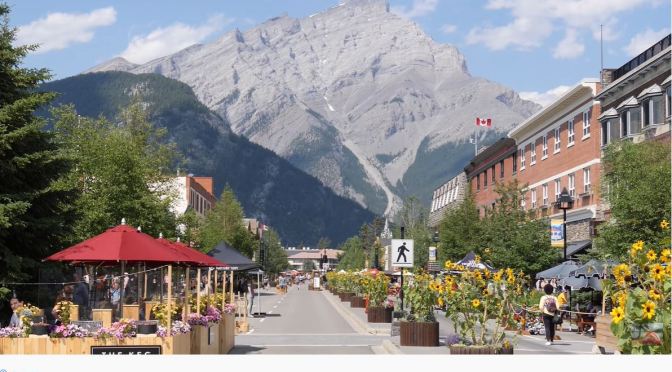
Summer Walks: Banff Village, Alberta, Canada
Banff is a resort town in the province of Alberta, located within Banff National Park. The peaks of Mt. Rundle and Mt. Cascade, part of the Rocky Mountains, dominate its skyline. On Banff Avenue, the main thoroughfare, boutiques and restaurants mix with château-style hotels and souvenir shops. The surrounding 6,500 square kilometres of parkland are home to wildlife including elk and grizzly bears.
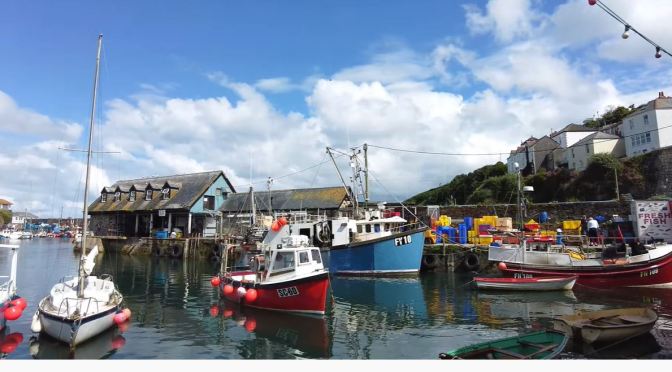
Seaside Walks: Mevagissey – Cornwall, England (4K)
Mevagissey is a village, fishing port and civil parish in Cornwall, England, United Kingdom. The village is situated approximately five miles south of St Austell. The parish population at the 2011 census was 2,015, whereas the ward population at the same census was 4,354.
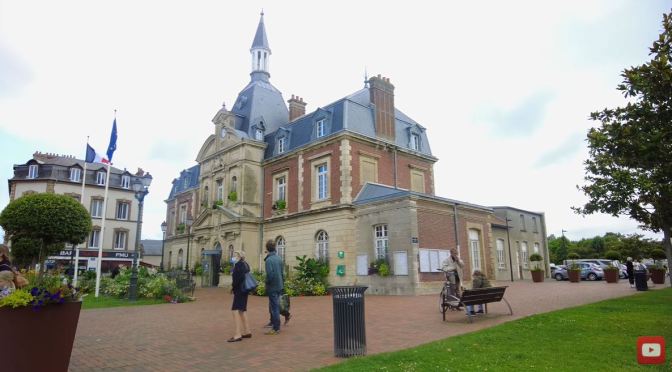
Walking Tour: Cabourg – Northern France (4K)
Cabourg is a commune in the Calvados department in the Normandy region of France. Cabourg is on the coast of the English Channel, at the mouth of the river Dives. The back country is a plain, favourable to the culture of cereal.
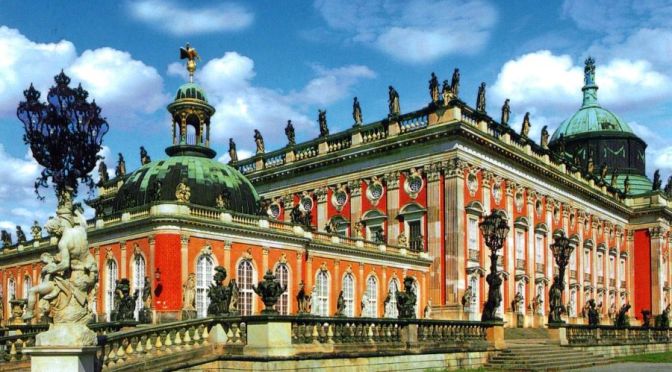
Walking Tour: Potsdam – Northeast Germany (4K)
Potsdam is a city on the border of Berlin, Germany. Sanssouci Palace was once the summer home of Frederick the Great, former King of Prussia. On the grounds of the complex, the Renaissance Orangery Palace overlooks Italian-style gardens with fountains. Historic Mill offers city views. English gardens surround neoclassical Charlottenhof Palace. The 19th-century Roman Baths were built in several architectural styles.

Tours: The Banff Springs Hotel – Alberta, Canada
Located in the heart of Banff National Park, a UNESCO World Heritage Site, the world famous Banff Springs hotel stands as a landmark in the picturesque alpine town of Banff, Alberta. Canada’s “Castle in the Rockies,” has been providing legendary hospitality to our guests for more than 130 years.
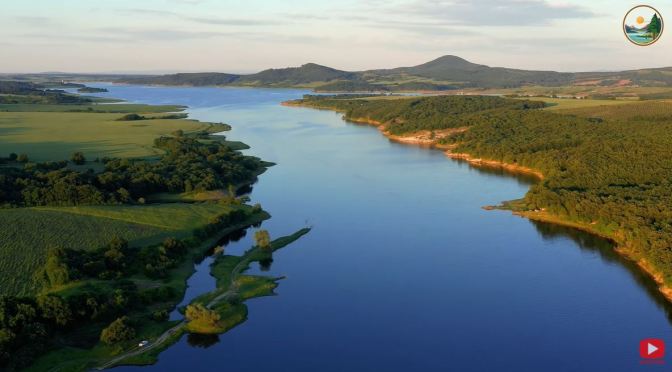
Aerial Views: The Natural Landscapes of Bulgaria
Bulgaria is a Balkan nation with diverse terrain encompassing Black Sea coastline, a mountainous interior and rivers, including the Danube. A cultural melting pot with Greek, Slavic, Ottoman, and Persian influences, it has a rich heritage of traditional dance, music, costumes, and crafts. At the foot of domed Vitosha mountain is its capital city, Sofia, dating to the 5th century B.C.

Iconic Views: The Spanish Steps In Rome, Italy (4K)
Piazza di Spagna, with the Spanish Steps, is one of the most famous in Rome. It owes its name to the palace of Spain, seat of the Iberian state embassy to the Holy See. In the center of the square there is the famous Barcaccia fountain, which dates back to the early Baroque period, built by Pietro Bernini and his son, the most famous Gian Lorenzo. On the side of via Frattina stands the Palazzo di Propaganda Fide, owned by the Holy See. In front of its facade, designed by Bernini (while the side facade is instead by Francesco Borromini), stands the column of the Immaculate Conception, which was raised after the proclamation of the dogma by the will of King Ferdinand II of the Two Sicilies in thanks for one escaped attack, and inaugurated on December 8, 1857.The monumental staircase of 135 steps, commissioned by Cardinal Pierre Guérin de Tencin, was inaugurated by Pope Benedict XIII on the occasion of the Jubilee of 1725: it was built, thanks to French funding starting from 1721, to connect the embassy of the Bourbons of Spain, to which the square owes its name, to the church of the Trinità dei Monti.It was designed by both Alessandro Specchi and Francesco De Sanctis after generations of long and heated discussions on how the steep slope on the side of the Pincio should be urbanized to connect it to the church. The solution chosen was that of De Sanctis: a large staircase decorated with numerous garden terraces, which in spring and summer is beautifully decorated with many flowers. The sumptuous, aristocratic staircase, located at the apex of a long road axis that led to the Tiber, was designed so that the scenic effects gradually increased as you approached. Typical of the great Baroque architecture was in fact the creation of long, deep perspectives culminating with scenes or backgrounds of a monumental nature. The church of the Santissima Trinità dei Monti is one of the 5 French-speaking Catholic churches of Rome, together with San Luigi dei Francesi, San Nicola dei Lorenesi, Sant’Ivo dei Bretoni and Santi Claudio e Andrea dei Borgognoni.
 Boomers Daily