

Early data from US biotech Moderna has revealed that its Covid-19 vaccine candidate is 94.5 per cent effective, raising hopes that a range of immunisations will be available to help end the pandemic. The interim analysis of the vaccine, currently known as mRNA-1273, comes after 95 trial participants contracted Covid-19, including just five who were given the coronavirus jab. While the data was published via a press release, it includes significant details that remain unclear around the Pfizer-BioNTech vaccine – which uses the same mRNA technology to target the coronavirus spike protein and an immune response.
Category Archives: Science
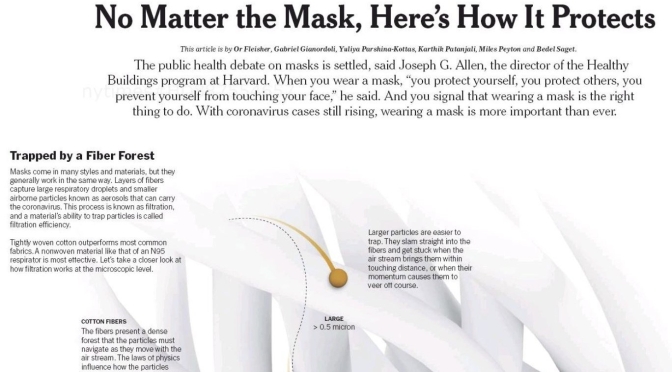
Infographic: ‘The Science Of How Masks Protect’
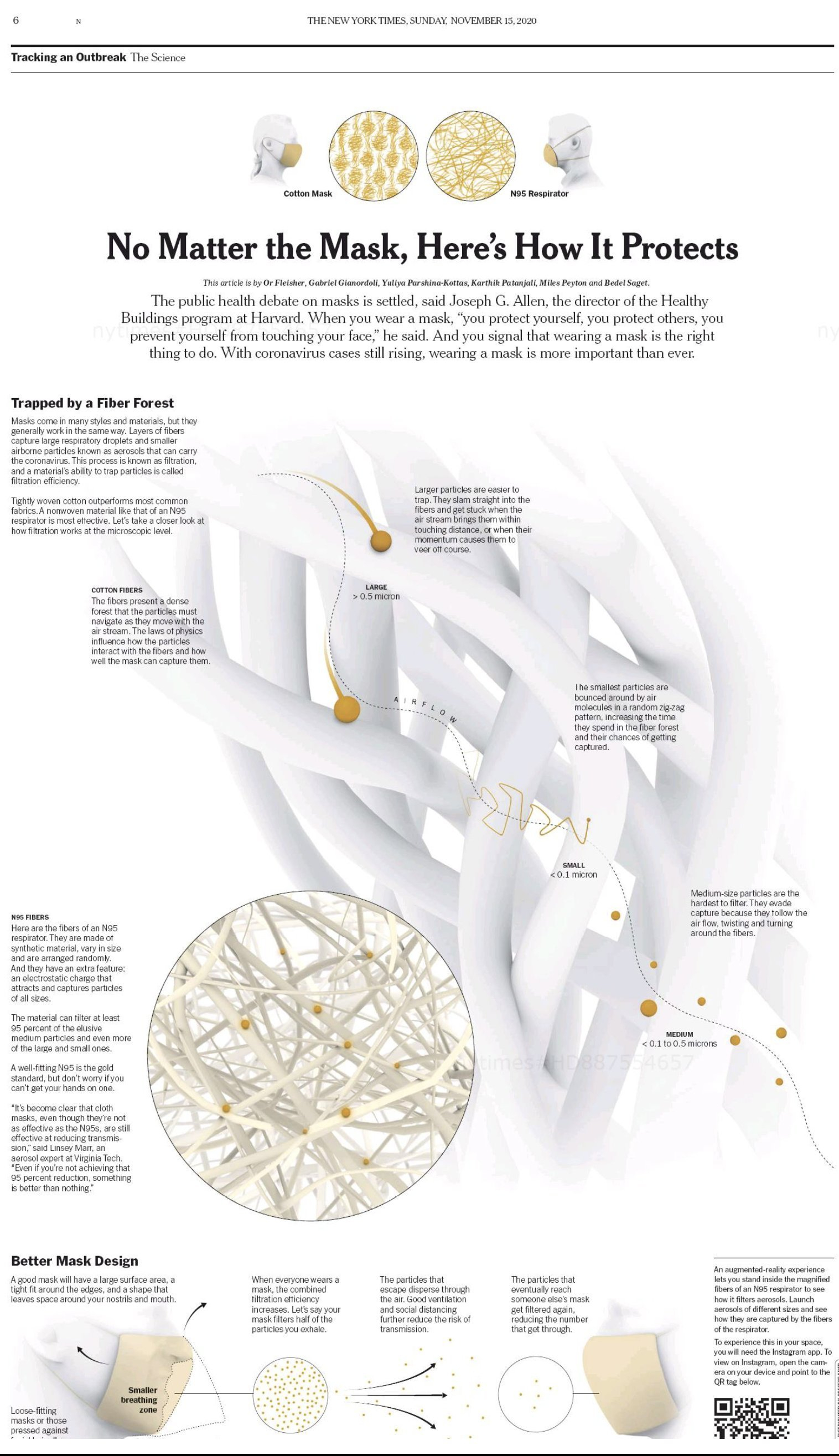
Health: ‘A Changing Climate, Changes Disease’
In recent decades, the worldwide burden of infectious disease has fallen, thanks to sanitation, hygiene, and prevention and control efforts. But the covid-19 pandemic shows how great a threat to global health remains – particularly as the climate crisis continues to affect disease spread and our response in myriad ways. Increasing temperatures are expanding the areas where diseases such as malaria and dengue thrive. More flooding and drought increases disease risk. Hygiene requires access to clean water. Further urbanization and migration related to climate change will also complicate prevention and control. The BMJ has published “The time is now” collection, calling for the strengthening of the global response to climate change and communicable disease. https://www.bmj.com/communicable-dise…

Science Podcast: Extreme Heat & The Human Body, Future Of Cooling Fabrics

This week the whole show focuses on keeping cool in a warming world. First up, host Sarah Crespi talks with Senior News Correspondent Elizabeth Pennisi about the latest research into how to stay safe when things heat up—whether you’re running marathons or fighting fires.
Sarah also talks with Po-Chun Hsu, assistant professor of mechanical engineering and materials science at Duke University, about the future of cooling fabrics for everyday use. It turns out we can save a lot of energy and avoid carbon dioxide emissions by wearing clothing designed to keep us cool in slightly warmer buildings than we’re used to now. But the question is, will cooling clothes ever be “cool”? Visit the whole special issue on cooling.

TOP JOURNALS: RESEARCH HIGHLIGHTS FROM SCIENCE MAGAZINE (NOV 13, 2020)


Science Podcasts: Birds & Sensory Pollution, Covid-19 Vaccine And Tiny Bats

Researchers try to unpick the complex relationship between sensory pollutants and bird reproduction, and how to combat organized crime in fisheries.
In this episode:
00:46 Sensory pollution and bird reproduction
Light- and noise-pollution have been shown to affect the behaviour of birds. However, it’s been difficult to work out whether these behavioural changes have led to bird species thriving or declining. Now, researchers have assembled a massive dataset that can begin to give some answers. Research article: Senzaki et al.
10:17 Coronapod
Interim results from a phase III trial show compelling evidence that a coronavirus vaccine candidate can prevent COVID-19. However, amid the optimism there remain questions to be answered – we discuss these, and what the results might mean for other vaccines in development. News: What Pfizer’s landmark COVID vaccine results mean for the pandemic
23:29 Research Highlights
A tiny bat breaks a migration record, and researchers engineer a mouse’s sense of place. Research Highlight: The record-setting flight of a bat that weighs less than a toothbrush; Research Article: Robinson et al.
25:39 Organised crime in fisheries
When you think of fishing, organised crime probably isn’t the first thing that springs to mind. However, billions of dollars every year from the fishing industry are lost to criminal enterprises. We discuss some of the impacts and what can be done about it. Research Article: Witbooi et al.
32:13 Briefing Chat
We discuss some highlights from the Nature Briefing. This time, a time-capsule discovered on the Irish coast provides a damning indictment of Arctic warming, and some human remains challenge the idea of ‘man-the-hunter’. The Guardian: Arctic time capsule from 2018 washes up in Ireland as polar ice melts; Science: Woman the hunter: Ancient Andean remains challenge old ideas of who speared big game

Covid-19 Podcasts: ‘Costs Of A Winter Lockdown To Take Cases To Zero’

Countries like the United Kingdom and France are locking down amid a spike in cases. They’re concerned that winter will only make things worse. But if Europe and America want to see an example of how well lockdowns work during colder months, they need only look at Melbourne, Australia.
The country’s second-largest city went through two lockdowns – one of which happened during its winter. Remarkably, the city has reported no new cases since late October. But, Jason Gale reports, it has come at a cost.
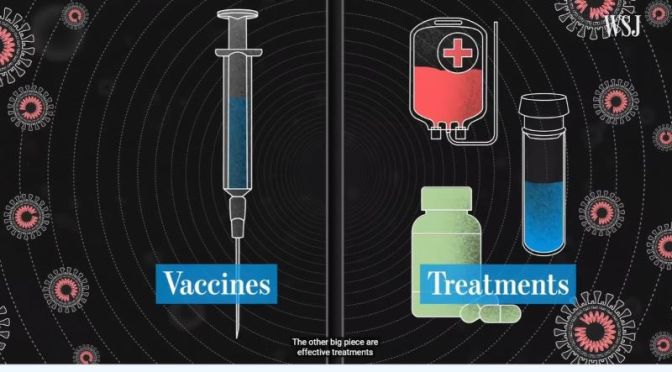
Covid-19 Video: ‘Critical Coronavirus-Busting Therapies Explained’
Health experts say having a vaccine is just one front in a two-front battle against COVID-19. The other is effective treatments for those who are already sick with the disease. WSJ breaks down the three most promising types in development.
Photo Illustration: Jacob Reynolds/WSJ.
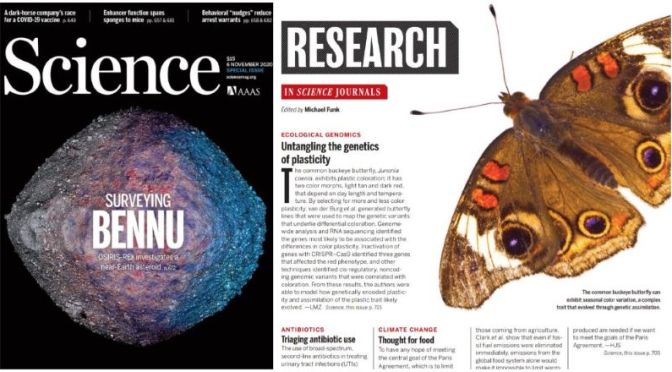
TOP JOURNALS: RESEARCH HIGHLIGHTS FROM SCIENCE MAGAZINE (NOV 6, 2020)

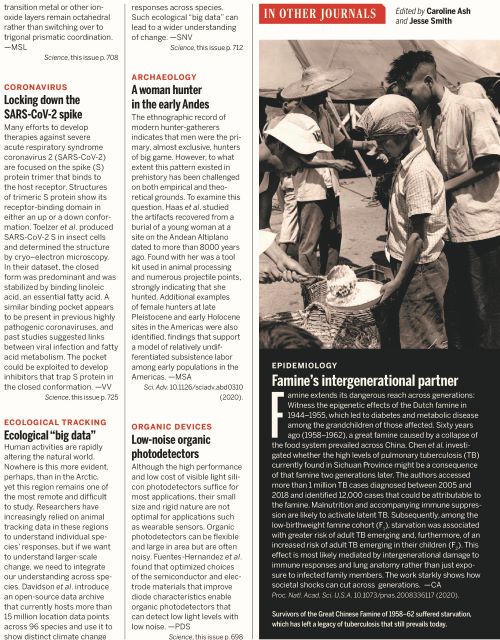
Science Podcasts: New Gravitational Waves, Black Hole Mergers & Arctic Animal Tracking
First up, host Sarah Crespi talks with Staff Writer Adrian Cho about new gravitational wave detections from the first half of 2019—including 37 new black hole mergers. With so many mergers now recorded, astrophysicists can do different kinds of research into things like how new pairs of black holes come to be and how often they merge.
Sarah also talks with Sarah Davidson, data curator at the Max Planck Institute of Animal Behavior, about results from an Arctic animal tracking project that includes 3 decades of location information on many species, from soaring golden eagles to baby caribou taking their first steps. The early results from the Arctic Animal Movement Archive show that researchers can use the database as a baseline for future Arctic investigations and to examine the effects of climate on ecosystems in this key region.
 Boomers Daily