
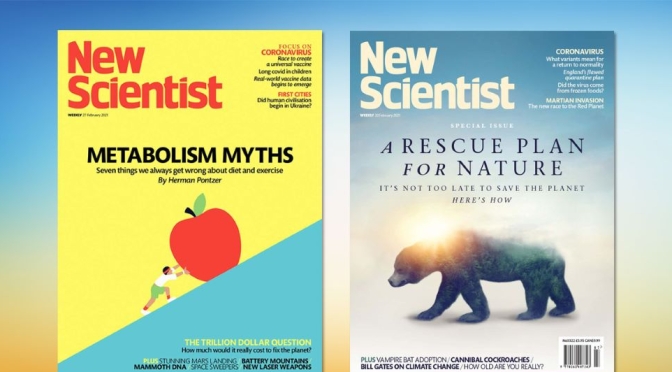
In this week’s issue: What does it mean to be happy and how can you get better at it?
— New Scientist (@newscientist) January 20, 2022
Plus, how and when will the pandemic end, and is it possible to live free of toxic chemicals?
Available at newsstands and via our app for digital and audio editions.https://t.co/BR9CIpxqEz pic.twitter.com/mQfqCKk4wR
Category Archives: Science
Science: Random Genome Mutations, Ancient Peru’s Hallucinogenic Beer
Challenging the dogma of gene evolution, and how chiral nanoparticles could give vaccines a boost.
In this episode:
00:45 Genome mutations may be less random than previously thought
A long-standing doctrine in evolution is that mutations can arise anywhere in a genome with equal probability. However, new research is challenging this idea of randomness, showing that mutations in the genome of the plant Arabidosis thaliana appear to happen less frequently in important regions of the genome.
Research article: Munroe et al.
News and Views: Important genomic regions mutate less often than do other regions
13:45 Research Highlights
How hallucinogenic beer helped cement an ancient superpower’s control, and a surprisingly enormous colony of breeding fish.
Research Highlight: Drug-fuelled parties helped ancient Andean rulers to hold power
Research Highlight: Vast fish breeding colony is more than twice the size of Paris
16:11 How a left-handed nanoparticle could give vaccines a boost
The chirality of a molecule – whether it has a left- or right-handed orientation – can have significant impacts on how it works. This week, a team show that left-handed gold nanoparticles can stimulate the immune system of mice, and boost the activity of a flu vaccine.
Research article: Xu et al.
News and Views: Nanoparticle asymmetry shapes an immune response
23:04 Briefing Chat
We discuss some highlights from the Nature Briefing. This time, Tasmanian devils’ discerning diets break the rules on scavenging, and new techniques uncovering the sex of ancient human remains may rewrite our assumptions.
Cosmos: Tasmanian devils puzzle science with picky eating habits
The Observer: Archaeology’s sexual revolution
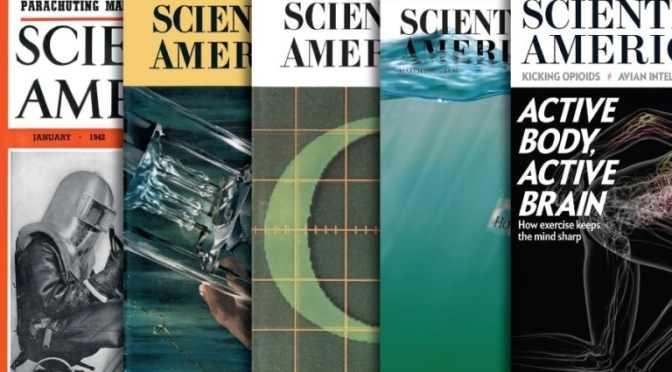
Cover Preview: Scientific American – February 2022
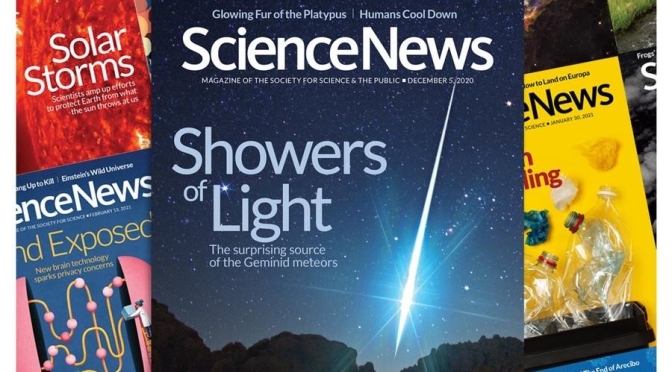
Previews: Science News Magazine – January 15
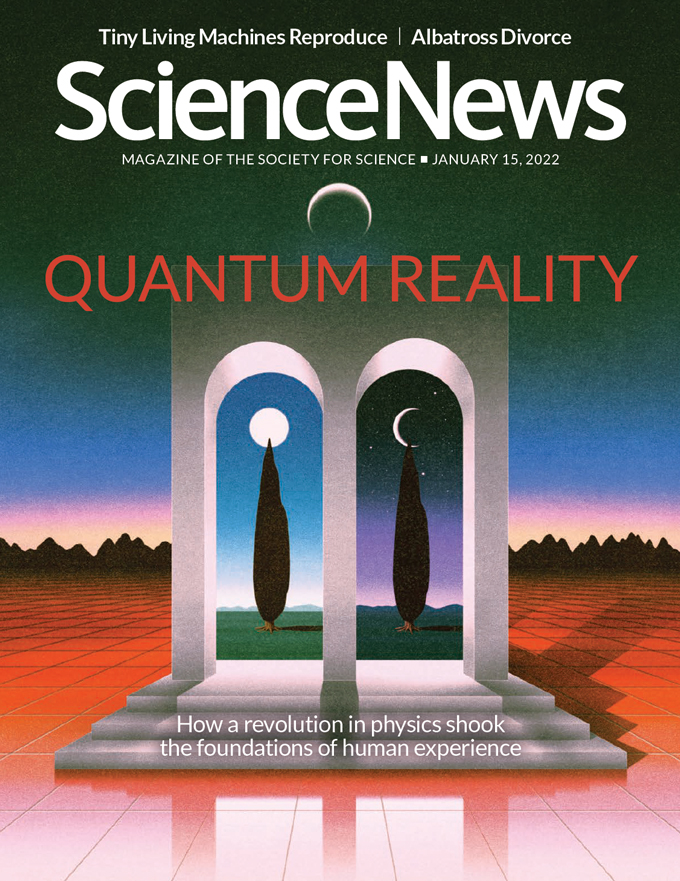
A century of quantum mechanics questions the fundamental nature of reality
A century after the quantum revolution, a lot of uncertainty remains.
Science: Cloning Saves An Endangered Species And Exoplanet ‘Super-Earths’
On this week’s show: How cloning can introduce diversity into an endangered species, and ramping up the pressure on iron to see how it might behave in the cores of rocky exoplanets.
First up this week, News Intern Rachel Fritts talks with host Sarah Crespi about cloning a frozen ferret to save an endangered species.
Also this week, Rick Kraus, a research scientist at Lawrence Livermore National Laboratory, talks about how his group used a powerful laser to compress iron to pressures similar to those found in the cores of some rocky exoplanets. If these super-Earths’ cores are like our Earth’s, they may have a protective magnetosphere that increases their chances of hosting life.
Previews: New Scientist Magazine – January 15
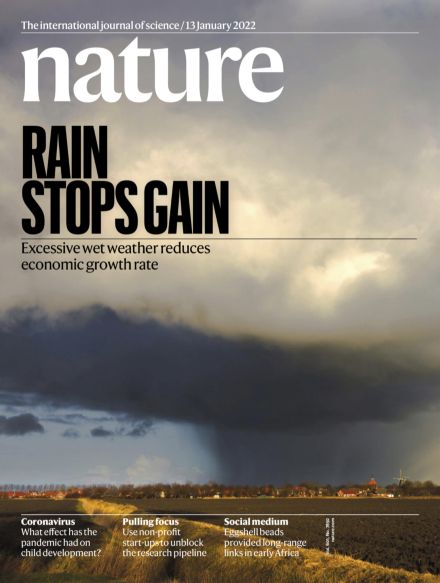
Front Covers: Nature Magazine – January 13
Previews: New Scientist Magazine – January 8
Science In 2022: Covid Vaccines, Multiple Moon Missions & Biodiversity
In this episode, Nature reporter Davide Castelvecchi joins us to talk about the big science events to look out for in 2022. We’ll hear about vaccines, multiple Moon missions, the push to save biodiversity, and more.
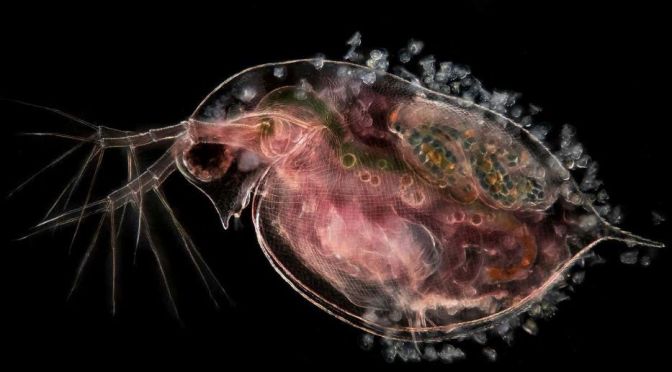
Photography: The ‘Micro-Beauty’ Of Plankton
Plankton form the base of marine and freshwater food webs. They consist of phytoplankton (plants) and zooplankton (animals). Their name derives from the Greek word for “drifter”, since they are too tiny to fight tides or currents. Phytoplankton oxygenate the ocean through photosynthesis, enabling marine animals to thrive, and produce about half the world’s oxygen. Yet despite their abundance and fundamental role for life on Earth, their microscopic nature makes them easy to ignore.
“The most exciting thing of the whole project was the discovery of this parallel, beautiful, strange, complex world, ” says photographer Jan van IJken, “there’s so much beauty around the corner that you’re not aware of”. Inspired by the microscopic beauty of plankton – and their predators, van IJken embarked on a photo and film project called Planktonium. Over a year, he collected a diverse array of species from various Dutch waters, including puddles, lakes and seas, “Every time it was [a] new discovery”, he says. “There’s such a diversity, it makes you humble”.
Back in his studio, Van IJken used various microscope and photography techniques, including dark field microscopy and timelapse photography to capture the “beauty, fine detail and incredible shapes” of his subjects. To add impact to the film, he commissioned Norweigan musician, Jana Winderen to create a soundscape, made using aquatic audio recordings including of fish, icebergs, small crustaceans which made a crackling sound and even the sounds of “fish howling to the moon”.
Read more: https://www.newscientist.com/article/…
 Boomers Daily