
Learn how corals are able to better withstand bleaching events after previous heat damage and more in our latest issue: https://t.co/3Gzu5o4aM8 pic.twitter.com/rOPUzaqUxv
— The Scientist (@TheScientistLLC) February 14, 2022
Category Archives: Science
March 2022 Previews: Scientific American Mind
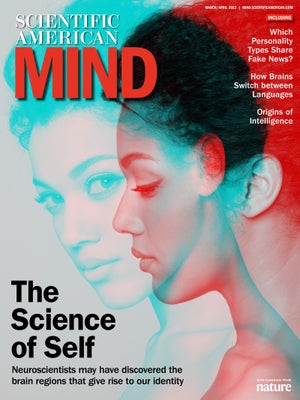
Astonishing Conscious Mind
Neuroscientists may have discovered the brain regions that give rise to our identity
- By Andrea Gawrylewski |
Human consciousness remains one of the biggest puzzles in science. Indeed, we have made moderate progress on how to measure it but less on how it arises in the first place. And what gives rise to our sense of self? In February we published a special collector’s edition exploring these mysteries and more. This issue’s cover story, by researcher Robert Martone, is a fascinating look at new discoveries on a region of the brain that helps us create a mental picture of our present and future identities (see “How Our Brain Preserves Our Sense of Self”).
Elsewhere in this issue, contributing editor Daisy Yuhas talks with linguist Sarah Frances Phillips about new research illuminating the neurological basis for multilingualism (see “How Brains Seamlessly Switch between Languages”). How the brain both creates our individual reality and enables us to thrive in that reality is nothing short of astonishing.
Preview: Science News Magazine – February 12
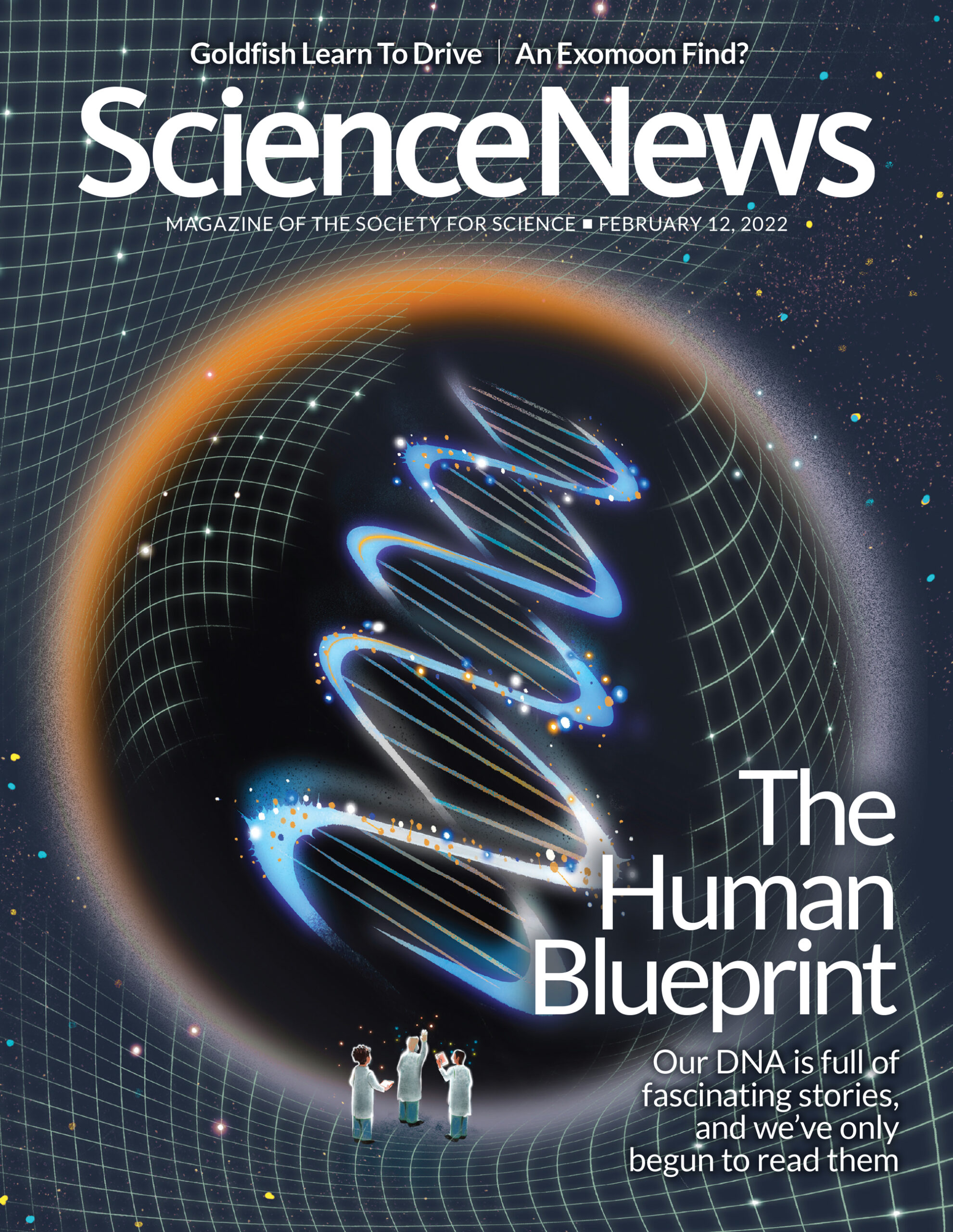
- COVER STORYHow the Human Genome Project revolutionized understanding of our DNACompletion of the Human Genome Project was a huge milestone, but there’s more work to do to ensure equitable access to the information in our DNA.By Tina Hesman Saey
- NEWSAfrica’s ‘Great Green Wall’ could have far-reaching climate effectsBy Carolyn Gramling
- NEWSAstronomers identified a second possible exomoonBy Sid Perkins
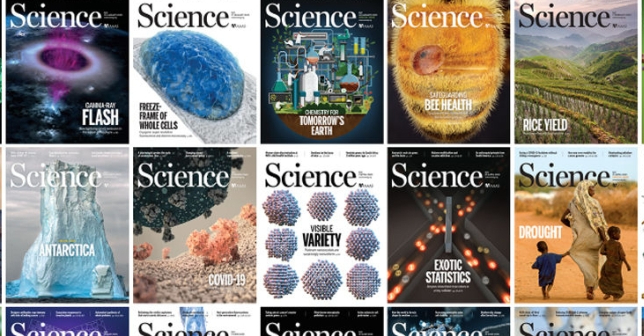
Cover Preview: Science Magazine – February 11
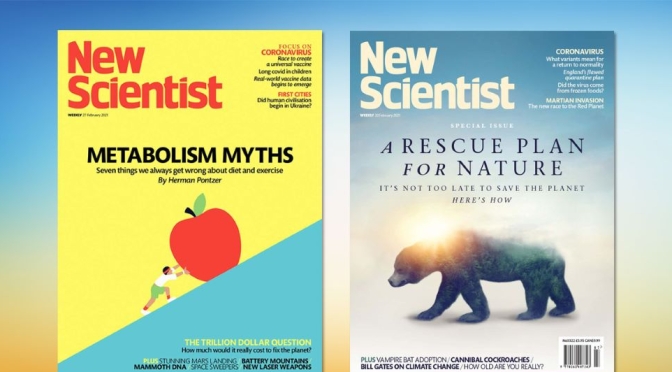
Preview: New Scientist Magazine – February 12


Cover Preview: Nature Magazine – February 10
Science: RNA Test Detects Pre-Eclampsia, Machine Vision, Recycling Urine
RNA in blood reveals signs of pre-eclampsia before symptoms occur, and the issue of urine in our sewage and what can be done about it.
In this episode:
00:46 Predicting pre-eclampsia
Cell-free RNA circulates in the blood and can give clues as to what is going on in the body. This can be used to detect disease before symptoms occur. Now researchers have analysed cell-free RNA in pregnant people and have found it can give early warning signs of a serious, and sometimes fatal, disorder of pregnancy — pre-eclampsia.
Research Article: Moufarrej et al.
07:19 Research Highlights
Upgrading machine vision by modelling it on human eyes, and stacked skeletons which could show attempts at repair after European tomb raiders.
Research Highlight: Retina-like sensors give machines better vision
Research Highlight: ‘Spines on posts’ hint at ancient devotion to the dead
09:55 The problems of pee
Sewage and the way it is managed can cause serious problems, for example contaminants in waste can lead to harmful algal blooms. One of the major causes of this is urine, and so some researchers have been promoting a deceptively simple solution — separate out the urine.
News Feature: The urine revolution: how recycling pee could help to save the world
Book Review: Toilets – what will it take to fix them?
16:40 Briefing Chat
We discuss some highlights from the Nature Briefing. This time, how China has planned to make this year’s Winter Olympics carbon neutral, and how a new radio telescope in Namibia will help us understand black holes.
Nature News: China’s Winter Olympics are carbon-neutral — how?
Nature News:
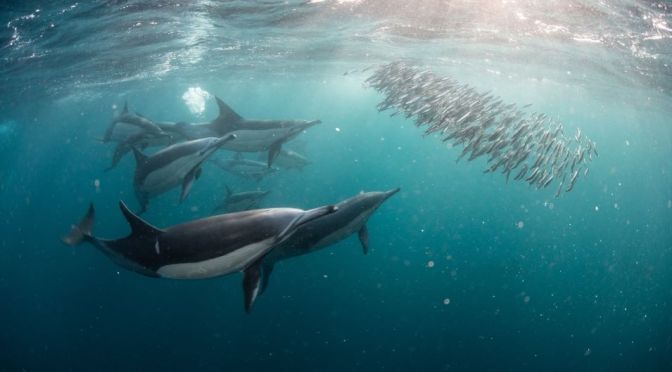
Oceans: Long-Distance Marine Migrations (Video)
Migrations are a key to survival in the marine ecosystem. From whales and turtles to sardines, by travelling to different locations, nektonic animals stand better chances of finding food or a suitable place to breed and raise their young. In this video, we’ll take a look at the migrations of nektonic organisms – animals that are able to actively swim and can undertake large-scale journeys around the world, covering larger distances than plankton and their predators.
Video timeline: 00:00 – Introduction 01:10 – Chapter 1: Nektonic Adaptations – Why Animals Migrate 02:05 – Chapter 1: Nektonic Adaptations – Marine Mammals 02:35 – Chapter 1: Nektonic Adaptations – Migratory Fish 03:00 – Chapter 2: In Search of Sanctuary – The Sea Turtle Migration 04:04 – Chapter 2: In Search of Sanctuary – The Whale Migration 04:56 – Chapter 2: In Search of Sanctuary – The Whale Nursing Period 05:40 – Chapter 3: The Sardine Run – A Plentiful Feast 06:45 – Chapter 3: The Sardine Run – Nektonic Invertebrates 07:13 – Conclusion
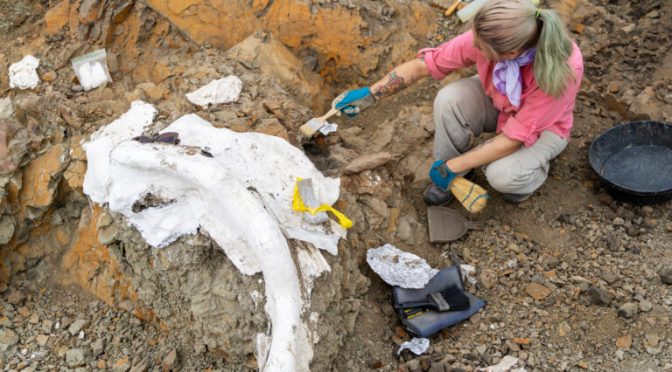
Views: Hunting Dinosaur Fossils In East Montana
“It’s Cretaceous crime scene work: We have a body — how did it get here?” Kelsie Abrams, Fossil Lab Manager for the UW’s Burke Museum of Natural History and Culture, left her climate-controlled lab to wield jackhammers and shovels on a dusty hillside of the Hell Creek Formation in remote eastern Montana, possibly the best place in the world to find fossils from the Late Cretaceous. In this short film, follow Abrams and the dig team from the field to the lab, as they unravel mysteries from the end of the age of dinosaurs.
Science: Extreme Old Age Gene Quest, Gravitational ‘Glint’ Waves, Early Springs
The team explores a theory that suggests gravitational waves may be the thing that finally helps us detect dark matter – we just need to look for the ‘gravitational glint’.
Spring is rolling around earlier and earlier. The team examines a new study which shows that since the 1980s, the warming climate has brought the season forward by a month – which could have major ecological implications. They also discuss a study which looks at the impact of marine heatwaves on things like coral and fish populations.
 Boomers Daily