In August, the Sun rose behind the Extremely Large Telescope, under construction in Chile.
Past the halfway point, Extremely Large Telescope prepares to receive first mirrors
A web of steel girders is rising from the flattened summit of Cerro Armazones, 3000 meters above sea level in Chile’s Atacama Desert. The dome it will support will be vast—with a footprint as big as a soccer field and almost as tall as the Statue of Liberty— and unexpectedly nimble: It will smoothly rotate on rails as a giant telescope inside tracks stars through the night.
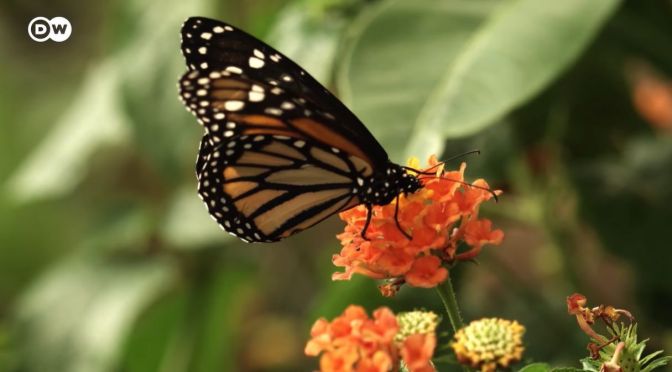
DW Documentary (October 18, 2023) – Butterflies and moths. Graceful and beautiful, they flit about our spring and summer skies. Their delicate choreographies and dazzling colors are among the most amazing in the animal kingdom. But beauty is not their only quality!
Through the lenses of powerful microscopes, scientists discover unexpected secrets about these fragile creatures that can be adapted and applied to make our world better and more sustainable. This film is a journey into the nano-dimensions of butterflies, taking viewers from high-tech labs to dense forests and lavender fields around the world. We take a close look at the iconic morpho butterfly and find out how its iridescent blue wings reveal a way to produce structural color, a discovery which allows researchers to control light.
Physicist Chunlei Guo, whose work involves reproducing butterfly structures, has created a material capable of absorbing all the colors of the spectrum, a discovery that might revolutionize the field of renewable energies. He is also investigating how the amazing hydrophobic properties of butterfly wings could be used to create an unsinkable metal, which could be useful for constructing floating cities if ocean levels continue to rise.
The blue morpho, the industrious silk moth, the transparent glasswing butterfly, the resistant Heliconius, the enigmatic monarch and the delicate white cabbage butterfly – all have inspired discoveries. These have taken place in many different scientific fields, including energy efficiency and medicine — and even in the detection of toxins, thereby helping save lives in the event of chemical or gas attacks. We take a look at the work of researchers, biologists and geneticists.
We also talk to experts, such as physicist and biomimicry expert Serge Berthier, as well as to Jessica Ware, an entomologist at the American Museum of Natural History, about butterflies’ incredible behaviors and capacities. Tiny as they are, butterflies and moths can inspire groundbreaking scientific progress. And they also serve as a warning about what’s at stake if we fail to protect our extraordinary natural environment.
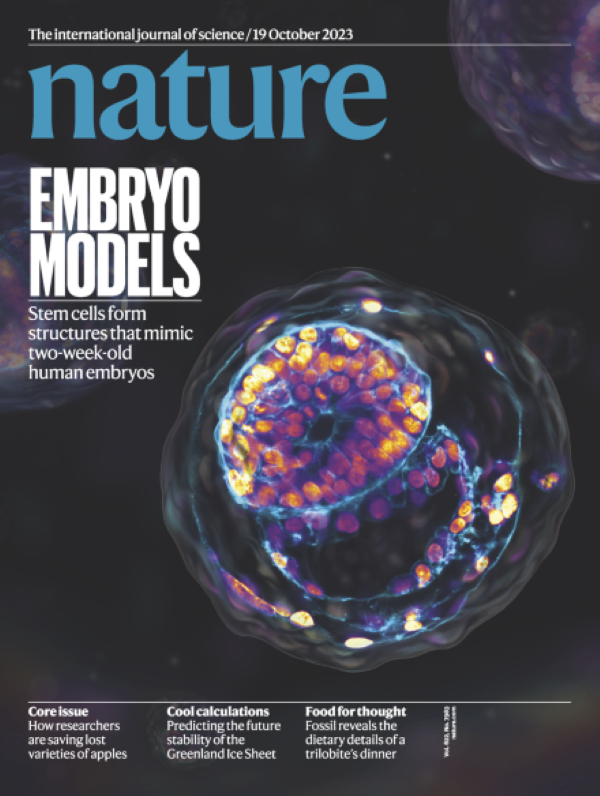
nature Magazine – October 19, 2023: The latest issue features how humans develop in the very early stages when a newly formed embryo is implanted in the wall of the uterus, largely because of the physical and ethical challenges that are presented by studying early human embryos.
The test 30 years ago of what remote sensing could tell us about our own planet shows the value of looking with unbiased eyes at what we think we already know.
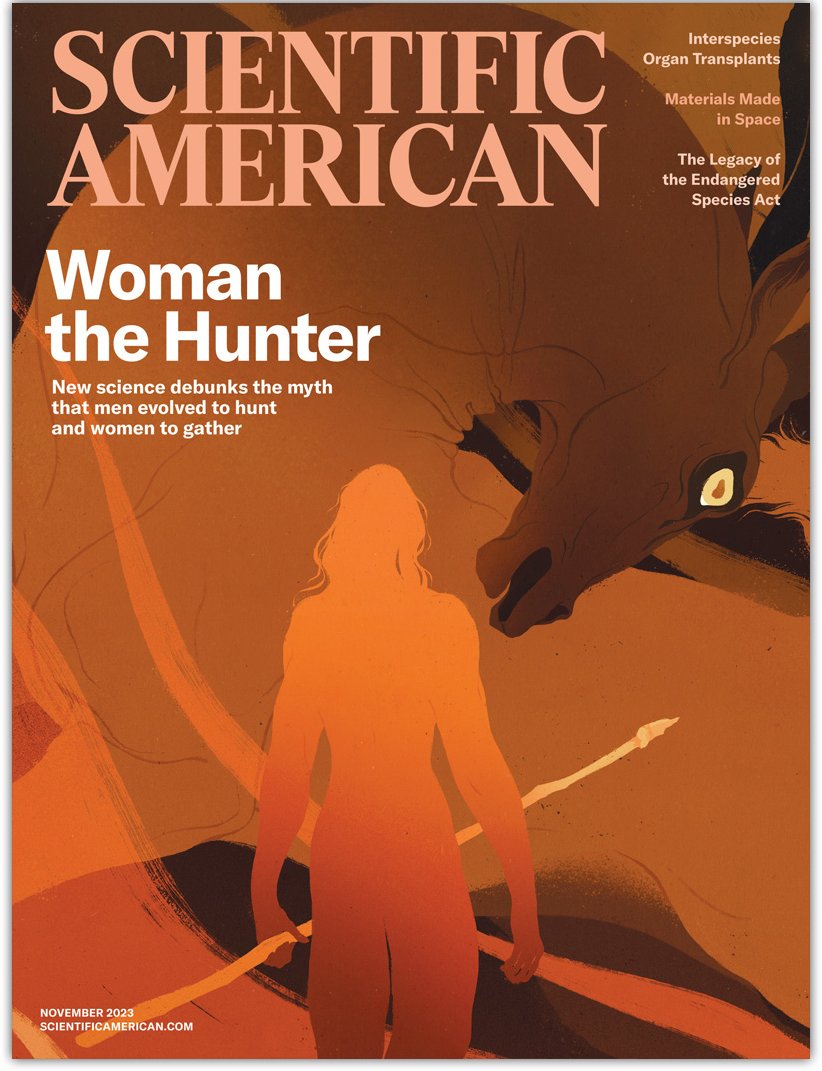
Scientific American – November 2023: The issue features Woman The Hunter – New science debunks the myth that men evolved to hunt and women to gather; Interspecies Organ Transplants; Materials Made in Space; The Legacy of the Endangered Species Act, and more…
The Endangered Species Act requires that every U.S. plant and animal be saved from extinction, but after 50 years, we have to do much more to prevent a biodiversity crisis
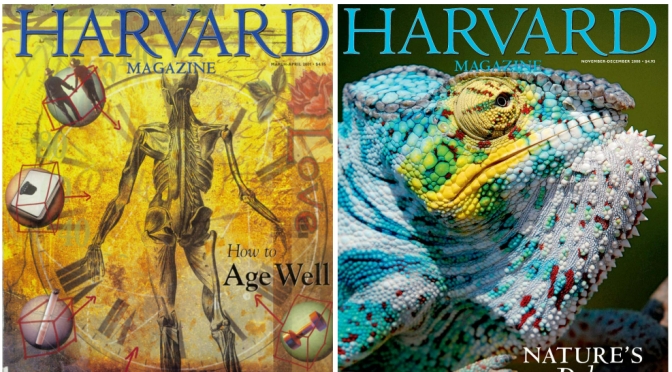
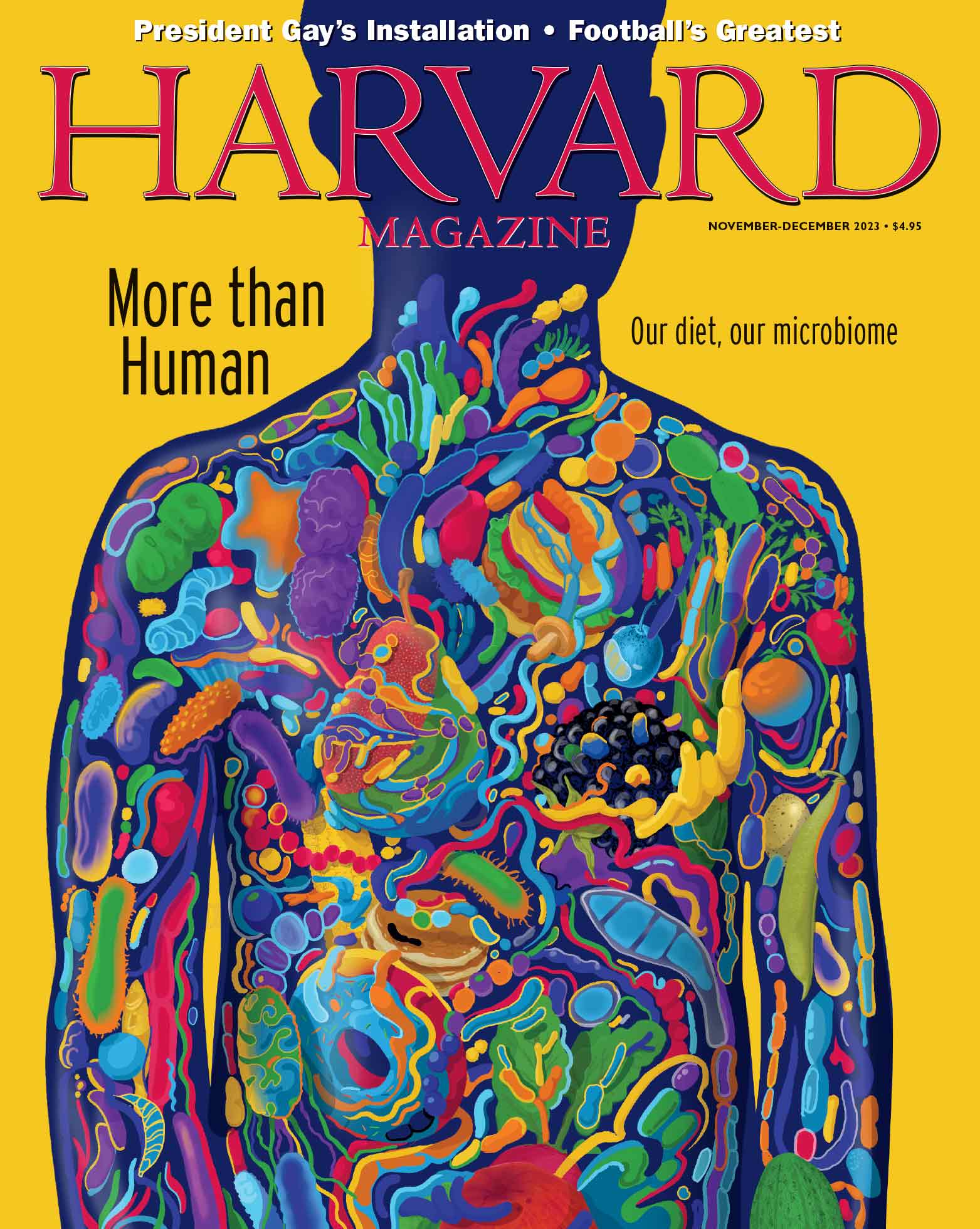
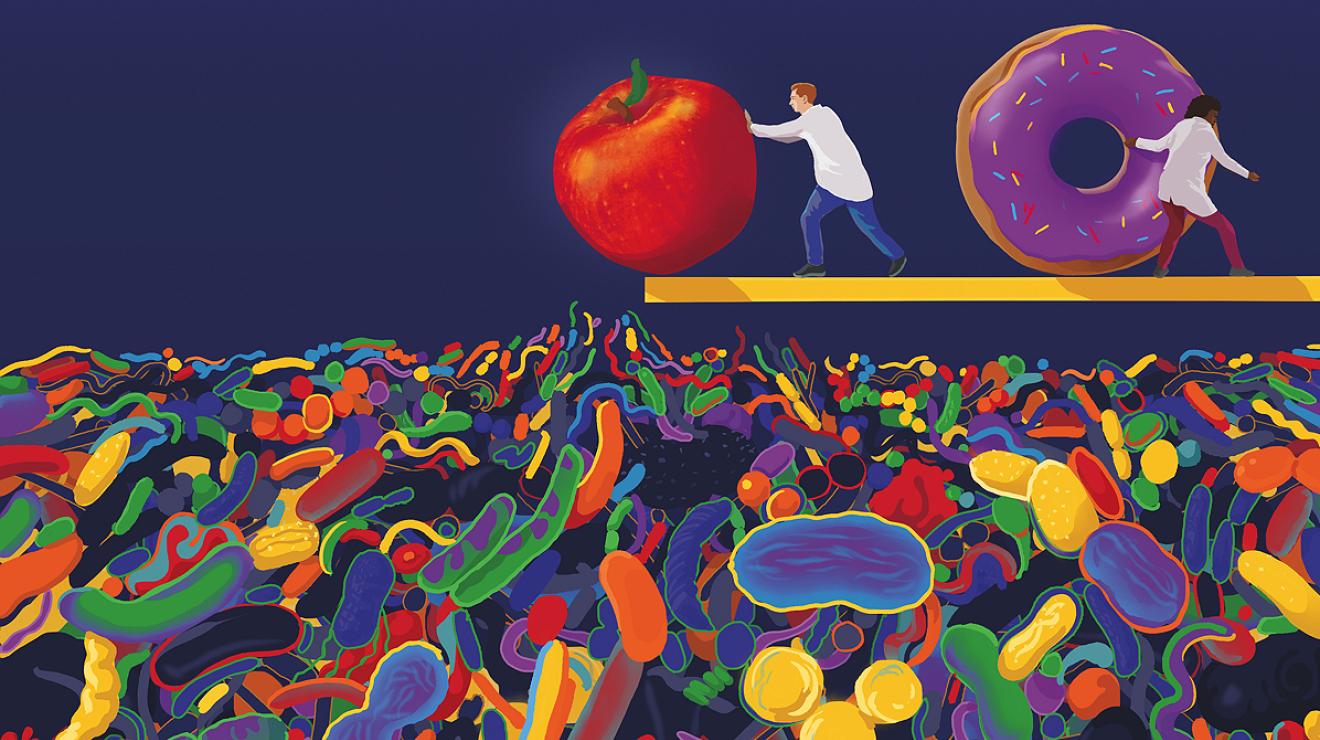
IN THE LATE 2000s, Rachel Carmody was spending a lot of time counting calories. An anthropology graduate student at Harvard, she was studying whether cooking changed the number of calories the gut can extract from food. When humans invented cooking thousands of years ago, she and her advisor Richard Wrangham wondered, had they opened the door to a new source of energy?
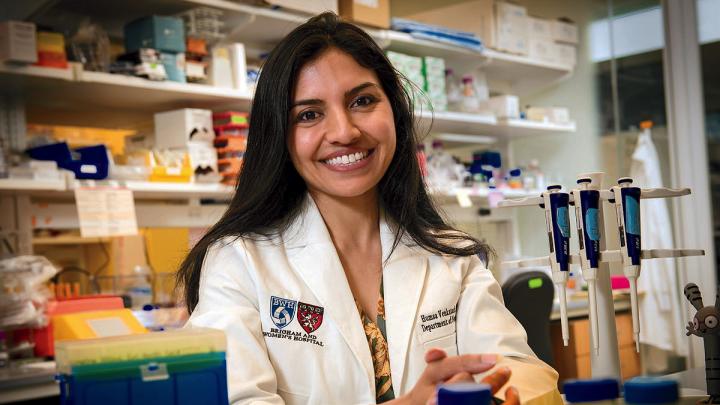
DURING THE past two decades, the number of annual cancer deaths in the United States has fallen by 27 percent, a remarkable improvement driven by new precision diagnoses and treatments tailored to individual patients. Today, oncologists can detect cancer in its earliest stages and deliver drugs that enlist the patient’s own immune system to improve their odds of survival. Yet cancer remains the second deadliest disease in the United States, claiming more than 600,000 lives every year. Its persistence underscores the urgent need for a deeper understanding of how cancer interacts with the body. Assistant professor of neurology Humsa Venkatesh believes she may have found a promising new pathway for highly effective cancer treatments in the most unexpected of places: the human brain.
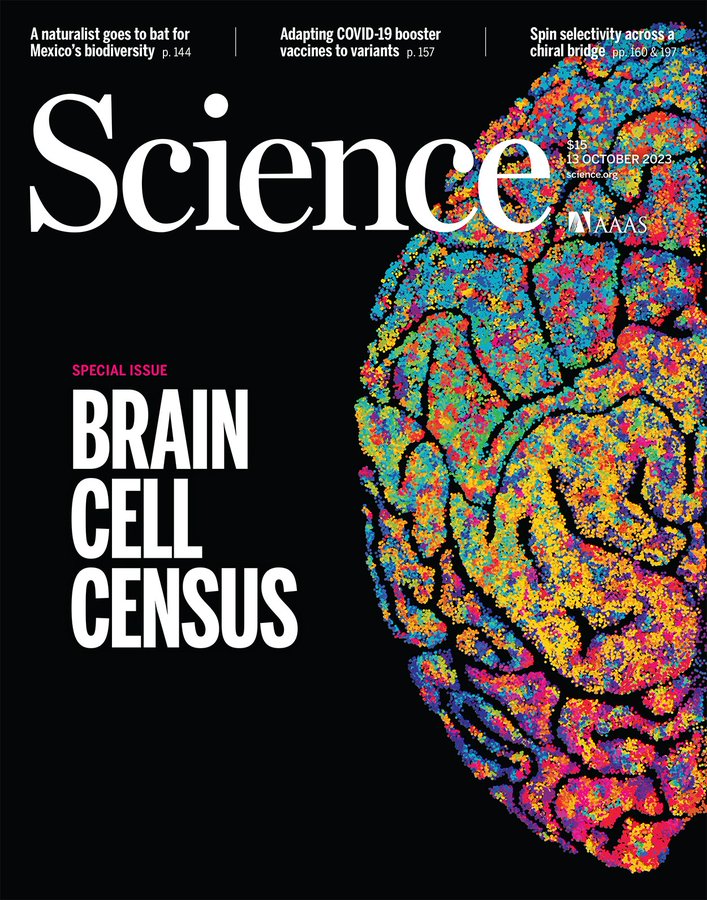
A cell census provides information on the source of human brain specialization
The brain is composed of multiple regions associated with distinct functions, which have become further specialized in the human lineage. To define how this specialization is implemented, how it arises during development, and how it has emerged over the course of human evolution, a detailed understanding of the cells that make up the human brain is required.
The ecology of whales in a changing climate
Some whale populations are exhibiting unexpected cycles of boom and bust
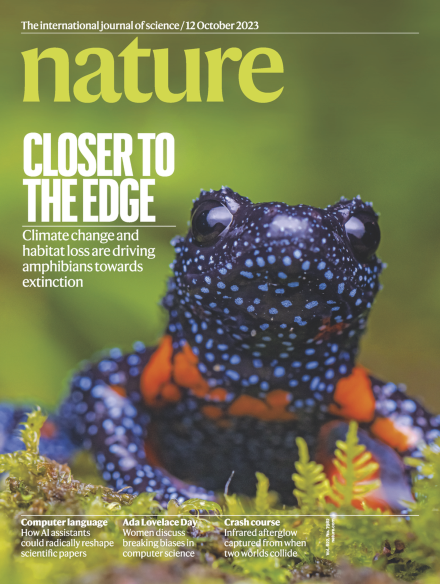
nature Magazine – October 12, 2023: The latest issue features the results of a comprehensive re-evaluation of the conservation status of amphibians since 2004.
Companies say the technology will contribute to faster drug development. Independent verification and clinical trials will determine whether this claim holds up.
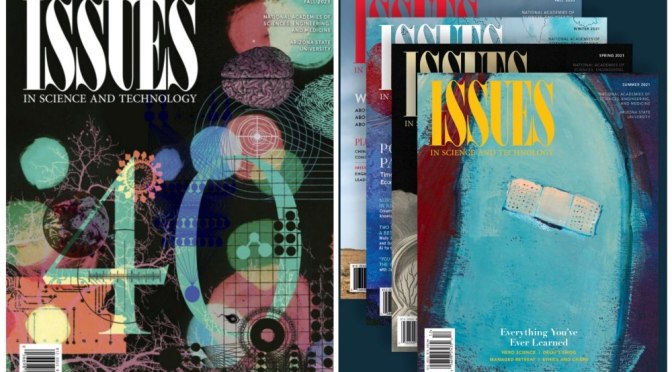
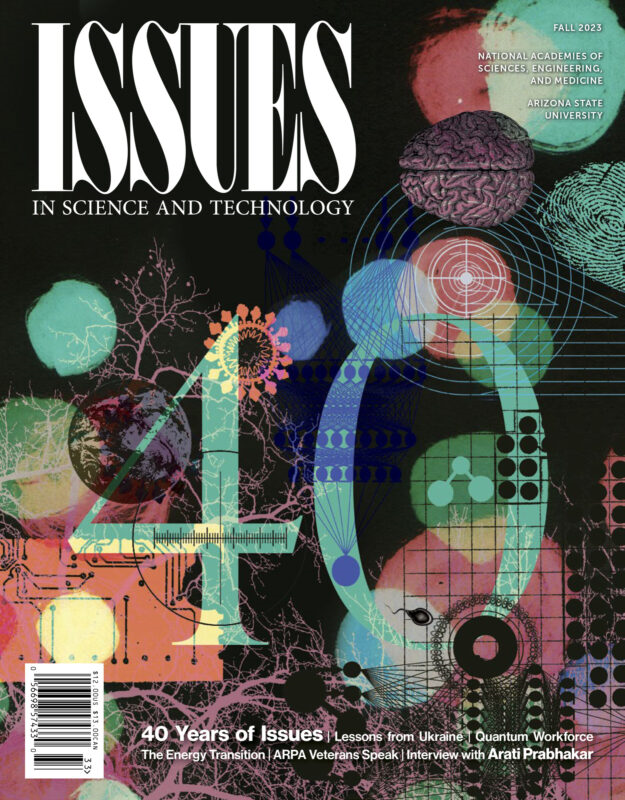
ISSUES IN SCIENCE AND TECHNOLOGY MAGAZINE (FALL 2023): The latest issue of @ISSUESinST features Lessons from Ukraine, Quantum Workforce, The Energy Transition, Why Space Debris Flies Through Regulatory Gaps and more…
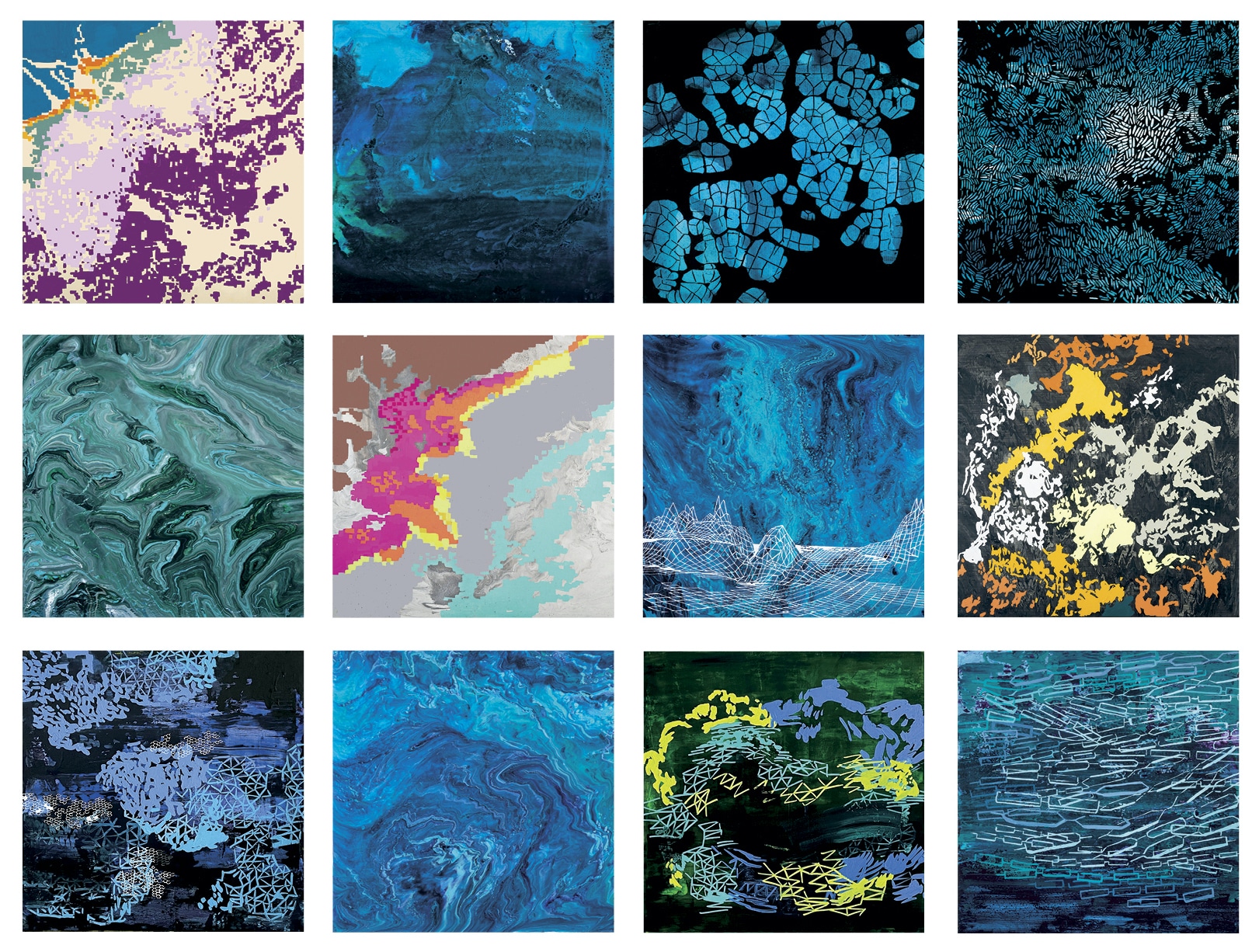
Blue Dreams is an immersive video experience inspired by microbial networks in the deep sea and beyond. Using stunning undersea video footage, abstract imagery, and computer modeling, the work offers a glimpse into the complicated relationships among the planet’s tiniest—yet most vital—living systems.
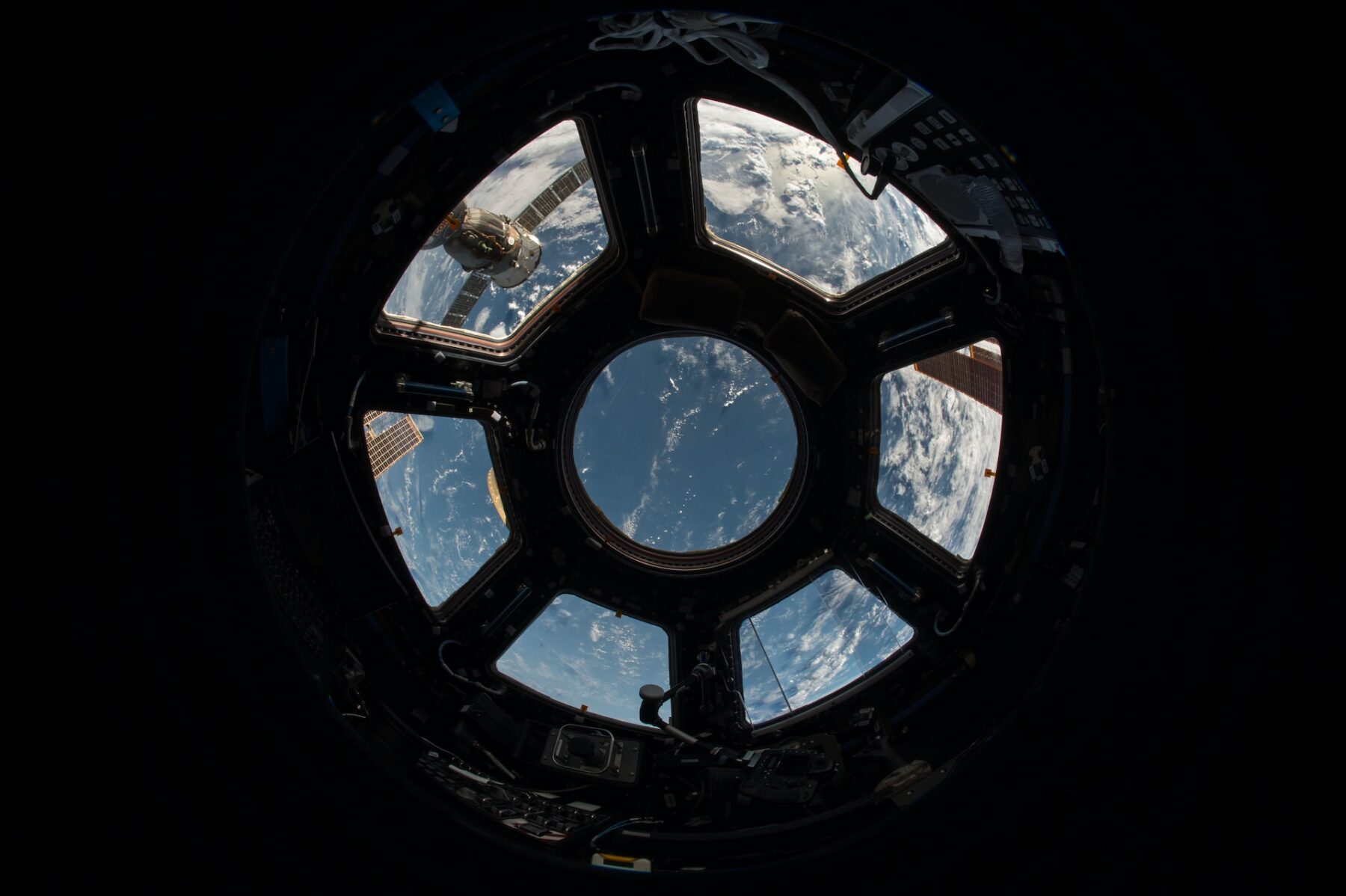
Orbital debris has been a looming issue for decades, and it’s only getting worse as activities in space increase. With technical expertise and authority over space activities widely distributed across the US government, officials need to determine the appropriate regulations and policies to address how space is changing.
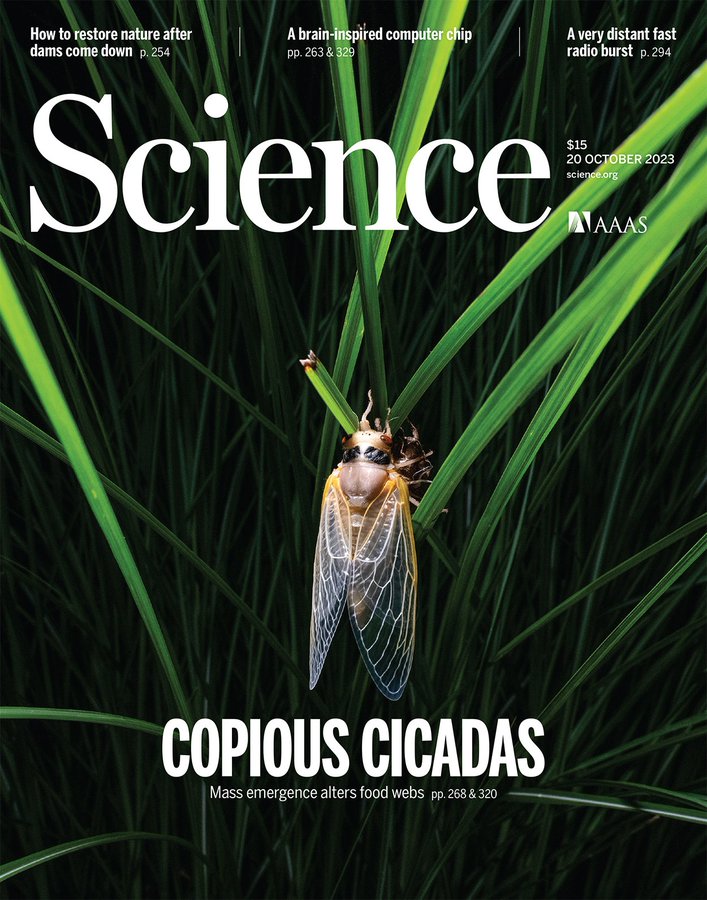
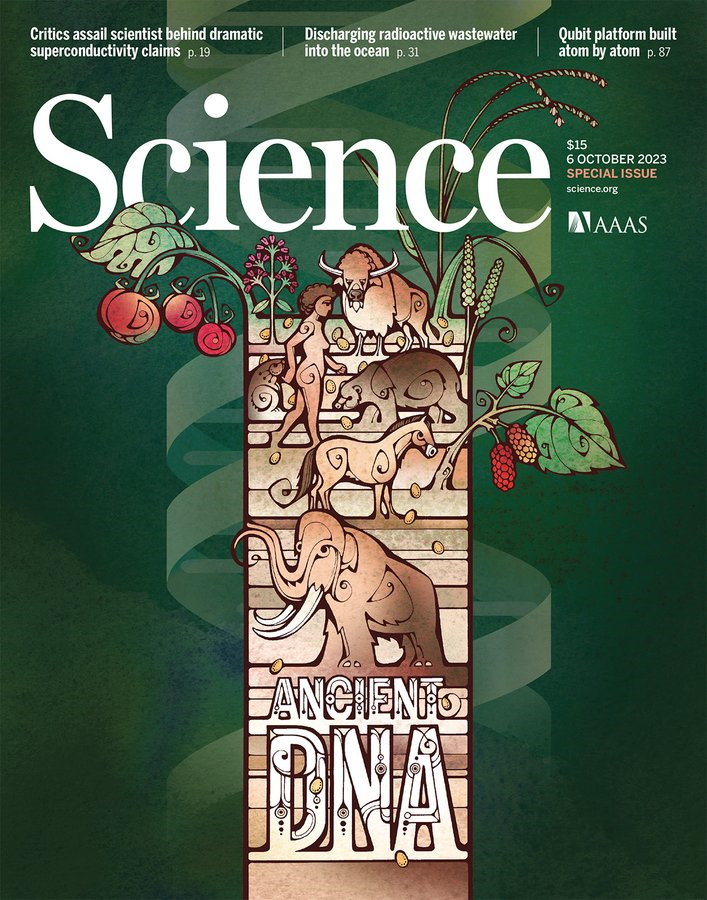
Science Magazine – October 6, 2023: The new issue features Ancient DNA; The risks of radioactive waste water release; Dating the arrival of humans in the Americas; and more…
The wastewater releas e from the Fukushima Daiichi nuclear plant is expected to have negligible effects on people and the ocean
In 2011, the east coast of Japan suffered an earthquake and tsunami that resulted in the meltdown of three of the reactors at the Fukushima Daiichi nuclear plant. This led to an uncontrolled release of large amounts of radioactive material to the surrounding land and to the Pacific Ocean.
A debate about the age of ancient footprints continues
Dating the oldest evidence for the presence of Homo sapiens in the Americas is a matter of ongoing debate. One view is that the earliest such evidence is from 16,000 to 14,000 years ago, after the Last Glacial Maximum (LGM), when people would have crossed the Beringian strait from Siberia over a dry land bridge.
New Scientist Magazine (October 7, 2023): This issue features ‘You And Your Microbiome’; How the microbiome changes our idea of what it means to be human; The best way to care for your microbiome to keep it healthy as you age; and more…



 DW Documentary






 Boomers Daily