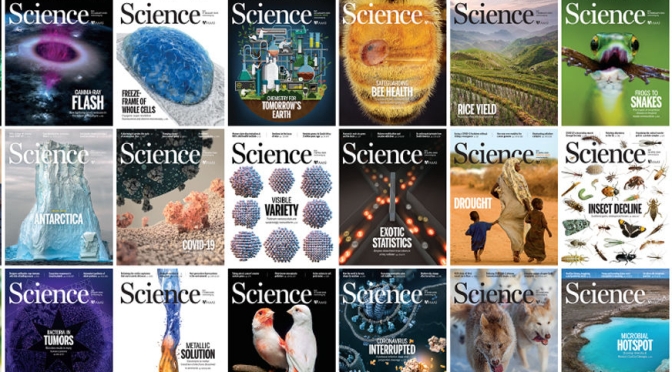
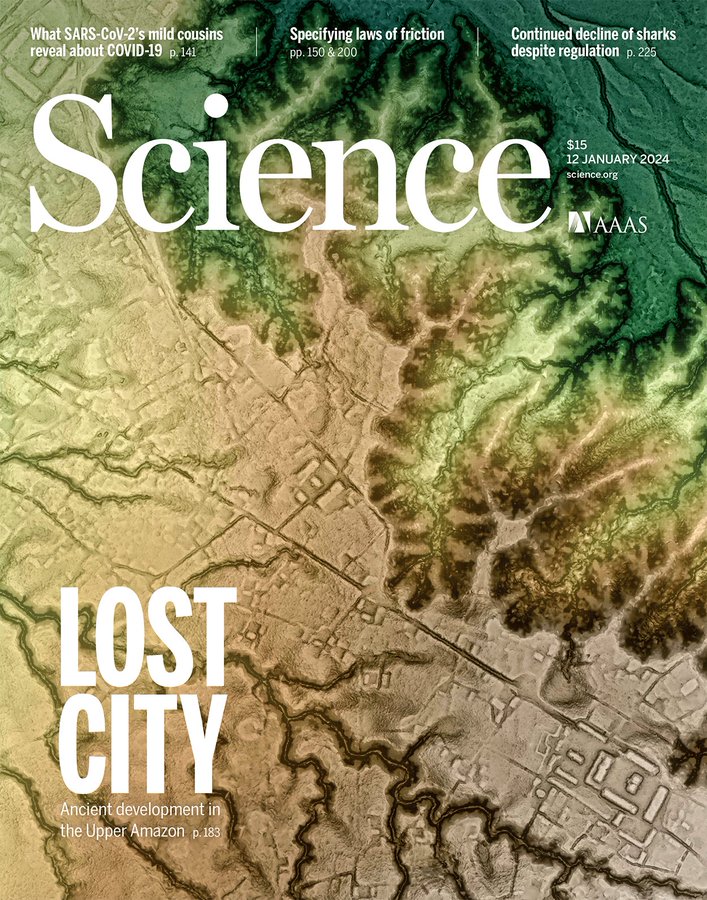
The hottest year was even hotter than expected
Greenhouse gases, El Niño, and cleaner air fueled record heat in 2023
Tectonic plate under Tibet may be splitting in two
Peeled-apart Indian Plate could be affecting earthquake hazards

Greenhouse gases, El Niño, and cleaner air fueled record heat in 2023
Peeled-apart Indian Plate could be affecting earthquake hazards
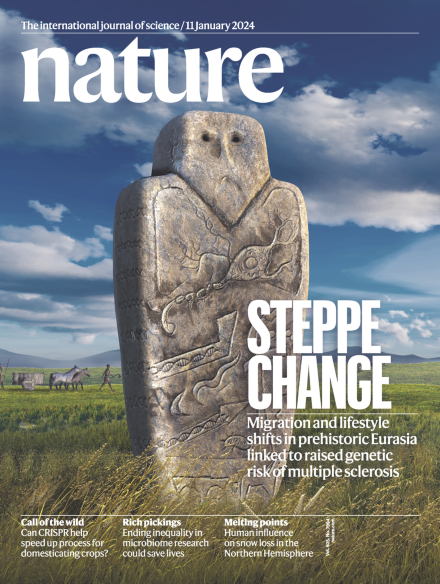

Scientists are devising ways to edit the genomes of immune cells without having to extract them from the people being treated.
A massive quake that triggered tsunamis, fires and multiple aftershocks was the largest on the country’s west coast in more than a century.
Studies of the microbes living on and in our bodies are conducted mainly in a few rich countries, squandering opportunities to improve the health of people globally.
Specific brain pathways can lower or raise the willingness of monkeys to take risks
Rethink of familiar object may boost odds that its name, offensive to some, will be changed
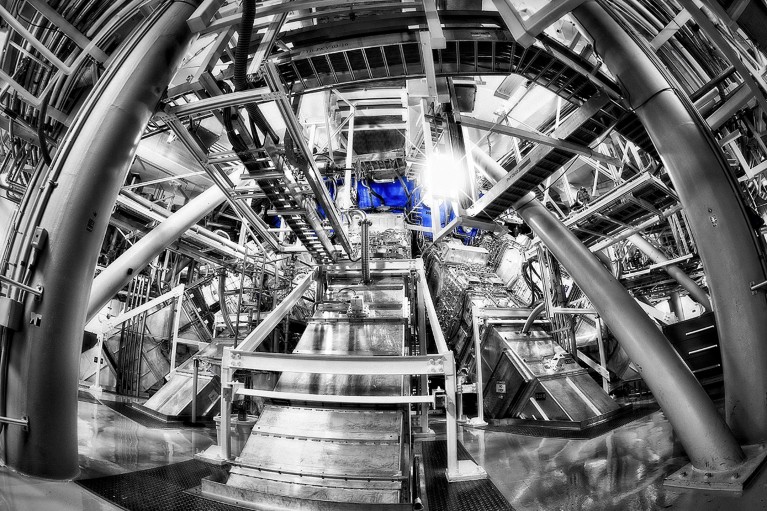
Researchers at the National Ignition Facility are consistently creating reactions that make more energy than they consume.
In December 2022, after more than a decade of effort and frustration, scientists at the US National Ignition Facility (NIF) announced that they had set a world record by producing a fusion reaction that released more energy than it consumed — a phenomenon known as ignition. They have now proved that the feat was no accident by replicating it again and again, and the administration of US President Joe Biden is looking to build on this success by establishing a trio of US research centres to help advance the science.

Large language model improves on efforts to solve combinatorics problems inspired by the card game Set.
The card game Set has long inspired mathematicians to create interesting problems.
Now, a technique based on large language models (LLMs) is showing that artificial intelligence (AI) can help mathematicians to generate new solutions.
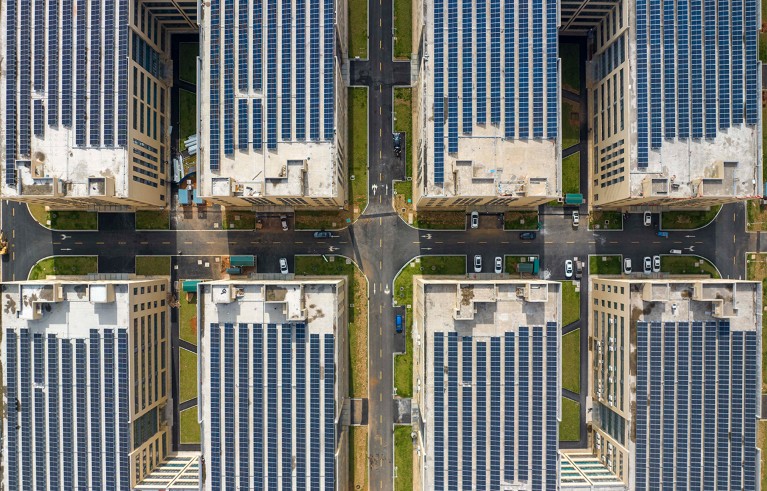
On the outskirts of Brandenburg an der Havel, Germany, nestled among car dealerships and hardware shops, sits a two-storey factory stuffed with solar-power secrets. It’s here where UK firm Oxford PV is producing commercial solar cells using perovskites: cheap, abundant photovoltaic (PV) materials that some have hailed as the future of green energy. Surrounded by unkempt grass and a weed-strewn car park, the factory is a modest cradle for such a potentially transformative technology, but the firm’s chief technology officer Chris Case is clearly in love with the place. “This is the culmination of my dreams,” he says.

Video timeline: 00:05 The Investigation of Consciousness – Our minds are constantly taking in new external information while also creating their own internal imagery and narratives. How do we distinguish reality from fantasy? This year, researchers discovered that the brain has a “reality threshold” against which it constantly evaluates processed signals. Original paper: “Subjective signal strength distinguishes reality from imagination”
04:30 Microbiomes Evolve With Us – This year, scientists provided clear evidence that the organisms in our microbiome —the collection of bacteria and other cells that live in our guts and elsewhere on our body — spread between people, especially those with whom we spend the most time. This raises the intriguing possibility that some illnesses that aren’t usually considered communicable might be.
08:43 How Life Keeps Time – The rate at which an embryo develops and the timing of when its tissues mature vary dramatically between species. What controls the ticking of this developmental clock that determines an animal’s final form? This year, a series of careful experiments suggest that mitochondria may very well serve dual roles as both the timekeeper and power source for complex cells.

A ghostly quasiparticle rooted in a century-old Italian mystery could unlock quantum computing’s potential—if only it could be pinned down
Preference for cash and privacy fears deterred bitcoin adoption in El Salvador.
Encapsulated aerogel fibers offer thermal insulation, breathability, and strength
Looking back a century reveals how much the research landscape has changed
Winds triggered by climate change sweep cold air down from the summit of Mount Everest and other Himalayan peaks, leading to a cooling trend.
The poster child for generative AI software is a startling human mimic. It represents a potential new era in research, but brings risks.

 Nature Magazine (December 15, 2023):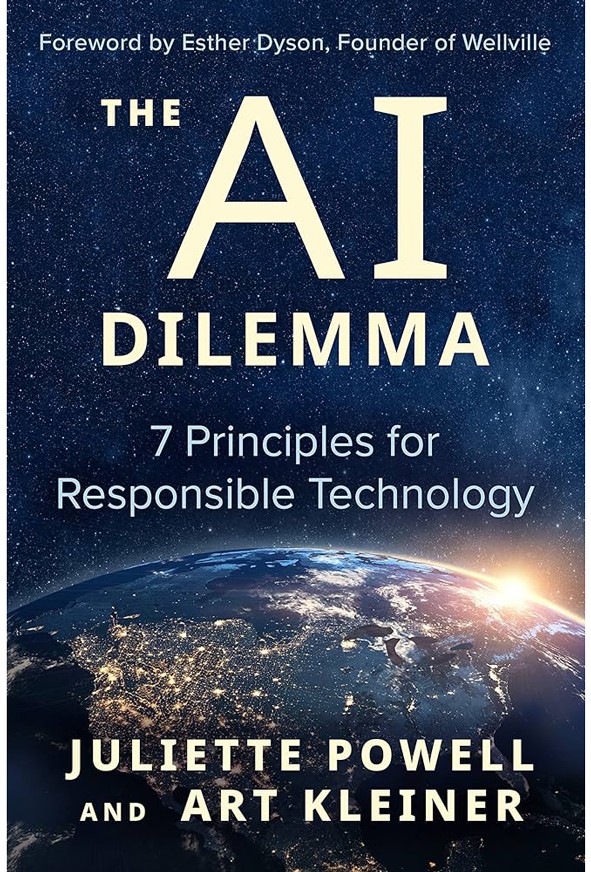
Juliette Powell & Art Kleiner Berrett-Koehler (2023)
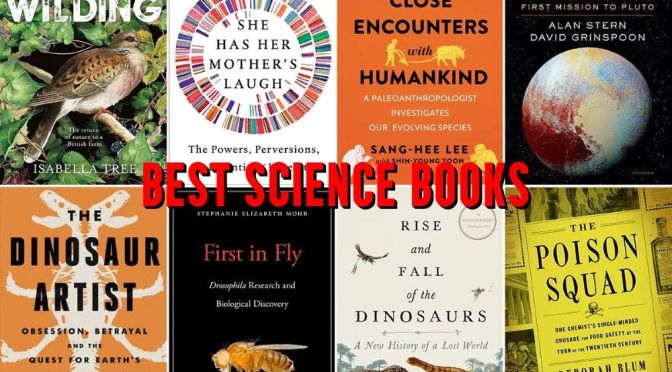
The benefits and harms of social media are intimately tied to the ongoing debate about artificial intelligence (AI). Will AI systems trained partly on social media benefit or harm humanity? In their excellent, sometimes alarming, analysis of engineering, social justice, commerce and government, entrepreneur and technologist Juliette Powell and writer and educator Art Kleiner compare humans developing AI tools to first-time parents. They recommend guiding AI systems “as we would a child towards full adulthood”.
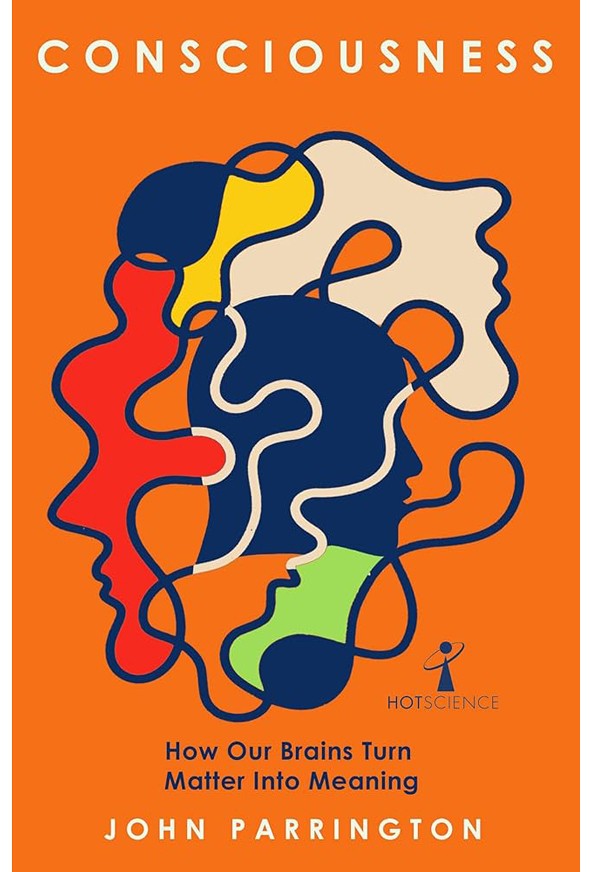
John Parrington Icon (2023)
“The material basis of human consciousness is one of the biggest unsolved issues in science,” admits cellular and molecular pharmacologist John Parrington in his pithy addition to a vast literature dating from the time of ancient Greek philosopher Aristotle. He considers many theories and proposes his own. Humans, he argues, are distinguished by conceptual thought and language, along with skills in designing tools and technologies. The evolution of these powers transformed our brains, creating meaning and consciousness.
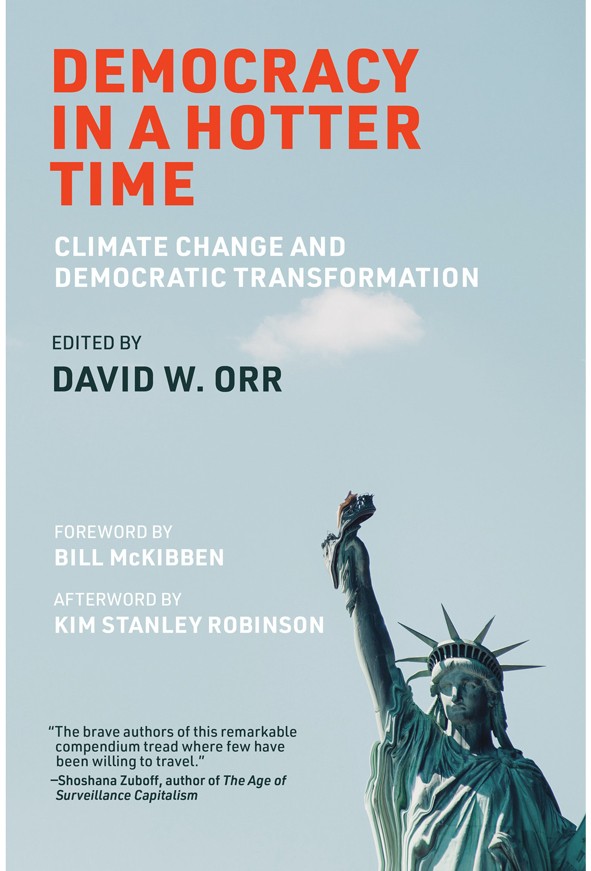
Ed. David W. Orr MIT Press (2023)
Environmentalist David Orr writes in the introduction to this timely collection that the planet faces two interlinked crises: “rapid climate change and potentially lethal threats to democracy”. The US Constitution rigorously protects private property but does not mention ecological systems, he observes. Contributors — almost all US-based — from a wide range of fields examine the need for political reform. The book is in four parts: the nature of democracy; roadblocks to change; policy and law; and education, including academic culture.
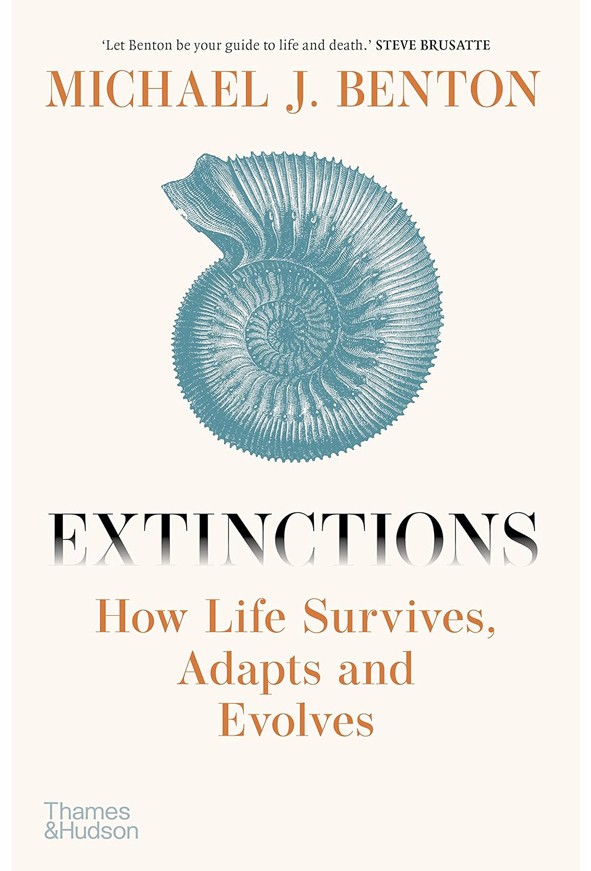
Michael J. Benton Thames & Hudson (2023)
When palaeontologist Michael Benton learnt about dinosaurs as a boy, he “loved the fact they were extinct”. They were like real science fiction. Perhaps he also intuited that their extinction permitted his existence. As his deeply informed and readable book reveals, the mass extinction at the end of the Cretaceous period 66 million years ago allowed a new cohort of creatures — including mammals — to “inherit the Earth”, as did four earlier extinction events. Living species represent less than 1% of all the species that have existed.
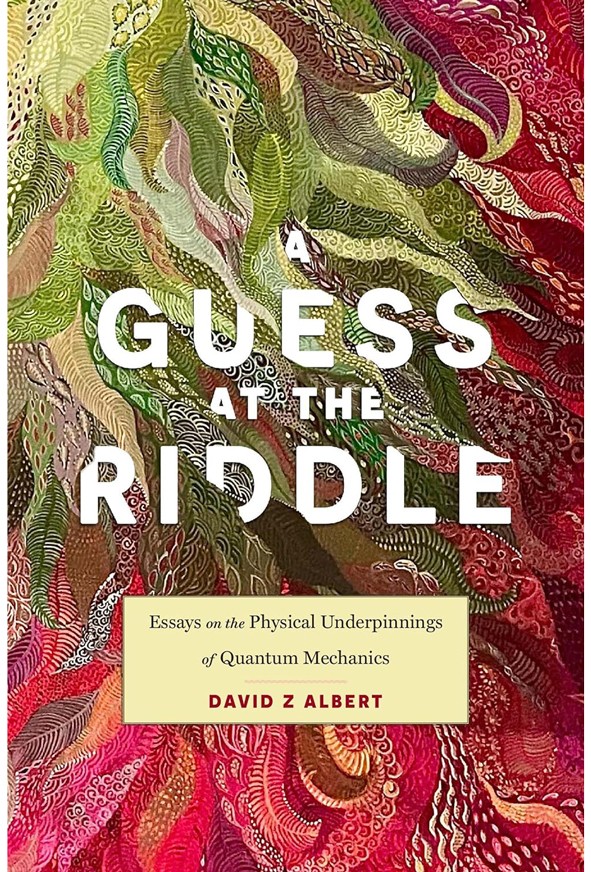
David Z. Albert Harvard Univ. Press (2023)
The physical interpretation of quantum mechanics has been a controversial riddle since the 1920s, when Niels Bohr argued that the atom’s inner workings could not be described in physical terms. Today, many philosophers and physicists disagree, but there’s no consensus on an alternative. Philosopher David Albert’s provocative book argues, in three essays, that Bohr’s quantum-measurement problem starts to make sense if the wave function is understood as the fundamental physical ‘stuff’ of the Universe.
 Boomers Daily