Category Archives: Research

Science: Enteric Viruses Spread Via Saliva, Jupiter’s Rocks, Megalodon Teeth

Enteric viruses, such as norovirus, cause a significant health burden around the world and are generally considered to only spread via the faecal-oral route.

However, new research in mice suggests that saliva may also be a route of transmission for these viruses, which the authors say could have important public health implications.

Research Article: Ghosh et al.

08:59 Research Highlights

How devouring space rocks helped Jupiter to get so big, and what analysing teeth has revealed about the diet of the extinct super-sized megalodon shark.

Research Highlight: The heavy diet that made Jupiter so big

Research Highlight: What did megalodon the mega-toothed shark eat? Anything it wanted

11:24 Making the tetraneutron

For decades there have been hints of the existence of tetraneutrons, strange systems composed of four neutrons, and now researchers may have created one in the lab. This breakthrough could tell us more about the strong nuclear force that holds matter together.

Research article: Duer et al.

News and Views: Collisions hint that four neutrons form a transient isolated entity

18:46 After Roe v. Wade

Last Friday the US supreme court struck down the constitutional right to abortion. In the wake of this ruling, Nature has been turning to research to ask what we can expect in the coming weeks and months.

News: After Roe v. Wade: US researchers warn of what’s to come

Editorial: 

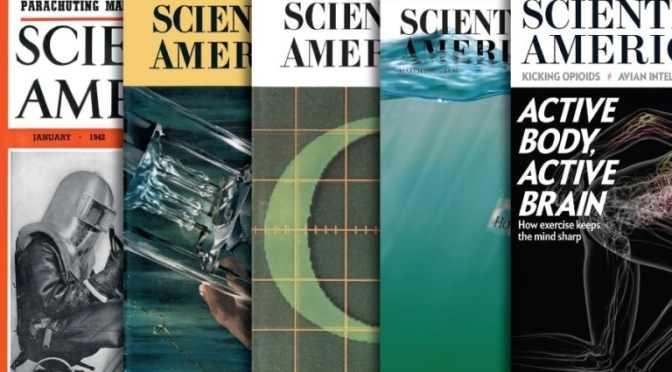
Cover Preview: Scientific American – July 2022

SPACE EXPLORATION

Record-Breaking Voyager Spacecraft Begin to Power Down

The pioneering probes are still running after nearly 45 years in space, but they will soon lose some of their instruments

By Tim Folger

EDUCATION

Subverting Climate Science in the Classroom

Oil and gas representatives influence the standards for courses and textbooks, from kindergarten to 12th grade

By Katie Worth

PSYCHOLOGY

How Parents’ Trauma Leaves Biological Traces in Children

Adverse experiences can change future generations through epigenetic pathways

By Rachel Yehuda

EVOLUTION

Toxic Slime Contributed to Earth’s Worst Mass Extinction–And It’s Making a Comeback

Global warming fueled rampant overgrowth of microbes at the end of the Permian period. Such lethal blooms may be on the rise again

By Chris Mays, Vivi Vajda and Stephen McLoughlin

COSMOLOGY

Astronomers Gear Up to Grapple with the High-Tension Cosmos

A debate over conflicting measurements of key cosmological properties is set to shape the next decade of astronomy and astrophysics

By Anil Ananthaswamy

COMPUTING

‘Momentum Computing’ Pushes Technology’s Thermodynamic Limits

Overheating is a major problem for today’s computers, but those of tomorrow might stay cool by circumventing a canonical boundary on information processing

By Philip Ball

Science: Biofuels For Planes, Biodiversity In Ecosystems, Conservation

On this week’s show: Whether biofuels for planes will become a reality, mitigating climate change by working with nature, and the second installment of our book series on the science of food and agriculture.

First this week, Science Staff Writer Robert F. Service talks with producer Meagan Cantwell about sustainable aviation fuel, a story included in Science’s special issue on climate change. Researchers have been able to develop this green gas from materials such as municipal garbage and corn stalks. Will it power air travel in the future?

Also in the special issue this week, Nathalie Seddon, a professor of biodiversity at the University of Oxford, chats with host Sarah Crespi about the value of working with nature to support the biodiversity and resilience of our ecosystems. Seddon emphasizes that nature-based solutions alone cannot stop climate change—technological approaches and behavioral changes will also need to be implemented.

Finally, we have the second installment of our series of author interviews on the science of food and agriculture. Host and science journalist Angela Saini talks to Jessica Hernandez, an Indigenous environmental scientist and author of Fresh Banana Leaves: Healing Indigenous Landscapes Through Indigenous Science. Hernandez’s book explores the failures of Western conservationism—and what we can learn about land management from Indigenous people.

This week’s episode was produced with help from Podigy.

[Image: USDA NCRS Texas; Music: Jeffrey Cook]

[alt: cows in a forest]

Authors: Meagan Cantwell; Robert Service, Sarah Crespi, Angela Saini

Cover Preview: Science Magazine – June 24, 2022

COVER: Humanity’s actions have committed us to a warming climate and limited our options for mitigation. Although there is no turning back, some paths are still open to avoid catastrophic climate change and reduce its impacts. We must act now to drastically reduce greenhouse gas emissions and change our approaches to growing food, consuming products, and managing ecosystems to avoid a dire future. See page 1392.

Illustration: Myriam Wares

Our climate future

Time to act

CAROLINE ASH

The matter of a clean energy future

JAMES MORTON TURNER

Previews: New Scientist Magazine – June 25, 2022

New Scientist Default Image

COVER STORIES

  • CULTURE Earth’s musical heritage finds an icy home next to global seed vault
  • FEATURES Personalised cancer vaccines are finally beating hard to treat tumours
  • NEWS Enormous impact flash seen lighting up Jupiter’s atmosphere

Cover Previews: Nature Magazine – June 23, 2022

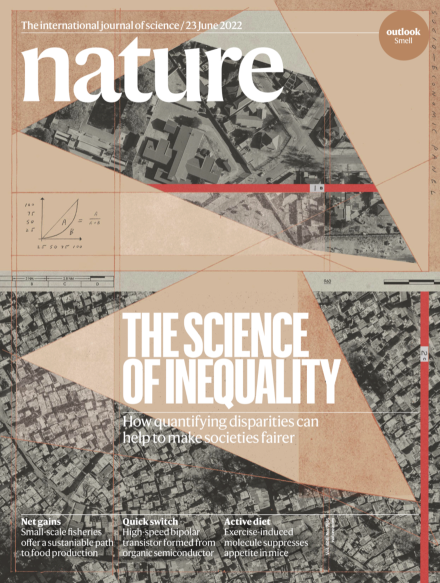
The science of inequality

To study inequality is to confront a world of contrasts: excessive wealth next to palpable poverty; sickness abutting health. The COVID pandemic has exposed and worsened many such disparities. This week, Nature presents a special collection of articles focusing on the researchers trying to quantify and reduce inequality. Whether they are measuring the effects of the pandemic or testing interventions to lift people out of poverty, the message is simple: gathering the right information will help to mitigate the harm caused by inequality.

Cover image: Mike McQuade.

Volume 606 Issue 7915

Table of Contents

  1. The science of inequality
  2. This Week
  3. News in Focus
  4. Opinion
  5. Research
  6. Amendments & Corrections
  7. Nature Outlook

Covid-19: Can A Vaccine Be Developed That Lasts?

“Roughly two and a half years into the pandemic, White House officials and health experts have reached a pivotal conclusion about Covid-19 vaccines: The current approach of offering booster shots every few months isn’t sustainable.

Though most vaccines take years to develop, the Covid shots now in use were created in record time—in a matter of months. For health authorities and a public desperate for tools to deal with the pandemic, their speedy arrival provided a huge lift, preventing hospitalizations and deaths while helping people to escape lockdowns and return to work, school and many other aspects of pre-Covid life.”

Cover Preview: Science Magazine – June 17, 2022

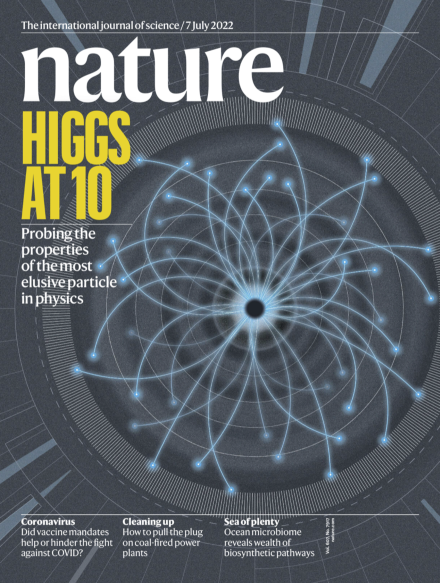
The triumph and tragedy of the Higgs boson

Ten years ago, physicists found what they predicted. Little new has followed

Ancient DNA reveals Black Death source

Graves in Kyrgyzstan hold early victims of plague that swept medieval Europe

Studies tying weather extremes to global warming gain rigor

Record-shattering events spur climate attribution advances

Previews: New Scientist Magazine – June 18, 2022

New Scientist Default Image

What is time? The mysterious essence of the fourth dimension

The nature of time is a tricky notion to pin down. But whether it is a fundamental part of our universe or just an illusion has huge implications

COVER STORIES

FEATURES Could we ever go back in time? Relativity does not rule it out

FEATURES How do we sense time? The brain cells that order our memories

Cover Preview: Nature Magazine – June 16, 2022

Volume 606 Issue 7914

Living the high life

The cover image shows plants growing at altitude on Altar Volcano in Chimborazo, Ecuador. Extreme altitudes pose challenges for most forms of life, and flowering plants are no exception. But flowering plants have been found growing as high as 6,400 metres above sea level. In this week’s issue, Michael Holdsworth and his colleagues reveal a molecular mechanism that helps plants to adapt to the extremes of altitude. The researchers studied a range of plants, representing four diverse clades of flowering plants — thale cress (Arabidopsis thaliana), tomato, poppy and the grass 

Brachypodium distachyon. They found that plants use genetic adaptations to adjust their sensitivity to atmospheric oxygen, whose partial pressure decreases with altitude. By decoding the ambient oxygen level, the plants are able to sense the altitude at which they grow and optimize internal biochemical processes.

Cover image: Cristian Miño, Ecuador.