

Taiwan has long been a U.S.-China flashpoint, but its tech and military capabilities have come into sharper focus under the Biden administration. WSJ travels to three places on the island to explain how both superpowers could determine Taiwan’s future. Photo: Wally Santana/AP
Category Archives: Military
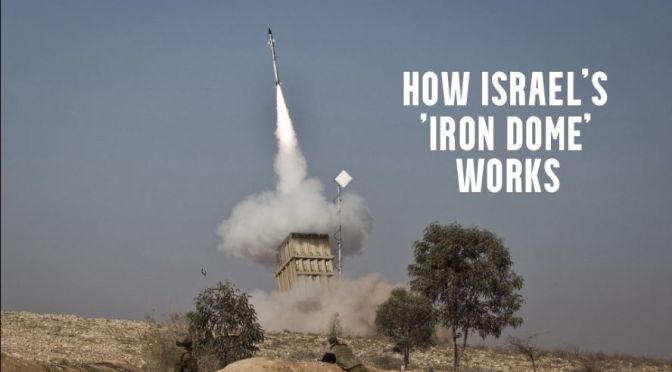
Military Analysis: How Israel’s ‘Iron Dome’ Works
Israel’s Iron Dome missile-defense system is designed to intercept and destroy short-range rockets and mortars. During the recent conflict, it has been used to destroy more than 200 rockets bound for Israeli cities. Here’s how it works. Photo: Ilia Yefimovich/Getty Images
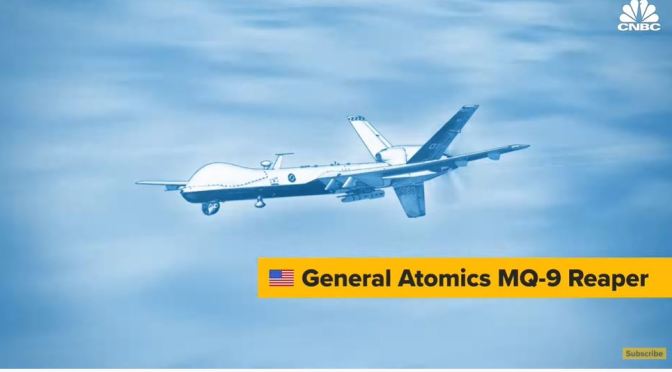
Analysis: Why Demand For Armed-Drones Is Surging
Armed drones are growing in military importance as conflicts around the world have proven the utility of these effective tools of war. Companies in China, Turkey, and Russia, among others, have developed advanced remotely piloted aircraft that can use guided weapons on and off the battlefield.
The widespread use of drones in Iraq and Afghanistan by the United States to target and kill insurgents jump started a new chapter in the history of conflict. These high flying and remotely piloted aircraft could engage targets with impunity while the operators were safely working in a ground control station. Keeping the crews out of danger also made the drones politically cheap to use over dangerous skies.
Now more and more countries are gaining this military capability for their own purposes. “At the moment, we’ve seen over 100 states worldwide using military drones and that number is growing significantly” said Wim Zwijnenburg, Project leader, Humanitarian Disarmament at PAX. “We have over 20 states that are using armed drones in conflicts or outside of armed conflicts.”
Although larger and more complex drones, like the General Atomics MQ-9 Reaper are not cheap to develop or operate, smaller drones are becoming more ubiquitous in conflict zones. Limiting the proliferation of these smaller drones, and the ability to weaponize them, is a regulatory nightmare for government agencies around the world.
“Drones are just model airplanes with great sensors on them. And all of these are dual use and have been used in the civilian realm” said Ulrike Franke, a Senior Policy Fellow at the European Council on Foreign Relations. “And in fact, drones have risen enormously in the civilian realm over the last five to 10 years. And so controlling their export is really difficult.”
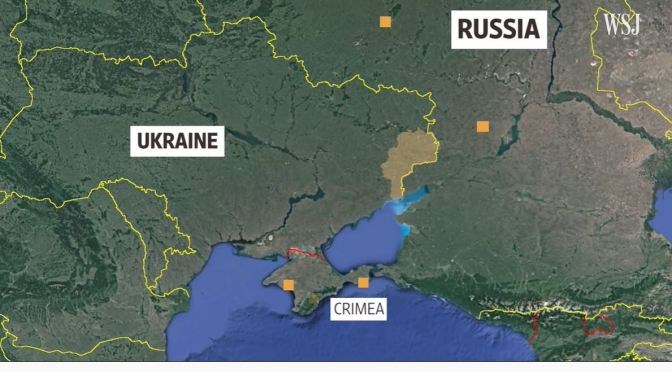
Analysis: Russia’s Military On Ukraine’s Border (WSJ)
Clashes between Ukrainian forces and Russia-backed separatists continued after Moscow’s large-scale military maneuvers at the border. WSJ’s Georgi Kantchev reports from the front line of a conflict that is seen as a test for the Biden administration. Photo: Anastasia Vlasova for The Wall Street Journal
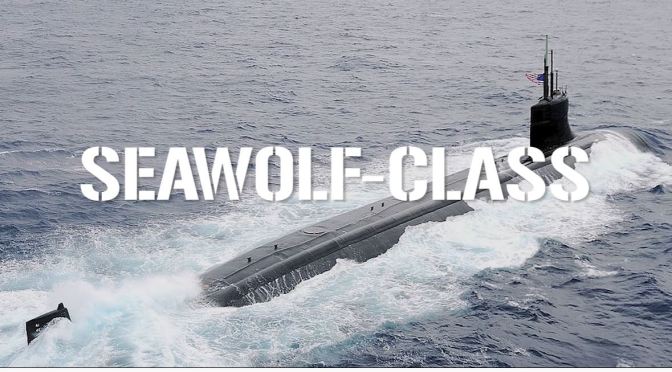
Naval Warfare: ‘Seawolf Class Submarines’ (Video)
The Seawolf class is a class of nuclear-powered fast attack submarines (SSN) in service with the United States Navy. The class was the intended successor to the Los Angeles class, and design work began in 1983. A fleet of 29 submarines was to be built over a ten-year period, but that was reduced to 12 submarines.
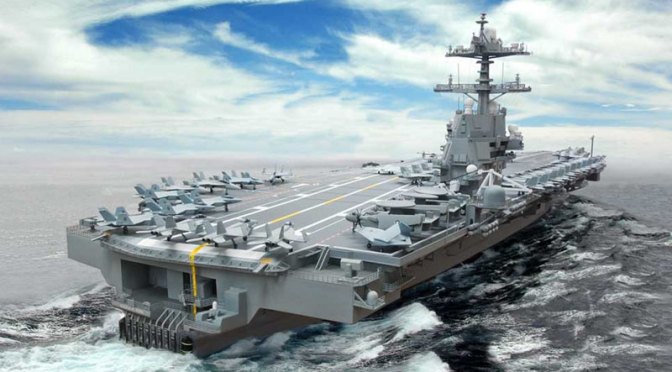
Inside Views: ‘USS Gerald R. Ford’ Aircraft Carrier
As the world’s largest aircraft carrier in the world’s dominant navy, the USS Gerald R. Ford is gargantuan. The aircraft carrier took eight years to build, several more years to test, and is large enough to tower over the biggest building in plenty of large towns. Named for the 38th President of the United States, the Gerald Ford is the lead ship of the US navy. It clocks in at over 1,000ft or nearly three American football fields in length, and nearly 250 feet high. Contained in that massive space, the aircraft carrier also has a whopping 25 decks. The massive ship, which can house over 4,500 people and carry over 75 aircraft, is powered by two nuclear reactors, and fully-loaded, weighs in at over 100,000 tonnes. That makes her the largest warship ever constructed. The total building cost is estimated at over 17 billion dollars, including 5 billion spent on research alone. After several delays it came in at 22% over the intended budget.
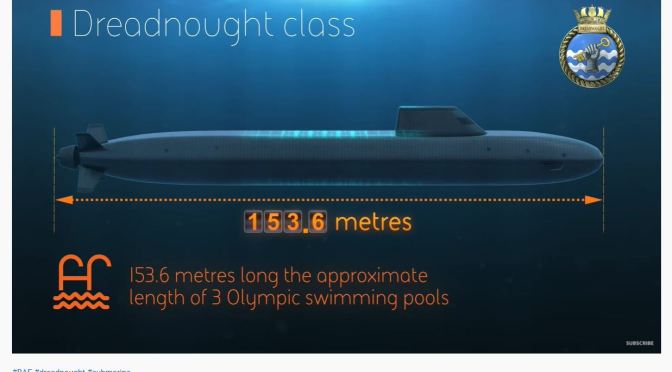
Naval Warfare: The New British ‘Dreadnought Class Submarine’ (Video)
The Dreadnought class of submarines will replace Britain’s existing fleet of Vanguards when they enter service from the early 2030s. Built by BAE and Rolls-Royce, the Dreadnought will have a payload of 16 nuclear missiles and torpedoes.
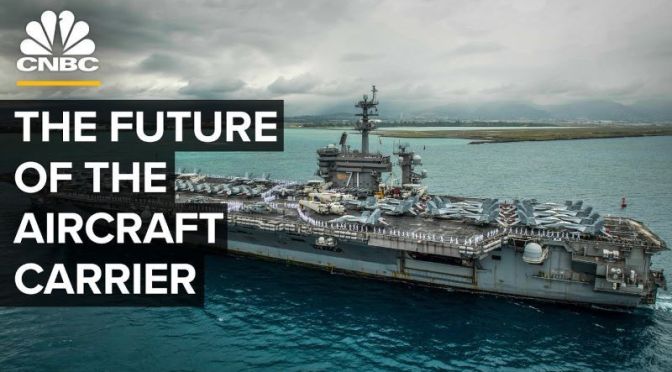
Defense: ‘Future Of The Aircraft Carrier’ (Video)
Expensive, massive and lethal, the aircraft carrier has been the cornerstone of American security for close to a century, but with advances in missile design, will it remain on top? Aircraft carriers are expensive. The latest carrier in the U.S. Navy, part of what’s called the Ford class, costs $12.8 billion per ship, and that’s before the cost of fixing new technology, aircraft flying off the deck and the cost of operating the carrier in the high seas for months at a time. The U.S. has more active aircraft carriers than every other country in the world combined. The U.S. Navy currently has ten Nimitz-class carriers, one Ford-class carrier and nine amphibious assault ships, which are smaller and focus on helicopters and short takeoff and vertical landing aircraft. A Nimitz-class carrier can carry a mix of F/A-18E/F Super Hornets, E-2D Hawkeye surveillance aircraft and an assortment of other support aircraft and helicopters. The carrier fighter of the future is the F-35C. But to field the new aircraft, most U.S. carriers will need to be upgraded.
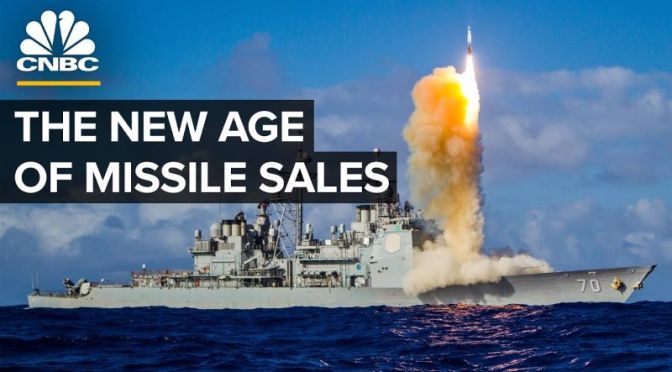
Defense Industry: How Companies Make Billions Off Missile Sales (Video)
Missile sales are the number two defense export in the U.S. and production is dominated by a handful of companies such as Raytheon, Boeing and Lockheed Martin. As technology advances, will expensive missiles and hypersonic glide weapons dominate the market, or could start-ups and cheaper technology change the missile economy?

Military Videos: ‘History Of Submarine Combat’
From silent one-man midget subs to U-boats on secret missions, both sides used secret submersibles of all shapes and sizes to conduct clandestine warfare in the war. An examination of the murky world of underwater “sneak craft” in WWII.
 Boomers Daily