Category Archives: Literature

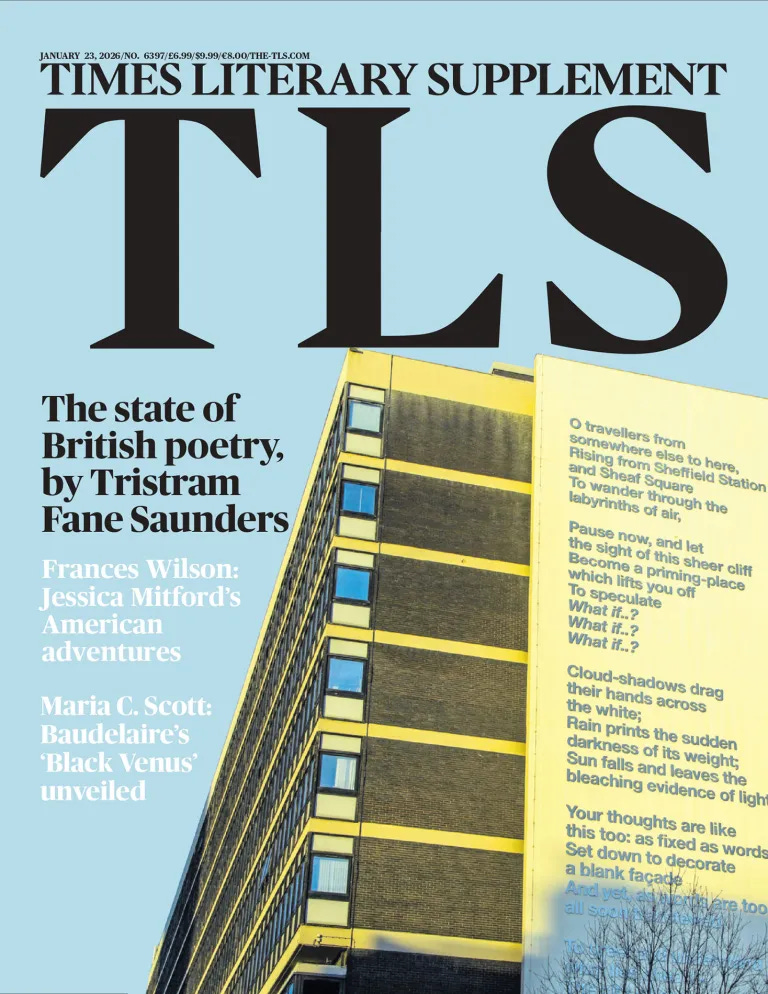
TIMES LITERARY SUPPLEMENT – JANUARY 23, 2026 PREVIEW

Fluff and puff' at the TS Eliot Prize

TIMES LITERARY SUPPLEMENT: The latest issue features ‘The state of British poetry’ by Tristram Fane Saunders…

Anon and on

The forward march of British poetry

By Tristram Fane Saunders

First class delivery?

A history of childbirth and a defence of the C-section

By Leah Hazard

Portraits of the ‘Black Venus’

Newly discovered photographs of Baudelaire’s muse

By Maria C. Scott

Fathoms deep

The thrill of marine archaeology

By Alan Jenkins

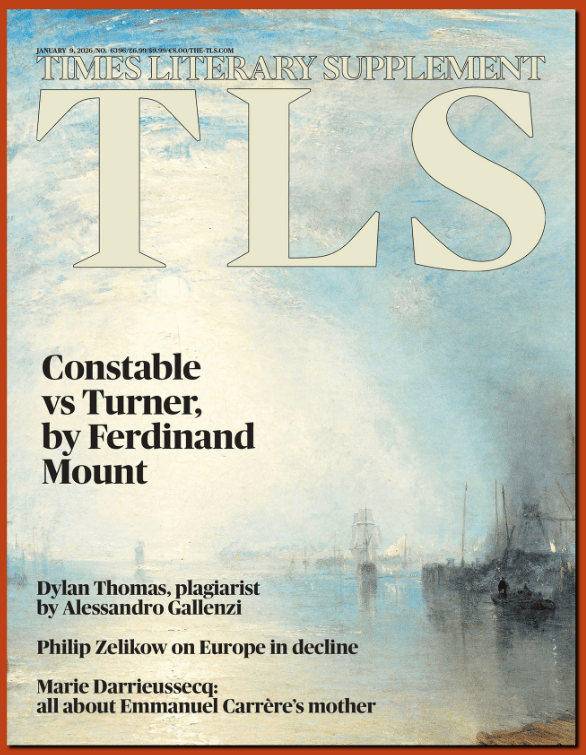
TIMES LITERARY SUPPLEMENT – JANUARY 9, 2026 PREVIEW

TIMES LITERARY SUPPLEMENT: The latest issue features ‘Constable vs Turner’ by Ferdinand Mount….

As unalike as ever

Turner is on our banknotes, Constable in our hearts By Ferdinand Mount

Coming out of Tate Britain just before noon on Budget Day, you are blinded by a blistering white sun behind Vauxhall Cross. The steepling glass towers south of the river are washed in an opal mist, the ziggurats of the MI6 HQ eclipsed to a ruined beige. Vauxhall Bridge gleams in the scarlet and yellow of a Turner sunset. J. M. W. would have rushed to the Embankment, whipped out his sketchbook, then worked up the whole shimmering scene into a six-footer and called it something like “The End of England”. John Constable would probably have turned away to catch the next coach to Hampstead Heath to paint Branch Hill Pond again.

‘One day, they’ll find me out’

How the young Dylan Thomas repeatedly stole from others By Alessandro Gallenzi

Mother was always right

A love-hate relationship recalled by France’s ‘greatest living writer’ By Marie Darrieussecq

The notebook fallacy

Why stylish stationery won’t change your life By Ian Sansom

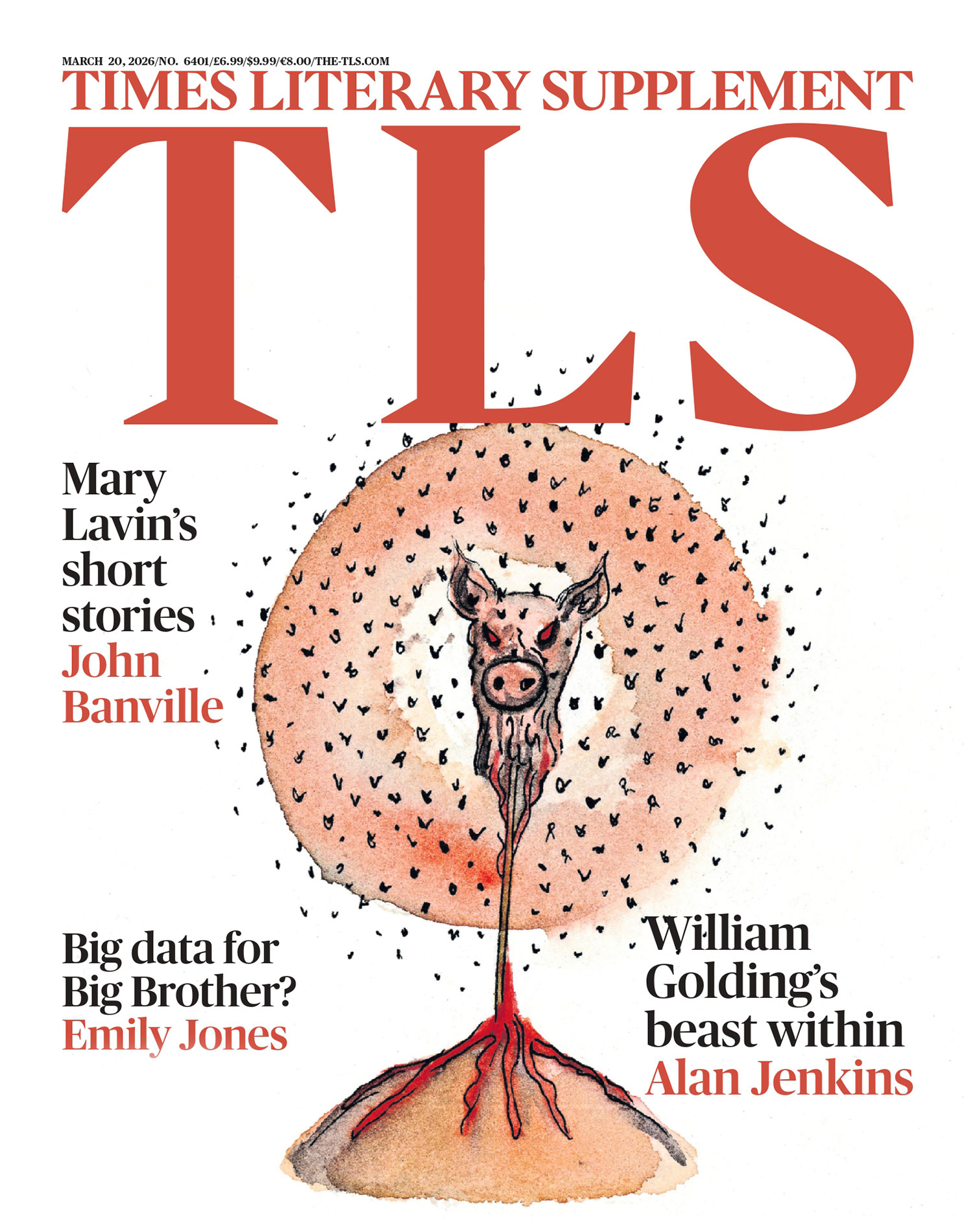
TIMES LITERARY SUPPLEMENT – DECEMBER 12, 2025

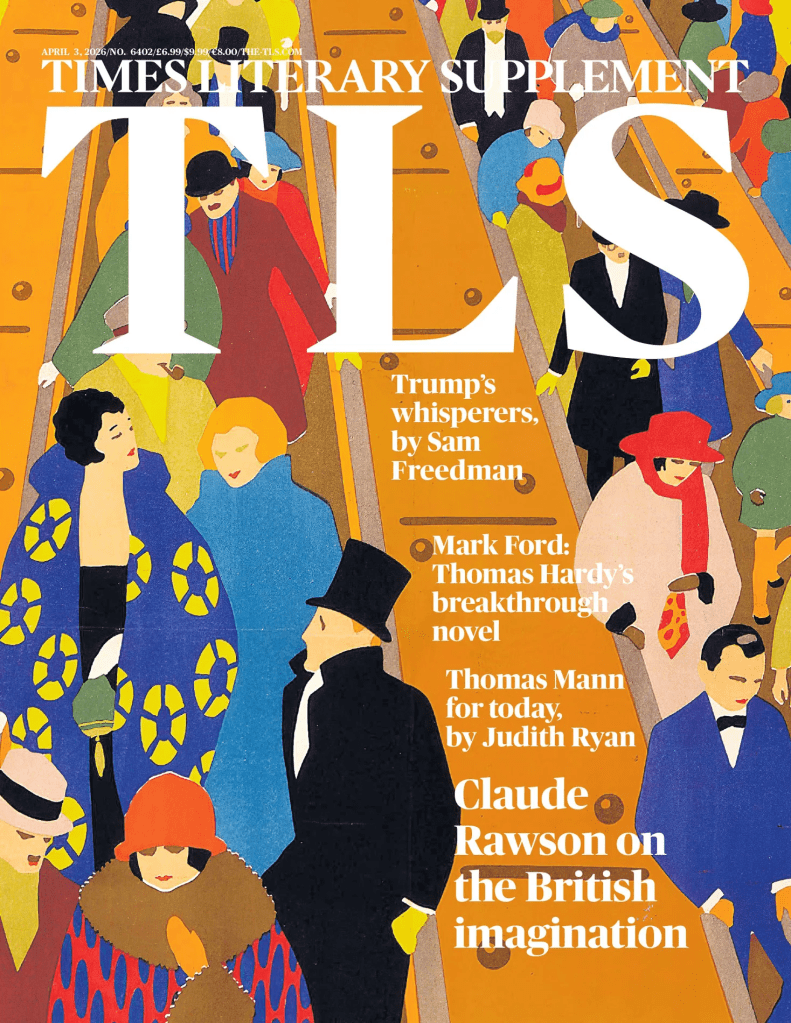
The TLS front page from the issue dated . Issue number

TIMES LITERARY SUPPLEMENT: The latest issue features ‘A Snail’s Tale – An unpublished story by Sylvia Townsend Warner…

Prince of the printed word

Tactful notes from a literary self-promoter By Nicola Shulman

Object of attention

Marking the 250th anniversary of Jane Austen’s birth By Devoney Looser

Wise fools

Irritating professors for the ages By Peter Thonemann

The Pursuit and the End

An unpublished story by Sylvia Townsend Warner, with a commentary by Peter Swaab By Sylvia Townsend Warner

TIMES LITERARY SUPPLEMENT – NOVEMBER 14, 2025

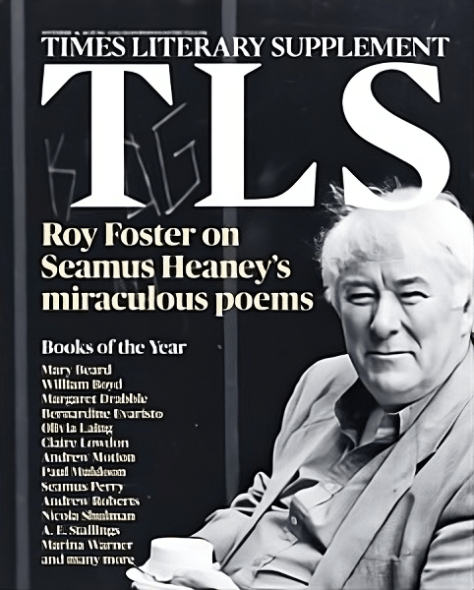
TIMES LITERARY SUPPLEMENT: The latest issue features ‘Roy Foster on Seamus Heaney’s miraculous poems.

Blazing graft

Charting Seamus Heaney’s Wordsworthian journey By Roy Foster

What the public wants?

Writing novels by AI – and committee By Gordon Fraser

Books of the Year 2025

Our contributors choose their favourites

Touching the void

Simone Weil’s ethical life class By A. Rebecca Rozelle-Stone

TIMES LITERARY SUPPLEMENT – OCTOBER 31, 2025 PREVIEW

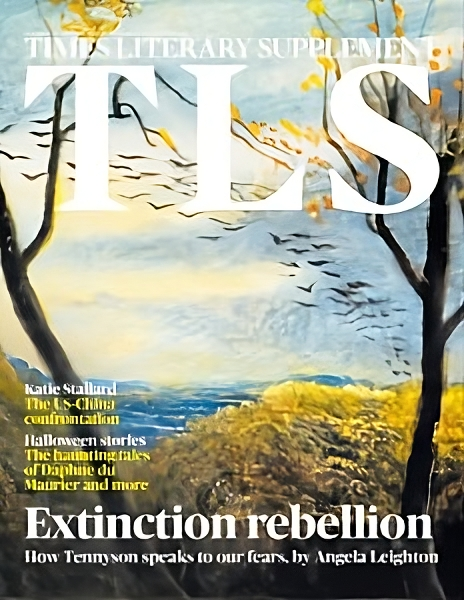
TIMES LITERARY SUPPLEMENT: The latest issue features ‘Extinction rebellion’ – How Tennyson speaks to our fears.

Collision course

The troubled history of US-China relations By Katie Stallard

Playing a game to tell the truth

Iris Murdoch’s unseen poetry, transcribed for the first time By Miles Leeson

The Kraken wakes

Tennyson’s embrace of science and catastrophe theory By Angela Leighton

Winter is coming!

Tales of the uncanny from a master of ambiguity By Joyce Carol Oates

TIMES LITERARY SUPPLEMENT – OCTOBER 17, 2025 PREVIEW

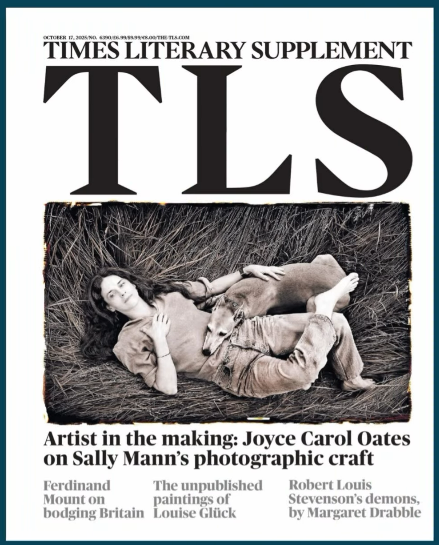
TIMES LITERARY SUPPLEMENT: The latest issue features ‘Artist in the making: Joyce Carol Oates on Sally Mann’s photographic craft’

Peer group

The British upper classes today By Michael Hall

Uniquely hers

A how-to book by ‘one of the greatest’ American photographers’ By Joyce Carol Oates

Master of the apocalypse

László Krasznahorkai, Nobel laureate in literature By George Szirtes

Thoroughly modern maenads

Religion, immigration, gender politics and severed heads By Mary Beard

The London Magazine – October/November 2025

THE LONDON MAGAZINE (April 2, 2025): The latest issue features…. 

Essay | The Aesthetic Life by Zsófia Paulikovics

Essays

‘Several broadly millennial acquaintances confess that reading the book made them feel a sort of sickening recognition.’

Essay | No Designated Venue: An Oral History of London’s Music and Poetry Scenes

Yasmina Snyder spoke to writers, poets, musicians and event organisers based in London about the connections between live music and poetry, and the spaces that host them.

Essay | Why Magazines Fail by Tristram Fane Saunders

‘There’s big trouble in the world of little magazines. In the last two years, an alarming number have vanished into that second-hand bookshop in the sky. Each leaves the world a little quieter, a little poorer.’

TIMES LITERARY SUPPLEMENT – OCTOBER 3, 2025 PREVIEW

TIMES LITERARY SUPPLEMENT: The latest issue features ‘Sylvia Plath’s Ariel at sixty; The case against progress; Patricial Lockwood’s bag of scraps…

Lioness of God    

The sixtieth anniversary ‘heritage’ edition of Ariel By Seamus Perry

The Puritan reflex

Thomas Pynchon’s haunted vision of history By James Marcus

A dashed clever fellow

The wisdom of Bertie Wooster By Tim Lake

Printed by herself

The precocious poetry of Charlotte Brontë By Samantha Ellis

HOWL AND HUSH

Jack London and Ernest Hemingway meet in a speculative broadcast, sparring over wolves, wounds, and the fragile myths of survival.

By Michael Cummins, Editor, September 28, 2025

In a virtual cabin where the fire crackles on loop and wolves pace behind the glass, London and Hemingway return as spectral combatants. One howls for the wild, the other hushes in stoic silence. Between them, an AI referee calls the fight—and reveals why, in an age of comfort and therapy, we still burn for their myths of grit, grace, and flame.

The lights dim, the crowd hushes, and Howard McKay’s voice rises like a thunderclap from another century. He is no man, not anymore, but an aggregate conjured from the cadences of Cosell and Jim McKay, the echo of every broadcast booth where triumph and ruin became myth. His baritone pours into the virtual cabin like an anthem: “From the frozen Yukon to the burning Gulf Stream, from the howl of the wolf to the silence of the stoic, welcome to the Wild World of Men. Tonight: Jack London and Ernest Hemingway. Two titans of grit. One ring. No judges but history.”

The myths of rugged manhood were supposed to have thawed long ago. We live in an age of ergonomic chairs, curated therapy sessions, artisanal vulnerability. Masculinity is more likely to be measured in softness than in stoicism. And yet the old archetypes remain—grinning, wounded, frostbitten—appearing on gym walls, in startup manifestos, and in the quiet panic of men who don’t know whether to cry or conquer. We binge survival shows while sipping flat whites. We stock emergency kits in suburban basements. The question is not whether these myths are outdated, but why they still haunt us.

Jack London and Ernest Hemingway didn’t invent masculinity, but they branded its extremes. One offered the wolf, the sled, the primordial howl of instinct. The other offered silence, style, the code of the wounded stoic. Their ghosts don’t just linger in literature; they wander through the way men still imagine themselves when no one is watching. So tonight, in a cabin that never was, we summon them.

The cabin is an elaborate fiction. The fire crackles, though the sound is piped in, a looped recording of combustion. The frost on the window is a pixelated map of cold, jagged if you stare too long. Wolves pace beyond the glass, their movements looping like a highlight reel—menace calculated for metaphor. This is not the Yukon but its simulacrum: ordeal rendered uncanny, broadcast for ratings. McKay, too, belongs to this stagecraft. He is the voice of mediated truth, a referee presiding over existential dread as if it were the third round of a heavyweight bout.

London arrives first in the firelight, massive, broad-shouldered, his beard glistening as though it remembers brine. He smells of seal oil and smoke, authenticity made flesh. Opposite him sits Hemingway, compressed as a spring, scars arranged like punctuation, his flask gleaming like a ritual prop. His silences weigh more than his words. McKay spreads his hands like a referee introducing corners: “London in the red—frostbitten, fire-eyed. Hemingway in the blue—scarred, stoic, silent. Gentlemen, touch gloves.”

Civilization, London growls, is only veneer: banks, laws, manners, brittle as lake ice. “He had been suddenly jerked from the heart of civilization and flung into the heart of things primordial,” he says of Buck, but it is himself he is describing. The Yukon stripped him bare and revealed survival as the only measure. Hemingway shakes his head and counters. Santiago remains his emblem: “A man can be destroyed but not defeated.” Survival, he argues, is not enough. Without grace, it is savagery. London insists dignity freezes in snow. Hemingway replies that when the body fails, dignity is all that remains. One howls, the other whispers. McKay calls it like a split decision: London, Nietzsche’s Overman; Hemingway, the Stoic, enduring under pressure.

The fire cracks again, and they move to suffering. London’s voice rises with the memory of scurvy and starvation. “There is an ecstasy that marks the summit of life, and beyond which life cannot rise.” Agony, he insists, is tuition—the price for truth. White Fang was “a silent fury who no torment could tame,” and so was he, gnawing bacon rinds until salt became torment, watching his gums bleed while his notebook filled with sketches of men and dogs broken by cold. Pain, he declares, is refinement.

Hemingway will not romanticize it. Fossalta remains his scar. He was nineteen, a mortar shell ripping the night, carrying a wounded man until his own legs gave out. “I thought about not screaming,” he says. That, to him, is suffering: not the ecstasy London names, but the composure that denies agony the satisfaction of spectacle. Santiago’s wasted hands, Harry Morgan’s quiet death—pain is humility. London exults in torment as crucible; Hemingway pares it to silence. McKay leans into the mic: “Suffering for London is capital, compounding into strength. For Hemingway, it’s currency, spent only with composure.”

Violence follows like a body blow. For London, it is honesty. The fang and the club, the law of the trail. “The Wild still lingered in him and the wolf in him merely slept,” he reminds us, violence always waiting beneath the surface. He admired its clarity—whether in a sled dog’s fight or the brutal marketplace of scarcity. For Hemingway, violence is inevitable but sterile. The bull dies, the soldier bleeds, but mortality is the only victor. The bullfight—the faena—is ritualized tragedy, chaos given rules so futility can be endured. “One man alone ain’t got no bloody chance,” Harry Morgan mutters, and Hemingway nods. London insists that without violence, no test; without test, no truth. Hemingway counters that without style, violence is only noise.

Heroism, too, divides the ring. London points to Buck’s transformation into the Ghost Dog, to the pack’s submission. Heroism is external dominance, myth fulfilled. Hemingway counters with Santiago, who returned with bones. Heroism lies not in conquest but in fidelity to one’s own code, even when mocked by the world. London scoffs at futility; Hemingway scoffs at triumph that cheats. McKay narrates like a replay analyst: London’s hero as Ozymandias, monument of strength; Hemingway’s as Sisyphus, monument of effort. Both doomed, both enduring.

McKay breaks in with the cadence of a mid-bout analyst: “London, born in Oakland, forged in the Yukon. Fighting weight: one-ninety of raw instinct. Signature move: The Howl—unleashed when civilization cracks. Hemingway, born in Oak Park, baptized in war. Fighting weight: one-seventy-five of compressed silence. Signature move: The Shrug—delivered with a short sentence and a long stare. One man believes the test reveals the truth. The other believes the truth is how you carry the test. And somewhere in the middle, the rest of us are just trying to walk through the storm without losing our flame.”

Biography intrudes on myth. London, the socialist who exalted lone struggle, remains a paradox. His wolf-pack collectivism warped into rugged individualism. The Yukon’s price of entry was a thousand pounds of gear and a capacity for starvation—a harsh democracy of suffering. Hemingway, by contrast, constructed his trials in realms inaccessible to most men. His code demanded a form of leisure-class heroism—the freedom to travel to Pamplona, to chase big game, to transform emotional restraint into a portable lifestyle. London’s grit was born of necessity; Hemingway’s was an aesthetic choice, available to the wealthy. Even their sentences are stances: London’s gallop like sled dogs, breathless and raw; Hemingway’s stripped to the bone, words like punches, silences like cuts. His iceberg theory—seven-eighths submerged—offered immense literary power, but it bequeathed a social script of withholding. The silence that worked on the page became a crushing weight in the home. McKay, ever the showman, raises his arms: “Form is function! Brawn against compression! Howl against hush!”

Then, with the shameless flourish of any broadcast, comes the sponsor: “Tonight’s bout of the Wild World of Men is brought to you by Ironclad Whiskey—the only bourbon aged in barrels carved from frozen wolf dens and sealed with Hemingway’s regrets. Not for sipping, for surviving. With notes of gunpowder, pine smoke, and frostbitten resolve, it’s the drink of men who’ve stared down the void and asked it to dance. Whether you’re wrestling sled dogs or your own emotional repression, Ironclad goes down like a fist and finishes like a scar. Distilled for the man who doesn’t flinch.” The fire hisses as if in applause.

Flashbacks play like highlight reels. London chewing frozen bacon rinds, scribbling by the dim flare of tallow, every line of hunger an autobiography. Hemingway at Fossalta, nineteen, bleeding into dirt, whispering only to himself: don’t scream. Even the piped-in fire seems to know when to hold its breath.

Their legacies wander far beyond the cabin. Krakauer’s Chris McCandless chased London’s frozen dream but lacked his brutal competence. His death in a bus became the final footnote to To Build a Fire: will alone does not bargain with minus sixty. Hollywood staged The Revenant as ordeal packaged for awards. Reality shows manufacture hardship in neat arcs. Silicon Valley borrows their vocabulary—“grit,” “endurance,” “failing forward”—as if quarterly sprints were marlin battles or Yukon trails. These echoes are currency, but counterfeit.

McKay drops his voice into a near whisper. “But what of the men who don’t fit? The ones who cry without conquest, who break without burning, who survive by asking for help?” London stares into looped frost; Hemingway swirls his glass. Their silence is not absence but tension, the ghosts of men unable to imagine another myth.

The danger of their visions lingers. London’s wolf, applied carelessly, becomes cruelty mistaken for competence, capitalism as fang and claw. Hemingway’s stoic, misused, becomes toxic silence, men drowning in bottles or bullets. One myth denies compassion; the other denies expression. Both are powerful; both exact a cost.

And yet, McKay insists, both are still needed. London growls that the man who forgets the wolf perishes when the cold comes. Hemingway replies that the man who forgets dignity perishes even if he survives. The fire glows brighter, though its crackle is only a recording. London’s flame is a blast furnace, demanding constant fuel. Hemingway’s is a controlled burn, illuminating only if tended with restraint. Both flames are fragile, both exhausting.

The wolves fade to shadow. The storm eases. The fire loops, oblivious. McKay lowers his voice into elegy, his cadence a final sign-off: “Man is nothing, and yet man is flame. That flame may be survival or silence, howl or whisper. But it remains the work of a lifetime to tend.”

The cabin collapses into pixels. The wolves vanish. The storm subsides. The fire dies without ash. Only the coals of myth remain, glowing faintly. And somewhere—in a quiet room, in a frozen pass—another man wonders which flame to keep alive.

The myths don’t just shape men; they shape nations. They echo in campaign slogans, locker-room speeches, the quiet panic of fathers trying to teach strength without cruelty. Even machines, trained on our stories, inherit their contours. The algorithm learns to howl or to hush. And so the question remains—not just which flame to tend, but how to pass it on without burning the next hand that holds it.

THIS ESSAY WAS WRITTEN AND EDITED UTILIZING AI

DO I WAKE OR SLEEP?

A Speculative Morning with Keats

By Michael Cummins, Editor, September 25, 2025

“As if I were dissolving.” — John Keats, letter to his brother George, April 1819

In Hampstead, on a spring morning in 1819, John Keats sat beneath a plum tree and wrote “Ode to a Nightingale.” This is how the lines may have come to him—half vision, half dissolution.

Brown clatters a cup somewhere inside. The sound is an unwelcome punctuation mark on the morning’s silence, a reminder of the relentless normalcy of domestic life. The room has felt too narrow for breath, not just for my ailing lungs, but for the grief that keeps the curtains drawn. Barely six months since my brother Tom slipped away, the house still smells faintly of smoke, paper, and the sweet-sick residue of medicine. His absence hangs in the air. That weight has driven me to the grass, away from the claustrophobia of the sickroom.

The garden receives me. The grass is damp, pressing cool blades into my palms. Light filters through the plum tree leaves, breaking into fragments on the soil. The blossoms drift like a quiet snowfall, powdering my sleeve with pale dust as if testing whether the body still belongs to earth. Beyond the hedge, a cart rattles, a dog barks, a bell tolls faintly from Hampstead. Life continues its tedious bookkeeping. But here, there is only the hush before song.

Brown’s footsteps echo faintly, a rhythm too human for the stillness I crave. Even his voice, when it rises in greeting, feels like a tether to the mundane. I do not resent him; I envy his ease with the world. He pours tea, hums to himself, and carries on. I am fixed under the plum tree, waiting for something less ordinary to speak.

And then the nightingale begins. The sound is not a tune but a force: poured, unbroken, radically unselfconscious. It arrives without the stutter of human intention, as if the bird is nothing but the channel of its own liquid note. The song alters the air. I feel it in the chest before I write a word. I steady my paper, and the ink pools like shadow, metallic and alive. It smells of iron and inevitability. Each stroke is a pulse, each word a breath I cannot take.

My heart aches, and a drowsy numbness pains
My sense, as though of hemlock I had drunk,

The line comes of its own accord. The ache is not complaint but aperture. Pain is the friction that opens the door. Numbness clears the chatter of reason. The poem begins in crisis, a shock both physical and metaphysical.

Or emptied some dull opiate to the drains
One minute past, and Lethe-wards had sunk:

Lethe does not erase; it suspends. In its waters, memory floats unmoored, waiting for a name. Tom is gone, ferried by the same current. His silence hovers in the ink. Yet the river here is not despair but narcotic kindness, a place where debts and illness dissolve into rhythm. I do not summon the myth; it summons me. Byron writes like a storm—quick, unrelenting. I write like a wound: slow, deliberate, pulsing. And yet today the hand runs faster, driven by the bird’s current.

’Tis not through envy of thy happy lot,
But being too happy in thine happiness,—

I do not covet. I am saturated. The bird’s happiness is no possession but a weather spilling into the morning. I am not resentful; I am simply overflowed. The pen scratches faster when I abandon self-pity and admit the sheer fact of joy.

That thou, light-winged Dryad of the trees,
In some melodious plot

The Dryad arrives without strain. Myth is not invention but recognition. The bird’s song is timeless, deserving of a classical name.

Of beechen green, and shadows numberless,
Singest of summer in full-throated ease.

Ease—I do not have it. My lungs constrict, my chest rasps, nights punctuated by the cough that writes mortality into every breath. Yet I put the phrase down because the bird teaches it. A line must do what it says: open, breathe, pour.

The song intoxicates more than wine. My lips are dry, yet the body reels as though stained purple at the mouth.

O for a draught of vintage! that hath been
Cool’d a long age in the deep-delved earth,

The cellar rises: cool, stony, damp. This is no ornament but a transcription of sensation.

Tasting of Flora and the country green,
Dance, and Provençal song, and sunburnt mirth!

I have never seen Provence, but the imagination persuades me otherwise. The song conjures the vineyard. These sensations are not decoration; they are human joy remembered in the body.

O for a beaker full of the warm South,
Full of the true, the blushful Hippocrene,

The beaker is not a vessel but the bird itself, brimming with myth. Hippocrene flows because the song requires its name.

With beaded bubbles winking at the brim,
And purple-stained mouth;

To drink is to be marked. The mouth is stained because it has been altered. Poetry demands transformation; ecstasy must leave a trace.

But intoxication fades. What remains is grief.

Fade far away, dissolve, and quite forget
What thou among the leaves hast never known,

The bird is blessed in its ignorance. It does not know poverty. It does not know longing. It does not know the ache of an empty chair.

Tom once sat beneath this tree, sketching the shape of a bird in flight. He said silence was the soul’s canvas. Now that silence is heavier, less blank, more bruised. His face—thin as paper—rises when I write “youth grows pale.” The ode becomes his memorial as much as mine.

The weariness, the fever, and the fret
Here, where men sit and hear each other groan;

The line steadies itself on blunt fact. Tom. Debt. The cough. No flourish can soften them.

Where palsy shakes a few, sad, last grey hairs,
Where youth grows pale, and spectre-thin, and dies;

He is there again, spectre-thin, his breath shallow. The cadence is the only mercy.

Where but to think is to be full of sorrow
And leaden-eyed despairs,

Thought itself betrays when it offers no hope forward. To write is to wrestle despair into cadence.

I call for wings—not Bacchus’s painted team but the invisible kind I know.

Away! away! for I will fly to thee,
Not charioted by Bacchus and his pards,

Wine is a lie. Fancy, too. Only poesy can lift.

But on the viewless wings of Poesy,
Though the dull brain perplexes and retards:

The brain resists, heavy, skeptical. Poesy ignores resistance. The moment I write “Away!” I am gone.

Already with thee! tender is the night,
And haply the Queen-Moon is on her throne,

Daylight floods Hampstead, yet the moon rises on the page. The imagination enthrones her, and that suffices.

Cluster’d around by all her starry Fays;
But here there is no light,

Contradiction is permitted. This is Negative Capability as I once named it: to remain “in uncertainties, Mysteries, doubts, without any irritable reaching after fact and reason.” The ode does not solve; it dwells.

Death arrives then, companionable, not hostile.

Now more than ever seems it rich to die,
To cease upon the midnight with no pain,

“Rich”—the word startles, but I keep it. Death here is plenitude, not theft.

While thou art pouring forth thy soul abroad
In such an ecstasy!

The bird pours, my ribs echo. Death feels like completion.

Still wouldst thou sing, and I have ears in vain—
To thy high requiem become a sod.

Yet honesty must break the dream: if I am earth, I cannot hear. Even rapture admits silence.

The song itself, though, is older than me, older than kings.

Thou wast not born for death, immortal Bird!
No hungry generations tramp thee down;

Mortality is mine, not yours. Your song belongs to recurrence.

The voice I hear this passing night was heard
In ancient days by emperor and clown:

Emperors and clowns alike have bent their ears. Beauty makes no distinction.

Perhaps the self-same song that found a path
Through the sad heart of Ruth, when, sick for home,

The “perhaps” is everything. Certainty would bruise compassion.

I think, too, of Fanny Brawne. Her presence lingers behind the lines, as urgent as my cough. She is near, but a partition stands—of health, of propriety, of fate itself. To love her is to ache for what cannot be promised. The bird’s song is boundless, but my breath is measured. Desire sharpens sorrow into necessity.

The garden dissolves. Casements open in the skull.

Charm’d magic casements, opening on the foam
Of perilous seas, in faery lands forlorn,

The peril saves the vision from cloying. A blossom falls on my sleeve like ash from a cooling fire.

Forlorn! the very word is like a bell
To toll me back from thee to my sole self!

One word tolls, and the spell breaks.

Adieu! the fancy cannot cheat so well
As she is fam’d to do, deceiving elf.

I do not scold the Fancy. I thank it. Its deception is mercy.

The music vanishes. Not fading, but gone.

Fled is that music:—Do I wake or sleep?

I stop. I do not answer. The question is the ode’s truest symmetry.

The ink is still damp, smelling of iron. I glance back at the start, weighing first heat against last stillness.

My heart aches, and a drowsy numbness pains… Fled is that music:—Do I wake or sleep?

Between these poles lies a morning: a poet beneath a plum tree, a body already failing, a bird whose song endures.

I think of what I wrote not long ago—that the world is a vale of Soul-making. Do you not see how necessary a World of Pains and troubles is to school an Intelligence and make it a Soul? Suffering is the furnace, imagination the hammer. The ode is not escape from the furnace but evidence of the forging itself.

Perhaps a widow will read this, her fingers trembling on the page. Or a child, too young to name sorrow, will feel something loosen in the chest. Or a soldier, resting between battles, will find a measure of stillness in the lines. Beauty is not ornament but survival. If the poem steadies even one breath, it has earned its place among the leaves.

Brown steps out, squinting in the morning light. I gather the pages, careful as if any breeze could undo the morning. I hand him the sheaf and say what is exact: “I have been writing.”

He will tell this story later and say I wrote under the plum tree in one morning, which is true in the way truth sometimes fits a simple sentence. I go back inside. The cough finds me at the foot of the stair; it always does. But the air in my chest is changed by the shape the morning carved in it. The bird sang, and I answered. Whether I wake or sleep, the song remains.

THIS ESSAY WAS WRITTEN AND EDITED UTILIZING AI