 Scott Burger, MITEI Energy Fellow and researcher, discusses rooftop solar economics, net metering, energy poverty, and electricity costs. Show notes and transcript: https://energy.mit.edu/podcast/16

Scott Burger, MITEI Energy Fellow and researcher, discusses rooftop solar economics, net metering, energy poverty, and electricity costs. Show notes and transcript: https://energy.mit.edu/podcast/16
From a Freedomsky webpage:
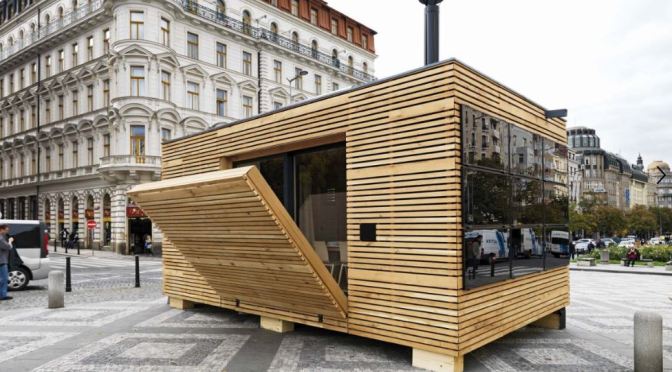
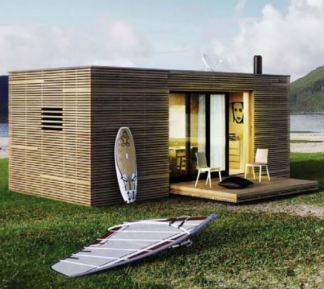 Freedomky offers a unique way of living that combines thoughtful design, style purity and uncompromising material quality. Freedomky are charming houses you just choose and then move right in. You don’t have to follow it; it comes wherever you decide. A pleasant space with minimal energy requirements, it’ll hook you immediately. Once you enter, you’ll understand. Maybe you’ll start to live a little differently, freely. Freedomky is not just a house, it’s a lifestyle.

From an Austin.Curbed.com online article:
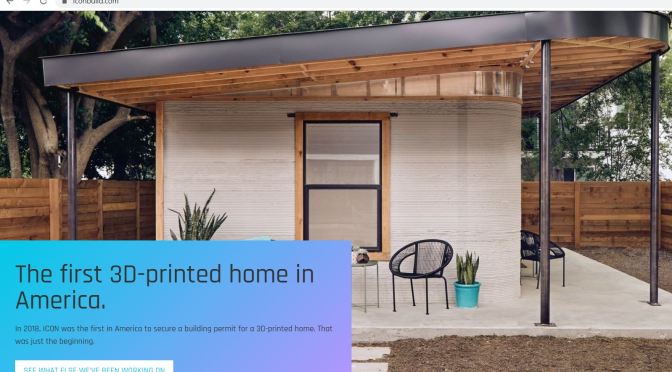
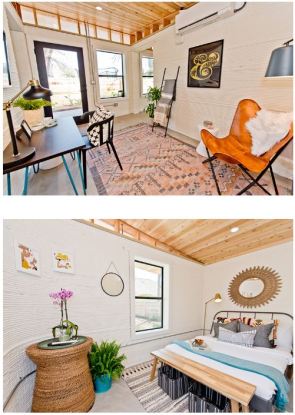 ICON, which uses robotics, software, and advanced materials (including its proprietary “Lavacrete”) to remove numerous barriers in the contemporary building industry, debuted its first 3D printer and the country’s first permitted, 3D-printed home in at SXSW 2018 in Austin.
Community First Village, run by Mobile Loaves and Fishes to provide permanent, personal housing and services for homeless people in Austin, had quite the breakthrough day Monday. Partnering with Austin-based Icon and and Cielo property group, it opened the second phase of its development with a 3D-printed prototype house that will serve as a welcome center for the community. The 500-square-foot building took a total of 27 hours to print.
To read more: https://austin.curbed.com/2019/9/10/20858924/austin-homeless-tiny-house-3d-printing
From a HousingWire.com online release:
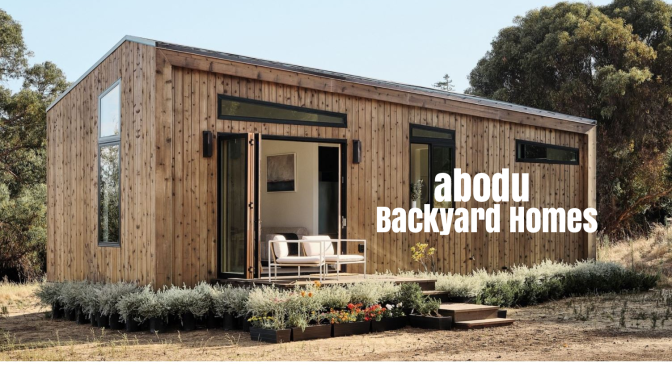
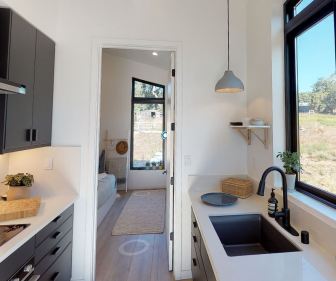 Having gained this pre-approval status, Abodu said one of its units can be installed in a backyard in as little as two weeks.
“Abodu is proud to enter the Bay Area market and provide a new, cost-effective alternative for those seeking more space or looking to monetize their backyard via rental income,” said John Geary, co-founder at Abodu. “Whether a buyer is installing an Abodu backyard home for a family member or as an additional source of income, this is a great and easy way to increase the value and functionality of a home.”
In 2017, the state of California passed several laws that gave cities more flexibility for allowing homeowners to build accessory dwelling units (ADUs). Most recently, at the beginning of this year, the state approved legislation that gave homeowners with ADUs constructed without a permit the ability to be inspected and approved under the standards that were in place the year the structure was built.
From a DesignBoom.com online review:
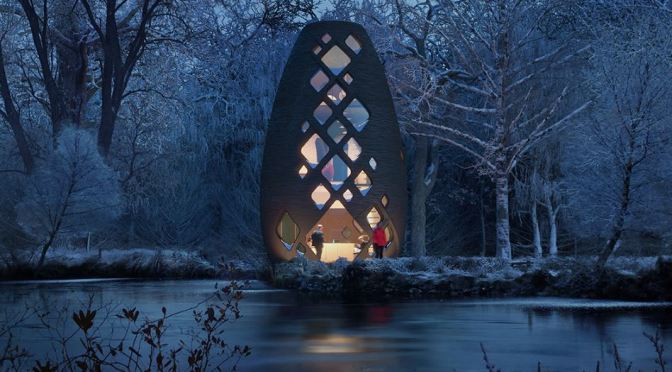
 AI spacefactory — the architects behind the NASA–award-winning mars habitat — is now launching ‘TERA’, a space-tech habitat designed for off-grid living on earth. designed to be a ‘B&B unlike any other’, ‘TERA’ will be a high-tech, luxe eco-home nestled in the woods of upstate new york with sweeping views of the hudson river. ‘we realized the materials and technology we developed for long-term missions on mars had the potential to be leaps and bounds more sustainable than conventional construction on earth,’ said david malott, AI spacefactory’s CEO and chief architect. ‘TERA will challenge everything we know about architecture and construction. it could transform the way we build on earth – maybe even save our planet.’
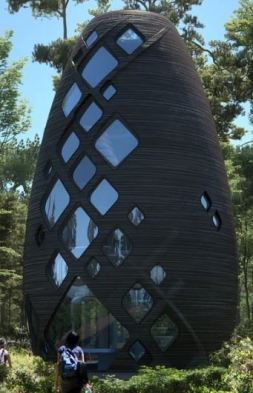 developed from the same designs and 3D printing technologies behind the AI spacefactory’s NASA-award-winning ‘MARSHA’ mars habitat, ‘TERA’ is designed to be minimally invasive to its surrounding environment. it can be broken down, recycled and re-printed elsewhere, without leaving any trace. the ‘multi-planetary architectural and technology design agency’ hopes to curb the massive footprint of conventional building practices that rely on energy-and waste-intensive materials. in its realization,
https://www.indiegogo.com/projects/tera-experience-the-future-of-living#/
From LandArkRV.com website:
 Optimized for an individual or a couple, this mid-century modern design delivers a functional layout in a sophisticated package. The mud room entry features a 7 ft.+ width wardrobe, a separate W/D utility closet and a nook with a bench and cubbies. Connecting this space to the rest of the interior is a gallery with recessed lighting and clerestory windows. From the gallery, ascend up the custom designed oak ladder into the sleeping loft enclosed with large windows. A compact, yet surprisingly luxurious bathroom features a vanity, wall-hung toilet and a full size, walk-in shower with recessed lighting and a window. Flooded with natural light, the main living area opens up to a large galley kitchen and a convertible U-sofa that transforms into a queen bed for the occasional guest. Living extends outside through the sliding patio door onto a large hardwood deck that can be raised and closed for transport.
Website: https://landarkrv.com/models/draper/
From a HousingWire.com online article:
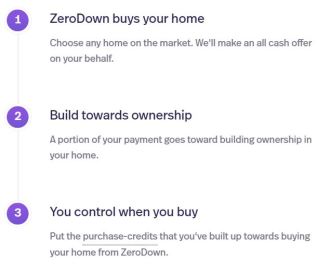 Real estate startup ZeroDown, which launched earlier this year, boasts a unique business model. Aiming to help more people become homeowners in the pricey San Francisco Bay Area, the company removes several of the largest hurdles from the homebuying process, namely the down payment and mortgage, and buys homes for its customers outright.
But it doesn’t give the properties away. Rather, the company buys the house with its own funds, without requiring its customers to put down a down payment or assume a mortgage, then leases the property to the customer for a period of as long as five years.
To read more click on the following link: https://www.housingwire.com/articles/49937-real-estate-startup-zerodown-secures-100-million-to-buy-san-francisco-homes-for-its-customers?utm_campaign=Newsletter%20-%20HousingWire%20Daily&utm_source=hs_email&utm_medium=email&utm_content=76098861&_hsenc=p2ANqtz–haCZ6Ij9bSwQwBZTqEGO12hhm6HCNa4G5lr3AeeJRbRjpsAJPIMAF8Ko0NPhdW_Nn8Vmg3s35rhQhmcODtqhIch-f1A&_hsmi=76098861
From a DesignBoom.com article:
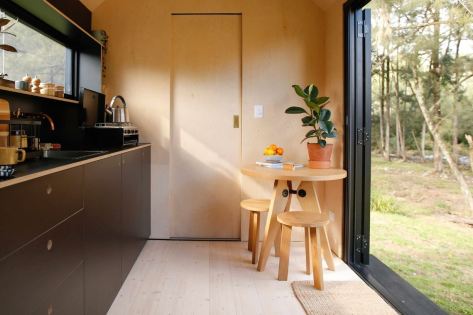
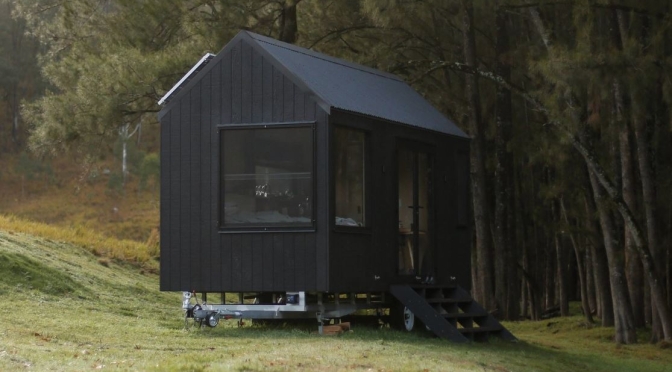
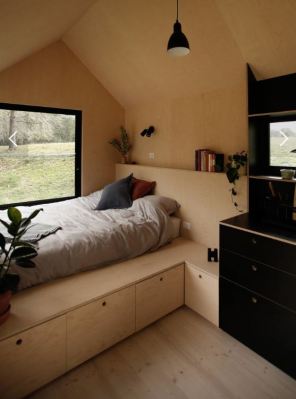 the lightweight timber structure is built on a wheeled chassis and clad in matte black weathertex, a locally sourced material made from forest thinnings and other industry by-products in the production process. the off-grid cabin features built-in joinery that blends seamlessly with the interior lining and cathedral ceiling so that this sense of openness is preserved.
sydney-based architecture firm fresh prince has designed a compact off-grid cabin in australia that offers a sustainable dwelling for summer getaways. located in new south wales, the 150-square-foot ‘barrington tops’ cabin is perched on the banks of a highland river, surrounded by dense woodland.
http://www.freshprince.com.au/
To read more click on the following link: https://www.designboom.com/architecture/fresh-prince-sustainable-off-grid-cabin-08-26-2019/?utm_source=designboom+daily&utm_medium=email&utm_campaign=fresh+prince+designs
From a Wall Street Journal article by Katherine Clark:
 “If you look back in the day to the ’70s and ’80s, there were these guys…raised with this mythology of the West,” said Ken Mirr, a local ranch broker. “It was attachment to something Hollywood produced. Their children aren’t necessarily always as interested in operating the properties. Sometimes the kids just see cows and think ‘What should I do with this?’”
Operating costs vary dramatically, depending on how much infrastructure ranchers have on their land and the level of agricultural activity but can often be millions a year.
Decades ago, a generation of America’s wealthiest, raised on television shows like “Howdy Doody” and “The Lone Ranger,” headed west with dreams of owning some of the country’s most prestigious ranches. Now, as those John Wayne- loving baby boomers age out of the lifestyle or die, they or their children are looking to sell those trophy properties.
To read more click on following link: https://www.wsj.com/articles/baby-boomers-are-leaving-behind-a-trail-of-luxury-ranches-11566487531?mod=hp_listc_pos3
From an 1843.com online article:
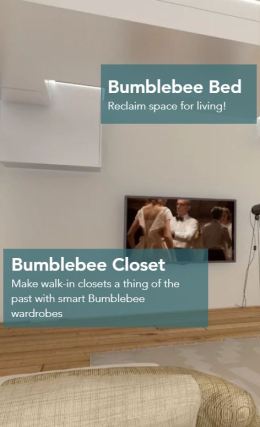 A startup called Bumblebee Spaces is trying to make micro apartments more appealing by adding movable furniture. Beds, wardrobe and drawers are stored up on the ceiling, to be lowered quietly on white suspension cords at the touch of a tablet, like a scene change on a theatre stage. In theory this frees up floor space. Once he’s raised his bed in the morning, Dabdoub sometimes does yoga and meditation. In the evening, he can sit on the couch and project Netflix onto a blank wall, which would otherwise be occupied by the bed’s headboard.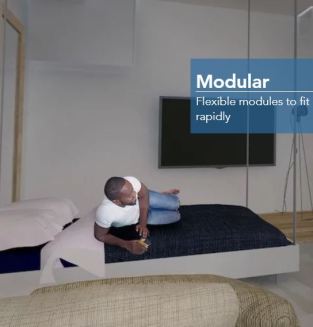
Bumblebee is putting a new twist on the Murphy bed, a mattress that folds down from the wall. That bed was named after another inventor in San Francisco, William Lawrence Murphy, who was living in a tiny one-room apartment in the early 1900s. According to lore, he was trying to woo an opera singer who refused to come to his bedroom. So he devised a way to fold up his mattress into the wall and convert the bedroom into a lounge. Lust fuelled innovation.
https://www.bumblebeespaces.com/
To read more click on the following link: https://www.1843magazine.com/upfront/postcard-from-silicon-valley/how-robotic-furniture-will-improve-our-lives



 Boomers Daily