
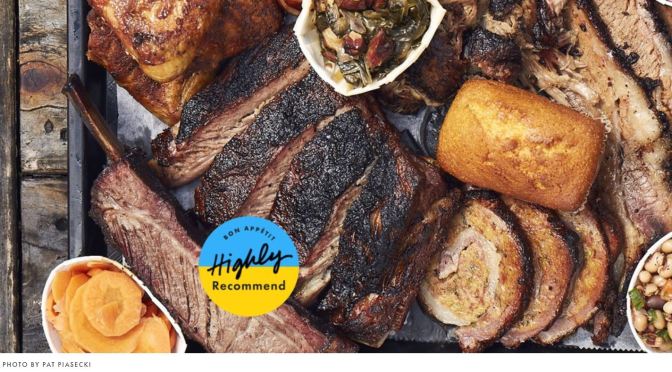
From a Bon Appétit Magazine article by Amanda Shapiro:
 While it may be unassuming, B.T.’s is hardly undiscovered. The lines get long, so time your trip to hit the smokehouse when it opens at 11 a.m. or during the late-afternoon lull. Order your meat to go, grab a beer at the convenience store next door, and park yourself on the hood of your car, the curb, or anywhere you can find a spot. It isn’t glamorous, but it is astonishingly good.
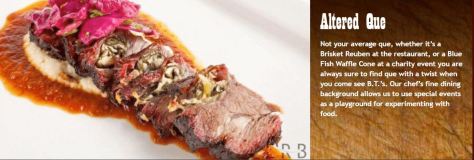
Situated between I-84 and I-90, B.T.’s is an ideal pit stop for any drive that takes you up to (or down from) Boston, New Hampshire, or Maine. Brisket is the thing here—smoked for 24 to 30 hours on local apple and hickory wood. You can order it à la carte, in a Reuben-style sandwich, or—my favorite—on a platter with classic sides like collard greens and mac and cheese.
To read more from article click on following link: https://www.bonappetit.com/story/bts-smokehouse-sturbridge-massachusetts


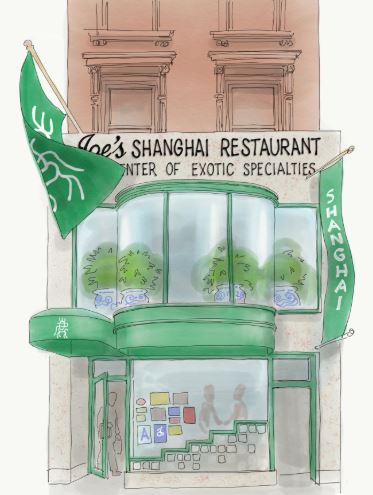 Paul Galloway is the collection specialist in Architecture and Design. He seems to know something about almost everything you could imagine in his field, whether posters, buildings, or chairs. And he’s always hungry. After years of careful lunch hour research, he’s put together what he calls his “peckish peregrinations”—easy and delicious spots around Midtown Manhattan to grab a good bite and eat outdoors. For a complete experience, we recommend pairing these spots with our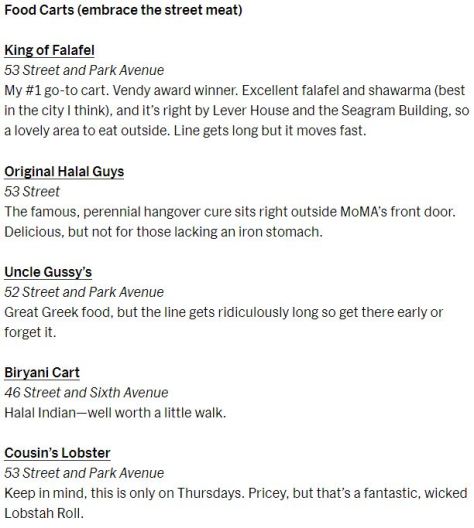

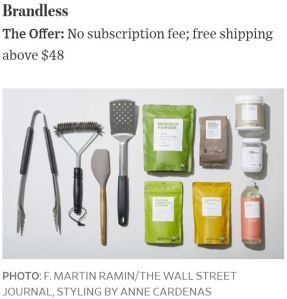 “Brandless makes grocery shopping…fun. Yes, you read that right. The site o

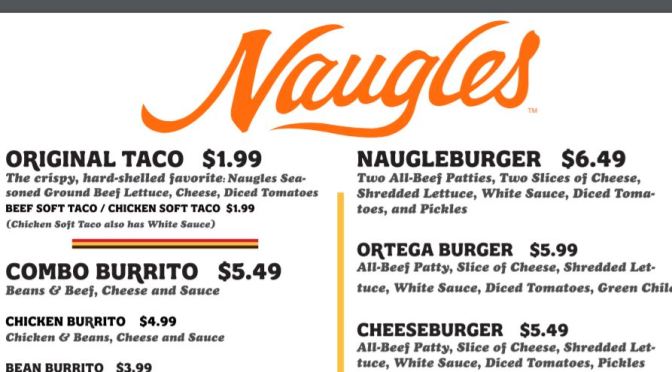
 It was a rival to Taco Bell and Del Taco in the fast-food Cal-Mex wars of the 1970s, until Del Taco acquired the company in 1995 and unceremoniously shut it down. The erasure was so complete that when food writer Christian Ziebarth petitioned the United States Patent and Trademark Office in 2012 to take control of Naugles’ trademark, arguing that Del Taco had done nothing with it for decades and he was therefore legally allowed to revive the chain, the feds sided with him (Del Taco is still fighting the ruling).
 “As the newly opened Coney Island and Brooklyn Railroad brought many more people to the seaside from Manhattan in the late 1860s, customers told Feltman that they wanted to eat hot food, not cold clams, according to Richard F Snow, the former editor of American Heritage Magazine. So in 1867, Feltman called on the wheelwright who’d originally made his cart and asked him to modify it. The craftsman built a custom charcoal brazier for cooking sausages and a metal box for warming bread.”
 Boomers Daily