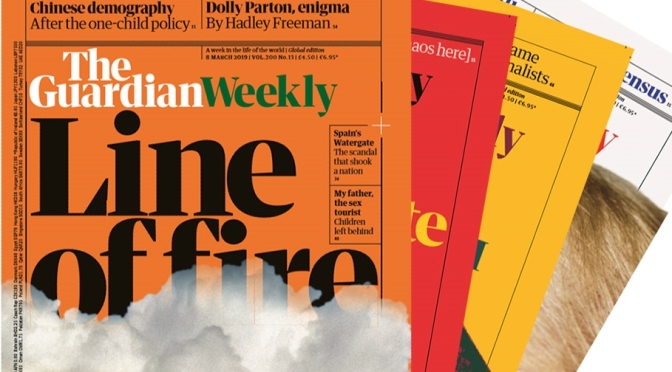
Once viewed as a safeguard against global injustice, international law has become increasingly politicised and dysfunctional in recent years. As Linda Kinstler writes in a fascinating essay for the cover story of this week’s Guardian Weekly magazine, the norms, institutions and good faith essential to the system functioning effectively have been badly eroded, and it’s hard to see how the problems can be reversed.
Institutions like the UN security council and international criminal court (ICC) are now often simply ignored or manipulated by powerful member states. The ICC in particular has struggled with legitimacy and enforcement, delivering only a few convictions, amid resistance from big powers such as the US and Russia. The unilateralism of Trump has further undermined the system, while China’s growing influence is shifting the international focus away from human rights.
Spotlight | How the rise of Zohran Mamdani is dividing Democrats Many believe the New York mayoral hopeful signals time for the national party to evolve but others say his brand of politics will not appeal in key battlegrounds. Lauren GambinoandAlaina Demopoulos report
Environment | Tipping points, doomerism and catastrophic risks Climate expert Genevieve Guenther talks to Jonathan Watts on the importance of correcting the false narrative that climate threat is under control – and why it is appropriate to be scared
Feature | The politics of breasts Breasts have always been political – and now they’re front and centre again. Is it yet another way in which Trump’s worldview is reshaping the culture? By Jess Cartner-Morley
Opinion | The global order is being dismantled by an ageing generation Just when the world desperately needs wise elders, its fate is in the hands of old and ruthless patriarchs, argues David Van Reybrouck
Culture | The Herds: The animal marathon stampeding to the Arctic Why is a huge pack of puppet animals, from tiny monkeys to towering elephants, making a 20,000km cross-planet odyssey? Kate Wyver spent a week as an antelope to find out
An AI Review of How Microsoft’s AI Chief Defines ‘Humanist Super Intelligence’
WJS “BOLD NAMES PODCAST”, July 2, 2025: Podcast Review: “How Microsoft’s AI Chief Defines ‘Humanist Super Intelligence’”
The Bold Names podcast episode with Mustafa Suleyman, hosted by Christopher Mims and Tim Higgins of The Wall Street Journal, is an unusually rich and candid conversation about the future of artificial intelligence. Suleyman, known for his work at DeepMind, Google, and Inflection AI, offers a window into his philosophy of “Humanist Super Intelligence,” Microsoft’s strategic priorities, and the ethical crossroads that AI now faces.
1. The Core Vision: Humanist Super Intelligence
Throughout the interview, Suleyman articulates a clear, consistent conviction: AI should not merely surpass humans, but augment and align with our values.
This philosophy has three components:
Purpose over novelty: He stresses that “the purpose of technology is to drive progress in our civilization, to reduce suffering,” rejecting the idea that building ever-more powerful AI is an end in itself.
Personalized assistants as the apex interface: Suleyman frames the rise of AI companions as a natural extension of centuries of technological evolution. The idea is that each user will have an AI “copilot”—an adaptive interface mediating all digital experiences: scheduling, shopping, learning, decision-making.
Alignment and trust: For assistants to be effective, they must know us intimately. He is refreshingly honest about the trade-offs: personalization requires ingesting vast amounts of personal data, creating risks of misuse. He argues for an ephemeral, abstracted approach to data storage to alleviate this tension.
This vision of “Humanist Super Intelligence” feels genuinely thoughtful—more nuanced than utopian hype or doom-laden pessimism.
2. Microsoft’s Strategy: AI Assistants, Personality Engineering, and Differentiation
One of the podcast’s strongest contributions is in clarifying Microsoft’s consumer AI strategy:
Copilot as the central bet: Suleyman positions Copilot not just as a productivity tool but as a prototype for how everyone will eventually interact with their digital environment. It’s Microsoft’s answer to Apple’s ecosystem and Google’s Assistant—a persistent, personalized layer across devices and contexts.
Personality engineering as differentiation: Suleyman describes how subtle design decisions—pauses, hesitations, even an “um” or “aha”—create trust and familiarity. Unlike prior generations of AI, which sounded like Wikipedia in a box, this new approach aspires to build rapport. He emphasizes that users will eventually customize their assistants’ tone: curt and efficient, warm and empathetic, or even dryly British (“If you’re not mean to me, I’m not sure we can be friends.”)
Dynamic user interfaces: Perhaps the most radical glimpse of the future was his description of AI that dynamically generates entire user interfaces—tables, graphics, dashboards—on the fly in response to natural language queries.
These sections of the podcast were the most practically illuminating, showing that Microsoft’s ambitions go far beyond adding chat to Word.
3. Ethics and Governance: Risks Suleyman Takes Seriously
Unlike many big tech executives, Suleyman does not dodge the uncomfortable topics. The hosts pressed him on:
Echo chambers and value alignment: Will users train AIs to only echo their worldview, just as social media did? Suleyman concedes the risk but believes that richer feedback signals (not just clicks and likes) can produce more nuanced, less polarizing AI behavior.
Manipulation and emotional influence: Suleyman acknowledges that emotionally intelligent AI could exploit user vulnerabilities—flattery, negging, or worse. He credits his work on Pi (at Inflection) as a model of compassionate design and reiterates the urgency of oversight and regulation.
Warfare and autonomous weapons: The most sobering moment comes when Suleyman states bluntly: “If it doesn’t scare you and give you pause for thought, you’re missing the point.” He worries that autonomy reduces the cost and friction of conflict, making war more likely. This is where Suleyman’s pragmatism shines: he neither glorifies military applications nor pretends they don’t exist.
The transparency here is refreshing, though his remarks also underscore how unresolved these dilemmas remain.
4. Artificial General Intelligence: Caution Over Hype
In contrast to Sam Altman or Elon Musk, Suleyman is less enthralled by AGI as an imminent reality:
He frames AGI as “sometime in the next 10 years,” not “tomorrow.”
More importantly, he questions why we would build super-intelligence for its own sake if it cannot be robustly aligned with human welfare.
Instead, he argues for domain-specific super-intelligence—medical, educational, agricultural—that can meaningfully transform critical industries without requiring omniscient AI. For instance, he predicts medical super-intelligence within 2–5 years, diagnosing and orchestrating care at human-expert levels.
This is a pragmatic, product-focused perspective: more useful than speculative AGI timelines.
5. The Microsoft–OpenAI Relationship: Symbiotic but Tense
One of the podcast’s most fascinating threads is the exploration of Microsoft’s unique partnership with OpenAI:
Suleyman calls it “one of the most successful partnerships in technology history,” noting that the companies have blossomed together.
He is frank about creative friction—the tension between collaboration and competition. Both companies build and sell AI APIs and products, sometimes overlapping.
He acknowledges that OpenAI’s rumored plans to build productivity apps (like Microsoft Word competitors) are perfectly fair: “They are entirely independent… and free to build whatever they want.”
The discussion of the AGI clause—which ends the exclusive arrangement if OpenAI achieves AGI—remains opaque. Suleyman diplomatically calls it “a complicated structure,” which is surely an understatement.
This section captures the delicate dance between a $3 trillion incumbent and a fast-moving partner whose mission could disrupt even its closest allie
6. Conclusion
The Bold Names interview with Mustafa Suleyman is among the most substantial and engaging conversations about AI leadership today. Suleyman emerges as a thoughtful pragmatist, balancing big ambitions with a clear-eyed awareness of AI’s perils.
Where others focus on AGI for its own sake, Suleyman champions Humanist Super Intelligence: technology that empowers humans, transforms essential sectors, and preserves dignity and agency. The episode is an essential listen for anyone serious about understanding the evolving role of AI in both industry and society.
THIS REVIEW OF THE TRANSCRIPT WAS WRITTEN BY CHAT GPT
The seaside lido is enjoying a fresh wave of popularity a century and more after its first appearance on the British coast. Kathryn Ferry dives in
Winging it
Watch out, watch out, there’s a thief about! Mark Cocker warns that no undergarment is safe from the resurgent red kite, a bird soaring back from near extinction
Travel
• Christopher Wallace checks in to a new opening in Marrakech, Morocco’s Mecca for luxury hotels
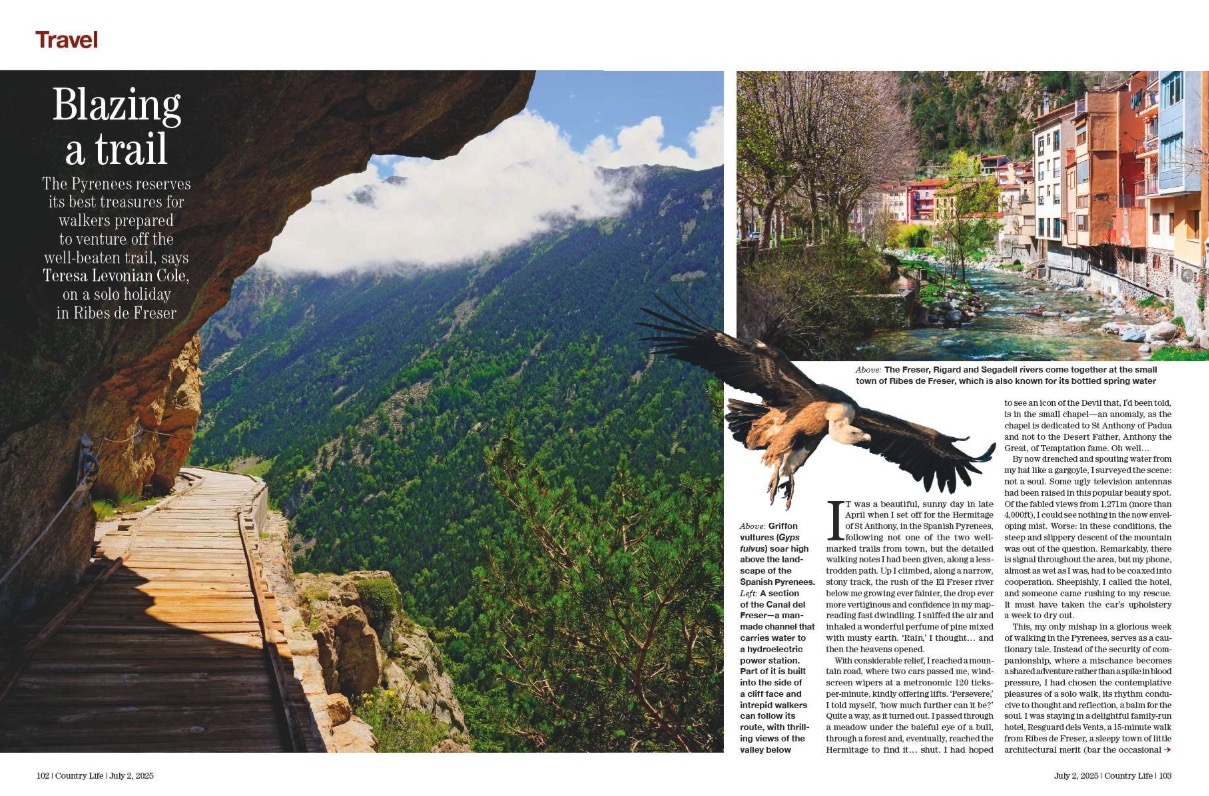
• Teresa Levonian Cole blazes a trail in the Spanish Pyrenees
• Pamela Goodman gets on her bike to explore the Welsh border country
Life’s a pretty picnic
Deborah Nicholls-Lee shares a hamper-full of tasty morsels from the long and varied history of alfresco dining on canvas
Ricardo Afonso’s favourite painting
The musical-theatre actor chooses an ‘otherworldly’ work that stirs complex emotions
The legacy
Amie Elizabeth White salutes Sir James Clark Ross, the vastly experienced naval officer who discovered Antarctica in 1841
In God’s acre we trust
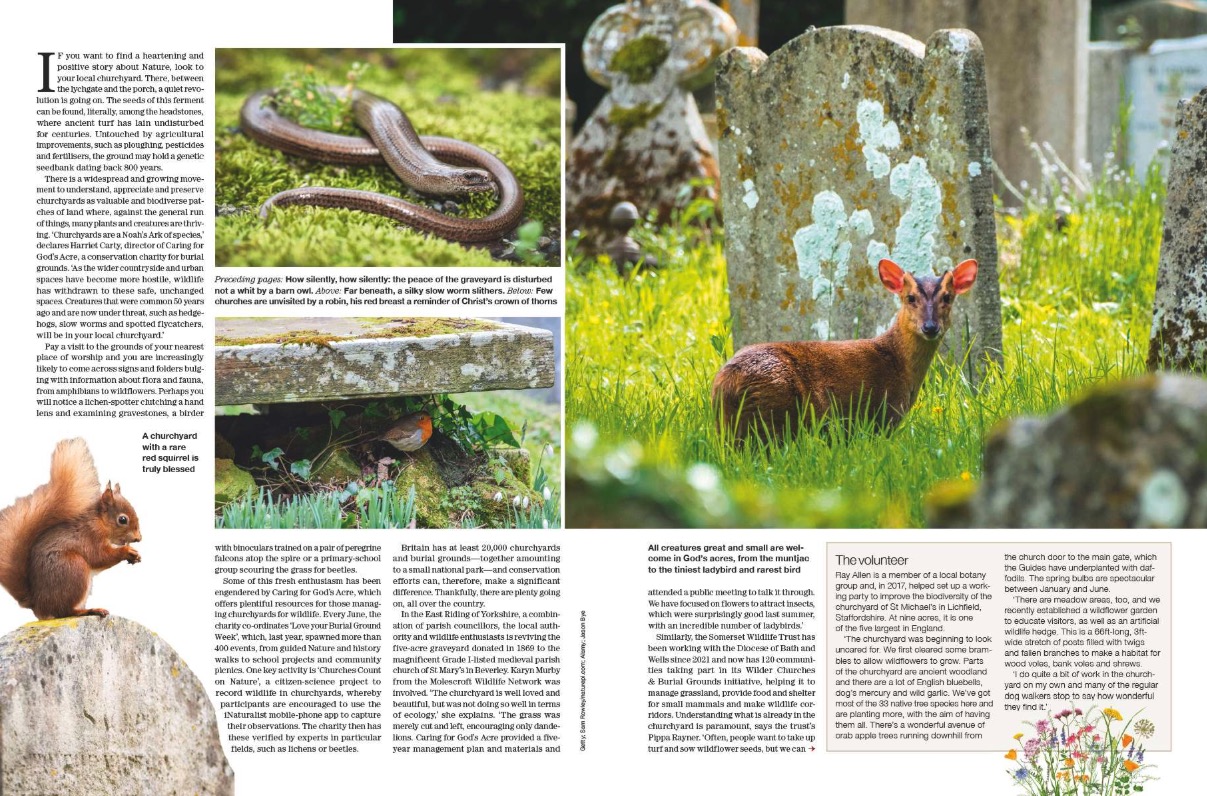
Laura Parker learns how the absence of interference over centuries enabled our wildlife-rich graveyards to become a ‘Noah’s Ark of species’
Keeping a low profile
The countryside is littered with storm-damaged trees that simply refuse to die. Jack Watkins celebrates great arboreal survivors
The good stuff
Hetty Lintell puts her best foot forward with a selection of sandals
Interiors
Arabella Youens commends an elegant townhouse kitchen and Amelia Thorpe picks out rhubarb accessories to brighten the home
London Life
• Will Hosie assesses the cost of our partying in the parks
• How the style set are reaffirming that west is best
Lost, but not forgotten
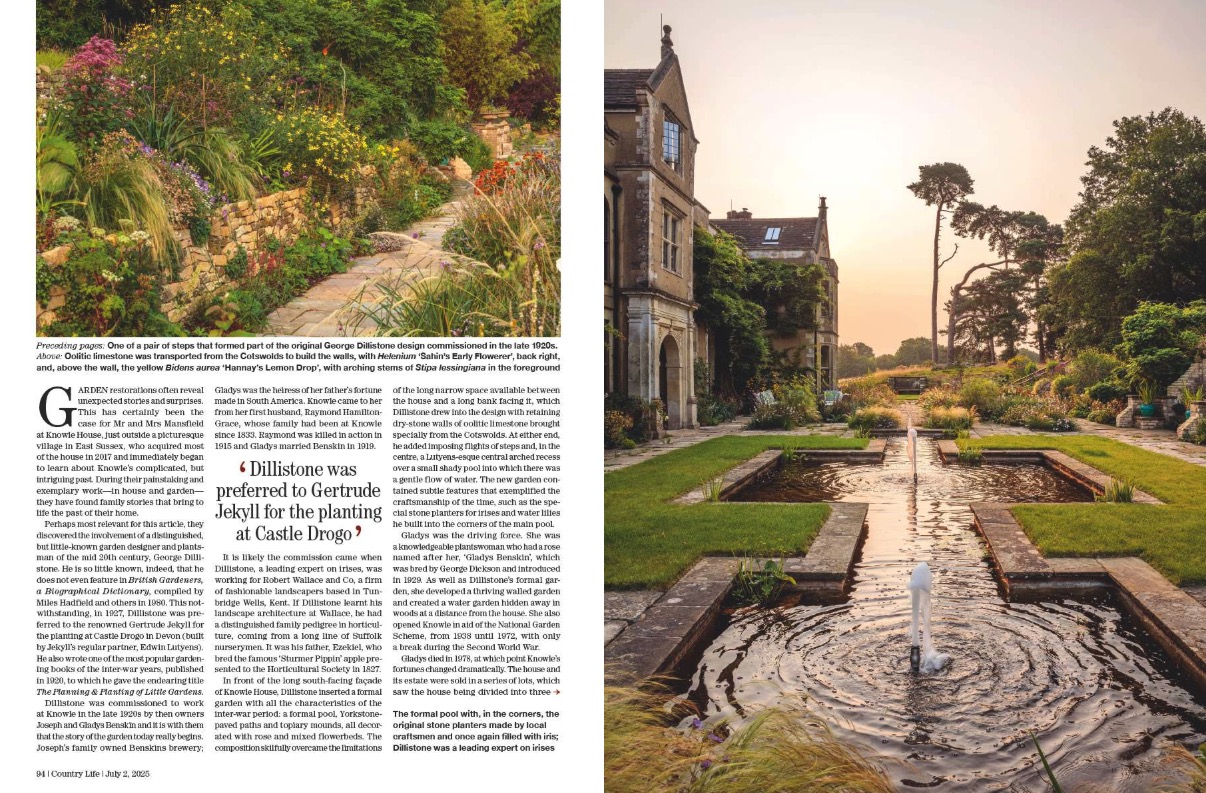
George Plumptre applauds the masterful restoration of the Arts-and-Crafts garden at Knowle House in East Sussex
Arts & antiques
Laura Dadswell believes her pair of 18th-century Venetian mirrors is the fairest of them all, as she tells Carlo Passino
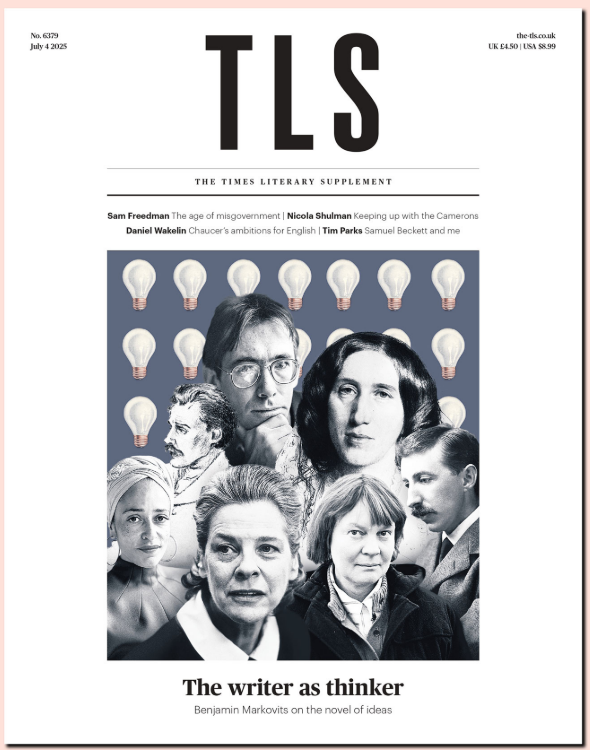
TIMES LITERARY SUPPLEMENT: The latest issue features ‘The writer as thinker’ – On the novel of ideas; The age of misgovernment; Keeping up with the Camerons; Chaucer’s ambitions for English and Samuel Beckett and me…
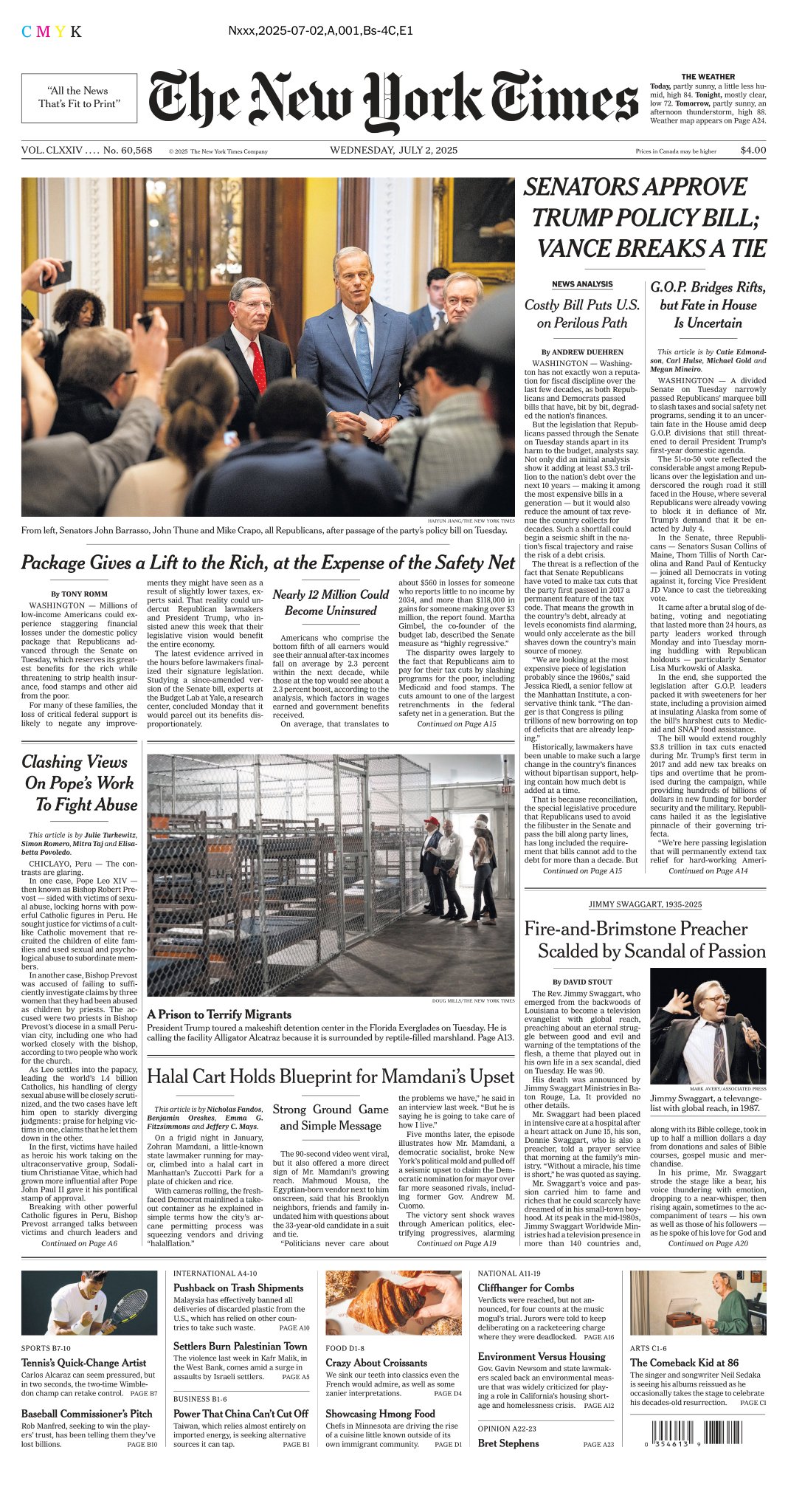
Contrary to President Trump’s assertions, records filed in a fraud case against him suggest that his riches are not the product of a steady and strong empire.
If President Trump gets his domestic policy bill over the finish line, it will be a vivid demonstration of his continuing hold over the Republican Party.






 Boomers Daily