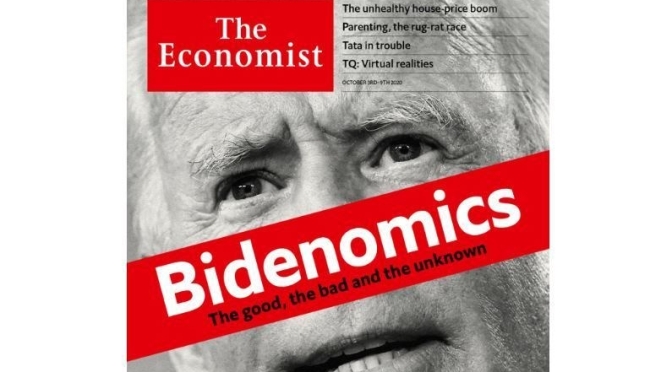

A selection of three essential articles read aloud from the latest issue of The Economist. This week: Bidenomics, Chinese officials want to erase many villages (12:00) and ethnic minorities in Britain (19:10).

A selection of three essential articles read aloud from the latest issue of The Economist. This week: Bidenomics, Chinese officials want to erase many villages (12:00) and ethnic minorities in Britain (19:10).

Monocle’s Emma Nelson speaks to Vincent McAviney and Rob Cox, plus we hear from The Saturday Paper’s Karen Middleton, and check in with Tokyo and Ljubljana.

Radio News 24/7 | Deutsche Welle reports: President Trump transferred to Walter Reed Medical Center, Germany marks 30th year of reunification, and other top world news.

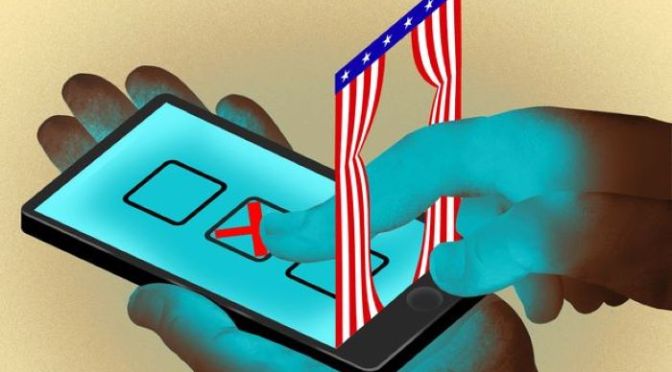
The U.S. is holding the general election during a pandemic. Many voters are eager to vote by mail, while others remain wary of mail-in ballots. Just about everyone longs for a faster, more secure method to cast their vote without exposing themselves to SARS CoV 2, the virus that causes Covid-19.
Many wonder why, if we do everything else on our phones, including banking, we can’t vote with them. Some communities already tried blockchain assisted mobile voting but with mixed results. Many academics are stridently opposed to mobile voting. This episode will consider whether new technologies can help us find a more secure way to vote.

OvernightPresident Trump and First Lady Melania Trump announced that they have tested positive for the coronavirus. In a statement shortly thereafter, the White House physician said the Trumps “are both well at this time” and will remain at home.
The president is 74 years old, which generally puts him at higher risk for severe illness from the virus, according to CDC guidelines.
Guests: Axios’ Sam Baker, Alayna Treene and Ashley Gold.

Investigative journalist Charles Piller joins host Sarah Crespi to discuss his latest Science exclusive: a deep dive into the Food and Drug Administration’s protection of human subjects in clinical trials. Based on months of data analysis and interviews, he uncovered long-term failures in safety enforcement in clinical trials and potential problems with trial data used to make decisions about drug and device approvals.
Sarah also talks with Klaus-Robert Müller, a professor of machine learning at the Technical University of Berlin, about an artificial intelligence (AI) trained in the sport of curling—often described as a cross between bowling and chess. Although AI has succeeded in chess, Go, and poker, the constantly changing environment of curling is far harder for a nonhuman mind to adapt to. But AIs were the big winners in competitions with top human players, Müller and colleagues report this week in Science Robotics.

NPR News Now reports: Stop-Gap Spending Bill signed into law, Presidential Debate Commission devises new tools, and other top news.

How current and future ice loss in Greenland compares to the past, Long-Covid, and using graphene to make ultra-sensitive radiation detectors.
In this episode:
00:45 Greenland’s historic ice loss
Climate change is accelerating the loss of ice and glaciers around the world leading to unprecedented levels of disappearance. Researchers have drilled samples from deep in the Greenland ice sheet, to model how current, and future, losses compare to those seen in the last 12,000 years. Research Article: Briner et al.; News and Views: The worst is yet to come for the Greenland ice sheet; Editorial: Arctic science cannot afford a new cold war
09:23 Coronapod
Despite recovering from an initial COVID-19 infection, many patients are experiencing severe symptoms months later. We find out about the impact of ‘Long Covid’ and the research that’s being done to try and understand it. News Feature: The lasting misery of coronavirus long-haulers
18:55 Research Highlights
A robot defeats humans at yet another sport, and extreme diving in Cuvier’s beaked whales. Research Highlight: A robot triumphs in a curling match against elite humans; Research Highlight: A smiling whale makes a record deep dive
21:20 A radiation detector made of graphene
Radiation-detectors known as bolometers are vital instruments in many fields of science. This week, two groups of researchers have harnessed graphene to make super sensitive bolometers that could be used to improve quantum computers, or detect subtle traces of molecules on other planets. Research Article: Lee et al.; Research Article: Kokkoniemi et al.
27:49 Briefing Chat
We discuss some of the latest stories highlighted in the Nature Briefing. This week we chat about the lack of diversity in academia, and an animal ally that can protect wildlife during forest fires. Nature Careers: Diversity in science: next steps for research group leaders; National Geographic:

This week a judge heard the first arguments in an antitrust case that could reshape the software ecosystem. Who will be the real winners and losers of this digital deathmatch? Quantum computers have limited capabilities, but the technology may yet live up to its promise.
And, how understanding the evolutionary history of exercise could help get people moving. Kenneth Cukier hosts.

Trump, Biden clash in contentious first debate, Judge Barrett begins Capitol Hill tour ahead of Supreme Court hearings, and James Patterson awards $500 grants to thousands of teachers.





 Boomers Daily