Tag Archives: Western France

Cinematic Short Films: Bordeaux & Saint Emilion

Filmed and edited by: Matteo Bertoli

Bordeaux, city and port, capital of Gironde départementNouvelle-Aquitaine région, southwestern France. It lies along the Garonne River 15 miles (24 km) above its junction with the Dordogne and 60 miles (96 km) from its mouth, in a plain east of the wine-growing district of Médoc.

The dry soil of Médoc attracted settlement as early as the Bronze Age; and, at least since Roman times, Bordeaux has been a flourishing town and port, with connections particularly with Spain and Britain. As Burdigala, it was the chief town of the Bituriges Vivisci, a Celtic people. Under the Romans it was the capital of the province of Aquitania, which extended from the Pyrenees to the Loire. In the 4th century Burdigala, then the capital of Aquitania Secunda (one of the three parts into which the emperor Diocletian had divided Aquitania), was described by the writer Ausonius, a native of the city, as a square, walled town and one of the great educational centres of Gaul. During the decline of the Roman Empire, the region around Bordeaux entered a period of political instability from which it recovered only when the dukes of Aquitaine established themselves early in the 10th century.
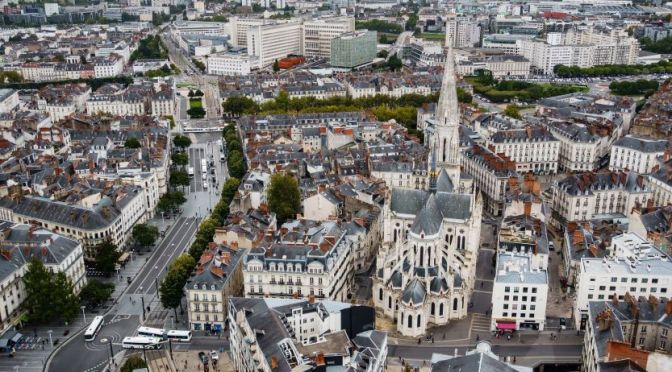
Walking Tours: Nantes – Western France (4K)

Nantes, a city on the Loire River in the Upper Brittany region of western France, has a long history as a port and industrial center. It’s home to the restored, medieval Château des Ducs de Bretagne, where the Dukes of Brittany once lived. The castle is now a local history museum with multimedia exhibits, as well as a walkway atop its fortified ramparts.

Travel & Culture Videos: ‘Charente Region’, France

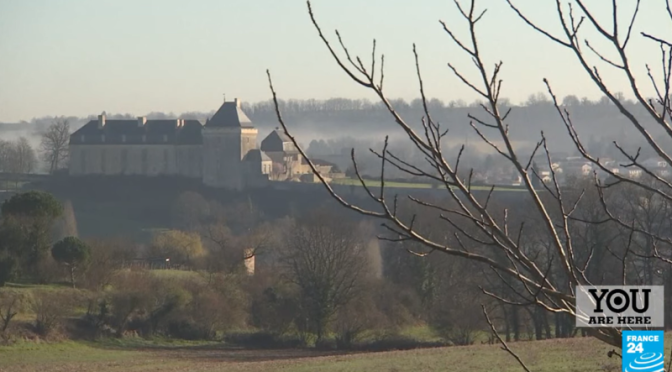
Roumazières-Loubert is known as the “city of clay”. This small town in France’s western Charente region has been turning the precious raw material into tiles for more than a century. For 40 years, Bernadette has been passionate about working with clay and says the local factory has become her second home. A little further south, the town of Chalais boasts opulent villas along the railway line: a unique architectural heritage. Jean-Louis shows us the impressive medieval castle, while Joël takes us to discover the world of traditional cattle farming, with calves fed under their mothers.

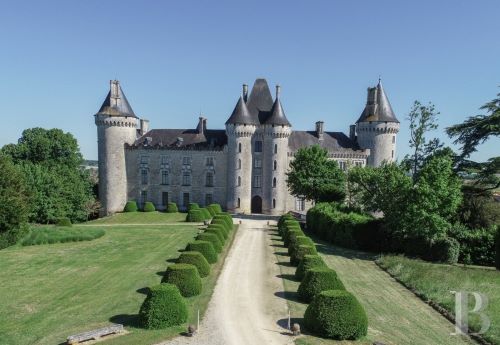
Top French Estate Tours: ‘Rochefoucauld Castle’ In Charente River Valley

The castle, part of the Rochefoucauld family fiefdom for a thousand years is concealed from the visitor’s eye. Passed the automatic entrance gates, a long tree-lined bridle path with park and woods on one side and outbuildings on the other, turns towards the end to reveal the impressive façade. The estate stretches the length of the village or perhaps the reverse.

“He who lives without madness is not as wise as he thinks”, one of François-de-la-Rochefoucauld’s maxims.

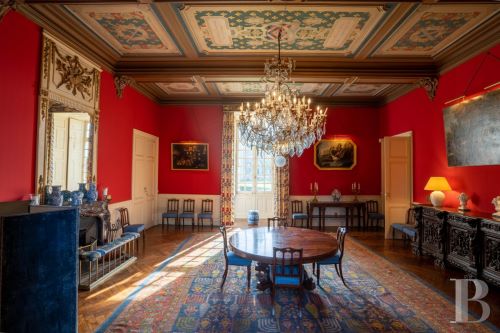
Ground floor: The entrance archway with its mosaic floor tiles leads, on one side, to a small lounge that opens into a through dining room featuring a beautiful coffered ceiling and kitchen that was moved up to this floor in 19th century. Behind the dining room is one of the four staircases and a small bedroom and ensuite bathroom.

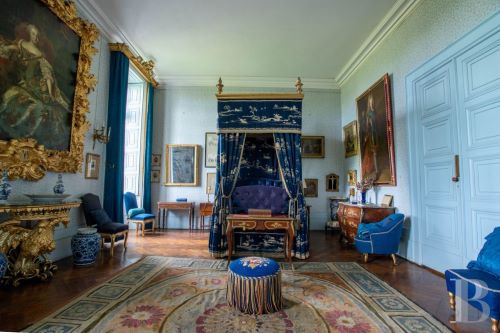
First floor: Two more intimate lounges are to be found on the ground floor for a cosier family atmosphere. Four bedrooms with ensuite bathrooms, two of which have their private toilet and a fifth one with a shower room. Two of the bedrooms are very formal, full of history and decorative features: they have seen visitors such as Charles Quint in 16th century and Queen Mum in 20th century. 

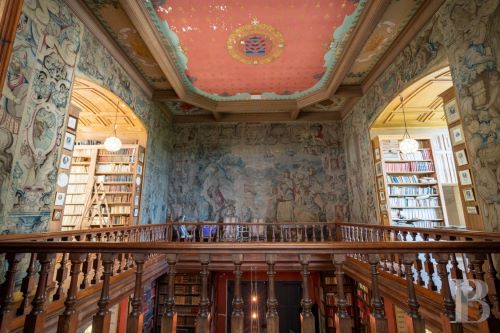
The library: Originally, a renaissance gallery linked the castle to the library and chapel. The library had always been part of an ensemble. It is located in the centre, built on the site of a former watchtower and features a vaulted ceiling.

The main courtyard: An ornamental pond is fed by water from the river thanks to a clever system bringing water up to a tank on the library roof and from where it is then poured. Under part of the main courtyard, there are large vaults, built together in 15th century with the consent of King Charles VII, with an additional defensive wall, after helping the La Rochefoucauld to reconquer their castle.

Read more