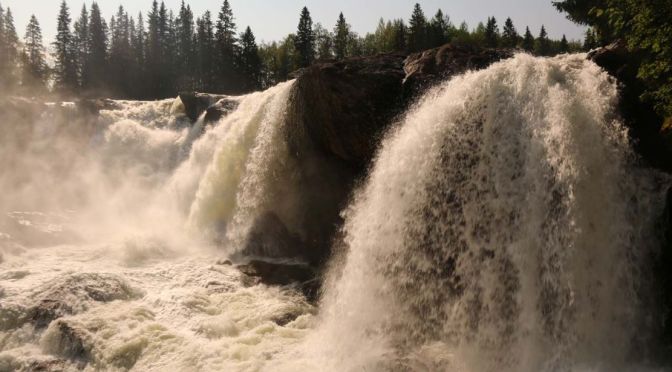
50 meters wide with a height of 14 meters. Ristafallet is one of Sweden’s most beautiful waterfalls, and famous from the movie “Ronia the Robber’s Daughter”.
In Hålland between Undersåker and Järpen lies the easily accessible Ristafallet. Turn off the E14 from Hålland into Ristafallet’s Camping. Park by the restaurant, then walk through the camping area until you find the waterfall.
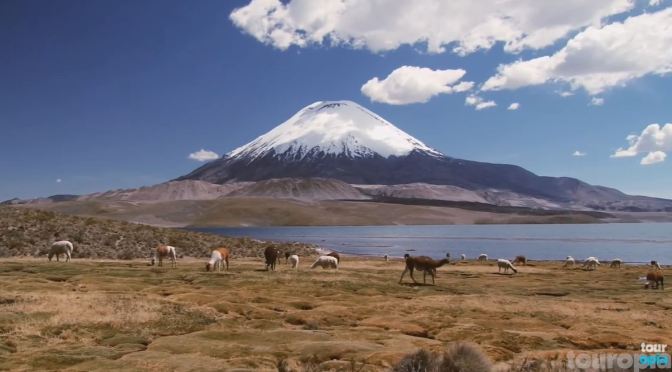
Chile is a long, narrow country stretching along South America’s western edge, with more than 6,000km of Pacific Ocean coastline. Santiago, its capital, sits in a valley surrounded by the Andes and Chilean Coast Range mountains.
Video timeline: 0:00 Mountains and lake in torres 0:08 Salto del claro 0:15 Dry hills in chile 0:22 Santiago 0:29 Misty waterfall 0:34 Araucaria forests 0:42 Tagua lake 0:55 Salto del claro 1:05 Northern chile 1:14 Dry hills in chile 1:24 Rice farmer 1:30 Mother and Child War Memorial 1:37 Dry hills in chile 1:41 Santiago 1:48 Green forest 1:53 Torres del paine 1:58 Puerto montt los lagos 2:12 Chile child 2:23 Araucaria forests
The city’s palm-lined Plaza de Armas contains the neoclassical cathedral and the National History Museum. The massive Parque Metropolitano offers swimming pools, a botanical garden and zoo.
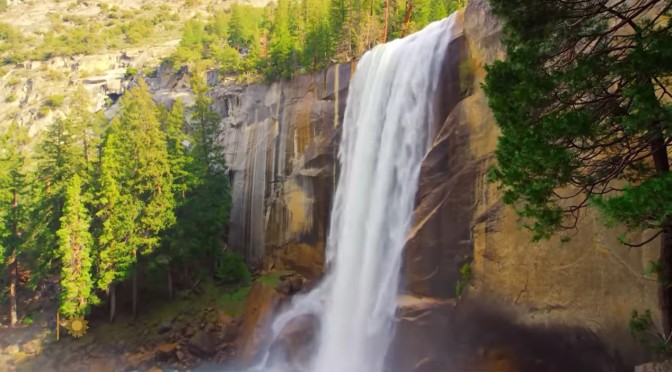
“Sunday Morning” takes us to Vernal Falls in California’s Yosemite National Park. Videographer: Lance Milbrand.
Vernal Fall is a 317-foot waterfall on the Merced River just downstream of Nevada Fall in Yosemite National Park, California. Like its upstream neighbor, Vernal Fall is clearly visible at a distance, from Glacier Point, as well as close up, along the Mist Trail.
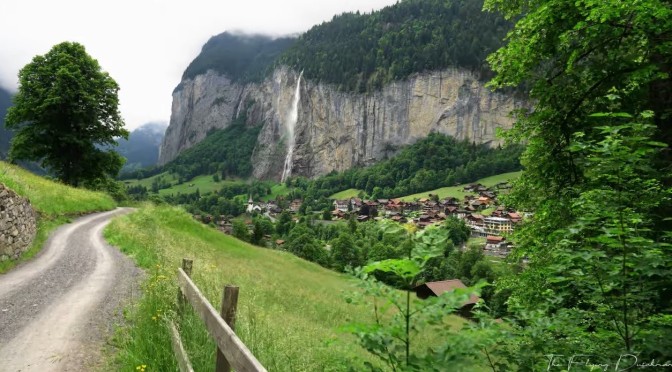
Lauterbrunnen is situated in one of the most impressive trough valleys in the Alps, between gigantic rock faces and mountain peaks. With its 72 thundering waterfalls, secluded valleys, colourful alpine meadows and lonely mountain inns, the Lauterbrunnen Valley is one of the biggest nature conservation areas in Switzerland.
– Description The very name ‘Lauter Brunnen’ (‘many fountains’) suggests the magnificence of this landscape. There are 72 waterfalls in the Lauterbrunnen Valley, the most famous being the Staubbach Falls. Plunging almost 300 metres from an overhanging rock face, they are one of the highest free-falling waterfalls in Europe.
In 1779, Johann Wolfgang von Goethe visited the valley, and was inspired by the roaring waters to write his well-known poem ‘Spirit song over the waters’.
Another deafening natural phenomenon are the Trümmelbach Falls in the ‘Black Monk’ mountain, hidden behind mighty rock faces. Up to 20,000 litres of water per second cascade over the ten glacier falls from a total height of about 200 metres. This spectacle can only be reached in summer by tunnel lift.
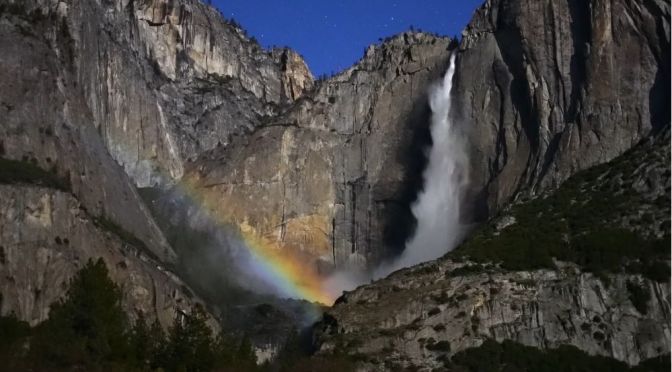
Ever see a rainbow at night? Moonbows (aka lunar rainbows) are a rare and mesmerizing phenomenon caused by light from a full moon shining on rain or the spray of a large waterfall. This first-of-its-kind video captures the famous moonbows of Yosemite National Park in a way that has never been seen before – by filming at real-time speed!
Until recently, the only way to film by moonlight was to use timelapse to gain more light through longer exposures. While timelapse is a useful filming technique, the fast motion doesn’t illustrate the immense scale of Yosemite’s waterfalls. I wanted to capture a true-to-life moonbow experience using a cinematic 24 frames-per-second frame rate. To meet this goal, I started experimenting with a new camera, fast lenses, and advanced noise-reduction software during the 2016 moonbow season. Every April, May, and June since then I would collect more footage and refine my low-light shooting skills while enjoying the incredible beauty of Yosemite in spring. In all, the footage in this video was filmed during 11 separate visits to Yosemite.
Filming at 24 frames-per-second allowed me to capture brief details that would easily be missed by timelapse. The shooting star (see if you can spot it!) was my favorite fleeting moment. I also enjoyed being able to film the fine textures of the falling water, the hypnotic ebb and flow of the wind-borne mist, and the excited reactions from people enjoying Yosemite at night. Filming at normal speed also accommodated live audio recording of Yosemite’s nocturnal soundscape.
In addition to the technical challenges of filming moonbows, I also needed to know when and where to see them. As with rainbows, moonbows require a precise alignment of the light source (the full moon, in this case), an area of rain or mist in the air, and the person observing. Using 3D-modeling software, I developed a method to visualize when moonbows could be seen for a given location. These calculations have helped me discover new compositions for photographing this striking phenomenon, and in 2018 I created the website YosemiteMoonbow.com so that I could share this information with others who want to see the moonbow from popular vantage points in the park.
Moonbows are just as common in nature as rainbows, but they often go unnoticed because human vision isn’t as sensitive to color in low light. When you first arrive at the base of the falls, you might see the bow as a gray arc in the mist, but as your eyes get acclimated to the dark, the moonbow will grow more vivid, especially when wind intensifies the spray. Compared to humans, cameras are much better at perceiving color in the dark, easily revealing the hidden beauty of moonlit nights.
Capturing the Yosemite moonbow with video hasn’t been easy. These dark scenes are a stretch for even the best low-light cameras, to say nothing of the challenges of trying to do quality photography while being sprayed with water in the cold dark of night. But that’s all part of the moonbow experience. There’s something a little wild about heading out into the forest at night to stand in the spray of a raging waterfall, but it’s always a good time!
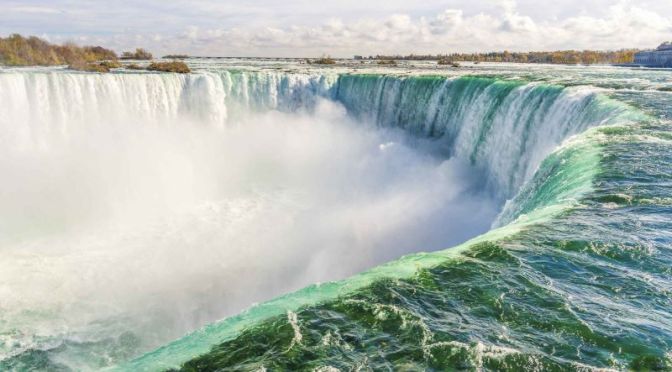
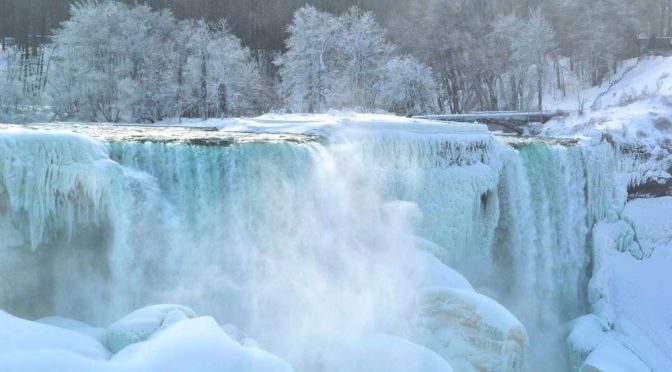
Niagara Falls is a group of three waterfalls at the southern end of Niagara Gorge, spanning the border between the province of Ontario in Canada and the state of New York in the United States.
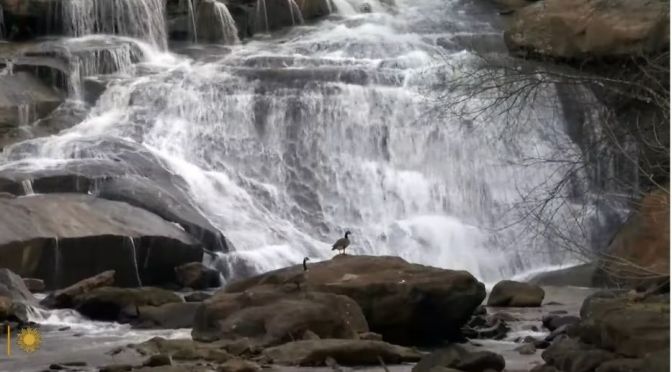
“Sunday Morning” takes us under waterfalls on the Reedy River near Greenville, South Carolina. Videographer: Kevin Kjergaard.
The Reedy River is a tributary of the Saluda River, about 65 miles long, in northwestern South Carolina in the United States. Via the Saluda and Congaree rivers, it is part of the watershed of the Santee River, which flows to the Atlantic Ocean.
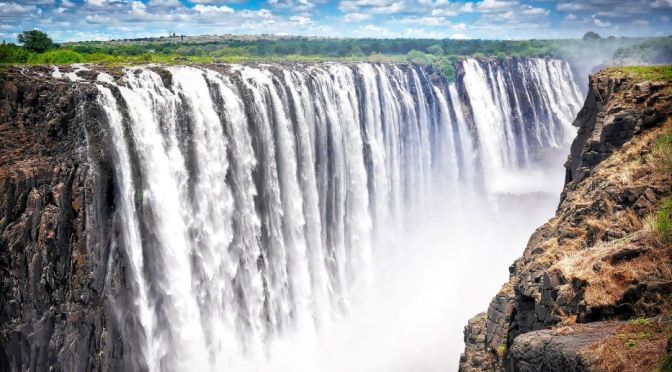
Victoria Falls presents a spectacular sight of awe-inspiring beauty and grandeur on the Zambezi River, forming the border between Zambia and Zimbabwe. It was described by the Kololo tribe living in the area in the 1800s as ‘Mosi-oa-Tunya’ – ‘The Smoke that Thunders’. In more modern terms Victoria Falls is known as the greatest curtain of falling water in the world.
Columns of spray can be seen from miles away as, at the height of the rainy season, more than five hundred million cubic meters of water per minute plummet over the edge, over a width of nearly two kilometres, into a gorge over one hundred meters below.
Niagara Falls, Ontario, is a Canadian city at the famous waterfalls of the same name, linked with the U.S. by the Rainbow Bridge. Its site on the Niagara River’s western shore overlooks the Horseshoe Falls, the cascades’ most expansive section. Elevators take visitors to a lower, wetter vantage point behind the falls. A cliffside park features a promenade alongside 520-ft.-high Skylon Tower with an observation deck.
There are thousands of waterfalls in all forms and sizes scattered around Iceland. We’ve compiled 10 of the top waterfalls to visit in Iceland here. For your geographical convenience, they are listed in counterclockwise order around the country, starting from southwestern Iceland.
1. Gullfoss
Gullfoss, or “Golden Falls”, is one of the 3 must-see attractions of the famous Golden Circle route in southwestern Iceland. This two-tiered waterfall drops 32 metres (105 feet) into a narrow, deep canyon, creating an impressive spray of mist that often produces rainbows in sunny weather.
2. Seljalandsfoss
This towering cascade in South Iceland is impressive to look at from a distance, but its wow-factor lies in the footpath leading behind the tumbling water.
This means you can admire Seljalandsfoss from multiple angles and enjoy the exhilarating experience of walking behind it. It’s no wonder why so many feel that this is one of the best waterfalls in Iceland!


 Boomers Daily