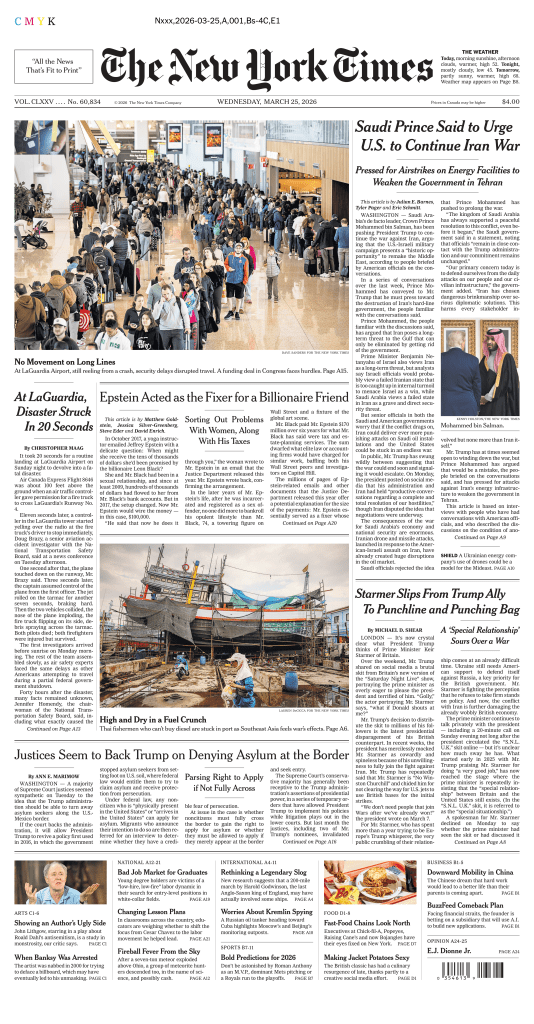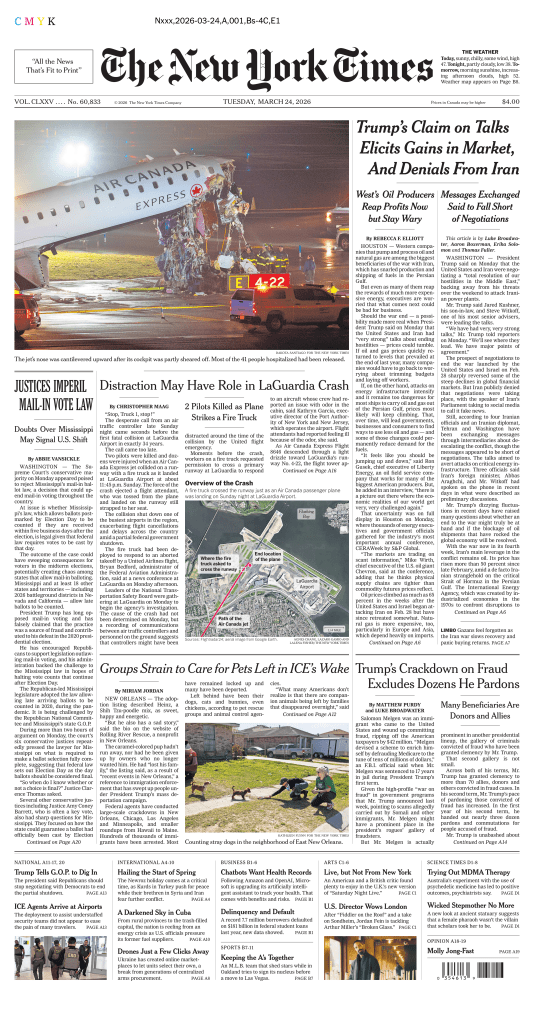
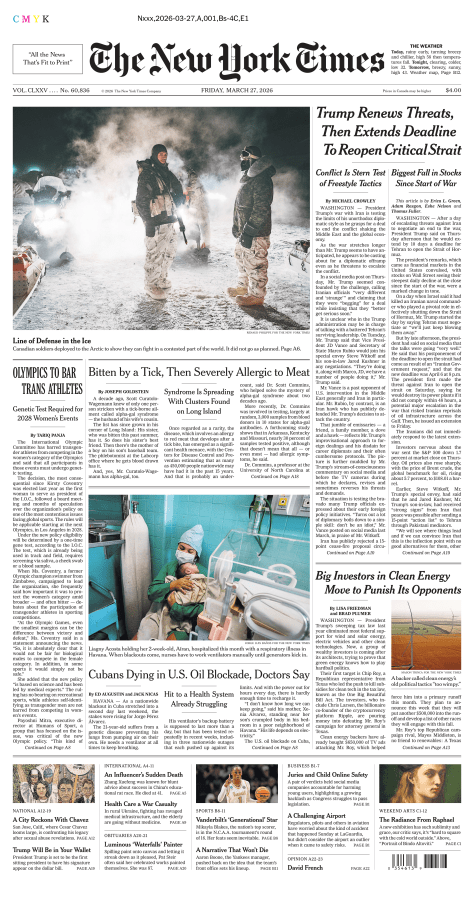
President Trump claimed that Iran had surrendered. He made the statement after the country’s president said earlier that Iran would end strikes in Gulf states, with caveats. Qatar and Bahrain reported incoming fire.
What the U.S. and Israel Have Targeted in Their Iran Blitz
The waves of bombings reveal a broad effort to ravage the country’s leadership and security services.
A fight over Pentagon contracts shows how the leaders of Silicon Valley’s two most important A.I. start-ups are feuding over the future of the tech industry.
The strikes on Beirut’s southern suburbs were the heaviest Israeli attacks since a 2024 war with the militia. Israeli air defenses were battling new missile launches from Iran.
The opening days of the conflict are challenging the idea that President Trump can project force abroad while safeguarding American lives and the economy.
Iranian drones landed in Azerbaijan, a day after NATO shot down a missile headed to Turkish airspace. Italy pledged air defense weapons to help Gulf nations.
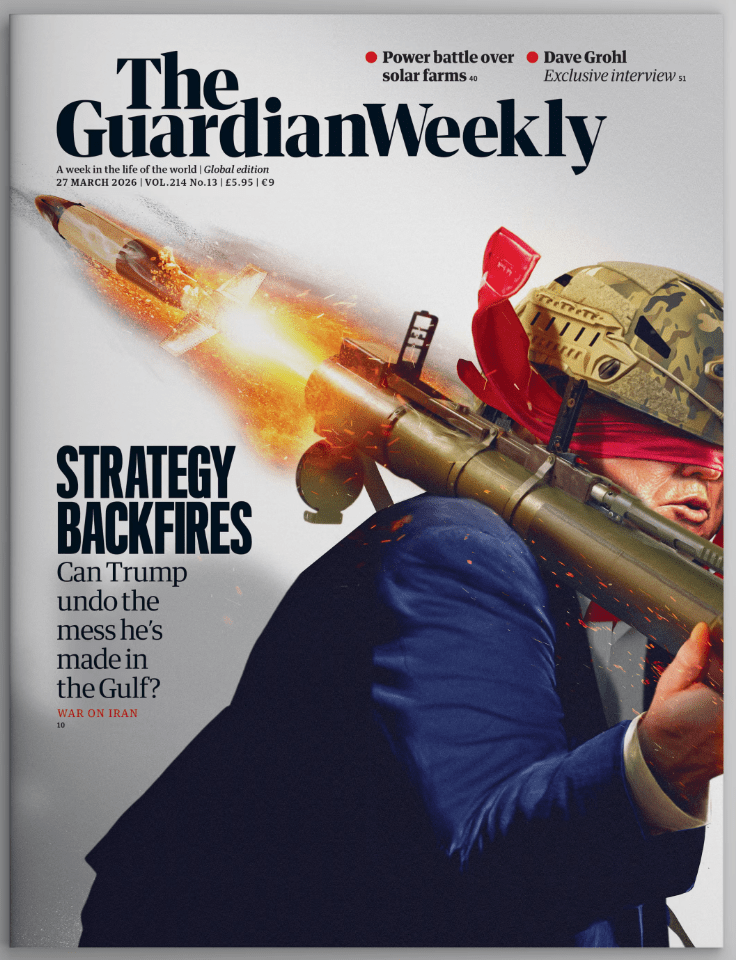
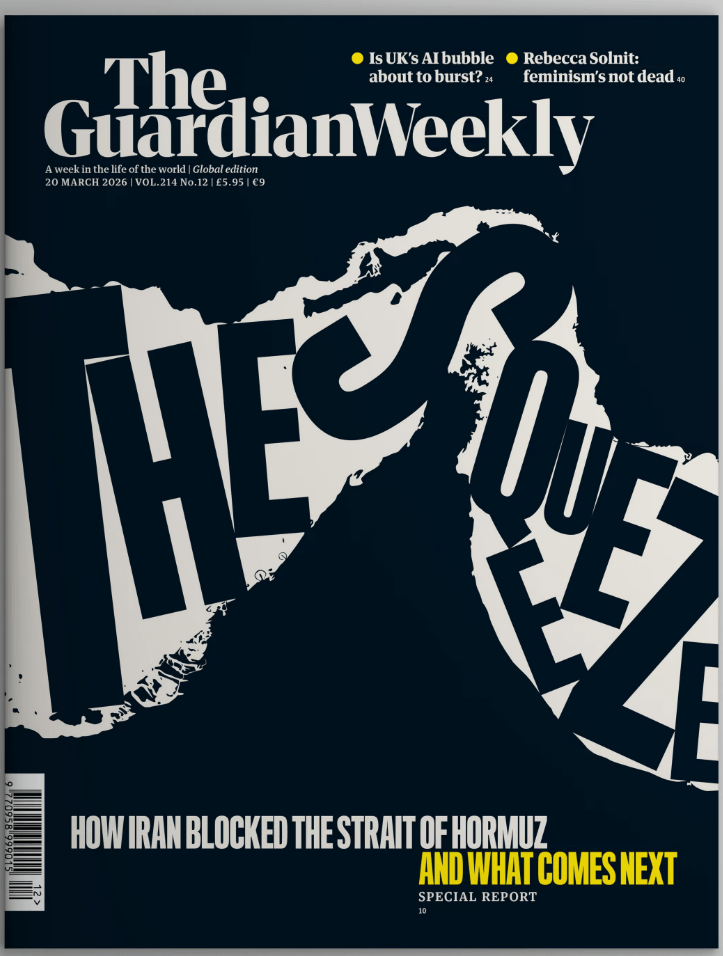
Some weeks I head out of the office on a Friday afternoon with an uneasy feeling that our best-laid plans for next week’s Guardian Weekly might not look quite the same by Monday. This was one of those weeks.
While the scope and power of the US-Israel attack on Iran – not least the successful targeting of Ayatollah Ali Khamenei and several other senior leaders – took many by surprise, the drums of war had been building for a while. With hindsight, last week’s failed nuclear talks may simply have been cover for what was to come.
As war unfurled dramatically across the Middle East, it was impossible to predict the consequences on a range of fronts, from the likelihood of regime change in Iran to the impact on America’s regional allies under attack, or the ripple effect on global energy prices and disruption to international travel.
Spotlight | Can the Louvre rediscover its joie de vivre? After a heist and the departure of its boss, the famous Paris museum is wrestling with repairs, strikes and a criticised renovation plan, reports Jon Henley
Science | Do lizards hold the key to how nature works? The emergence of a new group of common wall lizards offers an insight into how variety within nature can help conserve species, writes Roberto García-Roa
Interview | The world according to Gavin Newsom He’s the Democratic politician with movie-star looks, dogged by accusations of being a smooth‑talking elitist. But Gavin Newsom may just win the most powerful office in the world.Jonathan Freedlandfinds out why
Opinion | Labour needs to wake up to the dawning of a new political era After last week’s disastrous showing in a byelection, the government must accept voters no longer want two-party politics, argues John Harris
Culture | The wild and witty paintings of Rose Wylie Roaring into her 90s, the rebellious artistis now sought after by galleries worldwide and her works fetch huge sums. Melissa Denes visited her studio
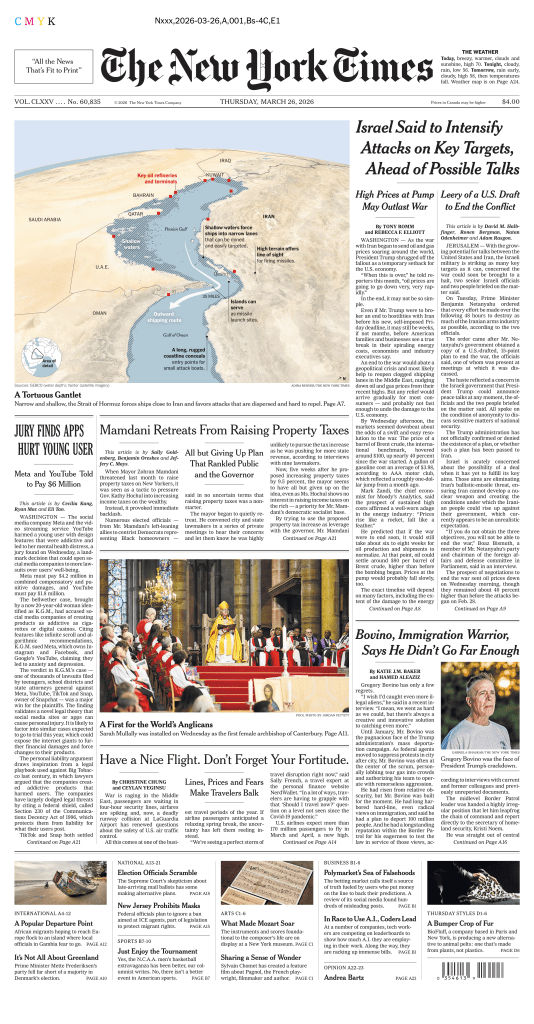
One-fifth of the global oil supply and substantial amounts of natural gas travel through the Strait of Hormuz, which has become a no-go zone for many tankers as fighting continues.
Iran and allied militias, including Hezbollah, attacked Israel and U.S. targets in retaliation for Ayatollah Khamenei’s death, and Israel struck in Lebanon. Top American officials suggested an extended campaign.
3 U.S. Planes Are Shot Down in ‘Friendly Fire’ in Kuwait, U.S. Military Says
Separately, a drone attack hit the U.S. Embassy compound in the Persian Gulf state, as Iran continues to target American assets across the Middle East.
The killing of Ayatollah Ali Khamenei came after close intelligence sharing between the U.S. and Israel, according to people familiar with the operation.
Decades of investigations yielded charges against only two people. A combination of missed chances, narrow laws and prosecutors’ limited focus helps explain why.
Israel joined the major U.S.-led assault as President Trump pledged to eliminate Iran’s nuclear program and devastate its military. Iran vowed retaliation and several Arab states that host U.S. military bases said they had been attacked.
The deal came hours after President Trump had ordered federal agencies to stop using artificial intelligence technology made by Anthropic, an OpenAI rival.