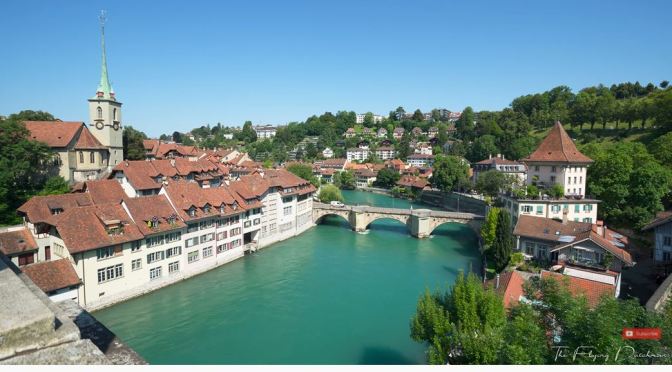
Bern, the capital city of Switzerland, is built around a crook in the Aare River. It traces its origins back to the 12th century, with medieval architecture preserved in the Altstadt (Old Town). The Swiss Parliament and diplomats meet in the Neo-Renaissance Bundeshaus (Federal Palace). The Französische Kirche (French Church) and the nearby medieval tower known as the Zytglogge both date to the 13th century.
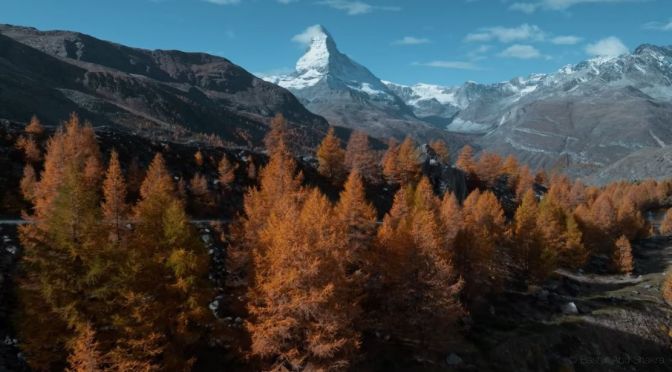
I’ve spent the last 8 days exploring the swiss alps mountains in autumn in Grindelwald, Zermatt, Appenzell, Lauterbrunnen, and Jungfrau area with no breaks, hoping to get as much epic footage as possible, since I was running out of time. Every day there was a hike for at least 5 hours and drive for 2 hours between every spot. I’ve spent 70% of the nights camping in front of these views just to catch the sunset and the sunrise.
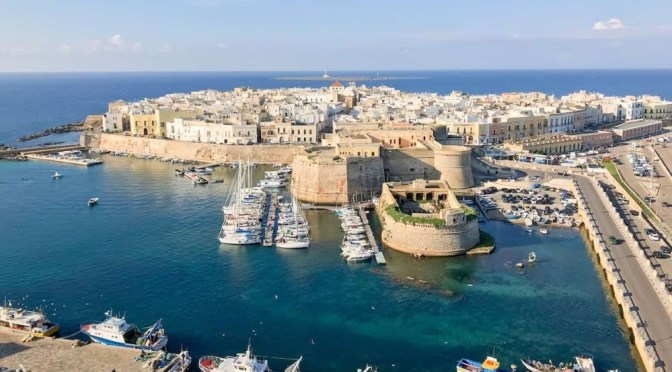
Gallipoli is a coastal town in Apulia, southern Italy. The historic center, on an island off the mainland, shelters churches like St. Agatha’s Cathedral, with its ornate facade. Nearby, the Church of St. Mary of Purity has a maiolica tiled floor. Gallipoli Castle includes the Rivellino tower, standing apart from the main building. Across the bridge, on the mainland, is the Greek Fountain, dating from the Renaissance.
Mount Ngungun, generally known as “Gun Gun”, is located an hours drive north of the city of Brisbane in south east Queensland, Australia. Mount Ngungun is the sixth tallest of the Glass House Mountains at 253 metres. The summit provides spectacular 360 degree views of nearby Mt Tibrogargan, Mt Tibberoowuccum, Mt Coonowrin and Mt Beerwah.
It is a very popular hike due to its relative ease and fantastic views, and has a well maintained walking trail to the summit. The trail from carpark is not as steep as the other higher mountains and is open to beginners. The south face contains steeper, unmarked but well known rock climbing routes.
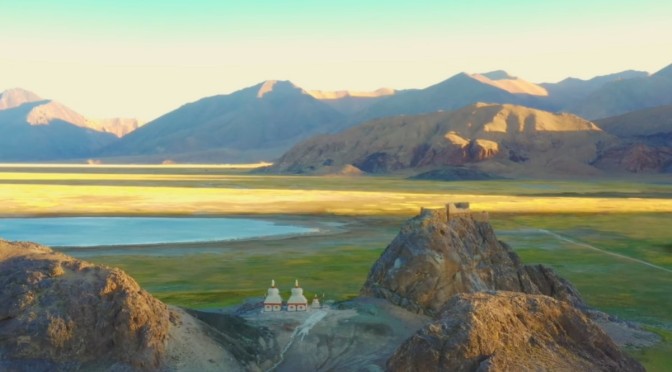
A trip to the most remote area of Tibet, western Tibet, and the small Rutog County that lies on the China National Highway 219 (Xinjiang – Tibet). Located 4300 meters above sea level, Rutog County is 1200 km away from Lhasa. Almost no tourists will come to this place.
However, if you are going to Mount Kailash or plan to have an overland tour from Xinjiang to Tibet (or vice versa), it is a place worth visiting. The highlights of Rutog County include the Pangong Tso Lake, the ancient Rutog Rock Painting, the Rutog Fortress, and the Monastery. You can feel the origin of Tibet here, which is isolated from the outside modern world for a long time.
On the edge of the Himalayas, Rutog County, as well as the whole of western Tibet, is one of the most inhospitable areas on the planet with high altitude, deserted mountains, and a harsh climate. But for many wild animals, it is actually heaven or the Shambala. In uninhabited western Tibet, you could see kinds of wild animals on the way, like the wild yaks, Tibetan wild donkeys, Tibetan antelope, etc.
The Jardin du Luxembourg, known in English as the Luxembourg Garden, colloquially referred to as the Jardin du Sénat, is located in the 6th arrondissement of Paris, France. Creation of the garden began in 1612 when Marie de’ Medici, the widow of King Henry IV, constructed the Luxembourg Palace as her new residence.
Building a city on a lagoon has its challenges. Here’s how the citizens of Venice accomplished this task centuries ago.
Rising sea levels and sinking land threaten to destroy Venice. Leading scientists and engineers are racing against the clock and battling the forces of nature to try to save this historic city for future generations. Discover the innovative projects and feats of engineering currently underway, including a hi-tech flood barrier, eco-projects to conserve the lagoon, and new efforts to investigate erosion beneath the city. This is Venice as never seen before, at a critical moment in its rich history.
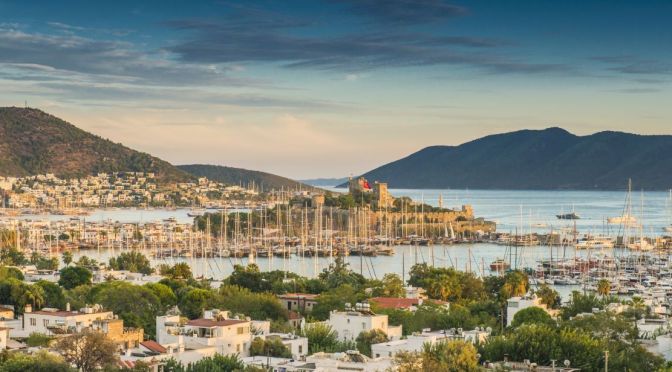
Bodrum is a city on the Bodrum Peninsula, stretching from Turkey’s southwest coast into the Aegean Sea. The city features twin bays with views of Bodrum Castle. This medieval fortress was built partly with stones from the Mausoleum at Halicarnassus, one of the Seven Wonders of the Ancient World, completed in the 4th century B.C. The city is also a gateway for nearby beach towns and resorts.
Sitting above the dunes on a plateau, Light Mine is an extraordinary home by Crosson Architects that embraces expansive views of the Coromandel Peninsula. Entering from the southern end of the house, the Light Mine house tour unfolds like a book, seeing Crosson Architects offer a carefully planned story from beginning to end.
Video timeline: 00:00 – Introduction to the Extraordinary New Zealand Home 00:43 – An Extraordinary Site 01:12 – A Choreographed Journey 01:30 – The History Behind the Gold Mining 02:10 – The Light Shafts 02:48 – Tying the Material Palette into Context 03:02 – Cladding Built From the Land 03:32 – Moulding and Blending into the Location Overtime 03:48 – The Extraordinary Craftsmanship 04:33 – A Reference to the Interior of a Gold Mine 05:08 – The Variations of Light Quality
Separated into interconnecting pods, Light Mine is a single level family home that takes inspiration from the dunes and headlands behind and becomes a unique structural form for future generations to enjoy. In designing the home, Crosson Architects looked to the gold mining history of the area, finding inspiration from a historical drawing of a gold mine shaft. As such, the architects have designed a series of geometric pods. Serving as unique structural elements, these inserts work together to break up the horizontal design of the extraordinary home.
Embraced by the clients after many conversations with Crosson Architects, the diagonal inserts offer a sense of scale and character to the home that relates to the surrounding landscape. From within, the diagonal shafts bring a playful and unique movement of light that instils changing characteristics; placed strategically over the living and dining areas, they offer variations of light as the sun shuffles through the extraordinary home.
Notably, the light shaft in the main bedroom offers glimpses of the night sky, capturing the Milky Way and stars above. Understanding that the extraordinary home needed to meld and blend into its surroundings over time, Crosson Architects has used reclaimed local native tōtara timber for the exterior cladding, enhancing the home’s horizontality and settling it into its surrounds. Overall, a cohesive approach to colour and materiality ensures the home reflects the surrounding landscape. Dark timber has been employed on the exterior, referencing the rock of the headland behind; inside, the use of light timber speaks to the sand dunes beyond.
The band sawn timber used extensively throughout the interior design creates a warm reprieve from the outside. In contrast, the kitchen and bathrooms feature dark timber veneer, which also nods to the gold mines while creating visual interest in each internal space. Challenged to design something that was both memorable and laid back, Crosson Architects has delivered an extraordinary home, which references Light Mine’s historical context and incorporates the changing colours of the day to emphasise its unique character.
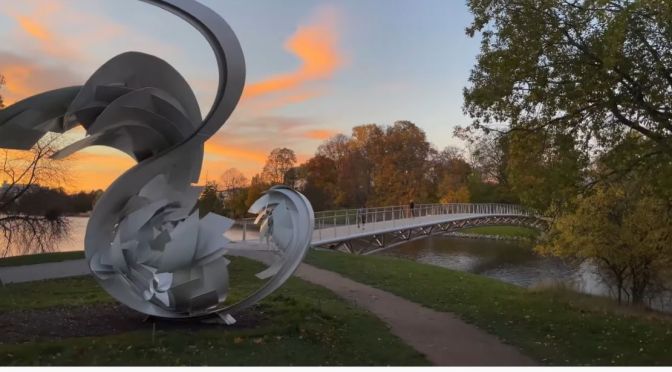
Perhaps the most classic place for a stroll in Stockholm. Sunday brunch at Djurgårdsbrunns värdshus, combined with a stroll along the canal is something I believe most locals appreciate. We’re here at a weekday, near sunset. Just a few joggers, walkers and a horse around.
Djurgårdsbrunnskanalen is a canal in central Stockholm, Sweden, separating the island Djurgården from the northern mainland. The canal stretches one kilometre from Lilla Värtan to Djurgårdsbrunnsviken and allows ships 9.5 metres wide and 2.1 metres deep to pass.
News, Views and Reviews For The Intellectually Curious





 Boomers Daily