Tag Archives: Trash

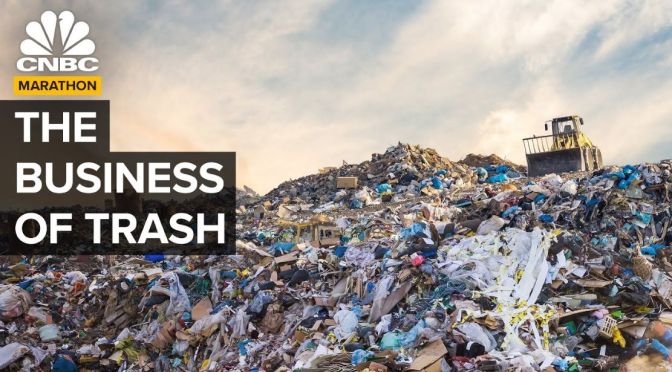
Analysis: The Business Of Waste Management (CNBC)


CNBC (January 8, 2024) CNBC Marathon explores the economics of waste management and how the United States is solving its trash problem. In 2019, the North American waste management market reached $208 billion.

Chapters: 00:00 Introduction 00:48 How Trash Makes Money In The U.S. (Published July 2021) 15:59 How Amazon, American Airlines And Subaru Burn Waste To Make Energy (Published May 2022) 32:24 How To Clean Up The World’s Most Polluted Rivers (Published August 2022) 46:16 Where Do EV Batteries Go When They Die? (Published March 2023)

Thanks to advancements in modern chemistry and support from municipal governments, landfills have seen astonishing financial success in recent years. Burning waste to make energy is a $10 billion industry in the U.S., and the fastest growing part of the business is waste from big companies like Amazon, Subaru, Quest Diagnostics and American Airlines.

They’re part of a growing corporate movement toward “zero landfill” as pressure mounts to reach sustainability requirements. It’s estimated that every year, millions of tons of plastic enter the ocean through rivers, and as global waste generation increases, the problem is poised to worsen.

But a host of companies from Baltimore, Maryland to Bengaluru, India are working on the issue, developing novel methods to capture trash from rivers before it reaches the ocean. Dozens of electric vehicles are scheduled to debut in the next few years and over 300 million electric vehicles are expected to be on the world’s roads by 2030.

The lifetime for an EV battery is estimated to be 12 to 15 years in moderate climates, but that doesn’t mean the batteries end up in landfills when they die.


Zero Waste: Trash Turned Into Cash (The Economist)

The world is facing a growing waste problem, with 2bn tonnes produced last year alone. Is it possible to clean up this mess by turning trash into cash? 00:00 – The world has a huge waste problem.

Video timeline: 00:45 – Upcycling to reduce waste 02:46 – Building offices from recycled products 03:46 – The problem with traditional recycling 04:59 – Waste reduction relies on a circular economy 05:38 – Taiwan’s waste management success 08:20 – The problem with incineration 09:55 – Is the future zero waste? 10:43 – Consumption attitudes are changing Read our special report on waste here https://econ.st/3JrlD6y

Morning News: Climate Change Report, Business Of Trash, Olympics Review

The UN’s Intergovernmental Panel on Climate Change released its latest report on climate change this morning. It shows that warming is happening more quickly than we realized, and calls the connection between human activity and global warming “unequivocal.” It’s the strongest stance by global scientists on climate we’ve seen yet.

  • Plus, the pandemic has changed our relationship with trash.
  • And, Ina Fried’s big takeaways from covering the Olympic games.

Guests: Axios’ Andrew Freedman, Hope King, and Ina Fried.

Analysis: How Landfills Make Millions From Trash

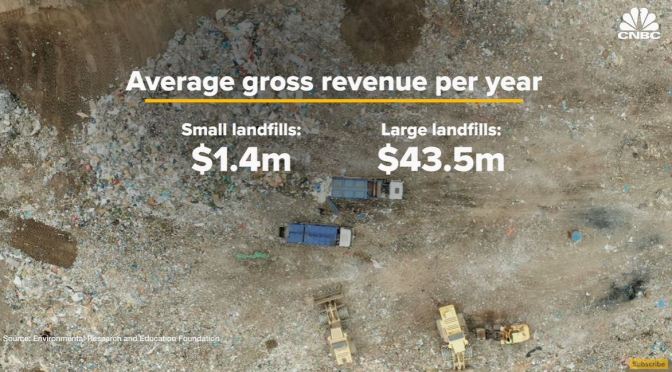
In 2019, the North American waste management market reached $208 billion. Thanks to advancements in modern chemistry and support from municipal governments, landfills have seen astonishing financial success in recent years. Private companies like Waste Management and Republic Services now own a majority of landfills across the U.S., their stocks outperforming the market every year since 2014. So how exactly are landfills turning a profit out of garbage and just how much money can be made? Watch the video to find out.

Conservation: ‘Tides Of Trash’ In The Maldives

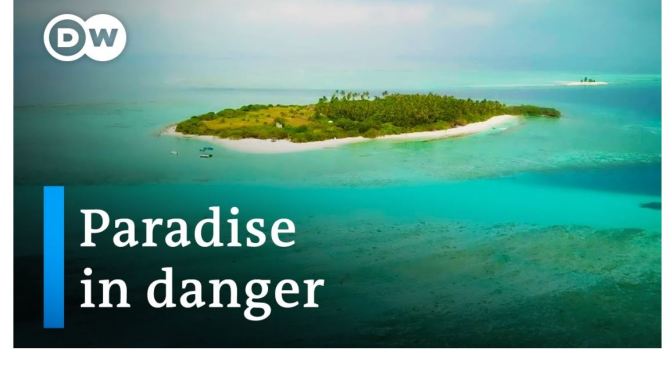
Thilafushi, an island of floating rubbish island in the Maldives, grows by a square meter a day. But diving instructor Shaahina Ali is trying to slow that growth by recycling and using floating barriers to hold back the rising seas.

For decades, the Maldives simply dumped the trash the tourists and the island country’s 400 thousand residents generated. Yet Shaahina Ali says that has to stop. Almost every day, the diving instructor and her allies go from island to island in the Indian Ocean. Working with an environmental organization, they have obtained trash compactors that make plastic waste transportable, allowing it to be shipped abroad for recycling. Ali also advocates avoiding disposable plastic. She gives lectures, advises hotel managers and even bends the ear of the Maldives’ president himself.

When she has time, Shaahina Ali goes scuba diving. Beneath the waves she sees environmental degradation – dying corals and fish caught up in plastic waste. She says, “We can’t afford to address just one problem. We’ve got to take care of everything at once because everything is connected to the sea.” But the island paradise is not only threatened by rubbish. Climate change is also causing the sea levels to rise, and the Maldives are at risk of sinking beneath the water.

That’s why conservationists are using floating barriers made of recycled plastic to help prevent flooding. In addition to the environmental group “Parley for the Oceans,” Ali has also won politicians to her cause. Last year saw a democratic change of government in the Maldives. “The new government no longer views environmentalists as annoying troublemakers. They see us as partners instead,” Ali says. But those trying to save the island are in a race against time. “If we don’t succeed,” says Shaahina Ali, “far more than a vacation paradise will be lost. We will lose our homeland.”