Tag Archives: The Scientist Magazine

The Scientist Magazine – March 2025 Issue

Issues | The Scientist Magazine® | The Scientist

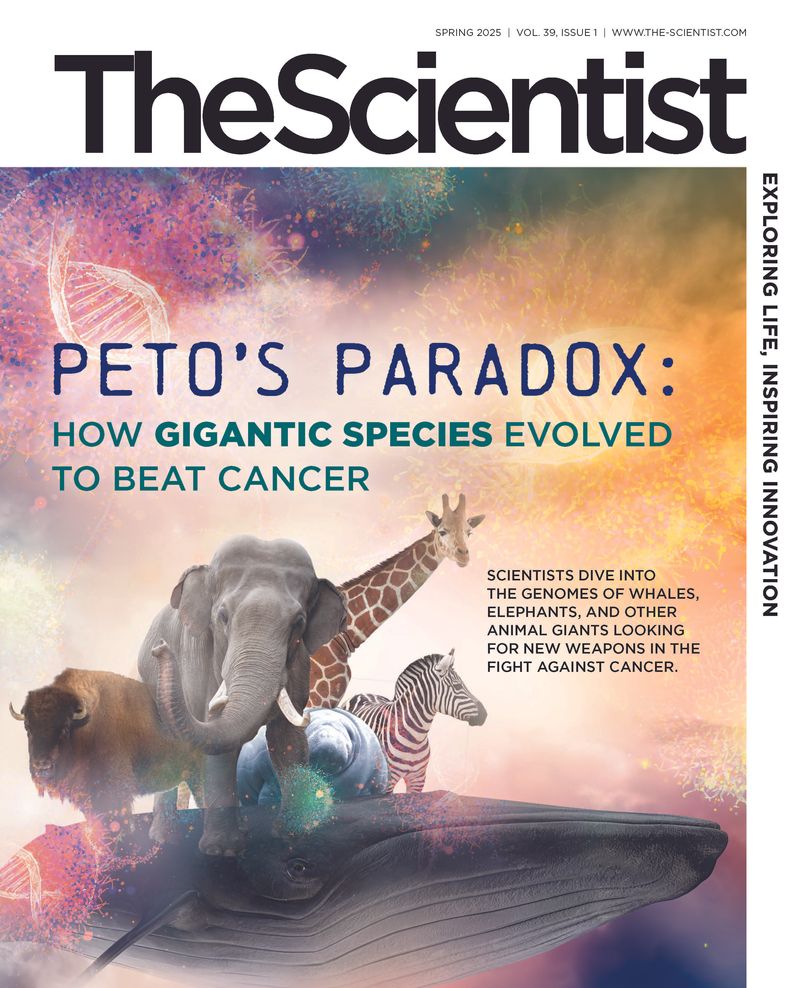
THE SCIENTIST MAGAZINE (March 12, 2025): The latest issue features ‘Peto’s Paradox’ – How gigantic species evolved to beat cancer…

Peto’s Paradox: How Gigantic Species Evolved to Beat Cancer

Scientists dive into the genomes of whales, elephants, and other animal giants looking for new weapons in the fight against cancer.

DNA Profiling: Tracing Killers and Solving Mysteries Using Genetic Clues

Every DNA fragment tells a story. Forensic experts use these genetic breadcrumbs to solve old mysteries and modern crimes.

Generation X and Millennials Face a Steep Rise in Early-Onset Colorectal Cancer Cases

Younger individuals are developing colorectal cancer earlier in life compared to older generations, and scientists don’t know why.


Research: The Scientist Magazine – Summer 2023

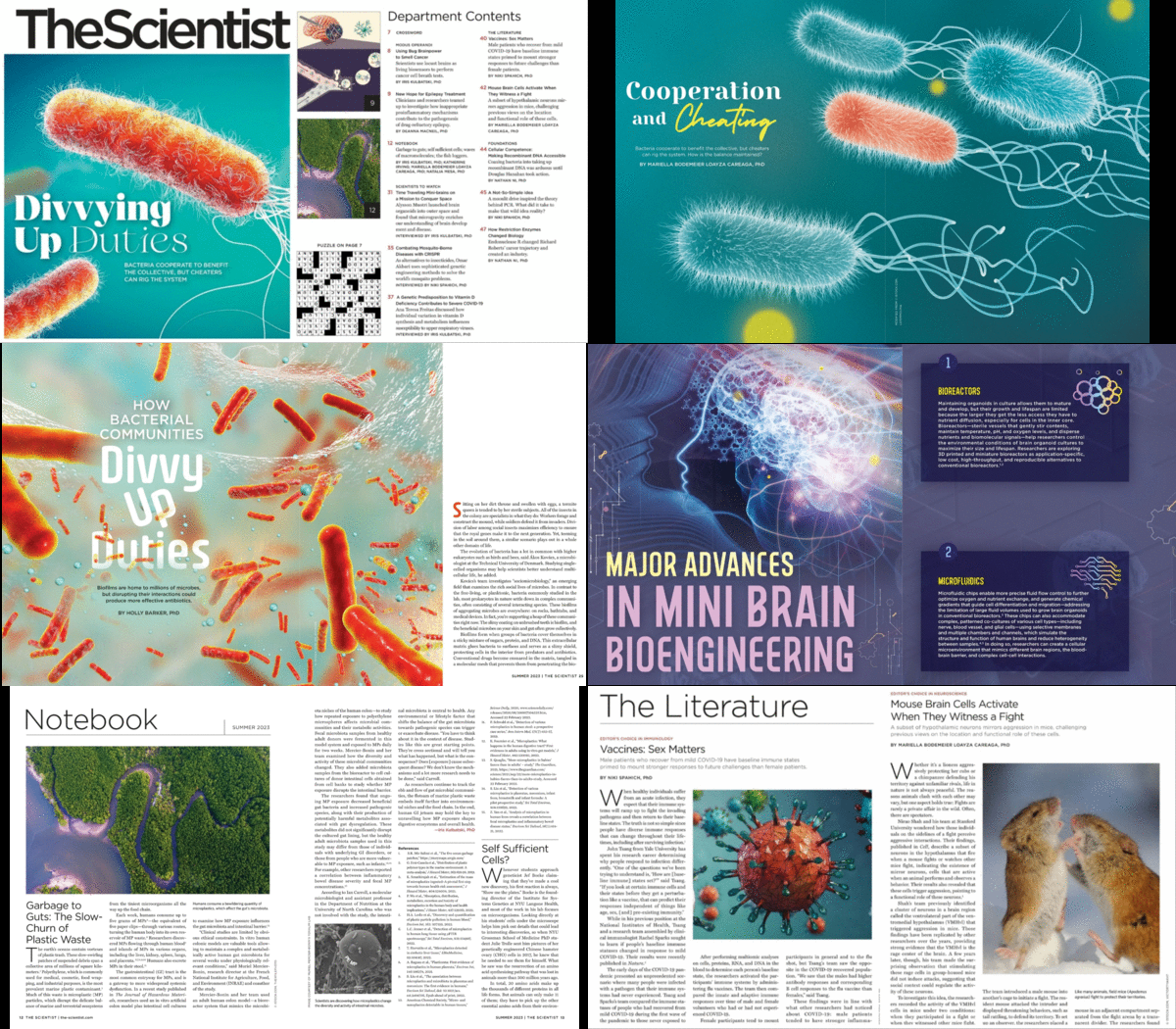
The Scientist Magazine (June 1, 2023) – The Summer Issue features bacteria cooperating to benefit the collective, but cheaters can rig the system and biofilms are home to millions of microbes, but disrupting their interactions could produce more effective antibiotics.

Cooperation and Cheating

Pseudomonas Aeruginosa

Bacteria cooperate to benefit the collective, but cheaters can rig the system. How is the balance maintained?


People often recognize social behaviors in complex organisms such as insects, nonhuman primates, and humans. But Megan Frederickson, an ecologist and evolutionary biologist at the University of Toronto, is interested in a different, microscopic social community: bacteria. “Cooperation is everywhere,” she said. “Cells cooperate in multicellular organisms; individuals cooperate in societies; and different species cooperate… Why would it not be the case that microbes cooperate with each other?” 

New Insight into Brain Inflammation Inspires New Hope for Epilepsy Treatment 

Clinicians and researchers teamed up to investigate how inappropriate proinflammatory mechanisms contribute to the pathogenesis of drug-refractory epilepsy.

3D image of a neuron cell network with a red glow representing inflammation.

Doctors treat epilepsy with anticonvulsants to control seizures, but some patients do not respond to these first-line therapies. For patients with drug-refractory epilepsy (DRE) whose seizures persist after treatment with two or more anticonvulsants, clinicians must surgically remove part of the brain tissue to cure the disease.

Previews: The Scientist Magazine – December 2021

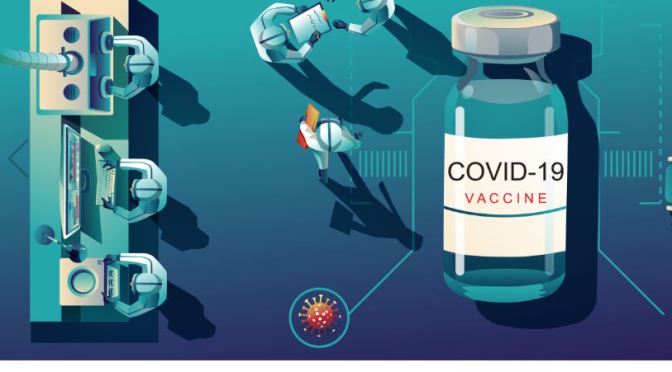
Covid-19 In 2021: End Is In Sight, Challenges Remain

We enter 2021 surrounded by these rays of hope that the end of the pandemic might be in sight. But monumental challenges remain. Vaccine manufacture, distribution, and uptake are substantial pieces of a complex puzzle that must be completed to reach the 75–90 percent vaccination rate that global health experts say is key to stopping the spread. 

And the virus itself is almost sure to change as it infects more people, possibly becoming more transmissible or dangerous. For instance, as I write this in late December 2020, public health officials in the UK are reporting the rapid spread of a new strain of SARS-CoV-2 that seems to be highly infectious.

This is a perfect example of the continued surprises this pandemic may yet throw at us. But virologists, epidemiologists, drug developers, and other scientists will continue to band together to study this virus and share information that can help humanity address this and future issues appropriately. In addition to careful monitoring of the virus as it mutates and spreads, I fully expect there to be regular monitoring of vaccinated individuals, further refinement of vaccine, and continued development of new COVID-19 therapies. And I can promise that The Scientist will continue to track these developments closely and provide up to date and accurate information about the COVID-19 pandemic and other scientific issues in 2021 and beyond.

Read more