Tag Archives: The Local Project Videos

Home Design: Crane Lodge In Palm Beach, Australia

A luxury getaway home settled on a unique site, Crane Lodge immerses visitors in its natural context. Designed by Secret Gardens, the landscape architecture of the home enhances the sensory experience of the outdoors.

Video timeline: 00:00 – Crane Lodge as an Experience 00:44 – The Client’s Vision 01:05 – The Garden and The Setting 01:58 – Lodged Unusually High 02:21 – The Inclusion of Amenities 02:37 – The Team Involved 03:04 – Major Site Components 03:34 – A Strong Connection to The Outdoors 03:49 – A Natural Watering Hole 04:28 – Sympathetic Materials and Beautiful Features

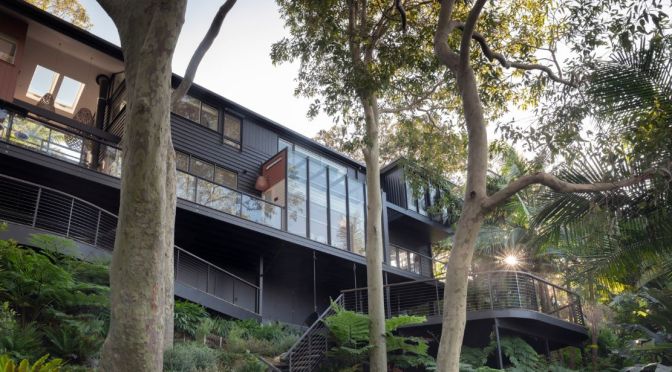
Located in the Sydney suburb of Palm Beach, Crane Lodge sits on an elevated site. The design brief for the landscape of the luxury getaway home centred on creating a sense of arrival whilst allowing access to the house across the terrain. Employing an inclinator, Secret Gardens instils the arrival process with a sense of anticipation and discovery.

Many endangered species of plant are championed in the landscape design of the luxury getaway home and are designed to appear slightly unkempt. Secret Gardens also includes indigenous plants for cooking and educational purposes. A smattering of boulders surrounds the luxury getaway home, contributing to the impressive character of its external environment.

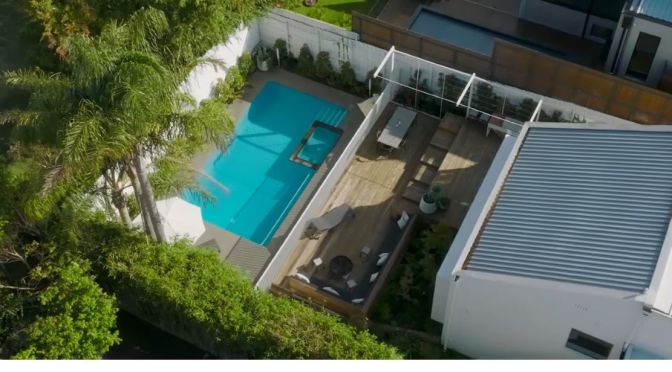
Secret Gardens purposefully positions the swimming pool adjacent to boulders, creating the impression that the amenity emerged naturally. The materials chosen for the landscape architecture of Crane Lodge express a sympathetic approach to nature. As a result, the luxury getaway home entirely embraces its context, with a landscape design that captures the essence of a bushwalk experience.
Home Renovations: May House, Malvern, Australia

When an architect designs a house with consideration and care, dwellings such as May House emerge. Taking a playful approach to colour and materiality, Neil Architecture reimagines a 1980s home as a relaxed, modern family residence.

Video timeline: 00:00 – The Local Project’s Print Publication 00:10 – Introduction to the House 00:45 – Complementary Design 01:01 – Exterior Renovations 02:03 – 1980s Materiality 03:12 – Landscape Architecture 04:09 – A House Made for Entertaining 04:42 – Timeliness Rejuvenation 05:17 – Subscribe to The Local Project’s Print Publication

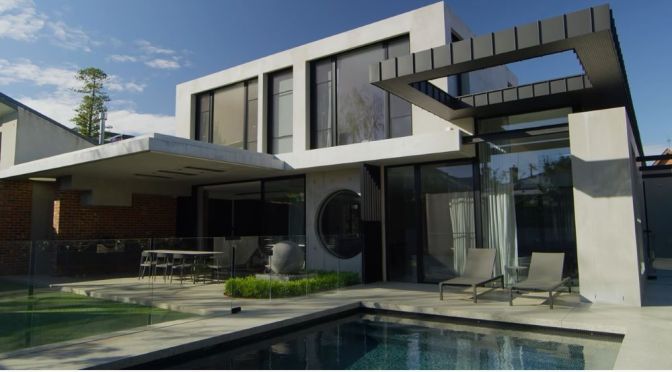
When an architect designs a house, the design brief can often stipulate a complete renovation. However, Neil Architecture recognised the value of the original 1980s construction – settled into the leafy suburb of Malvern – and decided instead to complement the home with architectural additions.

To maintain the strong and simple form of the original structure, Neil Architecture covers the pre-existing truss with a perforated screen. Off-form concrete is used to create the carport, whilst a roughcast concrete render is applied to the fence – in doing so, the architect designs a house that interacts with the local built environment. As an architect designs a house, the intent can be expressed through the finer details of the scheme.

In May House, rusty red and green tones appear in the material palette, paying homage to the colours present in 1980s interior design. May House sees a 1980s residence both celebrated and reimagined, embraced and rejuvenated. Managing the external architecture and interior detail, the architect designs a house that is imbued with a sense of warmth and continuity; a house for the future that is inspired by the past.

Modern Architecture: Rose Bay Duet In Sydney

Harmoniously engaged with its constituent parts and context, Rose Bay Duet is a residential work by Stafford Architecture. Utilizing the interior comforts of Poliform Australia, the two modern homes propose a lifestyle of relaxed family living.

Video timeline: 00:00 – Introduction to the Modern Homes 00:55 – The Client Brief 01:27 – Using Poliform Throughout the Home 03:13 – Materiality 04:40 – The Roof Terrace 05:06 – The Master Bedroom Area 05:35 – What the Architect is Most Proud Of

Named in reference to the Sydney Opera House, Rose Bay Duet is similarly settled on the eastern side of the city. Comprised of two modern homes, the project pays homage to the idea of lyrical, architectural narrative – in particular, the project celebrates the operatic relationship between the two modern homes, the sloping site, the Opera House and the iconic Sydney Harbour Bridge.

Appointing a specific design team to each of the two modern homes, Stafford Architecture creates dual unique outcomes that share select character qualities. Whilst both houses maximise the incredible views available and feature an exterior of simple materiality, one house has feminine characteristics while the other projects a more masculine impression.

Collaborating with Poliform Australia, Stafford Architecture enjoyed a smooth creative process. With access to the entire Poliform range, seeing both modern homes benefit from elegant joinery, textures, finishes and soft furnishings. Rose Bay Duet is a well-considered and intuitive feat of interior design and architecture. Stafford Architecture applies the Poliform Australia collection with enthusiasm and intent, crafting modern homes that rejoice in a sense of connection.

Design Tour: Queens Park House In Sydney, Australia

Queens Park House is an architect’s own minimalist oasis. Designed by Kyra Thomas Architects, the calming suburban home strongly contrasts its previous iteration as a storage warehouse.

Video timeline: 00:00 – The Local Project’s Print Publication 00:10 – Introduction to the Architect’s Own Home 00:49 – Warehouse Conversion 01:23 – The Brief 02:41 – Green Spaces 03:05 – Lighting 03:31 – Materiality 04:15 – The Architect’s Favourite Room 04:43 – The Finished Project 05:06 – Subscribe to The Local Project’s Print Publication

Located in Sydney, Queens Park House was originally a storage warehouse with brick walls built to the boundary of its site. Converting the commercial property into an architect’s own minimalist oasis required opening up the building and rewriting its internal character.

Structurally, turning the warehouse into an architect’s own minimalist oasis involved removing the pre-existing roof and inserting walls into the interior of the building. The brick boundary walls are retained, enabling a sense of privacy within the suburban setting and paying homage to the history of the building. As an architect’s own minimalist oasis, Queens Park House embraces natural light and fresh air.

Four courtyards punctate the spatial plan, creating green space for different aspects of the house to relate to, as well as facilitating internal lighting and ventilation. Responding to the residential needs of the client, Queens Park House stands as an architect’s own minimalist oasis. Custom and considered, the home testifies to the skill of Kyra Thomas Architects in transforming a commercial space.

Architecture: La Casa Rosa, Randwick, Australia

A modern house designed by Luigi Rosselli Architects, La Casa Rosa is the romantic reimagination of a heritage property. Combining architecture from the late 19th century with contemporary additions, the renovated home forms a considered and contemporary home.

Video timeline: 00:00 – The Local Project Print Publication 00:10 – Introduction to the Modern House 00:58 – Entering the House 01:57 – Maintaining the Existing Home 02:53 – Utilising Fluid Lines 03:25 – The Pool 04:18 – Selecting the House Colour 05:02 – What the Architect is Most Proud Of 05:41 – The Local Project Print Publication Subscription

Settled on an escarpment overlooking the Pacific Ocean, La Casa Rosa is accompanied by many other Victorian buildings. The steep roof of the modern house testifies to its roots, obviously referring to the architecture of its time. In materiality, La Casa Rosa pays homage to its past. Bricks, timber and sandstone reference the palette of the built surrounds, whilst some of the original roof tiles are used to make a tile screen.

To the rear, the tile screen breaks the western sun, but is also used in connected the original and modern roof structures. Entering through the front of the modern house, the small, original rooms are immediately revealed as the children’s bedrooms. The back of the modern house represents the contemporary addition. An open-plan living space encapsulates the kitchen, dining and sitting area, with a staircase that leads to the first floor.

Outdoors, Luigi Rosselli Architects also retains the pre-existing pool, a peanut-shaped feature that complements the landscaping concept. Incorporating the fluid lines that have become synonymous with the work of Luigi Rosselli Architects, La Casa Rosa is undoubtedly a modern house. However, the completed project sees historic architectural elements subtly blended with the latest features, establishing a cohesive dwelling that proudly represents its past.

Australia Architecture: House Bondi Beach Tour

House Bondi Beach accurately represents an original design by Carla Middleton Architecture. Inside a home featuring saw-toothed geometry, the interior design is effortlessly unique, incorporating the challenges of distinct, angular architecture.

Video timeline: 00:00 – A Private Retreat in the City 00:21 – Introduction to the Home 00:44 – Entering the Home 01:11 – Bringing the Vision to Life 01:54 – The Concept 02:39 – Creating a Happy Space 03:08 – External Finishes 03:54 – European Oak in the Home 04:14 – Bathroom Tiles 04:34 – What the Architect is Most Proud of

Constructed by M&G Building, House Bondi Beach is a modern suburban home. The design emerges from a rigorous analysis of the brief, which detailed the clients’ desired experience for inside a home, focusing on work, entertainment and retreat.

The design of House Bondi Beach was influenced by its gently sloping site. The bedroom, bathroom and living room – key amenities inside a home – are placed in a specific layout, defined by the act of stepping down into the rear of the property. Stairs delineate the more private areas of the family home. Carla Middleton Architecture manages the interior experience inside a home by using carefully chosen furniture and comforting materials.

In House Bondi Beach, a natural materiality creates the relaxing environment associated within a coastal setting. European oak features in the floor, timber staircase and refined balustrades, forming a point of material consistency throughout the home. To enter House Bondi Beach is to venture inside a home that is conceptually pure. Thoroughly expressing the vision of Carla Middleton Architecture, the residence is a rare feat of residential design.

Cabin Tours: Coromandel Bach In New Zealand (4K)

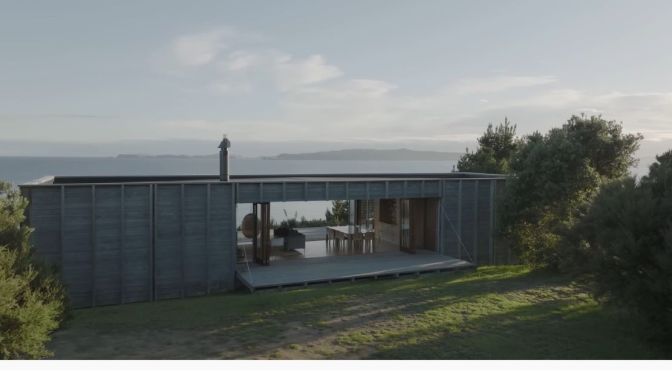
Coromandel Bach, an architect’s own tiny cabin, is designed by Crosson Architects as a functional holiday home. The timber residence is the ideal place of retreat away from busy urban life. Settled on the eastern side of The Coromandel Peninsula, Coromandel Bach is an architect’s own tiny cabin.

Video timeline: 00:00 – The Local Project Print Publication 00:10 – Introduction to the Architect’s Own Tiny Cabin 00:36 – Designing Using Timber 01:35 – The Perfect Holiday House 02:33 – Entering the Tiny Cabin 03:19 – The Bathroom 04:00 – The Kitchen and Dining Spaces 04:23 – An Experimental Home 05:42 – Celebrating Success 06:04

The holiday house sits on a site with no other buildings; no bush, just a north-facing view to white sandy beaches and a series of islands. As an architect’s own tiny cabin, Coromandel Bach expresses a studious approach to form and function. In a manner reminiscent of a suitcase, the architecture of the home can fold open or closed depending on the needs of the occupant, protecting its interior from the natural elements in some instances or embracing the outdoors in others.

The inspiration underpinning Coromandel Bach’s ‘refined camping’ is thoroughly executed, as would be expected in an architect’s own tiny cabin. Crosson Architects omits curtains and drapes from the interior design, enabling occupants to rise with the sun. Nature is celebrated using natural timber and through innovative features such as a bathtub on wheels that allows bathing outdoors in the morning sun or under the stars.

A unique example of an architect’s own tiny cabin, Coromandal Bach is a textural building with an innate sense of dynamism. The residential experience proposed by Crosson Architects is synonymous with the experience of nature.

Architecture: ‘Clifftop House’ On Coromandel Peninsula, New Zealand

A holiday home with a dual focus, Clifftop House maximises coastal views whilst maintaining a sense of privacy. Created by Ponting Fitzgerald Architects with appliances from Fisher & Paykel, the holiday house has a surprising relationship to its context.

Chapters: 00:00 – Introduction to the Holiday House 00:39 – The Client Brief 01:12 – Entering the House 02:16 – Designing the Kitchen 03:09 – The Master Bedroom 03:25 – Design Inspired by Context 04:21 – Connection to Nature 04:59 – A Unique Perspective

Settled into a coastal community on the Coromandel Peninsula, Clifftop House sits on a ledge overlooking Hahei Beach. While the holiday house has access to striking vistas, including views to Mercury Islands, the unusual topography also leaves the home within eyeshot of other properties. To foster a sense of privacy, Ponting Fitzgerald Architects purposefully restricts access to the surrounding context in some parts of the home.

The atmospheric interior of the holiday house distinctly contrasts the coastal scene outside – however, the top floor of the residence sees a large, covered deck flow out to the view, re-establishing the connection to nature in dramatic fashion. As an interior element of the design, the kitchen of Clifftop House contributes to the feeling of retreat from the outdoors. Dark American oak cabinetry establishes a modest and unimposing space, complemented by the seamless insertion of appliances by Fisher & Paykel.

The result sees the internal architecture play a dominant role in the holiday house, guiding occupants through the home and towards the view. A gentle imposition on its context, Clifftop House is defined by its architectural discretion. Ponting Fitzgerald Architects ensures that, despite having access to incredible views, the holiday house appears as a mere canopy from the perspective of the beach.

Architecture: The Gallery House, Toorak, Australia

The exact sum of its parts, The Gallery House features spaces both grand and small, each expressing their own narrative. Crafted by Workroom, the super house stands as an exemplary piece of interior design and architecture. Situated in the well-established suburb of Toorak,

00:00 – The Local Project Print Publication 00:10 – Introduction to the Super House 01:27 – Creating Continuity with Materials 02:30 – Use of Stone in the House 02:47 – Landscape Design 03:21 – Natural Light 03:50 – A Sense of Timelessness 04:27 – What the Architect is Most Proud Of

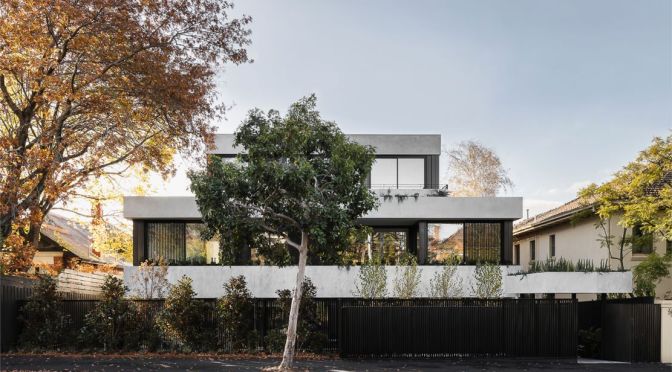
The Gallery House sits amongst other large family homes and gardens. Despite its spatial openness, the super house is designed in allusion to experiences yet to come, flowing towards other aspects of itself and its context. A house tour of the property reveals the extent of its size. A true super house, the residence contains 4 bedrooms, 2 lounge rooms and vast, double-height voids. Workroom purposely conceals the size of the home from the street, creating anticipation and intrigue, using a curved concrete wall to the entry as a reveal of what is to come. The modern materials of concrete, terrazzo, timber and stone feature consistently in the super house. Subverting expectations, Workroom uses the characteristically heavy concrete to craft an elegant staircase that appears effortlessly lightweight, whilst timber and green stone facilitate an open connection to the lush landscaping. Embracing a raw materiality, Workroom creates a super house that will gracefully express the passage of time. With the capacity to visually evolve with age, The Gallery House is a successful interpretation of modern refinement.

Australian Architecture: ‘Round Choreography’

Evolving from a symmetrical design, Round Choreography is a playful geometric home with a familial tenor. With the architecture, interior design and build undertaken by mckimm, the forever house sees a clear design intent rigorously executed.

00:00 – Introduction to the Forever Home 00:38 – Designing with Unique Geometries 01:08 – In-Situ Concrete 01:40 – Intuitive Design 02:14 – Wellness and Gym Area 02:31 – Collaborative Approach to Design 03:28 – The Material Palette 04:07 – What the Architect’s Are Most Proud Of

Settled into the leafy suburb of Malvern, Round Choreography is named in homage to the original floorplan of the home that flourished into the completed forever house. Geometric in nature, the interiors celebrate a circular motif, visible from the kitchen to the ensuite and the internal courtyard of the home’s lower level.

As architect, interior designer and builder, mckimm’s construction team had intimate knowledge of the design intent, enabling efficiency to undertake strenuous tasks to deliver the desired forever house. The unique frameless window in the living area is a particular triumph. The practical nature of the forever house extends to its materiality. mckimm chooses a durable palette comprised of concrete, timber and stone to express a commitment to longevity whilst celebrating aesthetic rawness.

Polished concrete flooring with hydronic heating meets walls of the same material, creating an architecturally consistent envelope. Designed in the knowledge that the clients are growing their family, Round Choreography captures the excitement of embedding oneself in a location. The light-filled forever house marks the beginning of family life.