Tag Archives: The Cotswolds

Travel In The Cotswolds: ‘Stroud To Tetbury’ (Video)

We’re continuing our journey south in this episode, having been to Painswick and the Slad Valley in episode five. We begin in Stroud, and move through the golden valley to Minchinhampton, high up on the escarpment and then down to Cirencester, before moving through Malmesbury and onto Tetbury.

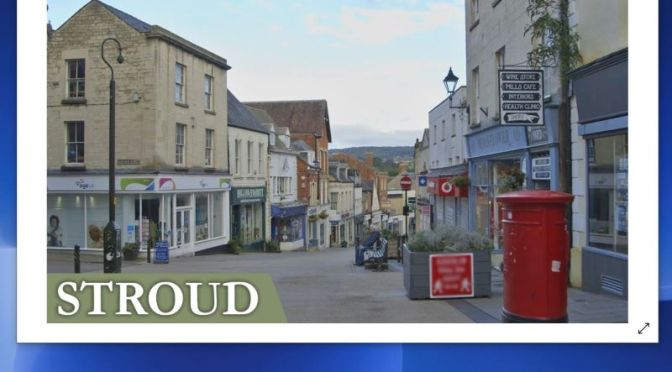
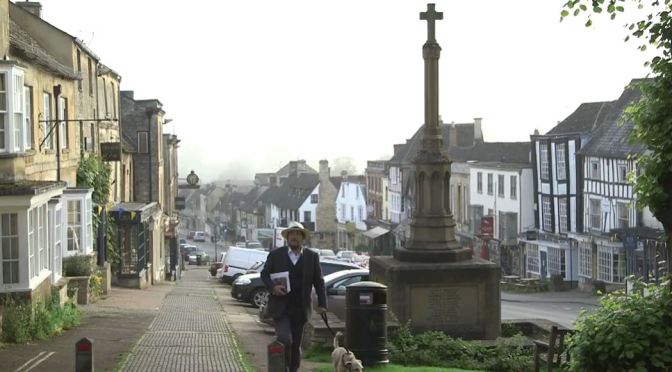
Stroud is a market town and civil parish in the centre of Gloucestershire, England. It is the main town in Stroud District. Situated below the western escarpment of the Cotswold Hills at the meeting point of the Five Valleys, the town is noted for its steep streets, independent spirit and cafe culture. 

Tetbury is a town and civil parish inside the Cotswold district in England. It lies on the site of an ancient hill fort, on which an Anglo-Saxon monastery was founded, probably by Ine of Wessex, in 681.

Travel In The Cotswolds: ‘History Of Cirencester’

Often regarded as the capital of the Cotswolds, Cirencester was once the second largest town in Britain during Roman times. It’s name back then was Corinium Dobunnorum and today makes for essential visiting to any Cotswold traveller. The history of the Gloucestershire town spans several centuries, reflected by the dozens of interesting buildings nestled in the centre.

Travel In The Cotswolds: ‘Stroud’, Gloucestershire

Stroud is a market town on the western side of the Cotswolds in Gloucestershire, England. It is the meeting point for the surrounding five valleys and is renowned both for its steep streets and highly political culture. It was heavily involved in the industrial revolution and produced cloth, powered by small rivers which flow through the five valleys. Although not often considered a classic Cotswold town, it is well worth a visit.

Cotswolds Home Tours: “Manor House At Chipping Norton”, Oxfordshire, UK

SEPTEMBER 2020

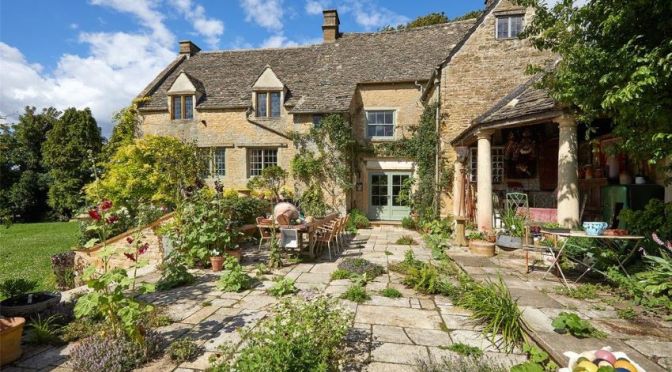
For the past 10 years or more, the manor’s globe-trotting owner and ‘serial collector’, Tony Hill, has painstakingly restored and modernized the quirky, 3,700 sq ft house set in three-quarters of an acre of totally private gardens in the heart of the town, with guidance and advice from Cheshire-based Nigel Daly Architectural Design.

In the rolling countryside of north Oxfordshire, Grade II-listed The Manor House at Chipping Norton has ‘the wonderful homely feel of a house your parents might have lived in for 30 years,’ says David Henderson of Savills in Stow-on-the-Wold.

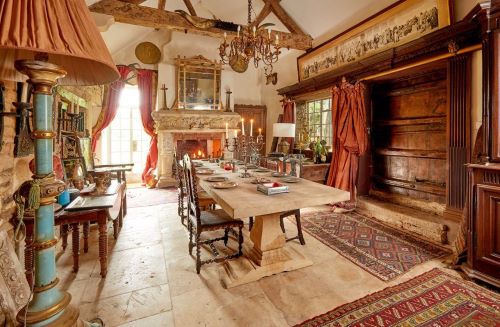
Stone steps from the hall lead to the light-filled main drawing room with its oriel window and window seat, where bespoke bookcases made from reclaimed elm boards surround the open fireplace. Another flight of stone stairs leads from the inner hall to the dining room with its vaulted ceiling and impressive carved stone fireplace. A large games/media room is used as a home cinema, office and party room.

Read more

Home Tours: “The Malt House” In Chipping Campden, The Cotswolds, England (Country Life)

Country Life Magazine (July 26, 2020):

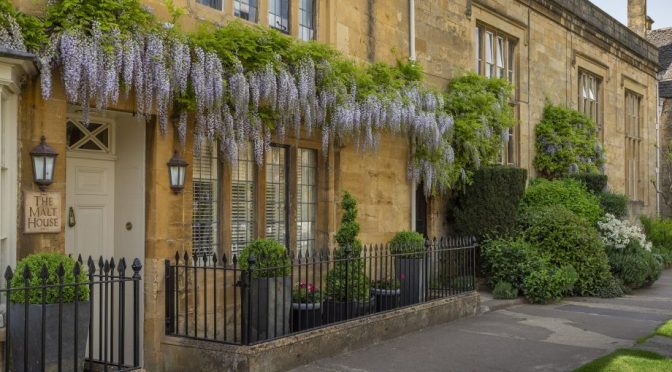
Country Life Magazine July 2020Chipping Campden is a town charmed by limestone. Its walls dance by the light of the dying day… Chipping Campden’s High Street is best viewed from the covered market of 1627, looking up towards the church tower. The houses are of a creamy local limestone. Walls are offset by grey-brown roof tiles and white woodwork, fronted by foxgloves, hydrangeas and a skirt of lawn.’

This slideshow requires JavaScript.

The High Street of Chipping Campden is described as ‘the best piece of townscape in Gloucestershire and arguably one of the best in England’, not by the agents, but by Nikolaus Pevsner himself.

The 18th-century, five-bedroom home is awash with period features, such as an oak staircase, fireplaces and exposed beams. The garden planted with hornbeam, yew and box hedging, as well as rose beds and herbaceous borders, leads through to the private parking area with three spaces.

Read full article

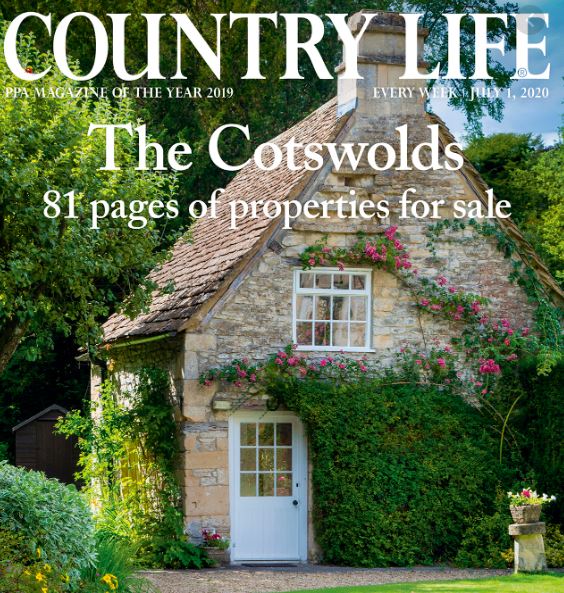
The Cotswolds is a rural area of south central England covering parts of 6 counties, notably Gloucestershire and Oxfordshire. Its rolling hills and grassland harbour thatched medieval villages, churches and stately homes built of distinctive local yellow limestone. The 102-mile Cotswold Way walking trail follows the Cotswold Edge escarpment from Bath in the south to Chipping Campden in the north.