Tag Archives: Sustainable Agriculture

World Economic Forum: Top Stories – Nov 16, 2024

World Economic Forum (November 16, 2024) – The top stories of the week include:

0:15 AI robot zaps weeds while saving crops – It’s called Concentrated Light Autonomous Weeding and Scouting or CLAWS for short. CLAWS uses AI-powered image processing to identify the crops, then targets weeds around the crop with blasts of concentrated light. This gets rid of unwanted intruders without damaging either crops or soil.

1:52 5 ways bioeconomy affects daily living – The bioeconomy uses renewable resources from land or sea to produce food, energy, and other resources. It focuses on leveraging nature’s processes and products to create sustainable economic outputs. The bioeconomy is already a part of our daily lives, influencing various sectors and industries.

6:08 Iceland sees benefit of a 4-day work week – The Nordic nation of 380,000 is rolling out a new way of working. Between 2020 and 2022, 51% of Iceland’s workers accepted an offer of shorter hours, such as a 4-day week for no loss of pay. The shift has had a positive impact on work-life balance and personal stress, new research shows.

8:17 Restored Amazon ecosystems beat logging – Amazon Sacred Headwaters Alliance is fighting to safeguard 35 million hectares of rainforest through a collaboration between 30 Indigenous nations of the Amazon basin. There’s an economic case for protecting the Amazon, says Atossa Soltani, Director of Global Strategy, Amazon Sacred Headwaters Alliance.

#WorldEconomicForum

Analysis: Is Traditional Agriculture Sustainable?

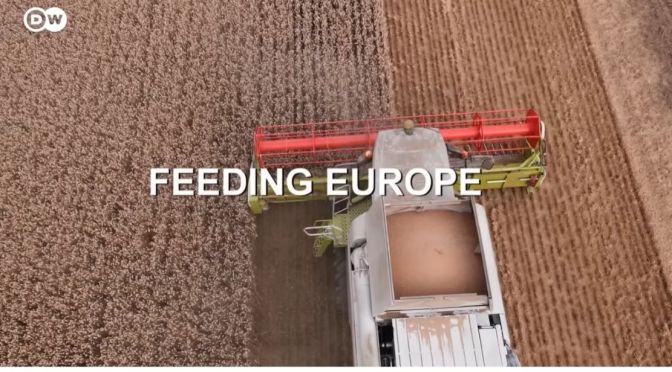
DW Documentary (December 10, 2022) – Is sustainable agriculture possible in Europe? From Spain’s “plastic sea” of greenhouses, to farmer suicides in France, the organics boom and high-tech production, it’s clear that Europe’s agricultural sector is in a period of extreme flux. And it needs to change: Agricultural landscapes are shaped by the history of our continent and inextricably bound up with its identity.

But farmers are struggling. They’re under constant pressure to produce more, at lower prices and can no longer hold out against the stiff competition. Most European farms are still family-run businesses, but it’s the large-scale enterprises that benefit from EU subsidies. These companies practice intensive farming, which we now know has a detrimental effect on biodiversity and human health.

This kind of agricultural system is also very bad for soil quality and is now seen as obsolete. With every crisis that occurs, its shortcomings become more evident. The pace of climate change now requires rapid responses to crucial questions: How to sustainably feed more than 500 million Europeans? What steps can be taken to stem the catastrophe resulting from the dramatic rise in meat consumption (up 60 per cent in 60 years) and its associated intensive production of cereal crops?

Solutions are presenting themselves, and many farmers have already seized the initiative. Throughout the European continent, they are the main drivers of a vital 21st century agricultural revolution: a return to traditional farming methods, intelligent or urban agriculture, fewer mass imports, research into in-vitro meat and meat substitutes. These are just some of the approaches being explored by European farmers in a bid to protect biodiversity, the landscape and the health of human beings.

Sustainability: Fertilizers From Biomass In France

As the world’s population grows, the need to feed billions of mouths mean our use of synthetic fertilisers will almost certainly increase significantly. The FT’s Anna Gross explores two innovative French companies that could ultimately reduce our reliance on artificial fertilisers by offering less carbon-intensive options. But how viable are these alternatives?