

Tag Archives: Science Magazines
Research Preview: Nature Magazine – Sept 8, 2022
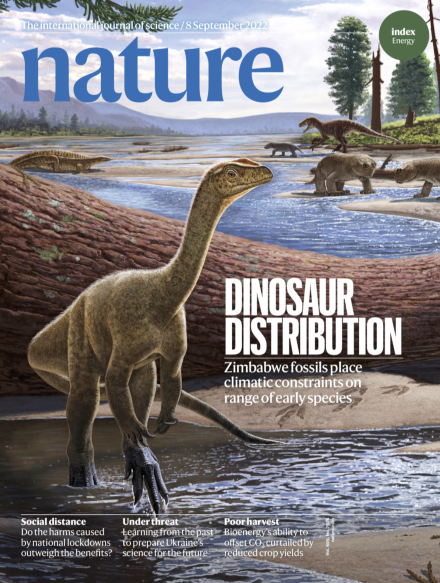
Dinosaur distribution
The cover shows an artist’s impression of Mbiresaurus raathi, a newly discovered species of herbivorous dinosaur found in Zimbabwe and dating to around 230 million years ago.
Avalanches in remote peaks are revealed with old satellites’ aid
Archived data from Landsat 5, launched in 1984, and two newer sensors allow scientists to chart dangerous flows in Afghanistan.
Quick-dried Lystrosaurus ‘mummy’ holds clues to mass death in the Triassic
Reptiles that perished during a severe drought 250 million years ago are preserved as spreadeagled and mummified fossils.
Research Preview: Nature Magazine – August 25, 2022
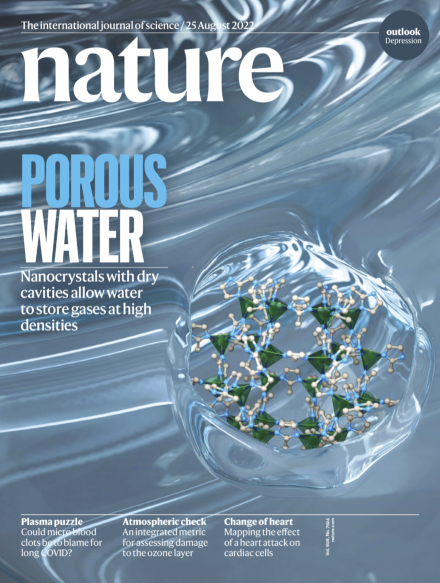
- Which glaciers are the biggest? Scientists finally have an answer – The world’s record holders are in Antarctica, regardless of how ‘glacier’ is defined.
- First space rock found inside Venus’s orbit — and it’s jumbo-sized – An asteroid that travels inside the orbit of Venus probably wandered there from further afield.
- Stretchy synthetic nerve helps mice give ball a mighty kick -Device can bridge a nerve damaged by motor-neuron disease or spinal-cord injury.
- Mosquitoes sniff out humans with super-smelling neurons – The biting insects have an odour-sensing set-up superior to that of many other animals.
- Mount Everest’s harsh heights shelter a rich array of life – Scraps of DNA show that living things of all kinds thrive in the thin air above 4,000 metres.
Preview: New Scientist Magazine – August 27, 2022

Research Preview: Nature Magazine – August 18, 2022
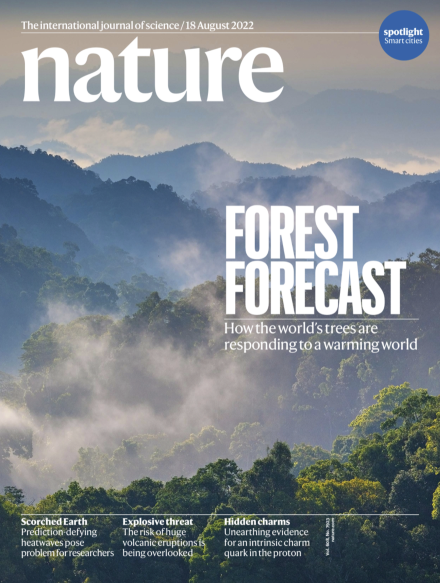
The cover captures the morning mist at Kaeng Krachan National Park in Thailand. Like every other aspect of life on Earth, forests are facing increased challenges posed by climate change. A collection of papers in this week’s issue probes the vulnerabilities and potential resilience of forests in a warming world. Three studies focus on North America: one examining the response of boreal species to warming and drought, another analysing the timing of stem growth in temperate deciduous forests, and a third revealing migration of white spruce (Picea glauca) into the Arctic tundra. In the tropics, one paper investigates the
impact of phosphorus availability in the Amazon, while another assesses the reasons for increased mortality of tropical trees. Finally, a sixth paper shows how satellite imaging can be combined with machine learning to identify declining resilience in the world’s forests.
Preview: New Scientist Magazine – August 20, 2022

In this week’s issue: How a strange system of eight-dimensional numbers could provide the mathematical framework to describe the entire universe.
Preview: New Scientist Magazine – August 13, 2022
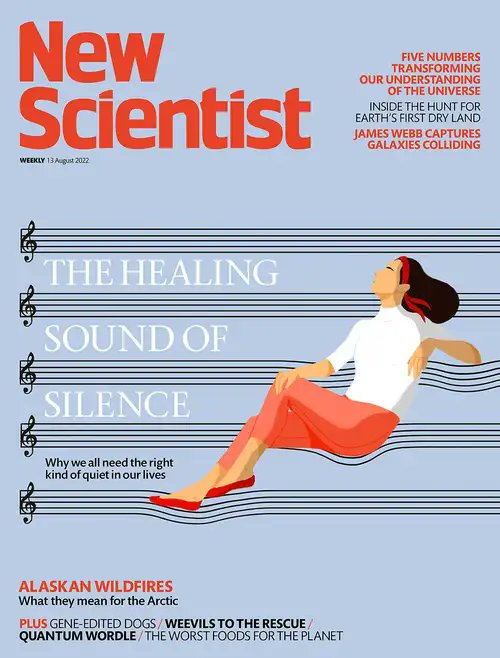
In this week’s issue: How the healing power of silence can improve our mental and physical health.
- FEATURES – What Earth’s mysterious infancy tells us about the origins of life
- FEATURES – The power of quiet: The mental and physical health benefits of silence
- FEATURES – 5 mind-bending numbers that could reveal the secrets of the universe
- NEWS – How weevils have become weapons in UK’s fight against invasive plants
Cover Preview: Nature Magazine – August 11, 2022
- World View
- There’s a simple fix for skewed pandemic estimates Demographers must work together so that officials can produce numbers all can trust.
- Elizabeth Wrigley-Field World View 09 Aug 2022
- There’s a simple fix for skewed pandemic estimates Demographers must work together so that officials can produce numbers all can trust.
- Research Highlights
- How jumping up and down in a canoe propels it forwards A watercraft subject to ‘gunwale bobbing’ travels on waves generated by the bobbing itself. Research Highlight 05 Aug 2022
- Sea creatures’ sun shades inspire low-cost ‘smart’ windows Dots of inky pigment spread in branching patterns, allowing close control of shade cover. Research Highlight 04 Aug 2022
- The fungus that entices male flies to mate with female corpses Dead, spore-infested female flies lure males to their doom, perhaps with an attractive odour. Research Highlight 01 Aug 2022
- Cancer cells hijack nerve cells to storm through the brain Cells of the deadly tumour glioblastoma hasten their advance by turning neurons to their advantage. Research Highlight08 Aug 2022
- Ancient graves show plague afflicted Bronze Age Crete Genomic analysis suggests that plague could have played a part in social change on the Greek island around 2000 BC.
Cover Preview: Nature Magazine – August 4, 2022
Capital gains
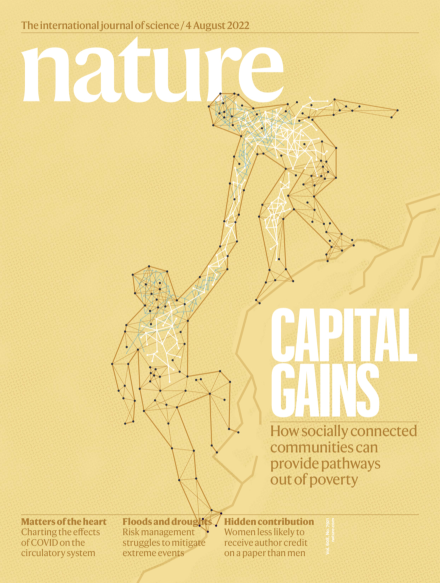
An individual’s social network and community — their ‘social capital’ — has been thought to influence outcomes ranging from earnings to health. But measuring social capital is challenging. In two papers in this week’s issue, Raj Chetty and his colleagues use data on 21 billion friendships from Facebook to construct a Social Capital Atlas containing measures of social capital for each ZIP code, high school and college in the United States. The researchers measure three types of social capital: connectedness between different types of people, social cohesion and civic engagement. They find that children who grow up in communities where people of low and high socio-economic status interact more have substantially greater chances of rising out of poverty. The team then examines what might limit social interactions across class lines, finding a roughly equal contribution from lack of exposure — because children in different socio-economic groups go to different schools, for example — and friending bias, the tendency for people to befriend people similar to them.
Previews: New Scientist Magazine – July 30, 2022
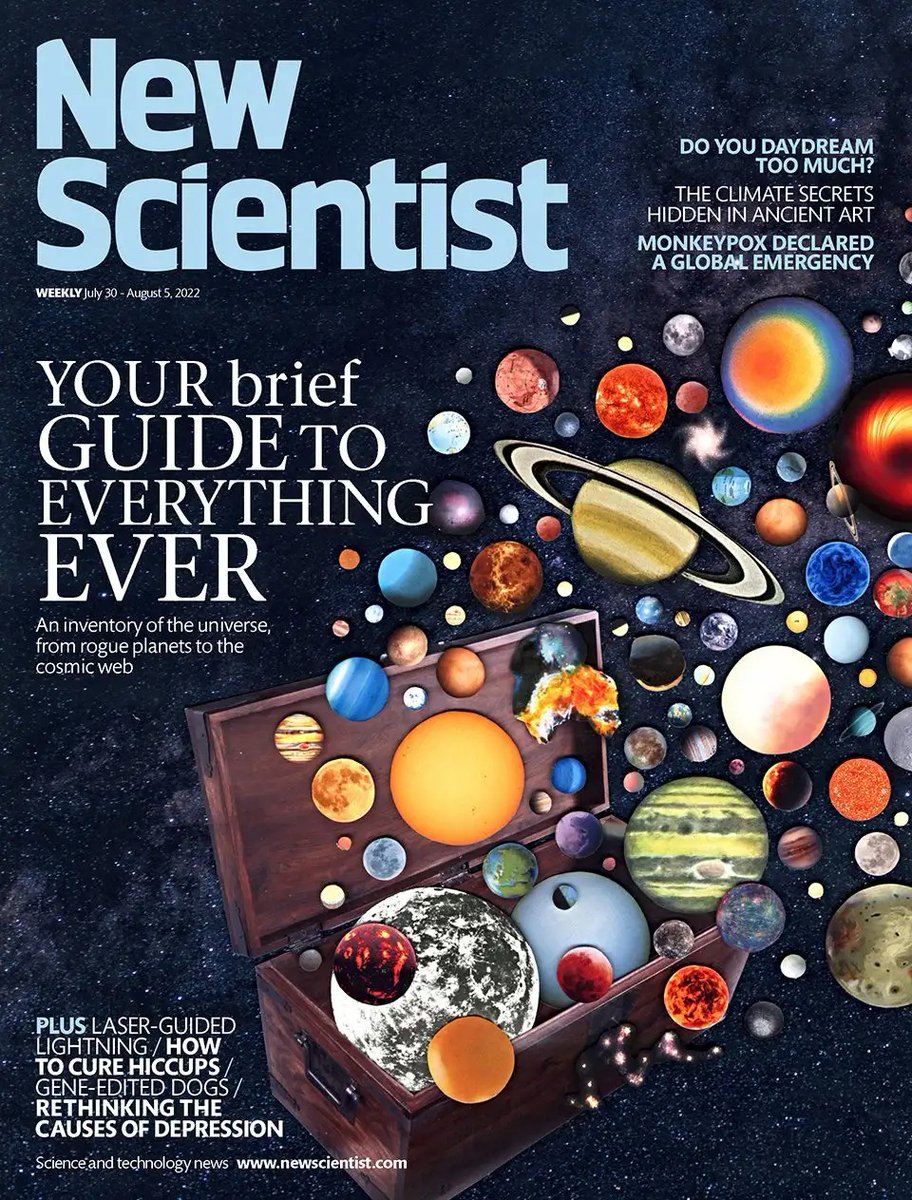
COVER STORIES
- FEATURES – Your essential guide to the many breathtaking wonders of the universe
- FEATURES – Daydreaming has a dark side – is your fantasising holding you back?
- NEWS – No link between depression and serotonin, finds major analysis
Grab a copy from newsstands now or get our app to download digital and audio editions. https://newscientist.com/issue/3397/
 Boomers Daily