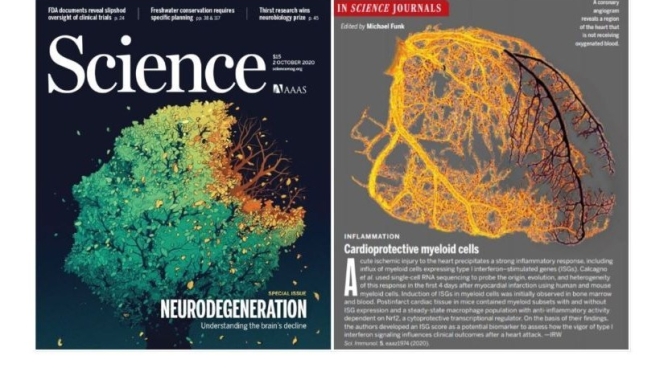


Investigative journalist Charles Piller joins host Sarah Crespi to discuss his latest Science exclusive: a deep dive into the Food and Drug Administration’s protection of human subjects in clinical trials. Based on months of data analysis and interviews, he uncovered long-term failures in safety enforcement in clinical trials and potential problems with trial data used to make decisions about drug and device approvals.
Sarah also talks with Klaus-Robert Müller, a professor of machine learning at the Technical University of Berlin, about an artificial intelligence (AI) trained in the sport of curling—often described as a cross between bowling and chess. Although AI has succeeded in chess, Go, and poker, the constantly changing environment of curling is far harder for a nonhuman mind to adapt to. But AIs were the big winners in competitions with top human players, Müller and colleagues report this week in Science Robotics.

Contributing Correspondent Ann Gibbons talks with host Sarah Crespi about a series of 120,000-year-old human footprints found alongside prints from animals like asses, elephants, and camels in a dried-up lake on the Arabian Peninsula. These are the earliest human footprints found so far in Arabia and may help researchers better understand the history of early hominin migrations out of Africa.
Continuing on the history of humanity theme, Sarah talks with Janet Kelso of the Max Planck Institute for Evolutionary Anthropology, about her team’s efforts to fish the elusive Y chromosome out of Neanderthal and Denisovan DNA. It turns out Y chromosomes tell a different story about our past interbreeding with Neanderthals than previous tales told by the rest of the genome.

Staff Writer Kelly Servick joins host Sarah Crespi to discuss how jail and prison populations in the United States have dropped in the face of coronavirus and what kinds of scientific questions about public health and criminal justice are arising as a result.

But on its own, “BMI [body mass index] remains a strong independent risk factor” for severe COVID-19, according to several studies that adjusted for age, sex, social class, diabetes, and heart conditions, says Naveed Sattar, an expert in cardiometabolic disease at the University of Glasgow. “And it seems to be a linear line, straight up.”

The impact extends to the 32% of people in the United States who are overweight. The largest descriptive study yet of hospitalized U.S. COVID-19 patients, posted as a preprint last month by Genentech researchers, found that 77% of nearly 17,000 patients hospitalized with COVID-19 were overweight (29%) or obese (48%). (The Centers for Disease Control and Prevention defines overweight as having a BMI of 25 to 29.9 kilograms per square meter, and obesity as a BMI of 30 or greater.)

First up this week, Senior Correspondent Daniel Clery talks with host Sarah Crespi about how Breakthrough Listen—a privately funded initiative that aims to spend $100 million over 10 years to find extraterrestrial intelligent life—has changed the hunt for alien intelligence.
And as part of a special issue on the Genotype-Tissue Expression (GTEx) project, Brandon Pierce, a professor in the Departments of Public Health Sciences and Human Genetics at the University of Chicago, joins Sarah to discuss his group’s work on variation in the protective caps at the end of our chromosomes. The gradual shortening of these caps, also known as telomeres, has been associated with aging. Read more from the GTEx special issue.