Staff Writer Kelly Servick joins host Sarah Crespi to discuss how jail and prison populations in the United States have dropped in the face of coronavirus and what kinds of scientific questions about public health and criminal justice are arising as a result.
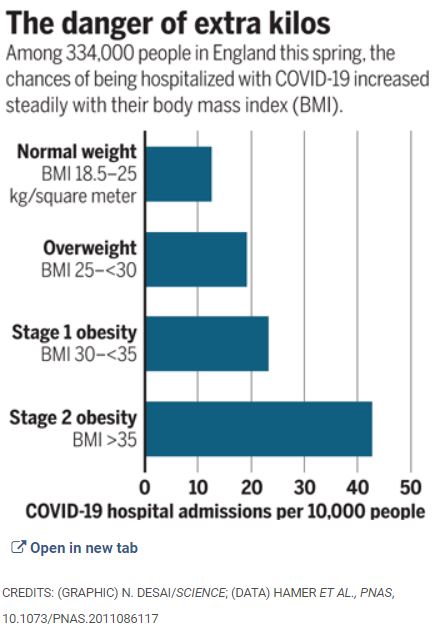
But on its own, “BMI [body mass index] remains a strong independent risk factor” for severe COVID-19, according to several studies that adjusted for age, sex, social class, diabetes, and heart conditions, says Naveed Sattar, an expert in cardiometabolic disease at the University of Glasgow. “And it seems to be a linear line, straight up.”
For starters, the blood of people with obesity has an increased tendency to clot—an especially grave risk during an infection that, when severe, independently peppers the small vessels of the lungs with clots
Immunity also weakens in people with obesity, in part because fat cells infiltrate the organs where immune cells are produced and stored, such as the spleen, bone marrow, and thymus, says Catherine Andersen, a nutritional scientist at Fairfield University. “We are losing immune tissue in exchange for adipose tissue, making the immune system less effective in either protecting the body from pathogens or responding to a vaccine,” she says.
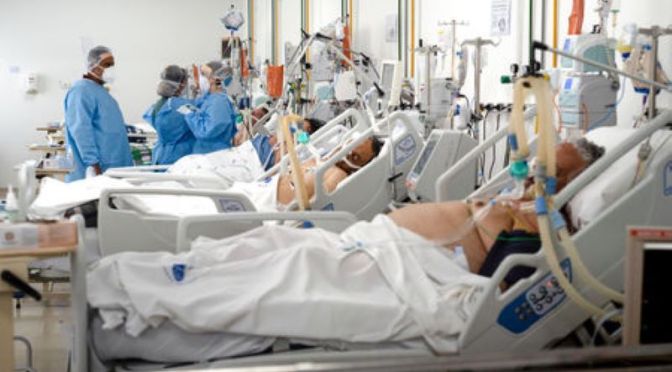
The impact extends to the 32% of people in the United States who are overweight. The largest descriptive study yet of hospitalized U.S. COVID-19 patients, posted as a preprint last month by Genentech researchers, found that 77% of nearly 17,000 patients hospitalized with COVID-19 were overweight (29%) or obese (48%). (The Centers for Disease Control and Prevention defines overweight as having a BMI of 25 to 29.9 kilograms per square meter, and obesity as a BMI of 30 or greater.)
First up this week, Senior Correspondent Daniel Clery talks with host Sarah Crespi about how Breakthrough Listen—a privately funded initiative that aims to spend $100 million over 10 years to find extraterrestrial intelligent life—has changed the hunt for alien intelligence.
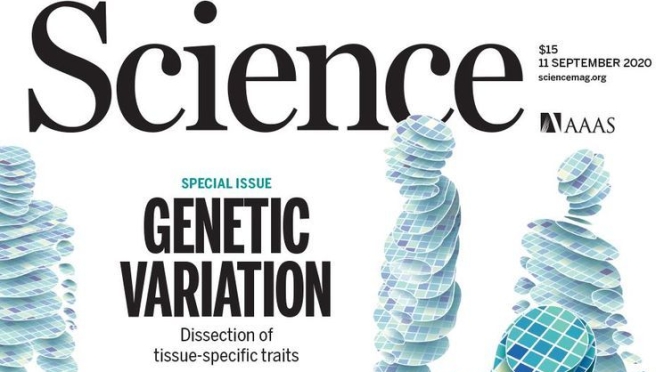
And as part of a special issue on the Genotype-Tissue Expression (GTEx) project, Brandon Pierce, a professor in the Departments of Public Health Sciences and Human Genetics at the University of Chicago, joins Sarah to discuss his group’s work on variation in the protective caps at the end of our chromosomes. The gradual shortening of these caps, also known as telomeres, has been associated with aging. Read more from the GTEx special issue.
Staff Writer Paul Voosen talks with host Sarah Crespi about how Arctic sea ice is under attack from above and below—not only from warming air, but also dangerous hot blobs of ocean water.
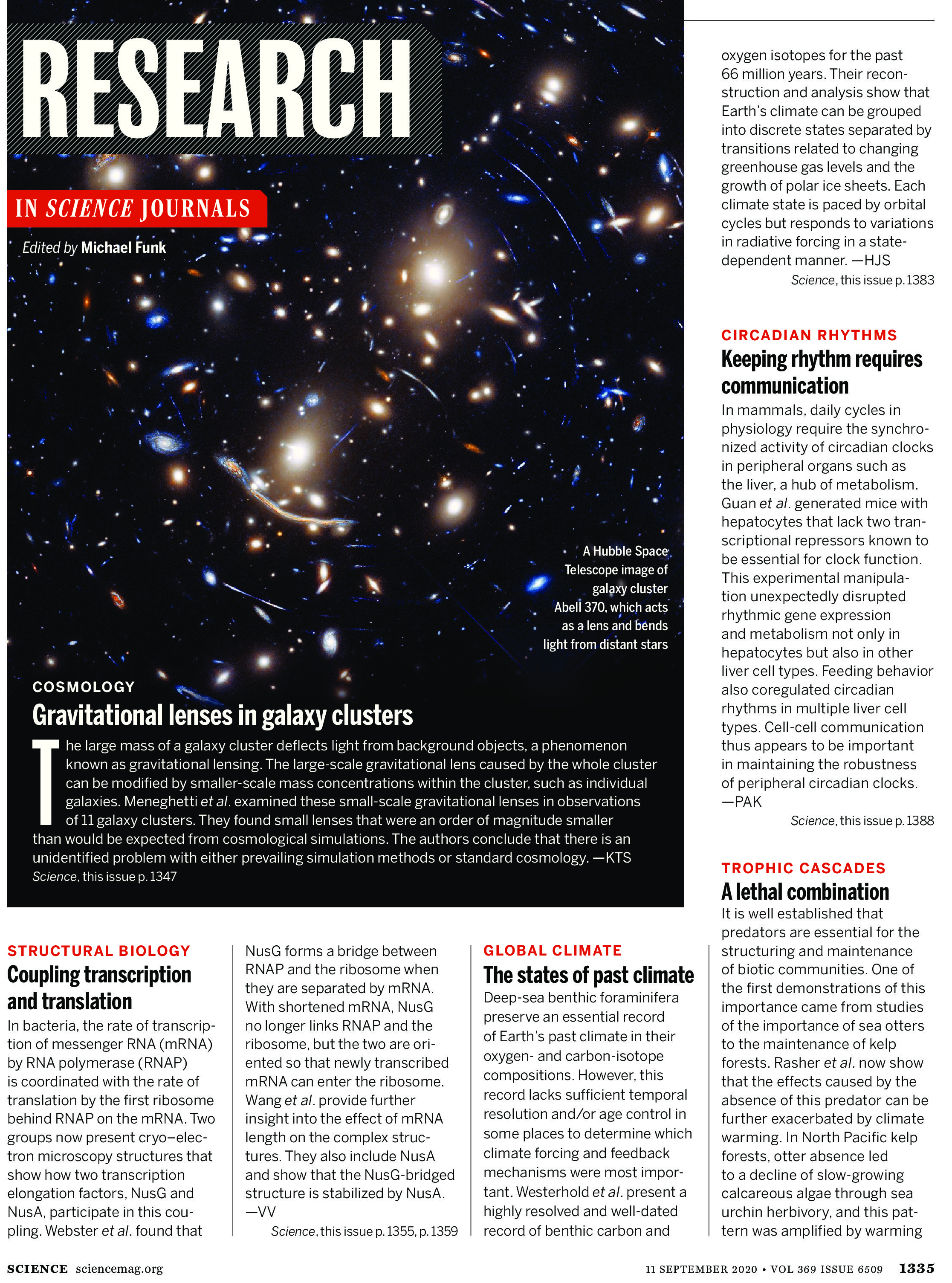
Next, Damien Fordham, a professor and global change ecologist at the University of Adelaide, talks about how new tools for digging into the past are helping catalog what happened to biodiversity and ecosystems during different climate change scenarios in the past. These findings can help predict the fate of modern ecosystems under today’s human-induced climate change. And in our books segment, Kiki Sanford talks with author Carl Bergstrom about his new book: Calling Bullshit: The Art of Skepticism in a Data-Driven World.
Staff Writer Robert Service talks with host Sarah Crespi about a different approach to COVID-19 testing that might be useful in response to the high numbers of cases in the United States. To break chains of transmission and community spread, the new strategy would replace highly accurate but slow polymerase chain reaction (PCR) tests with cheaper, faster tests that are less accurate but can be administered frequently.
Such tests cost between $1 and $3 compared with more than $100 for diagnostic PCR tests and give results in less than 30 minutes instead of days. Read all of our coronavirus coverage here. Also this week, Salma Mousa, a postdoctoral fellow at Stanford University, joins Sarah to talk about an experiment that added Muslim players to teams in a Christian soccer league in northern Iraq. The goal of the study was to see whether this type of social contact would change how the Christians—a threatened minority in the region—behaved toward Muslims, on and off the field.
News, Views and Reviews For The Intellectually Curious









 Boomers Daily