

This week, world leaders are announcing a series of pledges to protect and sustainably use the world’s oceans. The pledges form the crowning achievement of the ‘High Level Panel for a Sustainable Ocean Economy’ a multinational group formed back in 2018.
The panel has sought to bring together research, published in a number of so-called ‘blue papers’ and special reports by scientists, policy- and legal-experts from around the world – all with the ear of 14 participating world leaders.
Erna Solberg, the prime minister of Norway, co-led the Panel. In this podcast, she speaks with Springer Nature’s editor-in-chief Philip Campbell about the panel’s work.
The ocean in humanity’s future: read all of Nature‘s content on the Ocean Panel
World View: Science can boost ocean health and human prosperity
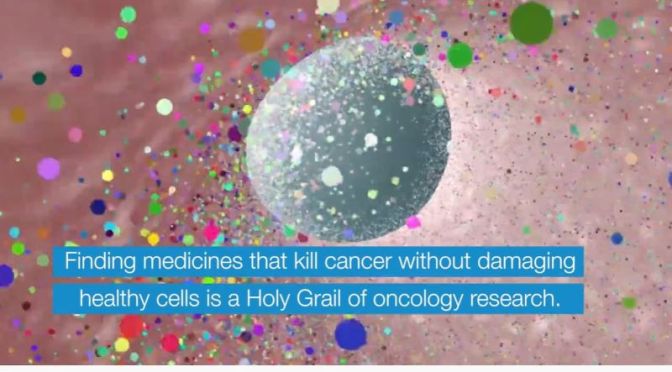
Finding medicines that can kill cancer cells while leaving normal tissue unscathed is a Holy Grail of oncology research. In two new papers, scientists at UC San Francisco and Princeton University present complementary strategies to crack this problem with “smart” cell therapies—living medicines that remain inert unless triggered by combinations of proteins that only ever appear together in cancer cells.
Biological aspects of this general approach have been explored for several years in the laboratory of Wendell Lim, PhD, and colleagues in the UCSF Cell Design Initiative and National Cancer Institute– sponsored Center for Synthetic Immunology. But the new work adds a powerful new dimension to this work by combining cutting-edge therapeutic cell engineering with advanced computational methods.
For one paper, published September 23, 2020 in Cell Systems, members of Lim’s lab joined forces with the research group of computer scientist Olga G. Troyanskaya, PhD, of Princeton’s Lewis-Sigler Institute for Integrative Genomics and the Simons Foundation’s Flatiron Institute.
Using a machine learning approach, the team analyzed massive databases of thousands of proteins found in both cancer and normal cells. They then combed through millions of possible protein combinations to assemble a catalog of combinations that could be used to precisely target only cancer cells while leaving normal ones alone. In another paper, published in Science on November 27, 2020, Lim and colleagues then showed how this computationally derived protein data could be put to use to drive the design of effective and highly selective cell therapies for cancer.
“Currently, most cancer treatments, including CAR T cells, are told ‘block this,’ or ‘kill this,’” said Lim, also professor and chair of cellular and molecular pharmacology and a member of the UCSF Helen Diller Family Comprehensive Cancer Center. “We want to increase the nuance and sophistication of the decisions that a therapeutic cell makes.”
Over the past decade, chimeric antigen receptor (CAR) T cells have been in the spotlight as a powerful way to treat cancer. In CAR T cell therapy, immune system cells are taken from a patient’s blood, and manipulated in the laboratory to express a specific receptor that will recognize a very particular marker, or antigen, on cancer cells. While scientists have shown that CAR T cells can be quite effective, and sometimes curative, in blood cancers such as leukemia and lymphoma, so far the method hasn’t worked well in solid tumors, such as cancers of the breast, lung, or liver.
Cells in these solid cancers often share antigens with normal cells found in other tissues, which poses the risk that CAR T cells could have off-target effects by targeting healthy organs. Also, solid tumors also often create suppressive microenvironments that limit the efficacy of CAR T cells. For Lim, cells are akin to molecular computers that can sense their environment and then integrate that information to make decisions. Since solid tumors are more complex than blood cancers, “you have to make a more complex product” to fight them, he said.
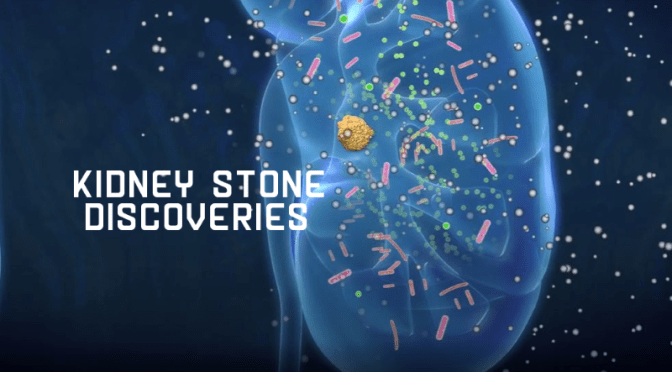
Travertine stone used extensively in Mayo Clinic buildings has provided a research team from Mayo Clinic and the University of Illinois with an unexpected – and beautiful – clue about kidney stones.

This week the whole show focuses on keeping cool in a warming world. First up, host Sarah Crespi talks with Senior News Correspondent Elizabeth Pennisi about the latest research into how to stay safe when things heat up—whether you’re running marathons or fighting fires.
Sarah also talks with Po-Chun Hsu, assistant professor of mechanical engineering and materials science at Duke University, about the future of cooling fabrics for everyday use. It turns out we can save a lot of energy and avoid carbon dioxide emissions by wearing clothing designed to keep us cool in slightly warmer buildings than we’re used to now. But the question is, will cooling clothes ever be “cool”? Visit the whole special issue on cooling.









 Boomers Daily