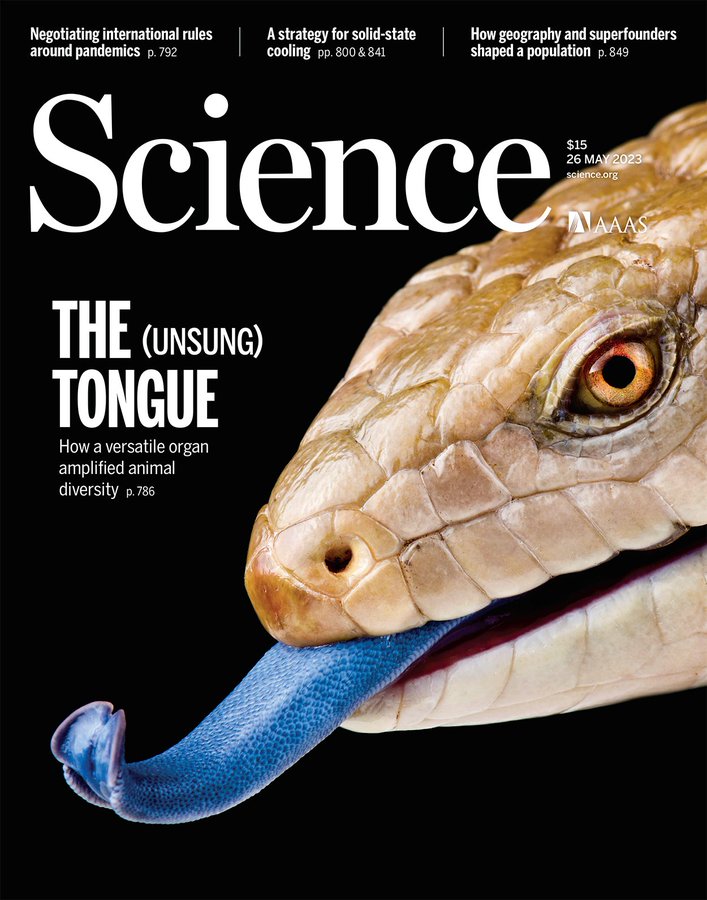
Science Magazine – May 26, 2023 issue: Tongues are thought to have evolved when vertebrates first moved onto land and could no longer rely on suction to ingest food. Since then, they have helped drive animal diversification by adopting functions as varied as pumping nectar, snagging prey, shaping speech, and, in the case of Australia’s northern blue-tongued skink (Tiliqua scincoides intermedia), startling enemies.
Since first evolving 350 million years ago, the tongue has taken myriad forms, unlocking new niches and boosting the diversity of life
Twice, quarterback Patrick Mahomes has led the Kansas City Chiefs to victory in the Super Bowl, the pinnacle of U.S. football. Although most fans have their eyes on the ball as Mahomes prepares to throw, his tongue does something just as interesting.
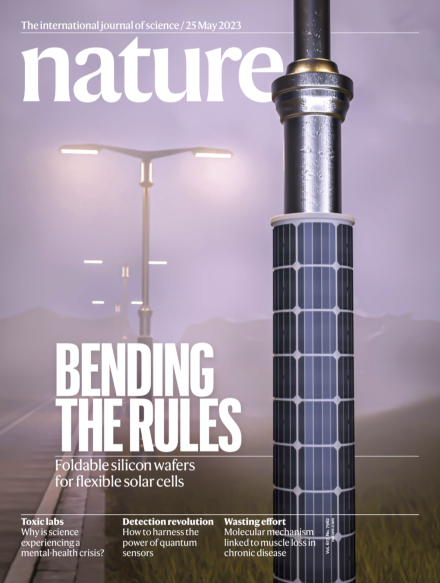
nature Magazine – May 25, 2023 issue: In this week’s issue, Wenzhu Liu and colleagues present a way to make foldable silicon wafers that can be used in flexible solar cells. The secret to success was to blunt the edges of the silicon wafers, thereby stopping them from undergoing brittle fracturing. As a result, the researchers were able to make 15-centimetre solar cells with a bending angle of more than 360°.
Science Magazine – May 19, 2023 issue: More than half of the world’s largest lakes have declined over the past three decades. Human water consumption, warming climate, and sedimentation are largely responsible. Lake Powell, shown here, with its once-submerged walls that now appear as whitened surfaces, exemplifies this drying trend.
Cloning vigorous crops, and finding the first romantic kiss First up this week, building resilience into crops. Staff Writer Erik Stokstad joins host Sarah Crespi to discuss all the tricks farmers use now to make resilient hybrid crops of rice or wheat and how genetically engineering hybrid crop plants to clone themselves may be the next step. After that we ask: When did we start kissing? Troels Pank Arbøll is an assistant professor of Assyriology in the department of cross-cultural and regional studies at the University of Copenhagen. He and Sarah chat about the earliest evidence for kissing—romantic style—and why it is unlikely that such kisses had a single place or time of origin.
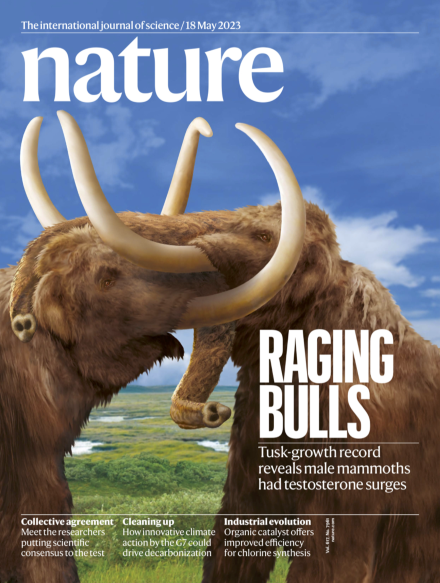
nature Magazine – May 18, 2023 issue: The cover shows an artist’s impression of two male mammoths fighting. During episodes of musth, adult male elephants undergo periods of elevated testosterone levels associated with aggression and competition for mating. In this week’s issue, Michael Cherney and his colleagues show that male woolly mammoths (Mammuthus primigenius) experienced similar episodes of musth.
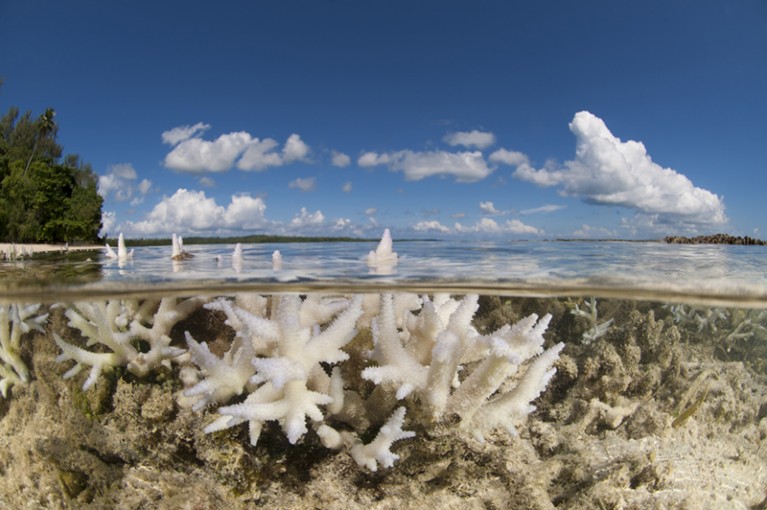
Record temperature combined with an anticipated El Niño could devastate marine life and increase the chances of extreme weather.
The global ocean hit a new record temperature of 21.1 ºC in early April, 0.1 ºC higher than the last record in March 2016. Although striking, the figure (see ‘How the ocean is warming’) is in line with the ocean warming anticipated from climate change. What is remarkable is its occurrence ahead of — rather than during — the El Niño climate event that is expected to bring warmer, wetter weather to the eastern Pacific region later this year.
Machine-learning systems in chemistry need accurate and accessible training data. Until they get it, they won’t achieve their potential.
Many people are expressing fears that artificial intelligence (AI) has gone too far — or risks doing so. Take Geoffrey Hinton, a prominent figure in AI, who recently resigned from his position at Google, citing the desire to speak out about the technology’s potential risks to society and human well-being.
Science Magazine – May 12, 2023 issue: Scalloped hammerhead sharks (Sphyrna lewini) form daytime schools near the ocean’s surface and, at night, dive into cold, deep waters to hunt deep-sea prey. They keep warm while deep diving by closing their gills—effectively holding their breath.
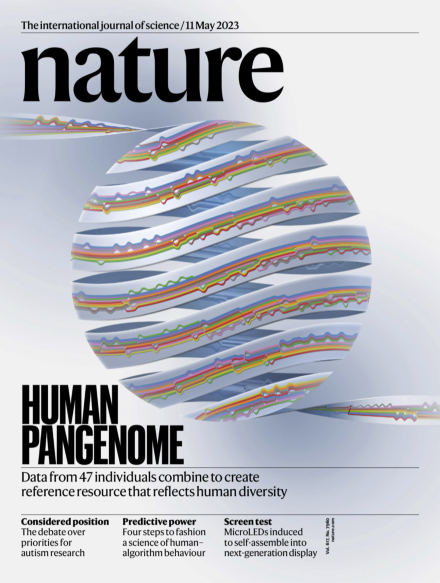
nature Magazine – May 11, 2023 issue:The human reference genome has been the backbone of human genomics since the release of the draft sequence in 2001. But it has its limitations: one genome cannot hope to capture the diversity of the human species. In this week’s issue, the Human Pangenome Reference Consortium presents the first draft human pangenome, which combines genetic material from 47 genetically diverse individuals to provide a more complete picture of the human genome.
Science Magazine – May 5, 2023 issue: The immune system protects us from cancer and infection using a powerful armamentarium that is kept in check by an array of regulatory processes. When they fail, the immune system can start attacking the host in a process known as autoimmunity. This special issue highlights recent advances in our understanding of autoimmune diseases and the regulation of immune tolerance. See the special section beginning on page 468.
Antibodies that target self-antigens are an important component of certain autoimmune diseases and are sometimes used as a clinical marker for these syndromes. ILLUSTRATION: STEPHAN SCHMITZ/FOLIOART
A cardinal feature of the immune system is its ability to distinguish self from nonself. Although many early immunologists thought that its powerful defenses could rarely, if ever, be turned against the host, pioneering research on autoimmune diseases beginning in the early 1900s has documented a different reality. More than 80 different autoimmune disorders have now been described that may affect up to 5% of the population.
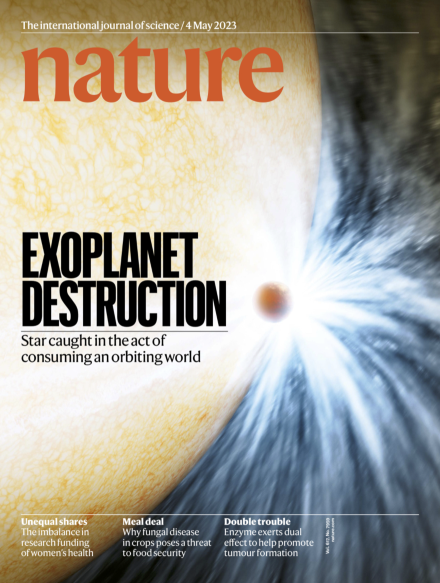
nature Magazine – May 4, 2023 issue:As stars evolve, they expand and so will engulf planets in close orbit around them. This planetary catastrophe is expected to generate powerful luminous ejections of mass from the star, although this has not been observed directly.
The current landscape of mobile mental-health apps is the result of a 70-year search to automate therapy. Now, advanced AIs pose fresh ethical questions.
Illustration by Fabio Buonocore
Since 2015, Koko, a mobile mental-health app, has tried to provide crowdsourced support for people in need. Text the app to say that you’re feeling guilty about a work issue, and an empathetic response will come through in a few minutes — clumsy perhaps, but unmistakably human — to suggest some positive coping strategies.
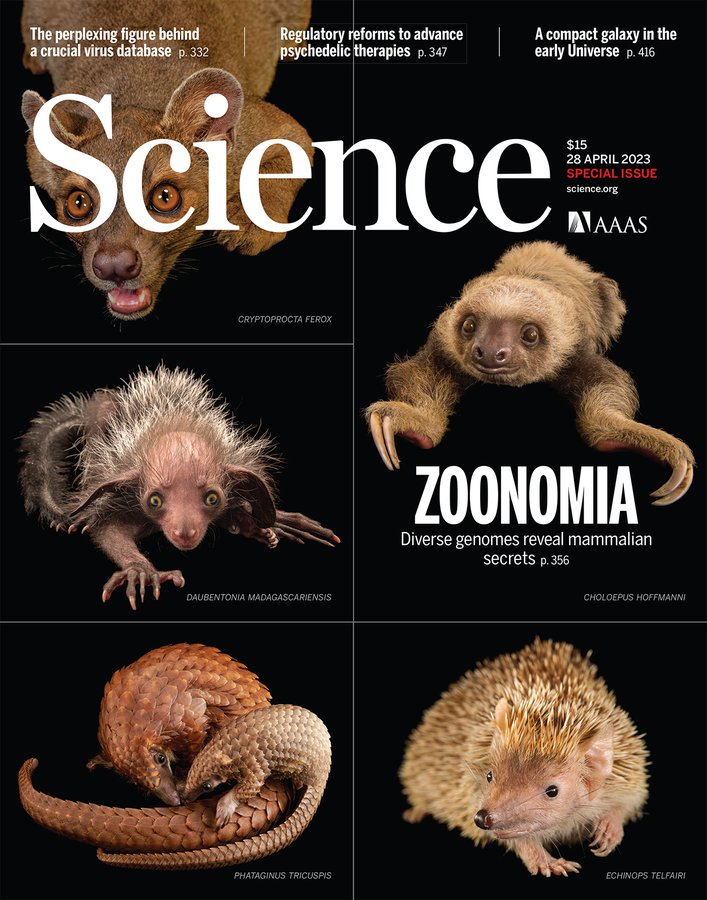
Science Magazine – April 28, 2023 issue: Mammals come in a wide variety of shapes and sizes, here represented by some of the least well known and most unusual—clockwise from top left: a fossa, a Hoffmann’s two-toed sloth, a lesser hedgehog tenrec, two tree (or white-bellied) pangolins, and an aye-aye.
Mammals are one of the most diverse classes of animals, ranging both in size, across many orders of magnitude, and in shape—nearly to the limit of one’s imagination. Understanding when, how, and under what selective pressures this variation has developed has been of interest since the dawn of science.
The 240 mammals sequenced through the Zoonomia project include the famous sled dog Balto, who was reported to have led a team of sled dogs in the final leg of the race to carry a life-saving serum to Nome, Alaska, in 1925. His genome, in conjunction with others, was used to reveal his ancestry and adaptations, as well as predict aspects of his morphology, including his coat color.
Researchers deploy a wave glider to measure seafloor displacement associated with earthquakes.PHOTO: TODD ERICKSEN
The destructive behavior of great earthquakes in subduction zones, such as in Japan in 2011, depends on details of the earthquake slip. A slip at shallow depth is the dominant driver of tsunami. Using recently developed seafloor geodetic instrumentation, Brooks et al. found that the deeper slip of the July 2021 magnitude 8.2 Chignik, Alaska earthquake was followed 2.5 months later by a second stage of (aseismic) slip. This approximately 2 to 3 meters of “silent” slip allowed the shallow fault to catch up with its deeper portion, reducing its future earthquake potential.
News, Views and Reviews For The Intellectually Curious


















 Boomers Daily