

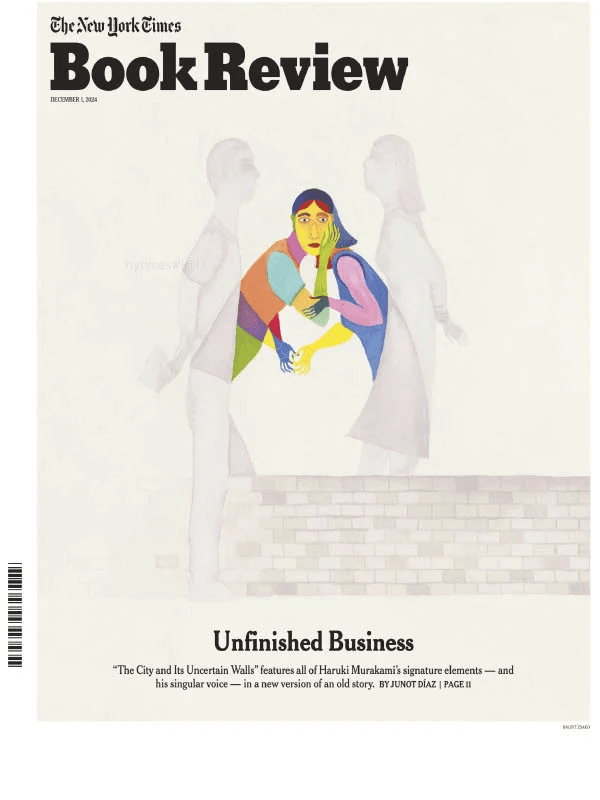

THE NEW YORK TIMES BOOK REVIEW (December 1, 2024): The latest issue features ‘Unfinished Business’ – “The City and Its Uncertain Walls features all of Haruki Murakami’s signature elements — and his singular voice — in a new version of an old story.
Here are the year’s notable fiction, poetry and nonfiction, chosen by the staff of The New York Times Book Review.
“The New India,” by Rahul Bhatia, combines personal history and investigative journalism to account for his country’s turn to militant Hindu nationalism.
In “The Miraculous From the Material,” the best-selling author Alan Lightman examines the science behind the wonder.
In her memoir, the former German chancellor reflects on her political rise and defends her record as the outlook for her country turns grim.
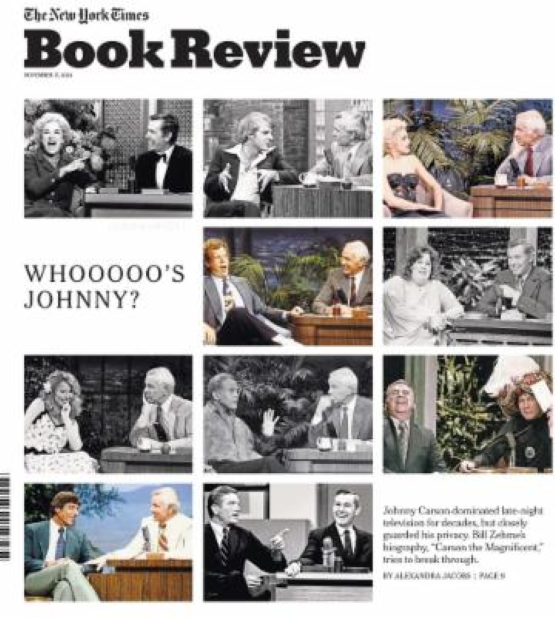
THE NEW YORK TIMES BOOK REVIEW (November 17, 2024): The latest issue features ‘Who’s Johnny?’…
Johnny Carson dominated late-night television for decades, but closely guarded his privacy. Bill Zehme’s biography, “Carson the Magnificent,” tries to break through.ent,’ by Bill Zehme
Rankings on weekly lists reflect sales for the week ending November 2, 2024.
![图片[1]-The New York Times Book Review-纽约时报书评2024.11.10期下载电子版PDF网盘订阅-易外刊-英语外刊杂志电子版PDF下载网站](https://e-magazines.top/wp-content/uploads/2024/11/The-New-York-Times-Book-Review-%E2%80%93-10-November-2024_00-475x550.webp)
THE NEW YORK TIMES BOOK REVIEW (November 10, 2024): The latest issue features ‘ Looking For The Promised Land’…
A new history by Roland Allen uncovers the wealth of ideas and invention hidden in the notebooks of literary luminaries.
In his latest book, the Rolling Stone writer David Browne tracks three decades of folk, blues, rock and jazz below 14th Street.
Cozy, whimsical novels — often featuring magical cats — that have long been popular in Japan and Korea are taking off globally. Fans say they offer comfort during a chaotic time.

THE NEW YORK TIMES BOOK REVIEW (November 3, 2024): The latest issue features ‘Recipe For Living’ – In “Be Ready When The Luck Happens”, the TV chef Ina Garten asks, “How easy is that?”. Not very.
Suggested reading from critics and editors at The New York Times.
Share your memories of reading García Márquez’s books here.
Our columnists on new books by John Banville, Kate Christensen under a pseudonym and more.

THE NEW YORK TIMES BOOK REVIEW (October 12, 2024): The latest issue features ‘The Heart of the Matter’
These terrifying tales by the likes of Stephen King and Shirley Jackson are more than good reads: They’ll freak you out, too.
The memoir, which will cover his time in prison and Russia’s move toward autocracy, will be published by Crown, an imprint of Penguin Random House.
The South Korean author, best known for “The Vegetarian,” is the first writer from her country to receive the prestigious award.
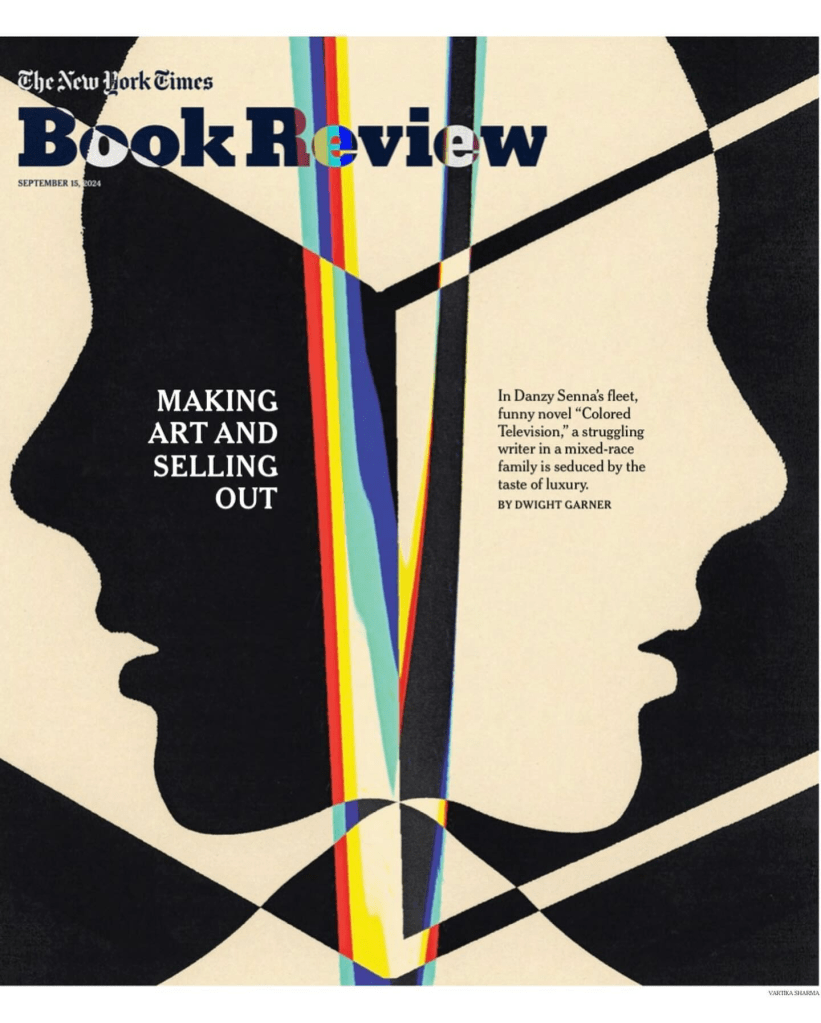
THE NEW YORK TIMES BOOK REVIEW (September 15, 2024): The latest issue features ‘Making Art and Selling Out’ = In Danny Senna’s fleet, funny novel “Colored Television”, a struggling writer in a mixed-race family is seduced by the taste of luxury….
Three new books examine debt’s fraught politics and history.
The Supreme Court justice has been drawn to American history and books about the “challenges and triumphs” of raising a neurodiverse child. She shares that and more in a memoir, “Lovely One.”
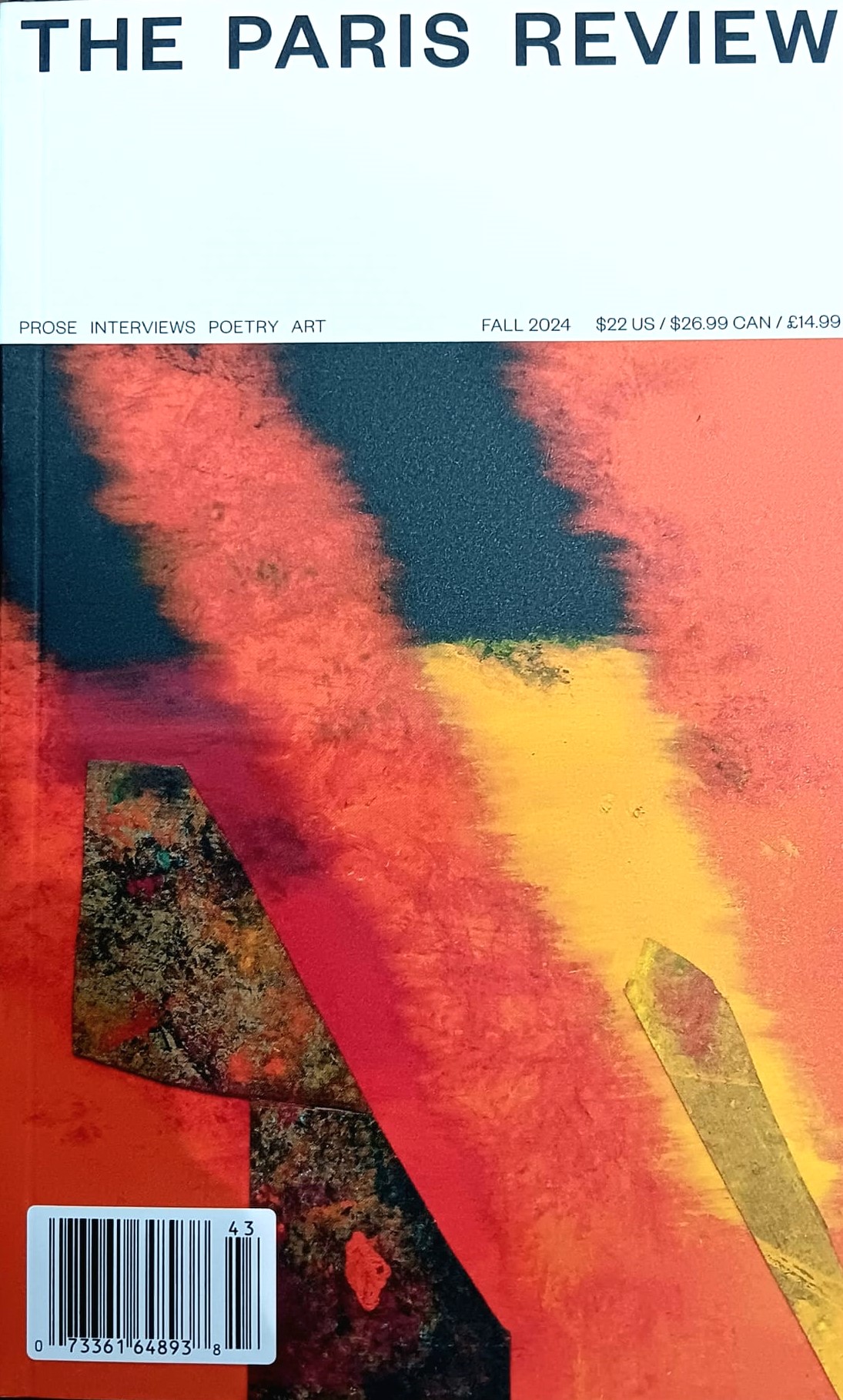

James Schuyler on Frank O’Hara: “I still can see Frank, standing on that street corner outside a pastry shop, holding a neatly tied-up box of God knows what—éclairs, perhaps.”
James Schuyler was born in Chicago in 1923, grew up in Washington, D.C., and East Aurora, New York, and spent most of his adult years in New York City and Southampton, Long Island. Although he is perhaps less widely known than the fellow New York School poets with whom he is associated, John Ashbery, Frank O’Hara, Barbara Guest, and Kenneth Koch, he published six full-length books of poetry during his lifetime—beginning with Freely Espousing, published by Doubleday and Paris Review Editions in 1969—as well as two novels, and a third written in collaboration with Ashbery. In 1981 he won the Pulitzer Prize for his collection The Morning of the Poem (1980). Mental illness plagued him intermittently, and there were times when his life threatened to veer out of control, but friends repeatedly rallied around him, and the years before his death in 1991 were happy and productive.

Mary Robison on the Art of Fiction: “The first thing they’d say was ‘This is a nice story—where’s your novel?’ And I would just lie my head off. ‘Oh, it’s at home. It’s almost there!’”
Elaine Scarry on the Art of Nonfiction: “A lot of my troubles in life have come from taking literally what I should have understood as figurative.”
Prose by Peter Cornell, Rodolfo Enrique Fogwill, Renee Gladman, Nancy Lemann, Banu Mushtaq, K Patrick, and Anne Serre.
Jhumpa Lahiri on the Art of Fiction: “My question is, What makes a language yours, or mine?”
Alice Notley on the Art of Poetry: “Writing is not therapy. That’s the last thing it is. I still have my grief.”
Prose by Elijah Bailey, Julien Columeau, Joanna Kavenna, Samanta Schweblin, Eliot Weinberger, and Joy Williams.
Poetry by Gbenga Adesina, Elisa Gabbert, Jessica Laser, Maureen N. McLane, Mary Ruefle, Julian Talamantez Brolaski, and Matthew Zapruder.
Art by Farah Al Qasimi and Chris Oh.
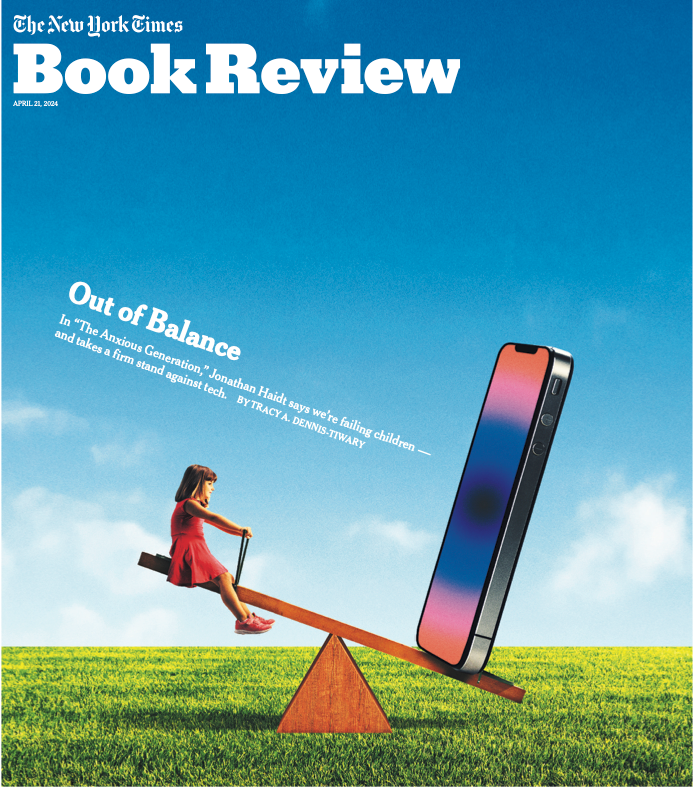
THE NEW YORK TIMES BOOK REVIEW (April 20, 2024): The latest issue features….
In “The Anxious Generation,” Jonathan Haidt says we’re failing children — and takes a firm stand against tech.

By Tracy Dennis-Tiwary
THE ANXIOUS GENERATION: How the Great Rewiring of Childhood Is Causing an Epidemic of Mental Illness, by Jonathan Haidt
Inside the book conservation lab at the Metropolitan Museum of Art.
By Molly Young
Not every workplace features a guillotine. At a book conservation lab tucked beneath the first floor of the Metropolitan Museum of Art, the office guillotine might as well be a water cooler or a file cabinet for all that it fazes the staff. “We have a lot of violent equipment,” said Mindell Dubansky, who heads the Sherman Fairchild Center for Book Conservation.
In “Muse of Fire,” Michael Korda depicts the lives and passions of the soldier poets whose verse provided a view into the carnage of World War I.
 Boomers Daily