Spies: The Epic Intelligence War Between East and West by Calder Walton
Spying Through a Glass Darkly: The Ethics of Espionage and Counter-Intelligence by Cécile Fabre
On October 7, as Hamas fighters roared into southern Israel from Gaza, bringing terror and death to anyone they encountered—Israeli soldiers, Bedouins, young people dancing and getting high together, kibbutzniks scooping up small children into desperate arms—I was sleeping in a comfortable hotel room in Georgia. All around me in the sultry darkness of a beautiful resort, many of the US intelligence community’s finest minds were also slumbering. We awoke with the expectation that we would be addressed by CIA director William Burns at the opening of the Cipher Brief’s annual Threat Conference, a yearly gathering of national security professionals from the private and public sectors, plus a few academics and journalists.
The New York Review of Books (December 28, 2023) – The latest issue featuresBen Tarnoff on Elon Musk, Julian Bell on Peter Paul Rubens, Fintan O’Toole on the American gerontocracy, Anjum Hasan on recent Sri Lankan fiction, Matthew Desmond on America’s Covid-era experiment with a social safety net, Francine Prose on a vampiric celluloid Pinochet, James Gleick on the science of free will, Frances Wilson on Tove Jansson and the Moomintrolls, Álvaro Enrique on indigenous Americans in Europe, Katie Trumpener on Alexander Kluge, two poems by Jack Underwood, and more.
Nobody was holding a gun to your head when you started reading this. You made a choice. Surely it felt that way, at least. A sense of agency—of control over our actions, of continual decision-making—is part of the experience of being human, moment by moment and day by day. True, we sometimes just drift, like robots or zombies, but at other times we gird our loins and exert our will. David Hume defined will nearly three centuries ago as “the internal impression we feel and are conscious of, when we knowingly give rise to any new motion of our body, or new perception of our mind.” The feeling was universal then and it’s universal now.
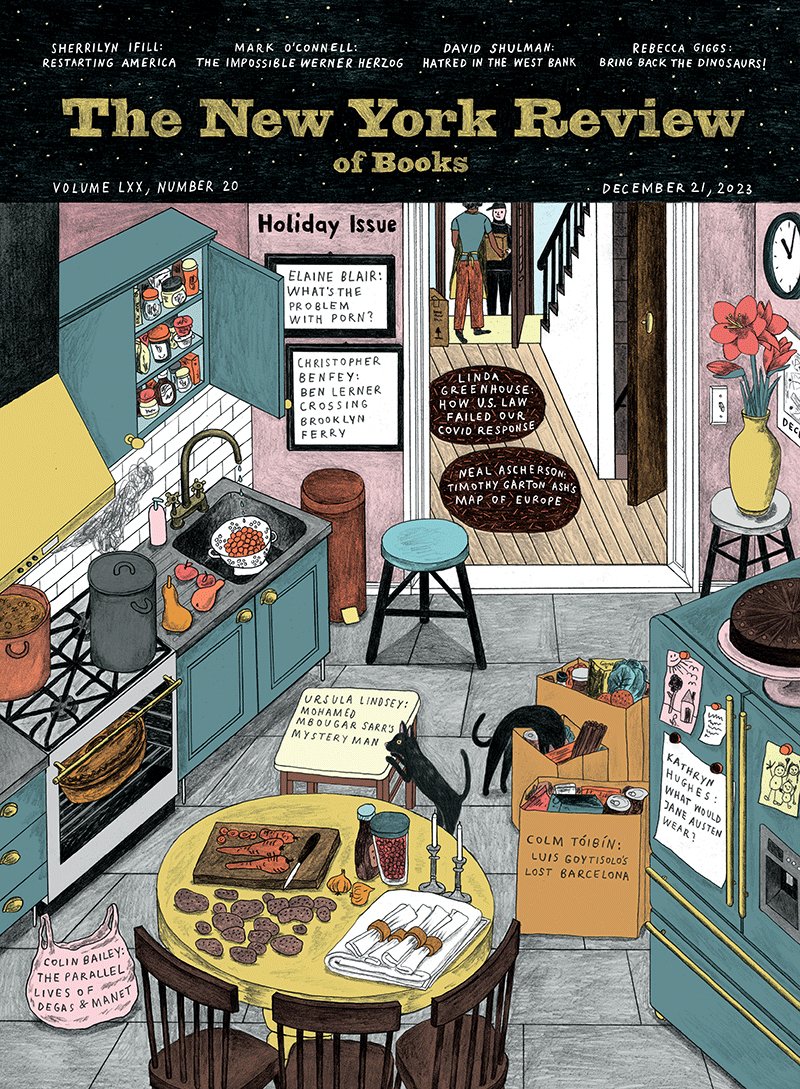
The New York Review of Books (December 21, 2023 Issue) – The latest issue features—the Holiday Issue—with Susan Tallman on William Kentridge, David Shulman on violence in the West Bank, Neal Ascherson on Timothy Garton Ash’s Europe, Elaine Blair on what we talk about when we talk about porn, Rebecca Giggs on the return of dinosaurs, Kathryn Hughes on Jane Austen’s fashion, Mark O’Connell on Werner Herzog, Linda Greenhouse on Covid in the courts, Gabriel Winslow-Yost on Bill Watterson’s first book since Calvin and Hobbes, John Banville on liberalism after Hobbes, poems by Lindsay Turner and Greg Delanty, and much more.
Imagine a festive dinner near Topeka during the fall of 1879 to celebrate the twenty-fifth anniversary of the founding of the Kansas Territory, with Walt Whitman as a featured speaker. Partially paralyzed by a stroke and described as “reckless and vulgar” by The New York Times—Leaves of Grass was soon to be banned for indecency by the Boston district attorney—Whitman, who had just turned sixty, may well have wondered why he, instead of some respectable graybeard like Emerson, was invited. Was it because he had defended John Brown, the hero of free-soil Kansas? Or was it hoped that a visit might inspire something like his 1871 “Song of the Exposition,” in which Whitman admonished the Muse:
Migrate from Greece and Ionia, Cross out please those immensely overpaid accounts, That matter of Troy and Achilles’ wrath… For know a better, fresher, busier sphere, a wide, untried domain awaits, demands you.
Hatzegopteryx, a giant pterosaur that lived around 66 million years ago on a subtropical island in what is now Romania; from Prehistoric Planet
Nature documentary has of late become a haunted genre. Not so Prehistoric Planet, which revels in portraying that which is already dead and gone, no longer our responsibility.
One early myth about the dinosaurs was that they would return. In 1830 Charles Lyell—earth scientist, Scot—gazed into the far future and posited as much in his Principles of Geology, arguing that since the planet’s climate was cyclical (or so he believed), vanished creatures could yet be revived, along with their habitats, when the right conditions came back around: “The huge iguanodon might reappear in the woods, and the ichthyosaur in the sea, while the pterodactyl might flit again through umbrageous groves of tree-ferns.” As to whether people would get to witness the spectacle of this resurrected bestiary—well, if Lyell was never drawn to that question, it was because the answer was not up for debate. His was an age in which the prospect of Earth bereft of human occupancy was too abominable, too sacrilegious, to contemplate.
The New York Review of Books (December 7, 2023 Issue) – The latest featuresA Fallen Artist in Mao’s China – Ha Jin’s The Woman Back from Moscow; Gut Instincts – Recent books about the importance of the microbiome have driven many patients to fixate on the idea of “gut health.” Are they right to do so?; Prelude to Empire – Abdulrazak Gurnah’s novels, whether set in German East Africa or the United Kingdom, never cease to demonstrate how the minutiae of people’s lives have been affected by European colonialism…
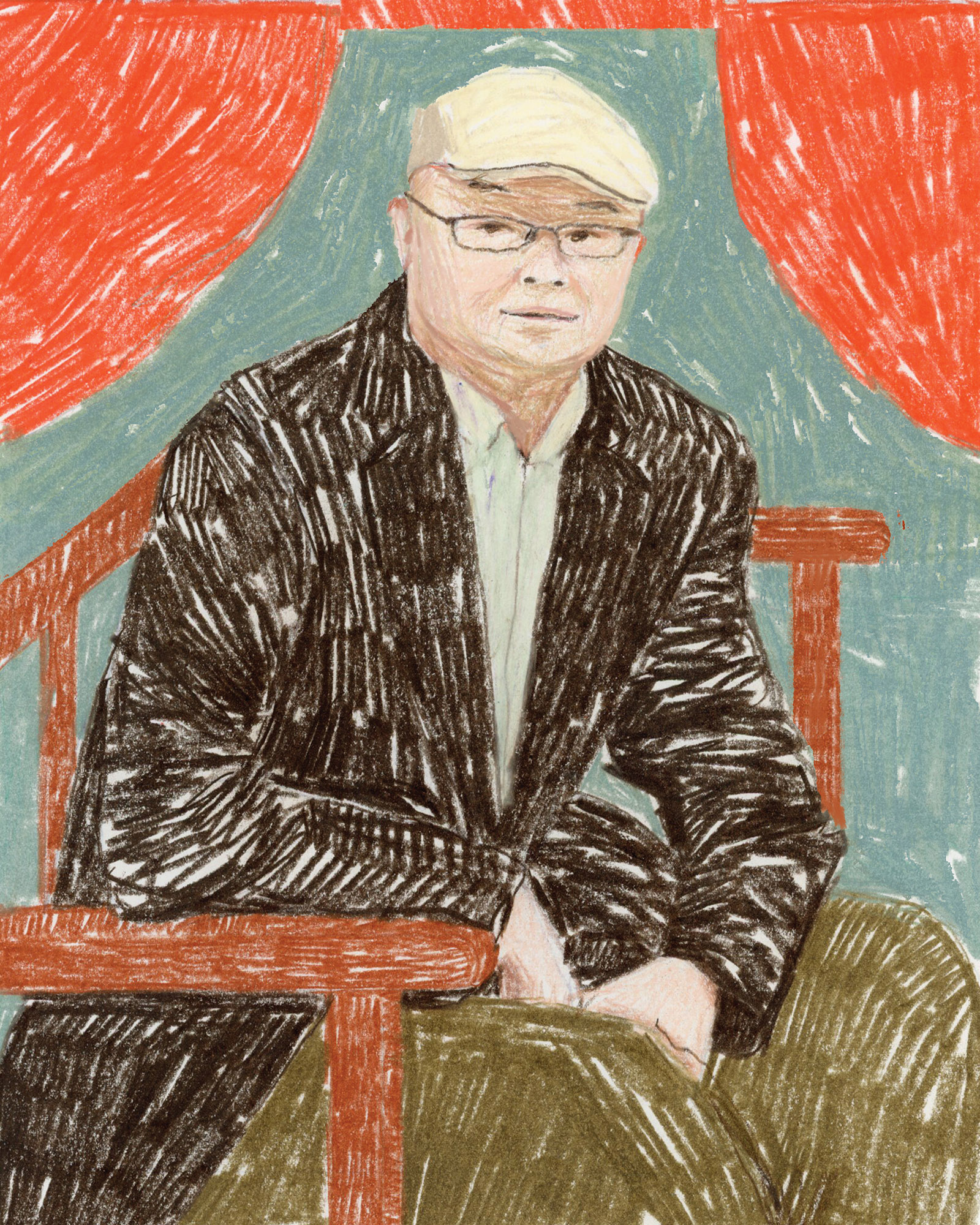
Ha Jin’s The Woman Back from Moscow, a fictionalized account of the life of the actress Sun Weishi, depicts the hypocrisy of the Communist elites and the fate of those who embraced new ideals after the revolution.
The Woman Back from Moscow: In Pursuit of Beauty by Ha Jin
This book will be denounced in Beijing. Ha Jin’s The Woman Back from Moscow is a novel based on the life of Sun Weishi, an adopted daughter of Chinese premier Zhou Enlai, whose brilliant mind and intensive study in Moscow of the Stanislavski acting method brought her to the pinnacle of China’s theatrical world during the Mao years. Her beauty and effervescent personality attracted powerful men—not only Zhou, who doted on her, but also Lin Biao, the Chinese Communist Party’s leading general, who divorced his wife in order to propose marriage to her (unsuccessfully), and Mao, who apparently raped her during a long rail trip. She had several other suitors and eventually married the film star Jin Shan.
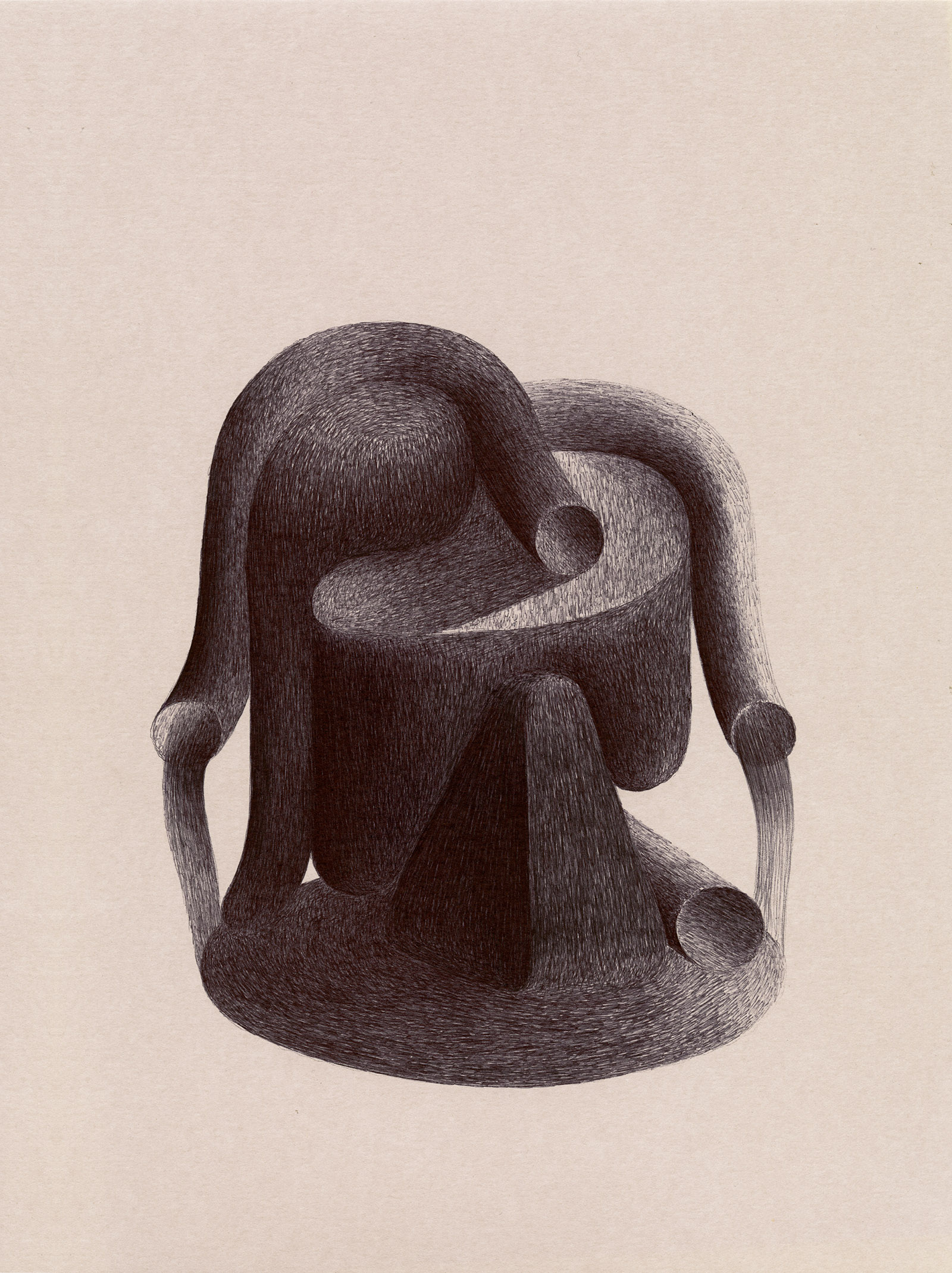
Right before their colonoscopies, with the stress of a bowel prep still rumbling in their bellies and a mental image of the procedure beginning to sharpen, some patients will ask me why I chose a career in gastroenterology: “What made you interested in this?” The reason I usually give is that you could go all your life without a heart problem, or a lung problem, or a kidney problem, but not without a bit of nausea, constipation, or abdominal pain. The work of digestion is part of the rhythm of our daily lives, I tell them, which helps my work feel similarly immediate.
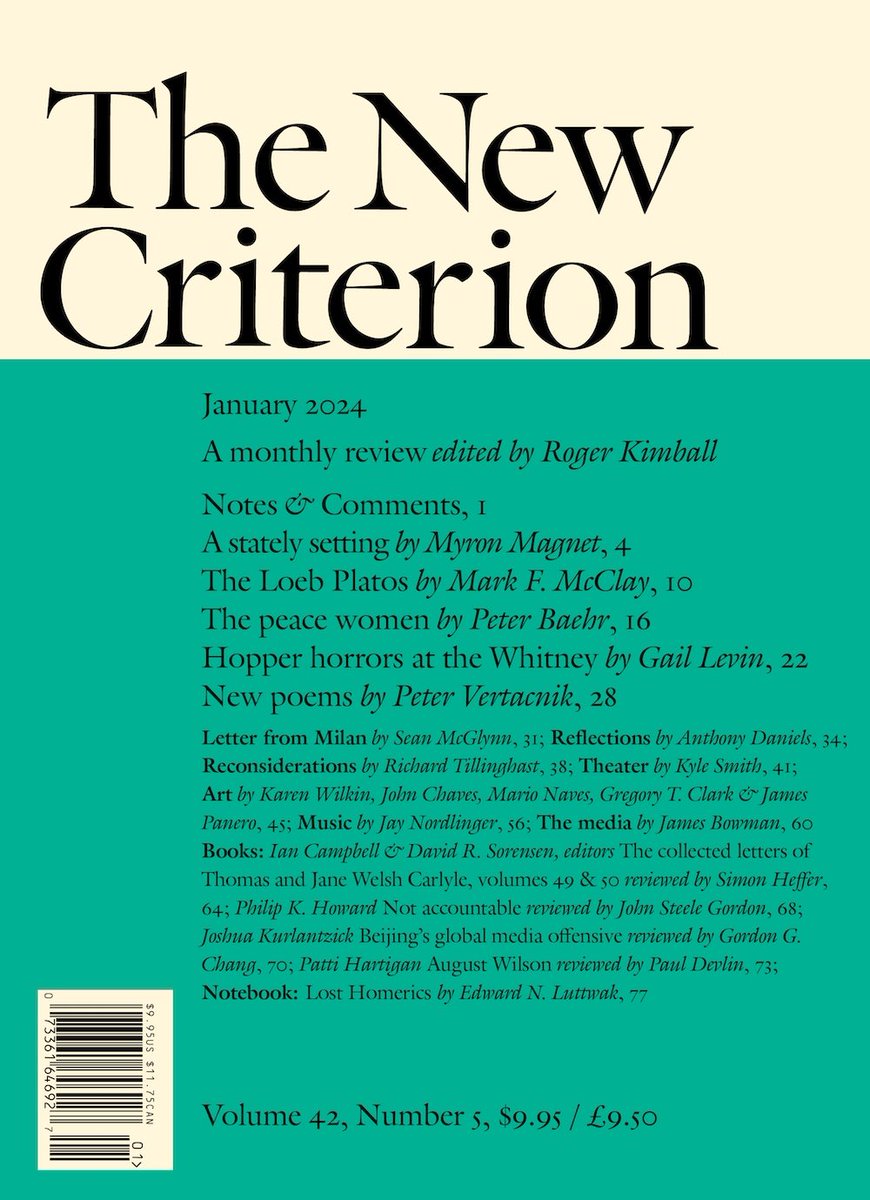
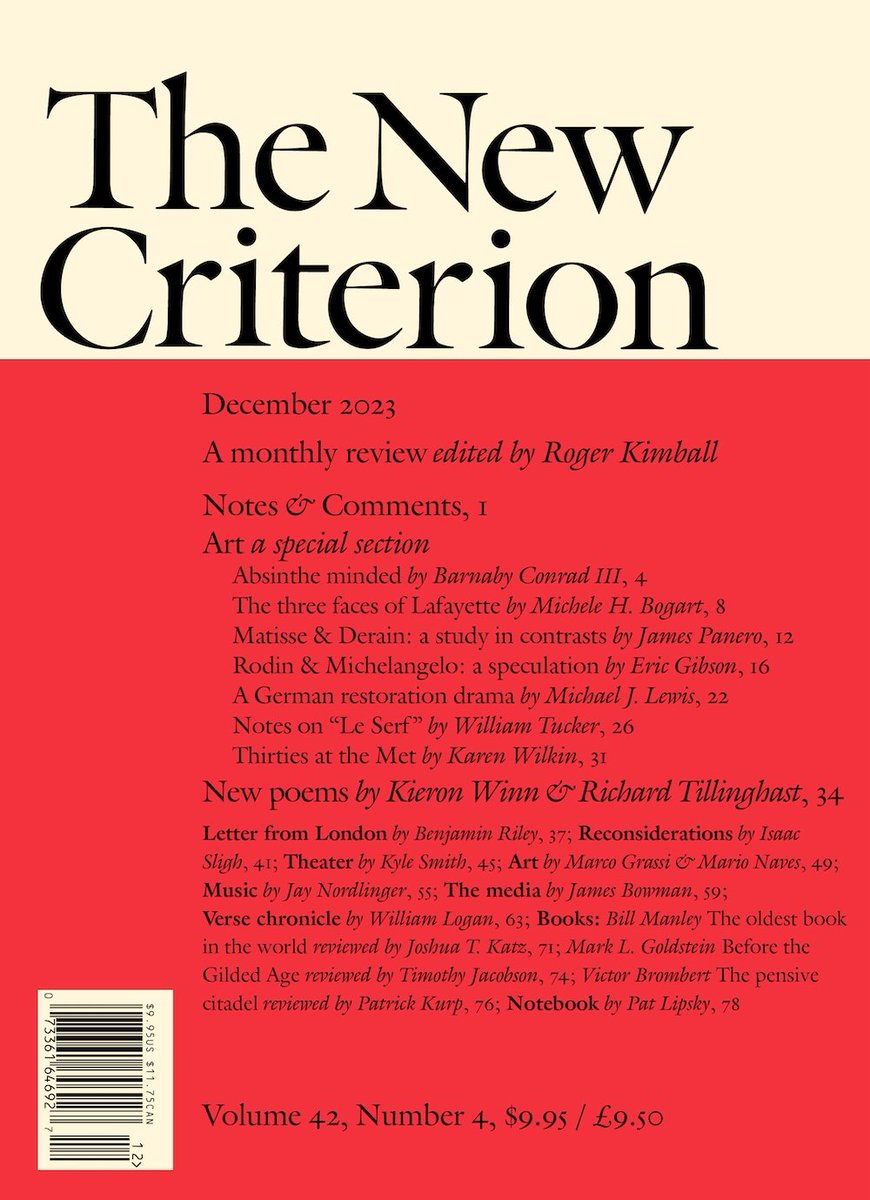
Absinthe minded by Barnaby Conrad III The three faces of Lafayette by Michele H. Bogart Matisse & Derain: a study in contrasts by James Panero Rodin & Michelangelo: a speculation by Eric Gibson A German restoration drama by Michael J. Lewis Notes on “Le Serf” by William Tucker Thirties at the Met by Karen Wilkin
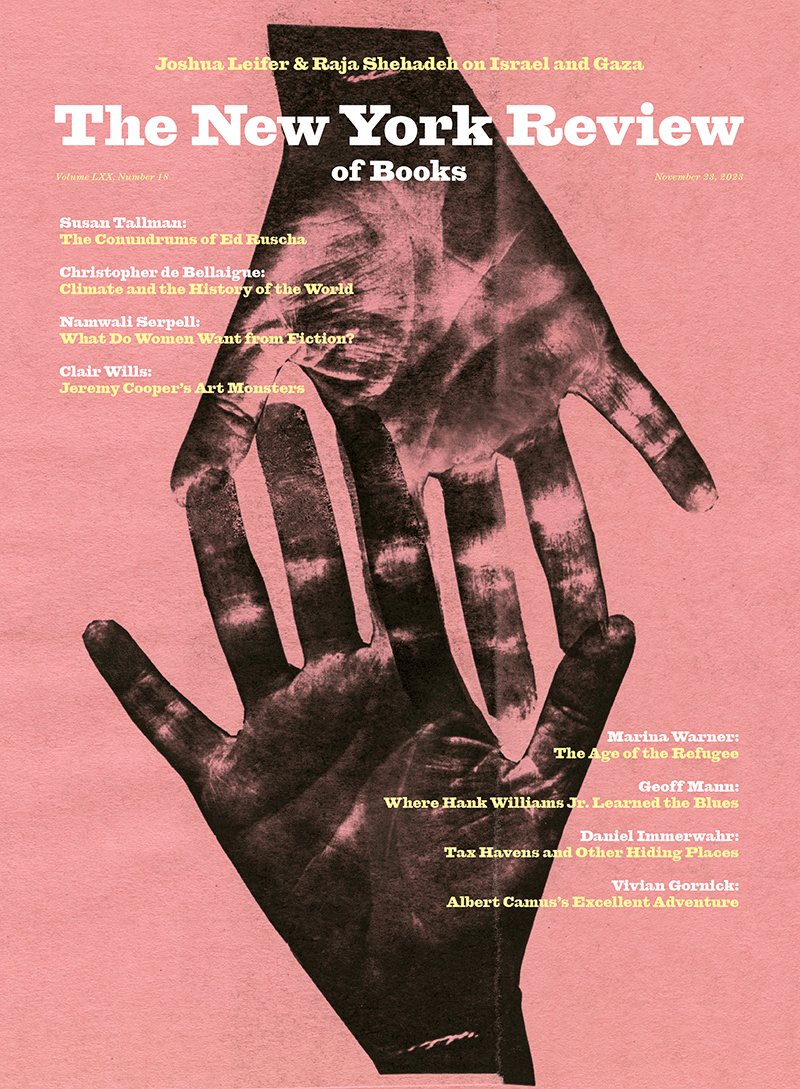
The New York Review of Books (November 23, 2023) – The latest features Inhumane Times – Israel’s current war, the punishment of the Palestinian people and an offensive against Hamas; Camus on Tour – Travels in the Americas: Notes and Impressions of a New World by Albert Camus; Zoning Out – Crack-Up Capitalism: Market Radicals and the Dream of a World Without Democracy by Quinn Slobodian, and more…
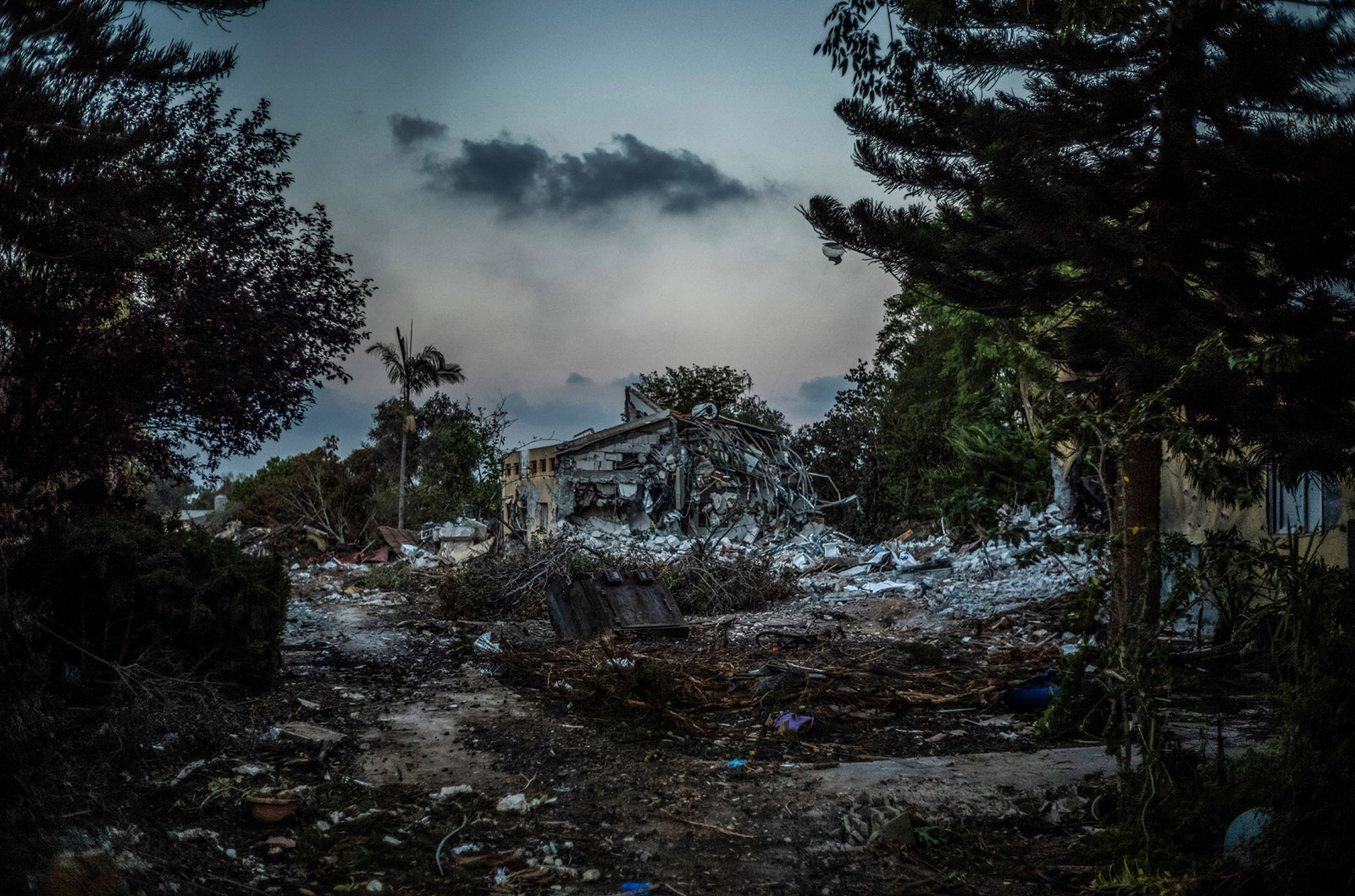
The scenes of devastation in Israel’s south on October 7 were almost beyond description. Children killed in their beds, babies taken from their mothers’ arms, the elderly slaughtered in their kitchens. Kfar Aza, a kibbutz close to the separation barrier with Gaza, was burned nearly to the ground: a charnel house. Between a quarter and a third of nearby Kibbutz Nir Oz’s residents were killed or kidnapped. Roughly 10 percent of Kibbutz Be’eri’s population was murdered. At least a dozen of tiny Kibbutz Holit’s two hundred members are dead. The streets of the city of Sderot were littered with bodies. At an outdoor rave near Kibbutz Reim, more than 260 young men and women were gunned down as they tried to flee.
Most of Albert Camus’s evaluations from his promotional trips across the Atlantic are superficial or laughably snotty. What’s intriguing is how quickly he demands that things make sense.
Nothing in a professional writer’s life more resembles the life of a traveling salesman than the literary book tour. The superficial difference between writers on tour and salesmen on the road is that writers are encouraged to imagine themselves prized personae whose pitch is eagerly awaited by the anonymous crowd, whereas salesmen know themselves to be an intrusion, albeit one with an edge. While both are beggars at the gate, each one singing for a bit of supper, salesmen are independent entrepreneurs, pretty much calling their own shots; writers, on the other hand, are performers in someone else’s show—a talk at ten, a class at twelve, a panel at three, a reading at seven, and oh, did I forget the ten or twelve interviews tucked in at every break in the day?—all the while being dragged around by people otherwise known as “handlers” who every half-hour tell them how much they are loved, how much their work is prized, how many lives it has changed, and yes, they know how tired you must be by now, but would you mind giving just one more very small interview, this guy’s been waiting all day to talk to you.
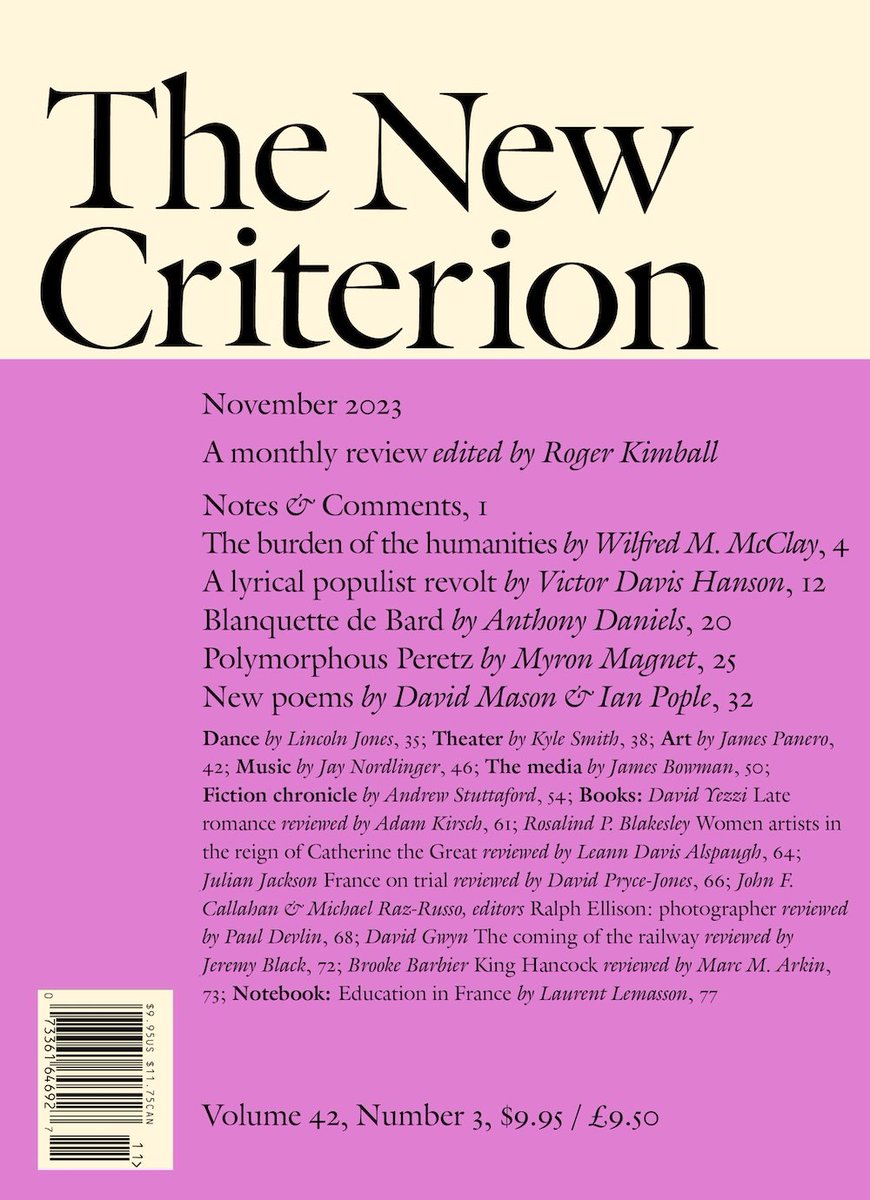
The burden of the humanities by Wilfred M. McClay A lyrical populist revolt by Victor Davis Hanson Blanquette de Bard by Anthony Daniels Polymorphous Peretz by Myron Magnet
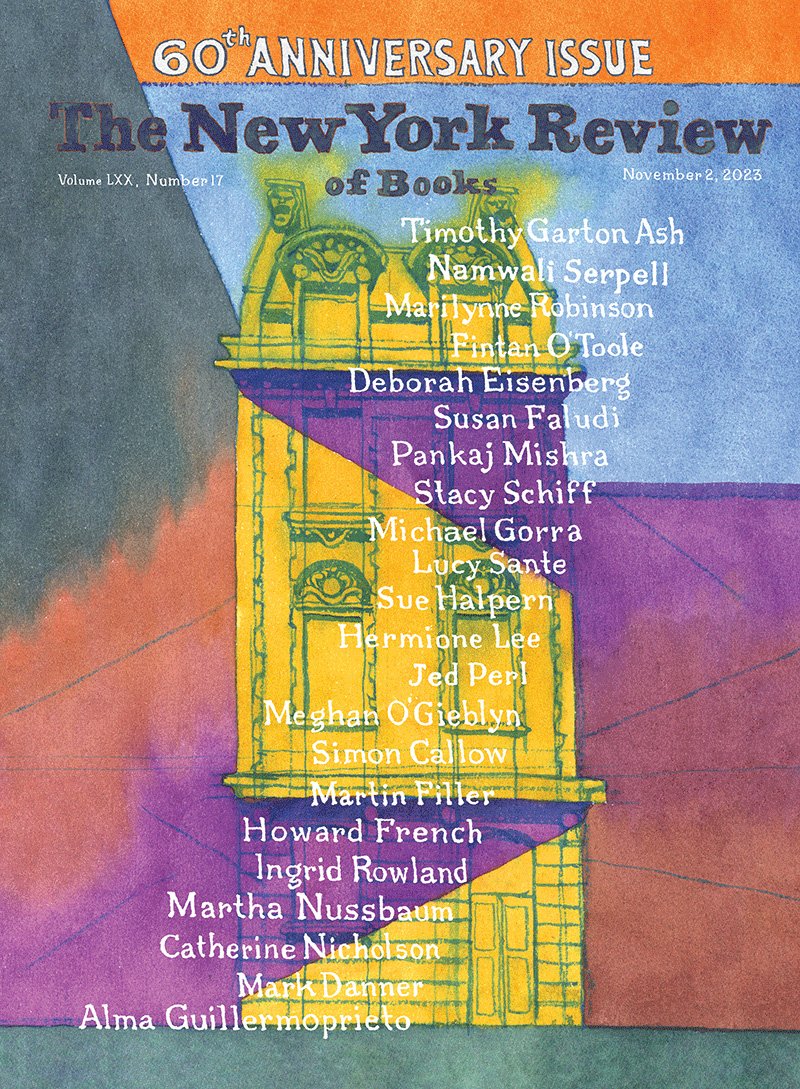
The New York Review of Books (November 2, 2023) – The latest features the 60th Anniversary Issue— with Pankaj Mishra on writing in the face of fascism, Lucy Sante on the kaleidoscopic Blaise Cendrars, Fintan O’Toole on the battles over wokeness, Deborah Eisenberg on the enchantments of Elsa Morante, Timothy Garton Ash on the dream of a free Europe, Simon Callow on vertiginous Mozart, Jed Perl on the Warholization of Picasso, Marilynne Robinson on Iowa’s tattered ideals, Catherine Nicholson on Shakespeare’s First Folio, Susan Faludi on abortion in the nineteenth century, Martha Nussbaum on the rights of whales, poems by Anne Carson and Ishion Hutchinson, and much more.
Uwe Wittstock’s new account of writers considering whether to flee or to remain in Germany during Hitler’s rise to power sheds light on the choices faced by many writers in India and Russia today.
by Uwe Wittstock, translated from the German by Daniel Bowles
“It will have become clear to you now,” Joseph Roth wrote to Stefan Zweig in mid-February 1933, “that we are heading for a great catastrophe.” Two weeks previously, on January 30, Germany’s eighty-five-year-old president, Paul von Hindenburg, had appointed as chancellor a man who for more than a decade had spoken and written frankly about his resolve to extirpate democracy and Jews from the country. Roth, who left Berlin the same morning Adolf Hitler came to power and never returned to Germany, was desperate to make his complacent friend recognize the perils before them.
Biographies of composers are a relatively recent genre; those of Mozart were among the first examples.Though his life was not as sensational as that of Gesualdo, for example, who murdered his wife, Mozart was, from his early years, an international celebrity whose very personality posed questions beyond the eternal riddle of creativity. How could a mere child—he started performing publicly on the clavichord at the age of six—be so astoundingly versatile? As he toured Europe, going from court to court and salon to salon with his father, Leopold, and his older sister, Maria Anna—a talented musician as well—the delightful little boy in his nattily embroidered outfits enchanted his listeners, readily obliging them with requests, however crass: now playing with the keys covered, now with only one finger, to delighted applause.
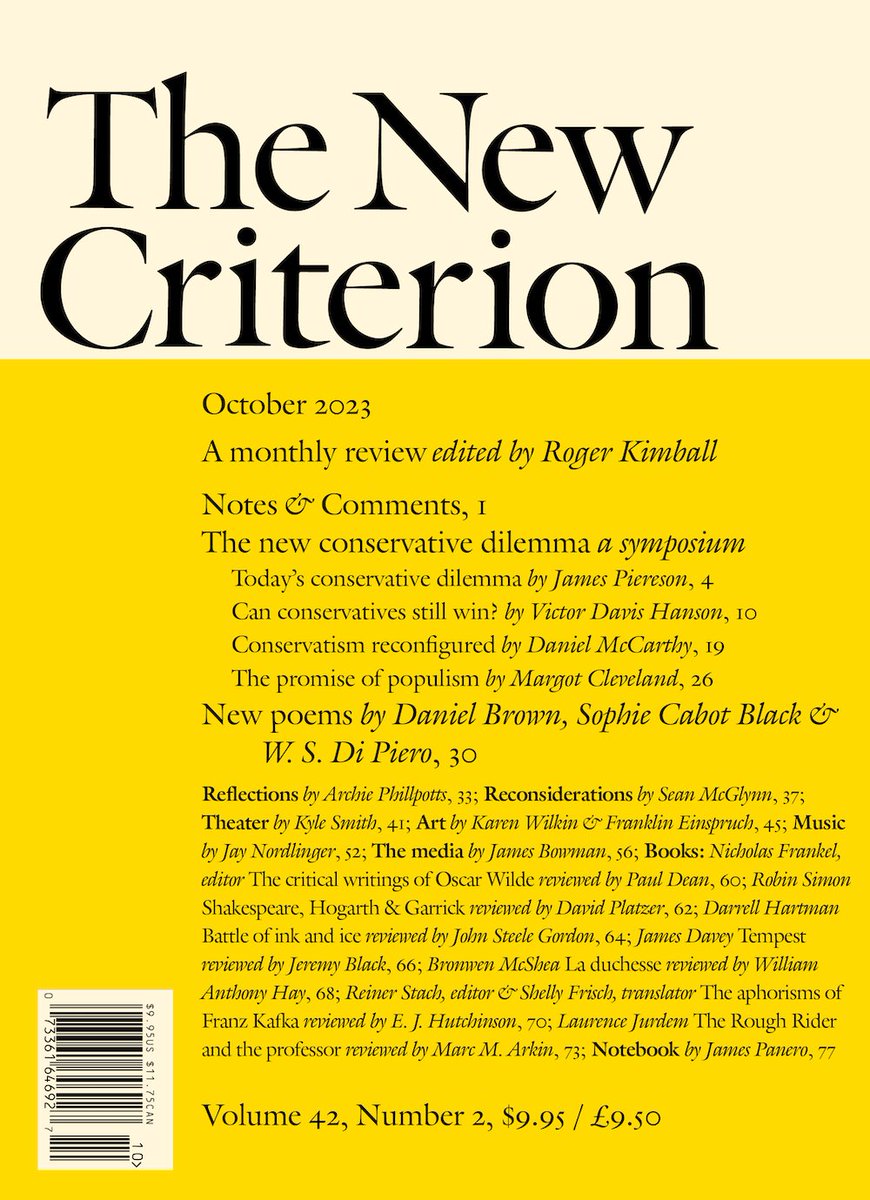
Today’s conservative dilemma by James Piereson Can conservatives still win by Victor Davis Hanson Conservatism reconfigured by Daniel McCarthy The promise of populism by Margot Cleveland
New poems by Daniel Brown, Sophie Cabot Black & W. S. Di Piero
News, Views and Reviews For The Intellectually Curious







 Boomers Daily