


From the New York Times Book Review:
“Antisocial,” the new book by Andrew Marantz, plainly states its subject in its subtitle: “Online Extremists, Techno-Utopians, and the Hijacking of the American Conversation.” In order to write it, Marantz immersed himself in corners of the internet most of us would go out of our way to avoid.
Gail Collins visits the podcast this week to discuss her new book, “No Stopping Us Now,” an eye-opening chronicle of older women’s journey to progress in the United States over the years. “It used to be, the whole vision of your life if you were a woman was that you got married, you had children and, once the children were grown, you were old — done,”

Collins says on the podcast this week. “That was the thing I was looking at: What counted as old, and then what did women do when they got to what was regarded as old? How did they use it, how did they fight it?”
To read more: https://www.nytimes.com/2019/11/08/books/review/Andrew-Marantz-Gail-Collins-interview.html

 Syndicated columnist Mark Shields and New York Times columnist David Brooks join Judy Woodruff to discuss the week’s political news, including the impact of released impeachment inquiry transcripts, what we might learn from the upcoming public hearings, the possible entry of Michael Bloomberg into the 2020 presidential race and results from state elections in Kentucky, Pennsylvania and Virginia.
 Most historical accounts of slavery were written by colonists and planters. Researchers are now using the tools of archaeology to learn more about the
 This week our correspondent joined Emmanuel Macron on his visit to China. The French president is stretching his diplomatic wings, and has some striking views about Europe’s place in the world. The state of Texas has been reliably Republican for decades, but its demographics are changing; could it at last turn blue? And how Japan is dealing with its epidemic of public-transport groping.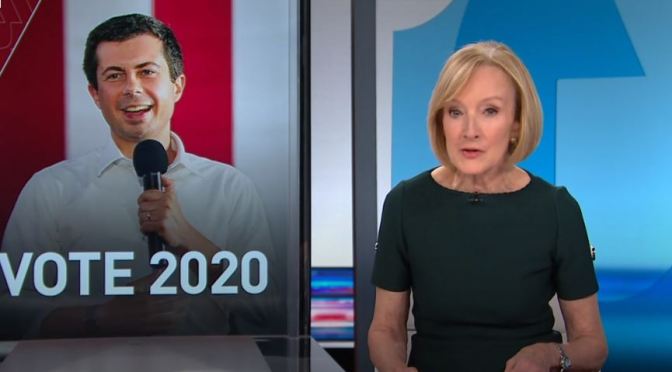
 Recent polls in early voting states show Pete Buttigieg’s popularity surging among Democratic voters. The mayor of South Bend, Indiana, is now in the top tier of candidates vying for the chance to challenge President Trump in the 2020 presidential election. But with that growing support comes rising scrutiny. Judy Woodruff talks to Buttigieg about health care, taxes and uniting a divided country.
 Dr David Adesnik, Director of Research at the Foundation for the Defense of Democracies, talks to Jonathan Kay about ISIS, Syria and the Kurds.
 Listen to the latest science updates, with Benjamin Thompson and Shamini Bundell. This week, insights into the evolution of walking upright, how science needs to change in the next 150 years, and the remaining hurdles for vaccination.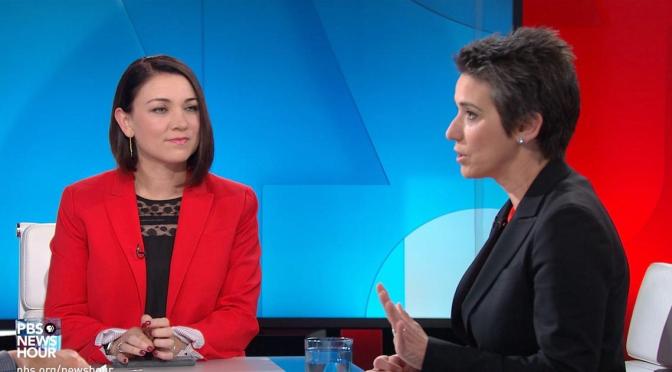
 NPR’s Tamara Keith and Amy Walter of the Cook Political Report join Amna Nawaz to discuss the latest political news, including the release of transcripts from the impeachment inquiry, what three upcoming gubernatorial races say about President Trump’s support, early polling in key 2020 battleground states and the waning distinction between local and national politics.
 In its heyday, dynamite was a transformative tool; it could blast rock quarries, excavate tunnels, and demolish buildings with power and reliability never before seen. But it also proved to be useful in some surprising ways. In this special episode of Sidedoor, we team up with the history podcast Backstory to explore two less-typical applications of the explosive: the artistic blasting at Mount Rushmore, and how anarchists used dynamite to advance their political agenda in 1886.
 As digital payments become the norm, will there be a need for cash? The Economist’s Finance editor Helen Joyce takes a look behind the scenes of the future, from Sweden to Shanghai. She explores how digital payments will transform the economy, and how they risk leaving some people behind.
 Boomers Daily