THE AMERICAN SCHOLAR (December 2, 2024): The latest issue features ‘From Atop The Magic Mountain’ – One-Hundred years later, Thomas Mann’s epic remains as prophetic as ever.
Only rarely did the outside world intrude on an idyllic Connecticut childhood, but in the tumultuous 1960s, that intrusion included an encounter with evil
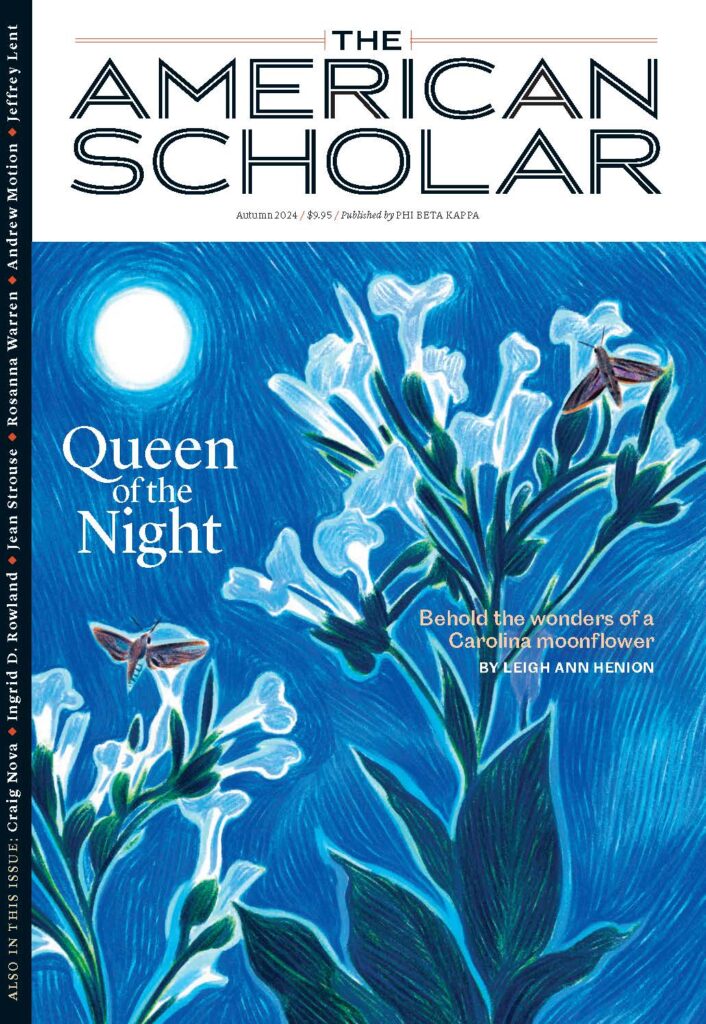
Experience the marvel that is night-blooming tobacco By Leigh Ann Henion
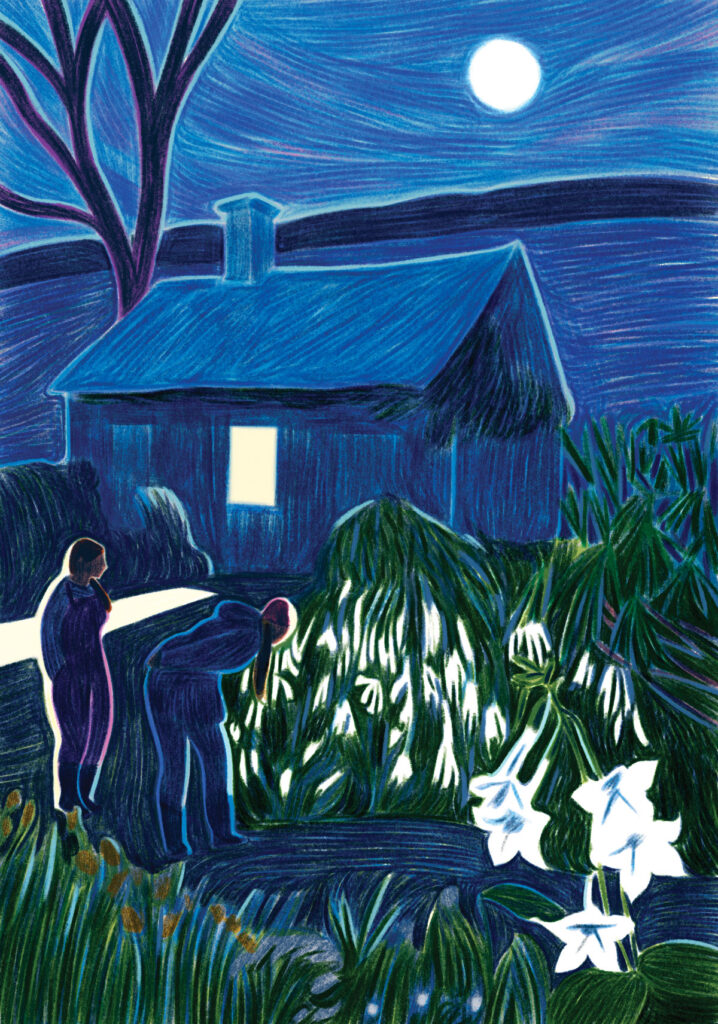
In western North Carolina, the mountain growing season is short, and autumn is already tossing yellow-and-red confetti against my windshield as I drive the back roads to my friend Amy’s homestead. Curve after curve, I find locust trees that are a few shades lighter than they were last week. Buckeyes also seem well on their way to change. It is now hard to tell the difference between orange leaves falling and monarch butterfly wings rising. The signs of summer and fall, all intertwining.
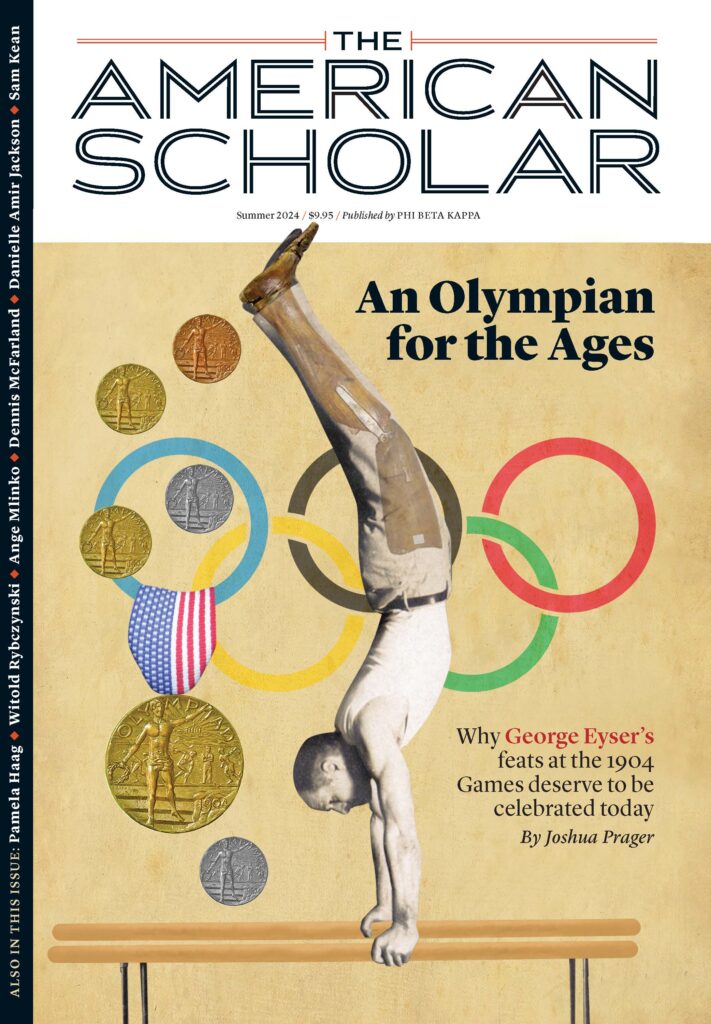
THE AMERICAN SCHOLAR(June 4, 2024): The latest issue features ‘An Olympian for the Ages’ – Why George Eyser’s feats at the 1904 Games deserve to be celebrated today; Joshua Prager on a forgotten Olympian, Mickalene Thomas and the art of remixing, new poetry from Ange Mlinko, and more…
Is the convergence of human and machine really upon us?
The Singularity Is Nearer: When We Merge with AI by Ray Kurzweil
In the fall of 2014, an MIT cognitive scientist named Tomaso Poggio predicted that humankind was at least 20 years away from building computers that could interpret images on their own. Doing so, declared Poggio, “would be one of the most intellectually challenging things … for a machine to do.” One month later, Google released an AI program that did exactly what he’d deemed impossible.
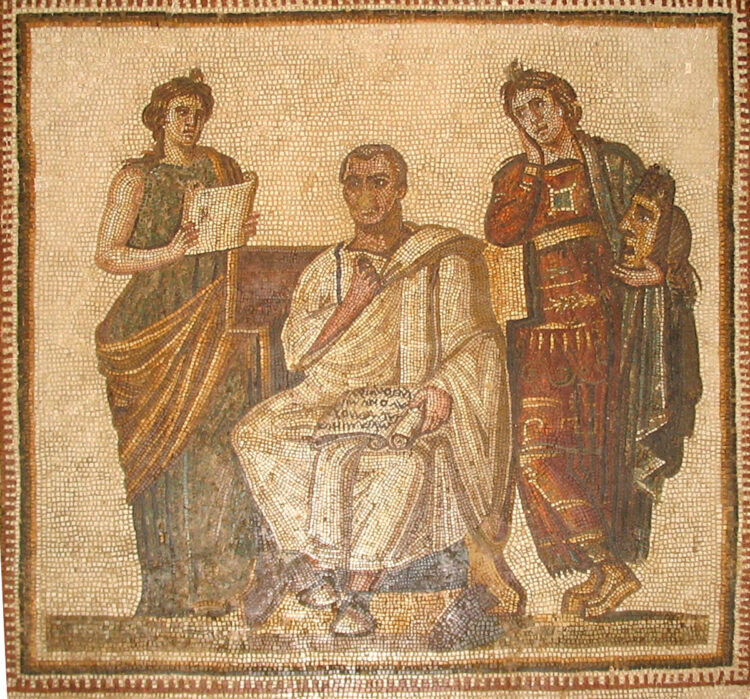
Great works of literature are sly and powerful beasts that pounce on their readers, grabbing them by the neck and shaking them back and forth. The young Augustine looks like a typical victim of Vergil’s Aeneid. The schoolboy being brought up as a Christian in fourth-century CE North Africa found the first-century BCE epic poem of pagan Rome the most impressive thing in his cultural life to date. Tellingly, his reaction shows no interest in the poem’s theme of individual sacrifice in the name of imperial destiny; rather, into middle age, the great theologian and founder of institutional Catholic monasticism remembered weeping for Dido, who commits suicide after her lover, Aeneas, abandons her at the end of Book IV.
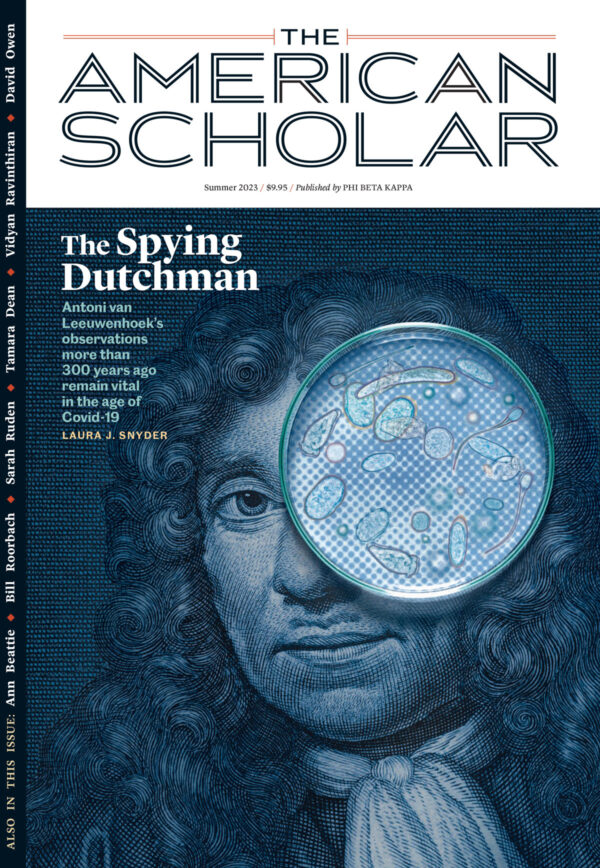
THE AMERICAN SCHOLAR – SUMMER 2023 issue: What does Antoni van Leeuwenhoek have to do with Covid? Can a digital restoration of a supposed da Vinci be just as good as the real thing? What was it like to be a young journalist on one of François Truffaut’s sets?
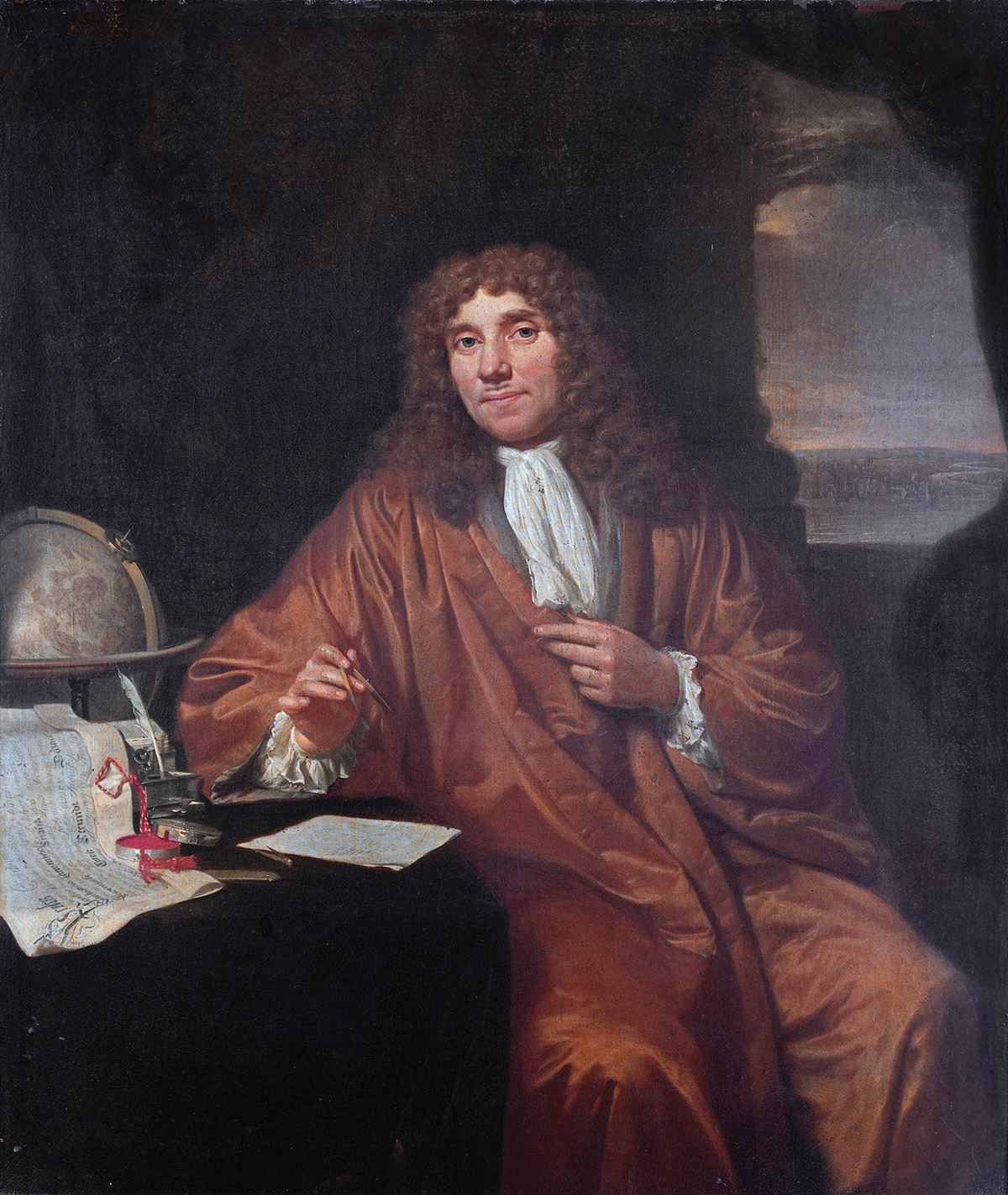
Antoni van Leeuwenhoek, in a circa 1680 painting by the Dutch artist Jan Verkolje, famous for his portraits of prominent members of Delft society
Antoni van Leeuwenhoek’s discovery of microorganisms made possible the revolutionary advances in biology and medicine that continue to inform our Covid age
One night in 1677, a grizzled man in a wrinkled linen nightshirt rushed from his bemused wife’s bed with a candle in hand to examine the “remains of conjugal coitus, immediately after ejaculation before six beats of the pulse.” Using the candle to cast a pool of light in his dark study, he put a drop of the liquid into a tiny glass vial he had blown himself, attaching it to the back of a strange-looking device he had also constructed.
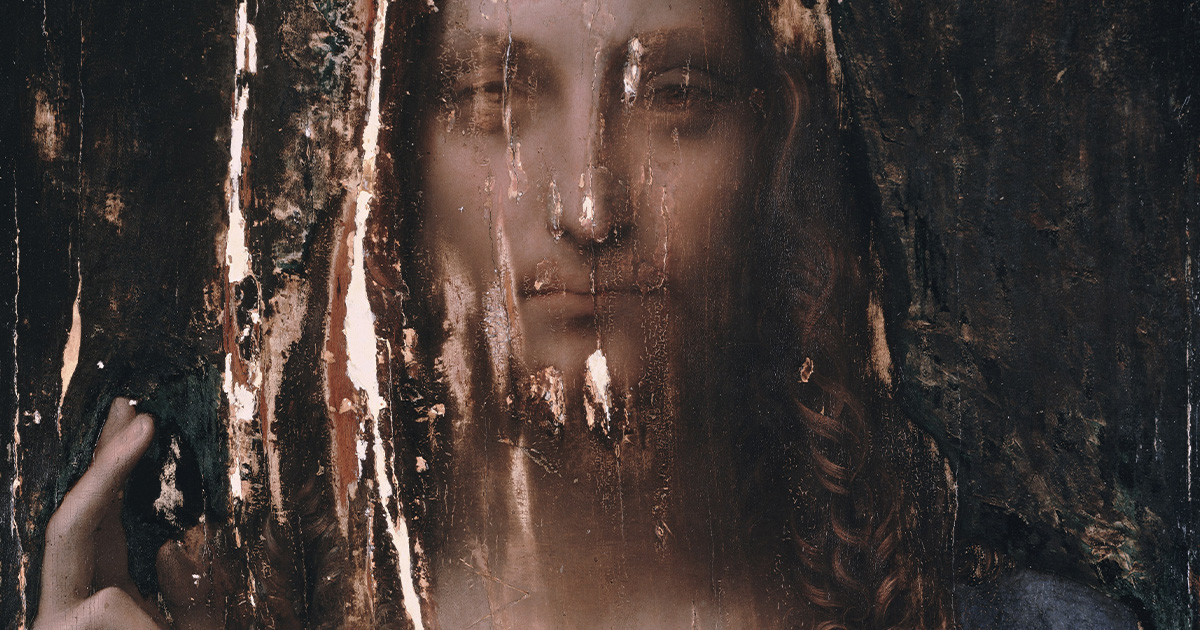
What a digital restoration of the most expensive painting ever sold tells us about beauty, authenticity, and the fragility of existence
I got the call late on a summer afternoon. Yanai Segal, an artist I’ve known for years, asked me whether I’d heard of the Salvator Mundi—the painting attributed to Leonardo da Vinci that was lost for more than two centuries before resurfacing in New Orleans in 2005. I told him that I’d heard something of the story but that I didn’t remember the details. He had recently undertaken a project related to the painting, he said, and wanted to tell me about it. I was eager to hear more, but first I needed to remind myself of the basic facts. We agreed to speak again soon.
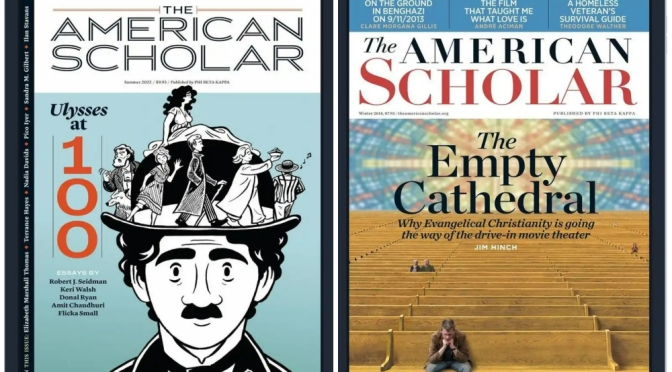
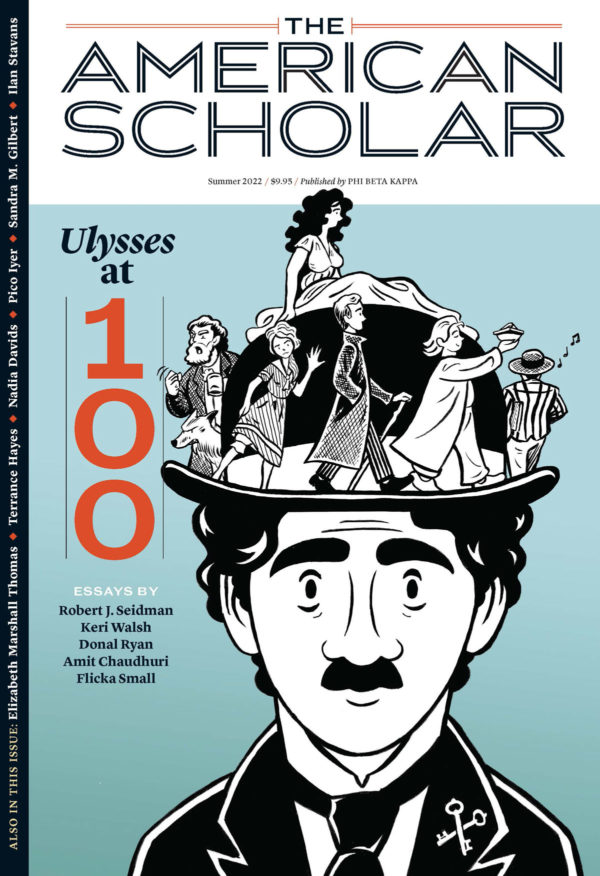
Is there a novel more revered—and more famously unread—than James Joyce’s Ulysses? Despite its complexities, this love letter to Dublin, published a century ago, is a very readable chronicle of everyday life and everyday struggles. It’s a book about marriage, sex, religion, food, art, loneliness, companionship, and so much else. It’s a book, that is, about life. We hope that the following essays will send you on a quest to discover, or rediscover, this most staggering of epics.








 Boomers Daily