
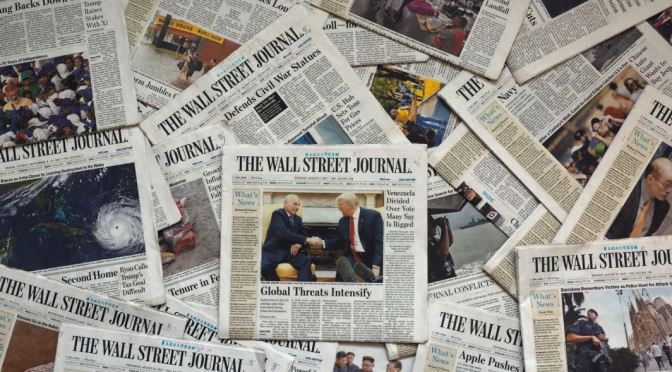
Take an early look at the front page of The Wall Street Journal https://t.co/5xQPDPcm8q pic.twitter.com/8WFBGc6SWo
— The Wall Street Journal (@WSJ) August 6, 2021
Tag Archives: News

Morning News: Disruptive Airline Passengers, China Trade, Spirit Airlines CEO
A.M. Edition for Aug. 6. WSJ’s Alison Sider discusses recent cases of disruptive airline passengers and how they can affect operations.
The CEO of Spirit Airlines apologizes for several days of flight cancellations. Some major business groups urge the Biden administration to open trade talks with China. And, how to handle an exit interview from your job. Marc Stewart hosts.

News: Top 5 Stories For August 5, 2021 (Reuters)
August 5, 2021: COVID-19 cases, California wildfire, Texas van crash, U.S. landlord groups, Sydney
1. The United States hit a six-month high for new COVID cases with over 100,000 infections reported, according to a Reuters tally.
2. A rapidly spreading wildfire burned homes and forced thousands to evacuate in two heavily wooded counties northeast of Sacramento in Northern California.
3. A van overloaded with 30 people, many of them believed to be illegal immigrants, crashed in southern Texas, killing 10 occupants and critically injuring many of the others, police said.
4. Landlord groups asked a U.S. judge in Washington to immediately lift a new eviction moratorium that was put in place by the Centers for Disease Control and Prevention, saying the new order was “unlawful”.
5. Sydney reported a record daily number of new coronavirus cases and the state of Victoria announced a one-week lockdown as Australia tried to contain the highly infectious Delta variant.
Front Page Views: Wall Street Journal – Aug 5
Morning News: Taliban In Afghanistan, Iran Hijacks Vessels, Italy’s Far Right
We get the latest from Lynne O’Donnell on the front line in Afghanistan and ask whether recent hijackings in the Persian Gulf are part of a concerted effort of Iranian foreign policy. Plus: is the far right on the rise in Italy?
Front Page Views: Wall Street Journal – Aug 4
Morning News: Delta Variant Challenges Asia, Eviction Delays & Jobs
A.M. Edition for Aug. 4. WSJ’s Jon Emont discusses what’s behind the economic challenges facing some parts of Asia amid a rise in the highly transmissible Delta variant of Covid-19.
The Biden administration implements a new federal moratorium on evictions. Spirit Airlines cancels more flights as it grapples with a dayslong operational meltdown. And, things to consider before quitting your job.
Front Page Views: Wall Street Journal – Aug 3
Morning News: Myanmar Military Rule, France-UK Rift, Kososvo’s Olympics
We get the latest from Myanmar with Asean under pressure to name an envoy to the country. Plus: we ask why Franco-UK relations are so poor and discuss official Olympic recognition for Kosovo.

News: Top 5 Stories For August 2, 2021 (Reuters)
August 2, 2021: Eviction ban, Moratorium extension, Delta variant, Turkey wildfires, Tanker attack
1. A pandemic-related U.S. government ban on residential evictions expired at midnight, putting millions of American renters at risk of being forced from their homes.
2. Democratic leaders in the U.S. House of Representatives called on the Biden administration to immediately extend a moratorium on housing evictions through Oct. 18.
3. The United States will not lock down again to curb COVID-19 but “things are going to get worse” as the Delta variant fuels a surge in cases, mostly among the unvaccinated, Dr. Anthony Fauci said.
4. The death toll from wildfires on Turkey’s southern coast rose to eight on Sunday as firefighters battled for a fifth day to contain blazes still raging in coastal resort towns.
5. The United States and Britain said they believed Iran carried out an attack on an Israeli-managed petroleum product tanker off the coast of Oman on Thursday that killed a Briton and a Romanian, both pledging to work with partners to respond.
 Boomers Daily