Protein Power: AI network predicts highly accurate 3D structures for the human proteome. Browse this week’s issue of Nature: https://t.co/ihA52BlziB pic.twitter.com/XUTcbbKL3q
— nature (@Nature) August 26, 2021
Tag Archives: Nature Magazine
Science Reviews: Nature Magazine – June 10, 2021
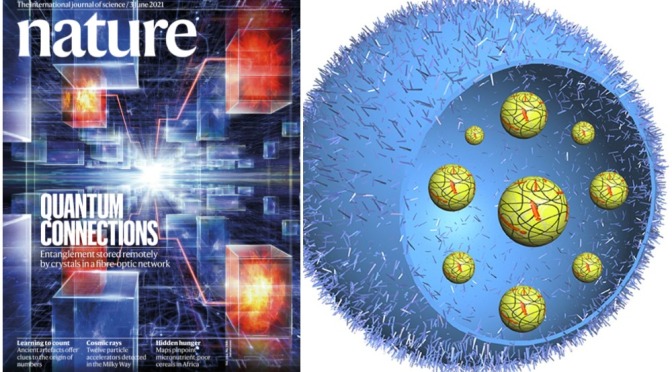
Research Highlights: Nature – June 3, 2021

Science Podcast: Snow-Covered ‘Zombie Fires’, Flashy Plant Research
Smouldering fires lay dormant before bursting back into flame in spring.
In this episode:
00:56 The mysterious overwintering forest fires
Researchers have shown that fires can smoulder under snow in frozen northern forests before flaring up the following spring. Understanding how these so-called ‘zombie’ fires start and spread is vital in the fight against climate change.
Research Article: Scholten et al.
07:39 Research Highlights
Aesthetic bias means pretty plants receive the most research attention, and ancient tooth gunk reveals the evolution of the mouth microbiome.
Research Highlight: Flashy plants draw outsize share of scientists’ attention
Research Highlight: Microbes in Neanderthals’ mouths reveal their carb-laden diet
10:04 Briefing Chat
We discuss some highlights from the Nature Briefing. This time, Voyager 1 detects a faint interstellar ‘hum’, and a trove of Neanderthal bones found in an Italian cave.
Reuters: Faraway NASA probe detects the eerie hum of interstellar space
The Guardian: Remains of nine Neanderthals found in cave south of Rome
Video: Hawaii’s surprise volcanic eruption: Lessons from Kilauea 2018
Science: Stone Age Burial Site In Kenya, Metal-Free Rechargeable Batteries
The earliest evidence of deliberate human burial in Africa, and a metal-free rechargeable battery.
In this episode:
00:44 Human burial practices in Stone Age Africa
The discovery of the burial site of a young child in a Kenyan cave dated to around 78 thousand years ago sheds new light on how Stone Age populations treated their dead.
Research Article: Martinón-Torres et al.
News and Views: A child’s grave is the earliest known burial site in Africa
09:15 Research Highlights
How warming seas led to a record low in Northwestern Pacific typhoons, and the Arctic bird that maintains a circadian rhythm despite 24 hour sunlight.
Research Highlight: Warming seas brought an eerie calm to a stormy region
Research Highlight: The world’s northernmost bird is a clock-watcher
11:35 A metal-free rechargeable battery
Lithium-ion batteries have revolutionised portable electronics, but there are significant issues surrounding their recyclability and the mining of the metals within them. To address these problems, a team of researchers have developed a metal-free rechargeable battery that breaks down to its component parts on demand.
Research Article: Nguyen et al.
Science Podcast: Inside A Proton, Cold Genes & Growing Small Intestines
The surprising structure of protons, and a method for growing small intestines for transplantation.
In this episode:
00:45 Probing the proton’s interior
Although studied for decades, the internal structure of the proton is still throwing up surprises for physicists. This week, a team of researchers report an unexpected imbalance in the antimatter particles that make up the proton.
Research Article: Dove et al.
News and Views: Antimatter in the proton is more down than up
07:08 Research Highlights
How an inactive gene may help keep off the chill, and Cuba’s isolation may have prevented invasive species taking root on the island.
Research Highlight: Impervious to cold? A gene helps people to ward off the chills
Research Highlight: Marauding plants steer clear of a communist-ruled island
09:48 A new way to grow a small intestine
Short Bowel Syndrome is an often fatal condition that results from the removal of the small intestine. Treatment options are limited to transplantation, but donor intestines are hard to come by and can be rejected by the body. Now researchers may have developed a method to grow a replacement small intestine using stem cells and a small section of colon.
Research Article: Sugimoto et al.
15:50 Briefing Chat
We discuss some highlights from the Nature Briefing. This time, the landing of Perseverance on Mars, and the researchers speaking with lucid dreamers.
Nature News: Mars video reveals Perseverance rover’s daring touchdown
Nature News: Touch down! NASA’s Mars landing sparks new era of exploration
Science Podcast: Secrets Of Einsteinium, Chemicals Sap Ozone & Traffic Jams
Exploring the properties of a vanishingly-rare man-made element, and the AI that generates new mathematical conjectures.
In this episode:
01:04 Einsteinium’s secrets
Einsteinium is an incredibly scarce, man-made element that decays so quickly that researchers don’t know much about it. Now, using state-of-the-art technology, a team has examined how it interacts with other atoms, which they hope will shed new light on einsteinium and its neighbours on the periodic table.
Research Article: Carter et al.
06:28 Research Highlights
The mysterious appearance of three ozone-depleting chemicals in Earth’s atmosphere, and how ride-sharing services have failed to reduce traffic jams.
Research Highlight: Mystery on high: an ozone-destroying chemical appears in the air
Research Highlight: Uber and Lyft drive US gridlock — but not cuts in car ownership
8:38 The computer that comes up with new mathematical formulas
A team of researchers have developed artificial-intelligence algorithms that can generate new formulas for calculating the digits of key mathematical numbers like pi. Although crucial, many of these numbers remain mysterious, so it is hoped that this system will open up new avenues of questioning for mathematicians.
Research Article: Raayoni et al.
14:48 Briefing Chat
We discuss some highlights from the Nature Briefing. This time, a new theory to explain a sixty-year-old mystery surrounding the icy deaths of a group of Russian students, and the continued controversy about the chances of life on Venus.
Video: Explaining the icy mystery of the Dyatlov Pass deaths
Science Podcast: Dire Wolf Extinction, Pluto’s Blue Haze & Mice Empathy
DNA clues point to how dire wolves went extinct, and a round-up of the main impacts of Brexit on science.
In this episode:
00:45 Dire wolf DNA
Dire wolves were huge predators that commonly roamed across North America before disappearing around 13,000 years ago. Despite the existence of a large number of dire wolf fossils, questions remain about why this species went extinct and how they relate to other wolf species. Now, using DNA and protein analysis, researchers are getting a better understanding of what happened to these extinct predators.
Research Article: Perri et al.
11:43 Research Highlights
The secret to Pluto’s blue haze, and the neural circuitry underlying mice empathy.
Research Highlight: Ice bathes Pluto in a blue haze
Research Highlight: Brain maps show how empathetic mice feel each other’s pain
13:31 Post-Brexit science
In December, a last minute trade-deal between the UK and EU clarified what the future relationship between the two regions would look like, after Brexit. We discuss the implications of this trade-deal for science funding, the movement of researchers, and data sharing.
News Explainer: What the landmark Brexit deal means for science
23:18 Briefing Chat
We discuss some highlights from the Nature Briefing. This time, concerns about contaminating water on the moon, and the spy satellites that spied out environmental change.
Nature News: Will increasing traffic to the Moon contaminate its precious ice?
The New York Times: Inside the C.I.A., She Became a Spy for Planet Earth
Science: Nature Magazine Research Highlights
Science Podcasts: Birds & Sensory Pollution, Covid-19 Vaccine And Tiny Bats

Researchers try to unpick the complex relationship between sensory pollutants and bird reproduction, and how to combat organized crime in fisheries.
In this episode:
00:46 Sensory pollution and bird reproduction
Light- and noise-pollution have been shown to affect the behaviour of birds. However, it’s been difficult to work out whether these behavioural changes have led to bird species thriving or declining. Now, researchers have assembled a massive dataset that can begin to give some answers. Research article: Senzaki et al.
10:17 Coronapod
Interim results from a phase III trial show compelling evidence that a coronavirus vaccine candidate can prevent COVID-19. However, amid the optimism there remain questions to be answered – we discuss these, and what the results might mean for other vaccines in development. News: What Pfizer’s landmark COVID vaccine results mean for the pandemic
23:29 Research Highlights
A tiny bat breaks a migration record, and researchers engineer a mouse’s sense of place. Research Highlight: The record-setting flight of a bat that weighs less than a toothbrush; Research Article: Robinson et al.
25:39 Organised crime in fisheries
When you think of fishing, organised crime probably isn’t the first thing that springs to mind. However, billions of dollars every year from the fishing industry are lost to criminal enterprises. We discuss some of the impacts and what can be done about it. Research Article: Witbooi et al.
32:13 Briefing Chat
We discuss some highlights from the Nature Briefing. This time, a time-capsule discovered on the Irish coast provides a damning indictment of Arctic warming, and some human remains challenge the idea of ‘man-the-hunter’. The Guardian: Arctic time capsule from 2018 washes up in Ireland as polar ice melts; Science: Woman the hunter: Ancient Andean remains challenge old ideas of who speared big game