Tag Archives: Nature Magazine

Research Preview: Nature Magazine – August 10, 2023

Volume 620 Issue 7973

nature Magazine – August 10, 2023 issue: Algorithm designs 3D shapes to follow specific pathways; Why Indigenous youth need a voice in the climate debate; DNA leaks linked to inflammageing in the brains of mice; JWST spots what could be a quasar from the early Universe….

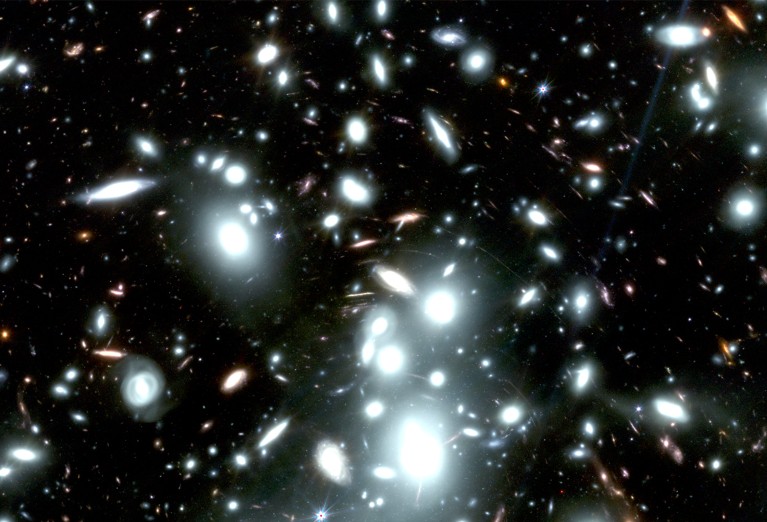
JWST spots what could be a quasar from the early Universe

Composite-colour image of the central core of a massive galaxy cluster.

The object’s deep red colour suggests it existed when the Universe was less than 700 million years old.

The James Webb Space Telescope (JWST) has seen what is probably a quasar from the early Universe1.

ChatGPT-like AIs are coming to major science search engines

The Scopus, Dimensions and Web of Science databases are introducing conversational AI search.

A hand holds a phone displaying the OpenAI website ChatGPT.

The conversational AI-powered chatbots that have come to Internet search engines, such as Google’s Bard and Microsoft’s Bing, look increasingly set to change scientific search, too. On 1 August, Dutch publishing giant Elsevier released a ChatGPT-like artificial-intelligence (AI) interface for some users of its Scopus database, and British firm Digital Science announced a closed trial of an AI large language model (LLM) assistant for its Dimensions database. Meanwhile, US firm Clarivate says it’s working on bringing LLMs to its Web of Science database.

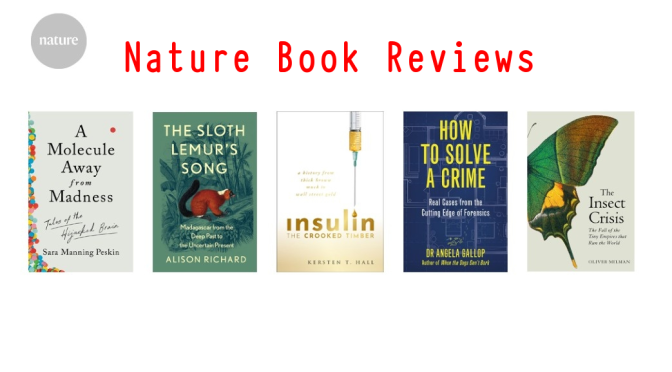
Nature Reviews: Top New Science Books – AUG 2023

nature Magazine Science Book Reviews – August 4, 2023: The bitter-sweet history of sugar, and the marvels of measurement. Andrew Robinson reviews five of the best science picks.

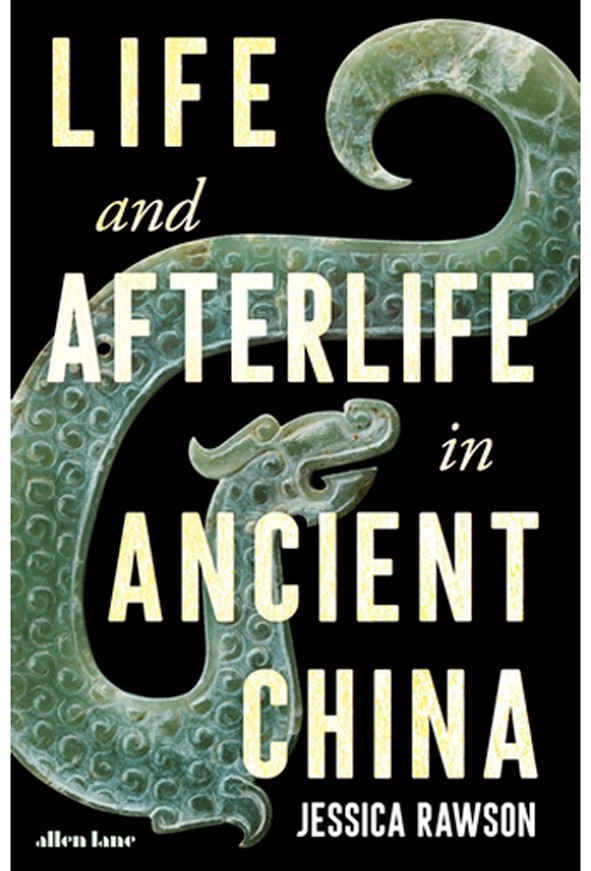
Life and Afterlife in Ancient China

By Jessica Rawson 

When constructing monumental tombs thousands of years ago, “the Egyptians built up” — with their pyramids — whereas “the Chinese built down”, writes sinologist Jessica Rawson. The geology of China’s dry Loess Plateau permitted the excavation of shafts more than 10 metres deep. These tombs were filled with objects for the afterlife. Rawson’s majestic history explores 11 such monuments and one large sacrificial deposit, dating from 5,000 years ago to the third century bc, with the First Emperor’s protective Terracotta Army.

The World of Sugar

Ulbe Bosma 

Sugar’s societal dominance is a recent development. Granulated sugar was eaten from the sixth century bc in India, but refined sugar became widely available in Europe only in the nineteenth century. Its history is both a story of progress and a bitter-sweet tale of “exploitation, racism, obesity, and environmental destruction”, writes historian Ulbe Bosma in his authoritative, highly readable study — the first to be truly global. Of 12.5 million Africans kidnapped in the Atlantic slave trade, between half and two-thirds were enslaved on sugar plantations.

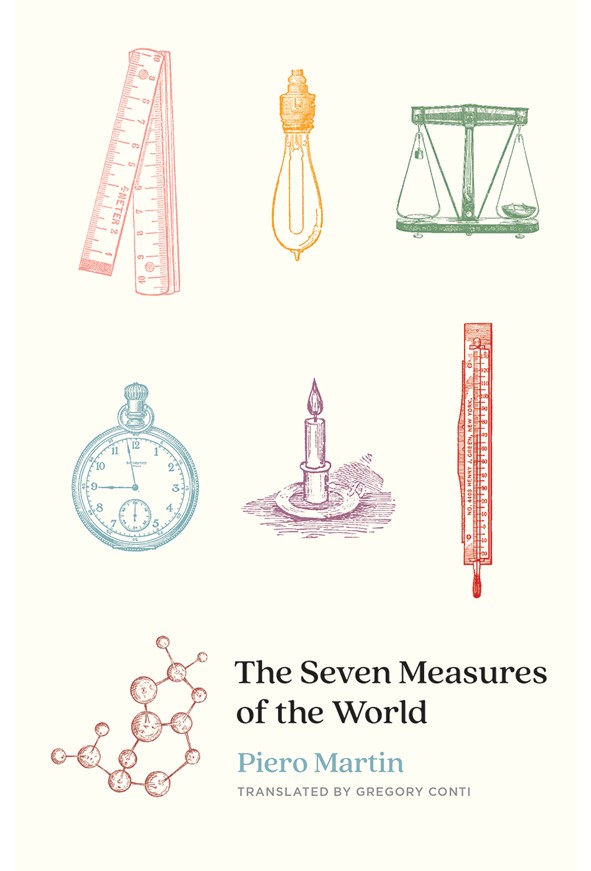
The Seven Measures of the World

Piero Martin (transl. Gregory Conti) 

The great civilizations of the ancient world could use precise measurements — witness the Egyptian pyramids. But their units differed. Not until 1960 was the international system of measurement (SI) introduced, defining the metre, second, kilogram, ampere, kelvin and candela — then the mole in 1971. Each gets a chapter in this concise, anecdotal history by experimental physicist Piero Martin. He stresses the subjective aspect of measurement, such as the idea that the quality of scientific publications matters more than their quantity.

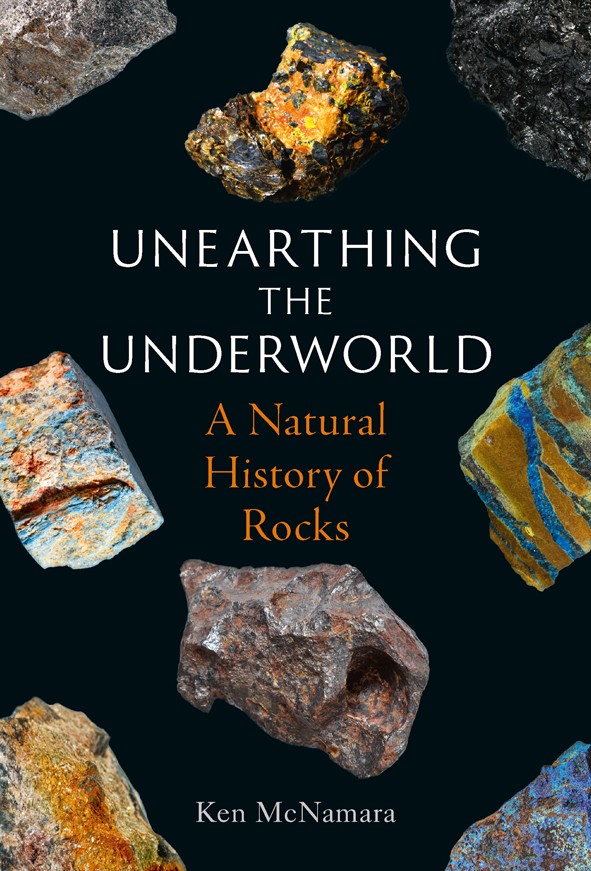
Unearthing the Underworld

By Ken McNamara 

Earth scientist Ken McNamara focuses on palaeontology and evolution. His appealing book about rocks and their lessons — illustrated with fine photographs of fossils — leaves aside igneous and metamorphic rocks, and the wonders of mineralogy. It concentrates instead on sedimentary rocks: mudstones, siltstones, sandstones and limestones, scattered over three-quarters of Earth’s surface in “endless piles”. As he jokily advises: “Ignore rocks at your peril.” But then surely continental drift deserved proper discussion?

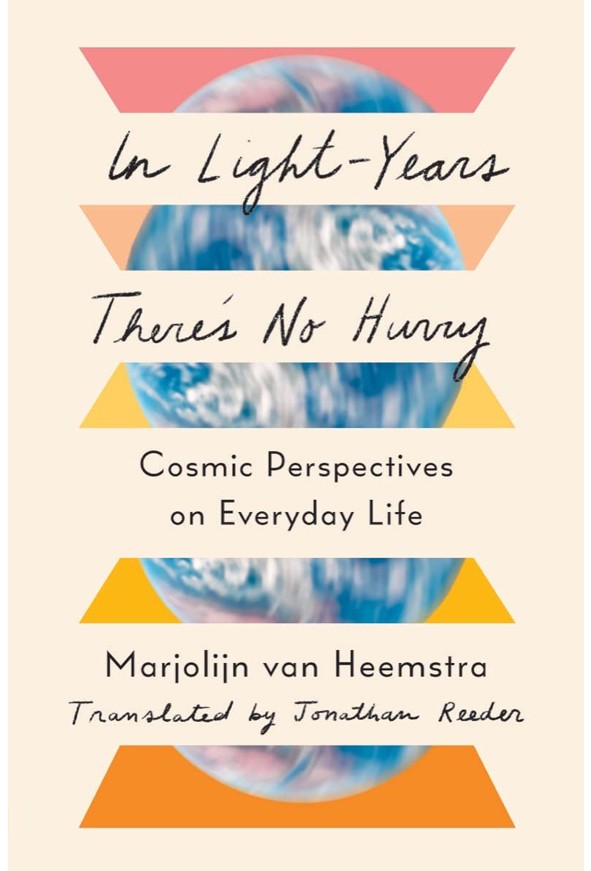
In Light-Years There’s No Hurry

Marjolijn van Heemstra (transl. Jonathan Reeder)

Dutch space reporter Marjolijn van Heemstra is also a poet, novelist and playwright. This translation of her highly personal meditation on the Universe reflects lyrically on the fact that the atmosphere “signifies a boundary”, whereas space “appeals to our notion of boundlessness”. She notes a growing difference of opinion between those who see space exploration as irresponsible because our planet is in deep trouble — environmental and otherwise — and those who regard space as a potential refuge from Earth.

Research Preview: Nature Magazine – August 3, 2023

Volume 620 Issue 7972

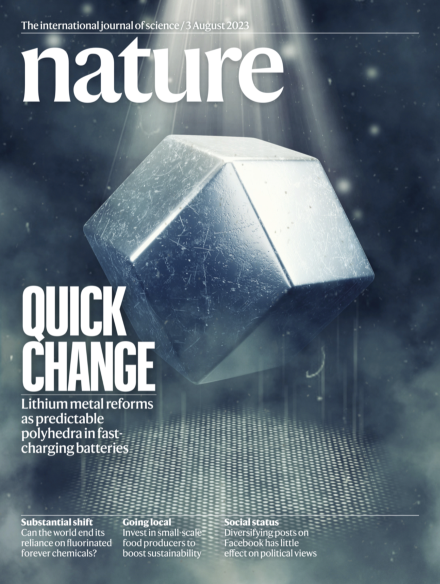
nature Magazine – August 3, 2023 issue: Lithium-metal batteries promise to charge rapidly and to hold more energy than batteries based on lithium ions. Recharging these batteries requires lithium metal to be reformed at the anode, but this process is affected by the battery’s electrolyte and current collector, which causes the shape of the lithium deposits to vary unpredictably, impairing the battery’s performance.

Water crisis: how local technologies can help solve a global problem

Climate change is making water stress worse for billions worldwide. Scaling up both new and traditional solutions must be a priority.

Why heart trouble can lead to sleep trouble

An immune response triggered by cardiac disease affects the function of a gland with a key role in the sleep–wake cycle.

Research Preview: Nature Magazine – July 27, 2023

Volume 619 Issue 7971

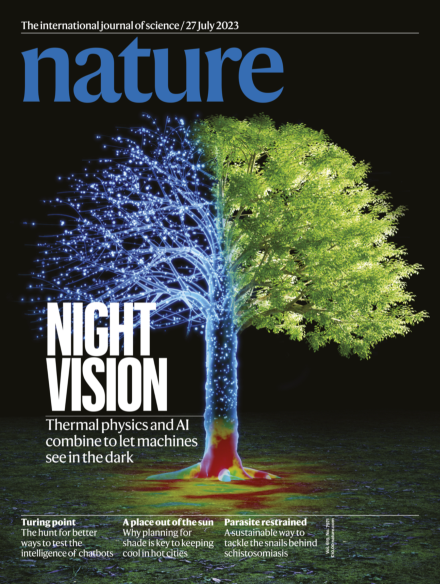
nature Magazine -July 27, 2023 issue: HADAR (heat-assisted detection and ranging) combines thermal physics and infrared imaging with machine learning to discern an object in pitch darkness as though it  is illuminated by broad daylight.

ChatGPT is a black box: how AI research can break it open

Despite their wide use, large language models are still mysterious. Revealing their true nature is urgent and important.

A lethal fungal infection gets a hand from the body’s own defences

Bloodstream infections by a common fungus are less deadly in mice engineered to have lower levels of a protein secreted by immune cells.

Research Preview: Nature Magazine – July 20, 2023

Volume 619 Issue 7970

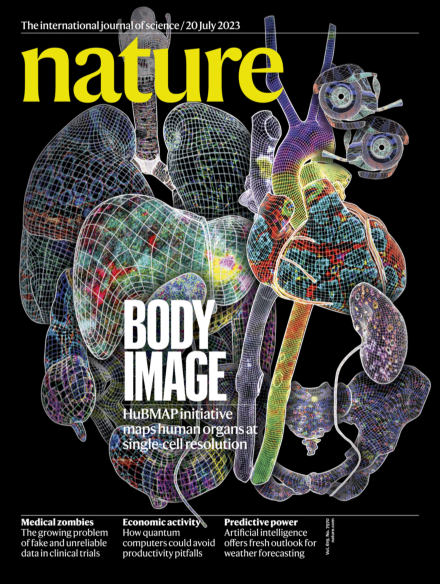
nature Magazine -July 20, 2023 issue: Launched in 2018, the Human Biomolecular Atlas Program (HuBMAP) aims to map how cell types are arranged in the human body. The initiative is both developing and then deploying the necessary technology to create maps of organs at single-cell resolution.

This quiet lake could mark the start of a new Anthropocene epoch

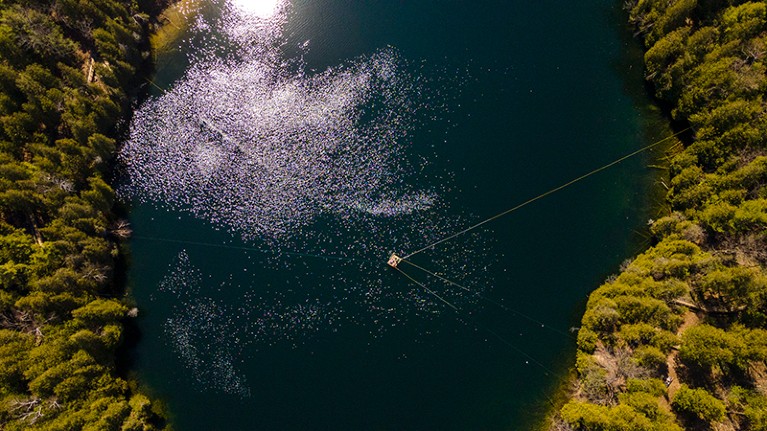
An aerial view of Crawford Lake.

The dawn of a new geological epoch is recorded in the contaminated sediment at the bottom of Crawford Lake in Canada.

The official marker for the start of a new Anthropocene epoch should be a small Canadian lake whose sediments capture chemical traces of the fallout from nuclear bombs and other forms of environmental degradation. That’s a proposal out today from researchers who have spent 14 years debating when and how humanity began altering the planet.

How to introduce quantum computers without slowing economic growth

To smooth the path of the quantum revolution, researchers and governments must predict and prepare for the traps ahead.

Research Preview: Nature Magazine – July 13, 2023

Volume 619 Issue 7969

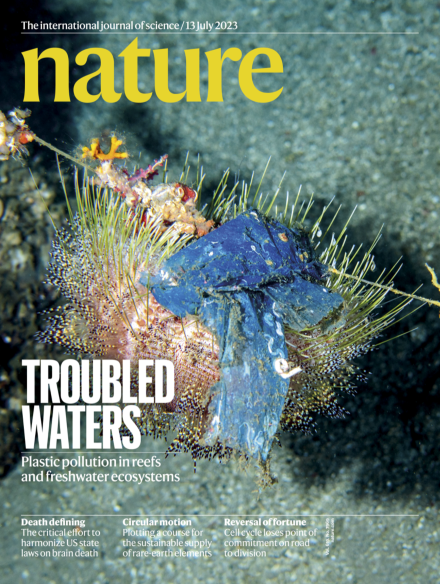
nature Magazine -July 13, 2023 issue: Usually, sea urchins procure blades of seagrass or small pieces of rubble to help them blend in with the sea floor, but the fire urchin (Asthenosoma varium) on the cover has instead appropriated the remnants of a blue plastic bag and is entangled in a discarded fishing line stuck on a reef.

How ancient monkeys rode the waves to the Americas — and survived

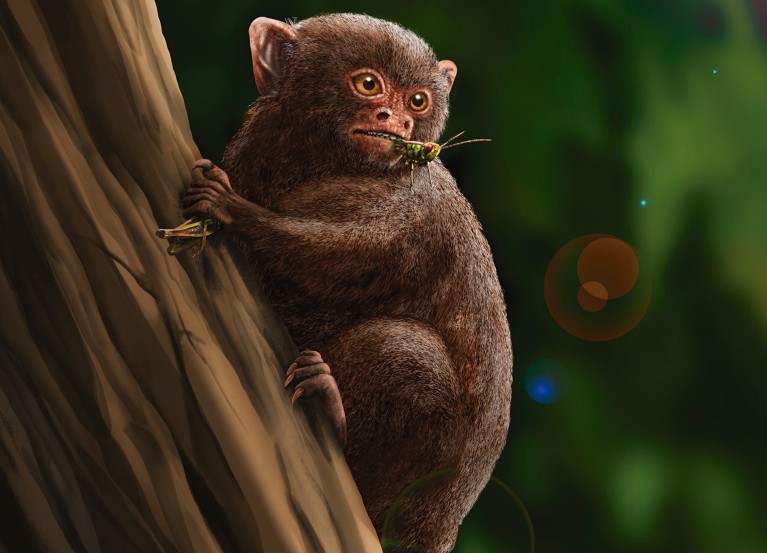
Artist’s reconstruction of the primate Ashaninkacebus.

Analysis suggests that three types of primate made the transoceanic journey to South America from Africa millions of years ago.

Some of the first primates to reach South America might have been tiny, insect-loving monkeys that had been swept out to sea.

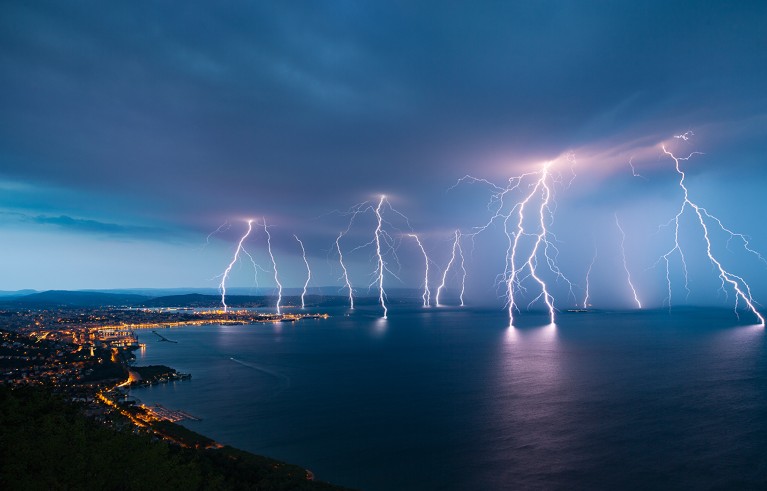
Great bolts of lightning foretell Earth-warming clouds

Trieste Lightning.

Coverage of wispy cirrus clouds is linked to episodes of electrical activity.

Lightning is typically seen when imposing cumulonimbus clouds fill the sky. But new research shows that these bolts of electricity can also be used to forecast thin and wispy clouds that warm the world by reflecting heat back to the surface.

Research Preview: Nature Magazine – July 6, 2023

Volume 619 Issue 7968

nature Magazine -July 6, 2023 issue: Shape shifters – DNA origami allows useful supramolecular structures to be created from templates. But the process has its limitations, with most structures confined to two configurations: folded or unfolded.

Fungi bacon and insect burgers: a guide to the proteins of the future

Stylised illustration showing a shop display of alternative protein products with signs saying 'New' and 'Try today'.

Humanity needs to eat less meat. Here are seven alternatives.

Would you eat a burger enriched with mealworms? Fake bacon sliced from a mass of fermented fungi? Milk proteins extruded by microbes? Maybe you already have. Dozens of companies are now banking on these alternatives to animal protein becoming a regular part of your diet.

Mini-antibodies given mighty powers can stave off influenza

Influenza A virus, TEM image.

Complexes formed from ‘nanobodies’ and an antiviral drug halt infection in its tracks.

A dynamic duo comprising an antiviral drug joined to an antibody fragment provides strong protection against the two main types of influenza that infect humans, according to research in mice.

Research Preview: Nature Magazine – June 29, 2023

Volume 618 Issue 7967

nature Magazine -June 29, 2023 issue: RNA molecules can adopt complex 3D structures, but whether DNA can self-assemble into similar 3D folded structures has been less clear. In this week’s issue, Luiz Passalacqua and his colleagues use a DNA mimic of green fluorescent protein (GFP) to investigate this question.

Underwater volcano triggered the most intense lightning ever recorded

Satellite video of Tonga's Hunga Volcano eruption.

The huge eruption of the Hunga Tonga–Hunga Ha‘apai volcano generated more than 2,600 lightning flashes per minute.

Open-source AI chatbots are booming — what does this mean for researchers?

A green unlocked padlock symbol is pictured amongst a binary code sequence on a computer screen.

Freely accessible large language models have accelerated the pace of innovation, computer scientists say.

The craze for generative artificial intelligence (AI) that began with the release of OpenAI’s ChatGPT shows no sign of abating. But while large technology companies such as OpenAI and Google have captured the attention of the wider public — and are finding ways to monetize their AI tools — a quieter revolution is being waged by researchers and software engineers at smaller organizations.

Nature Reviews: Top New Science Books – June 2023

nature Magazine Science Book Reviews – June 23, 2023: The ocean’s engine, the science of reading, the mystery of moths… Andrew Robinson reviews five of the best science picks.

Blue Machine

By Helen Czerski (2023)

Few scientific subjects are so vast, and yet oceans “often seem invisible”, remarks physicist and broadcaster Helen Czerski; the workings of the seas got no mention in her physics training. Her profound, sparkling global ocean voyage mingles history and culture, natural history, geography, animals and people, to understand the “blue machine”: the ocean engine powered by sunlight that shunts energy from Equator to poles.

The Science of Reading

By Adrian Johns (2023)

Starting in the 1880s with US psychologist James Cattell, the experimental study of reading dealt in extremes, notes information historian Adrian Johns in his intriguing analysis. Researchers devised mechanical ways to measure quantities that were nearly imperceptible, such as pauses in motion as an eye scans prose. Today, scanners can measure brain activity, but the reading process remains mostly imponderable.

Meetings with Moths

By Katty Baird  (2023)

Ecologist Katty Baird’s fly-specialist friend grumbles that butterflies should be renamed ‘butter-moths’. Butterflies and moths belong to one order, and are not always easy to tell apart. However, most butterflies rest with wings shut, whereas resting moths display theirs. The garden tiger moth (Arctia caja), for example, has “forewings a mosaic of darkest brown and white which conceal shocking scarlet underwings spotted with denim blue”.

A History of Ancient Egypt, Volume 3

By John Romer (2023)

This deeply informed history by Egyptologist John Romer focuses on the New Kingdom, 1550–1185 bc, including rulers Nefertiti, Tutankhamun and Ramesses II: crucial figures in popular perception. Calling it the “most fantasized period in all of ancient history”, Romer criticizes much scholarship on the era for being “firmly stuck” in the nineteenth-century European vision of ancient Egypt, launched by Jean-François Champollion in the 1820s.

In the Herbarium

By Maura C. Flannery (2023)

London’s Royal Botanic Gardens at Kew are open to all. Not so Kew’s Herbarium, a collection of more than seven million plant specimens reserved for academic visitors. Access to most herbaria is restricted: biologist Maura Flannery knew “almost nothing” about them until 2010, when a US curator took her behind the scenes at one and she fell in love with them.

Research Preview: Nature Magazine – June 22, 2023

Image

nature Magazine -June 22, 2023 issue: 00:45 Why losing the Y chromosome makes bladder cancer more aggressive; How pollution particles ferry influenza virus deep into the lungs, and why artificial lights could dazzle glow worms into extinction.

Laos cave fossils prompt rethink of
human migration map

A skull fragment and shin bone suggest that early modern humans might have passed through southeast Asia earlier than thought.

Tam Pà Ling cave.

Researchers laboriously sifted through clay, bucket by bucket, using their fingers to hunt for bone fragments