Tag Archives: National Geographic Magazine

National Geographic Magazine – January 2025

National Geographic (December 16, 2024): The latest issue features….

Finding The Endurance

On the hunt for Shackleton’s lost ship

The Ancient Art of Tea

A journey to the mountain forests of China

Saving New Zealand’s Birds

Inside one of the world’s boldest conservation plans

Secrets of Arctic Caves

Searching for climate clues in Greenland

NATIONAL GEOGRAPHIC MAGAZINE – NOVEMBER 2023

Image

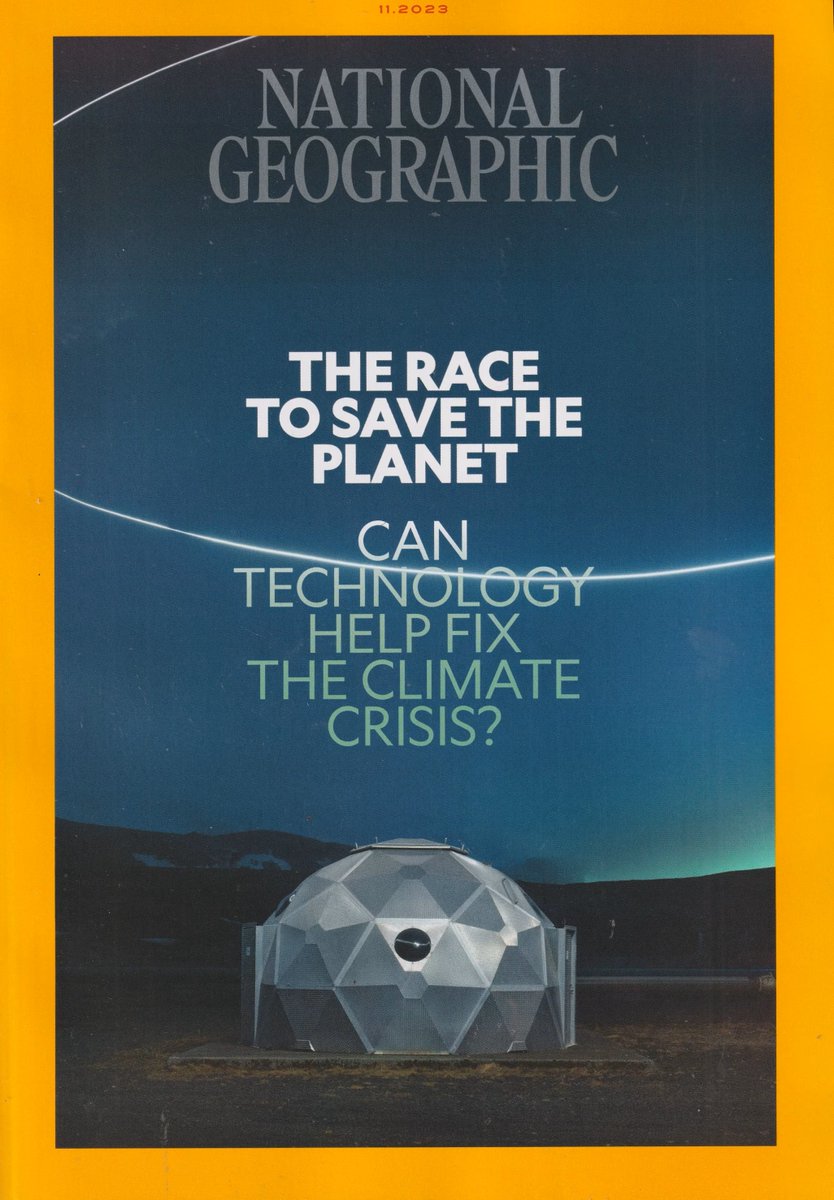
National Geographic (NOVEMBER 2023) – The latest issue features The race to capture carbon – Any climate solutions strategy requires the removal of carbon from the atmosphere. Here are 12 of the most promising strategies; What flashy feathers reveal about the secret lives of birds, and more…
Another weapon to fight climate change? Put carbon back where we found it

Diver in wetsuit next to free-floating experimental enclosures.

Getting to zero carbon emissions won’t save the world. We’ll have to also remove carbon from the air—a massive undertaking unlike anything we’ve ever done.

BY SAM HOWE VERHOVEK

Over the past few centuries, we have dug, chopped, burned, drilled, pumped, stripped, forged, flared, lit, launched, driven, and flown our way to adding 2.4 trillion metric tons of carbon dioxide to Earth’s atmosphere.

That’s as much CO2 as would be emitted annually by 522 billion cars, or 65 cars per person living today.

On a lonely, lunar-like valley 20 miles outside of Reykjavík, Iceland, Edda Aradóttir is on a mission to put it back where it came from.

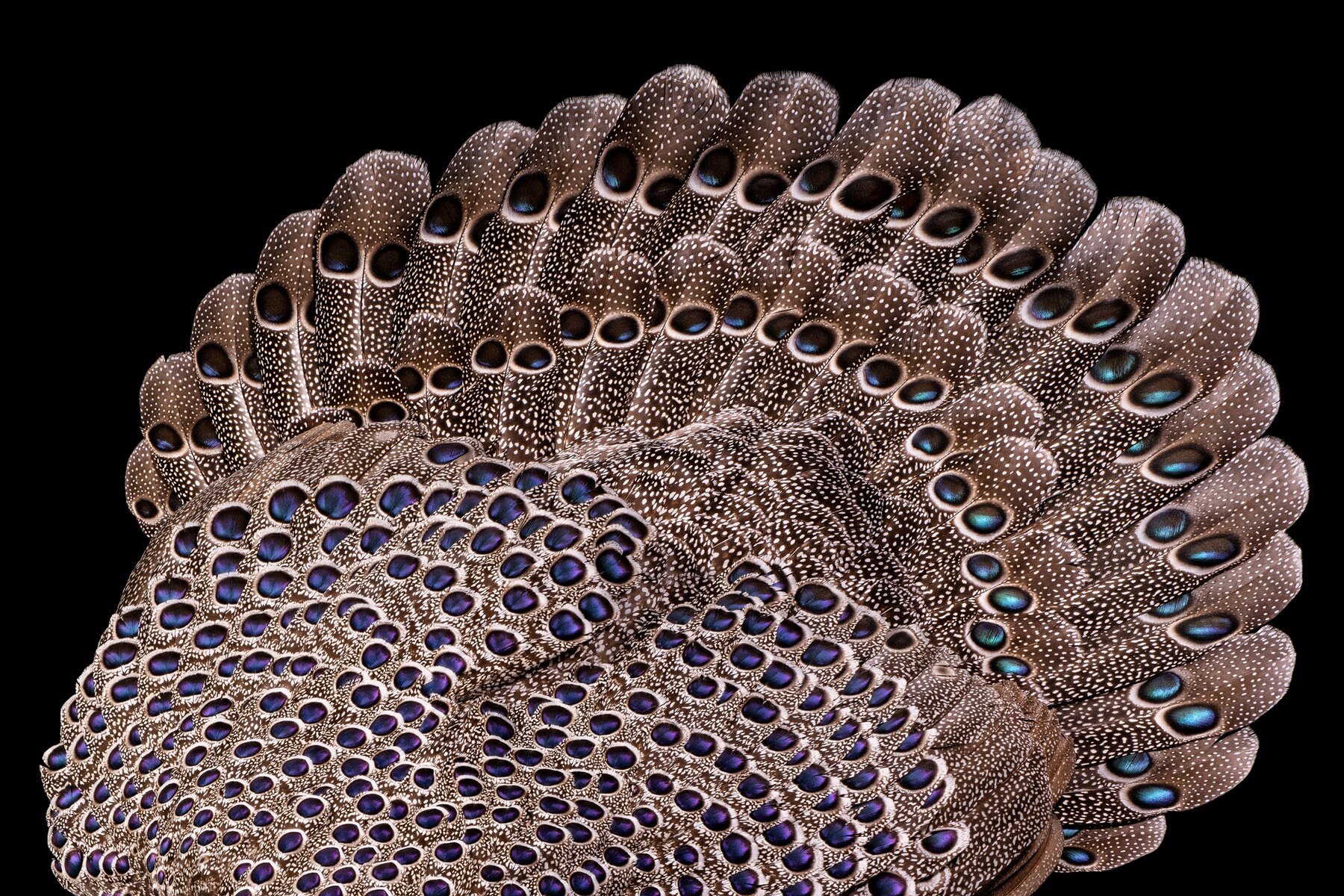
What these flashy feathers reveal about the secret lives of birds

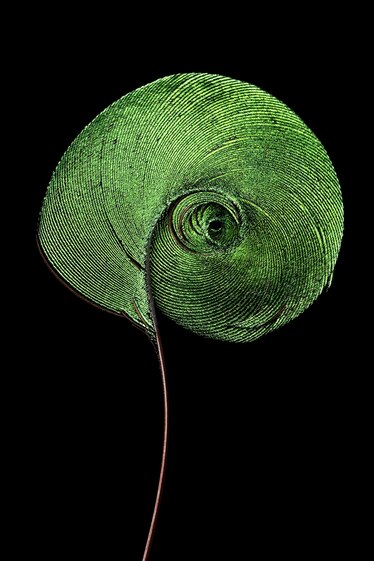
Shimmery. Spiky. Shaggy. Soft. Feathers are what make birds so alluring—but these photographs remind us that they also tell a story about the science of evolution.

BY ANNIE ROTH

PHOTOGRAPHS BY HEIDI AND HANS-JÜRGEN KOCH

In 1860 Charles Darwin wrote, “The sight of a feather in a peacock’s tail, whenever I gaze at it, makes me sick!” The plumes were so extravagant, he surmised, they could be a hindrance to survival. Darwin’s frustration with their seemingly inexplicable elegance eventually led him to the idea of sexual selection. Although this form of natural selection—driven by the preference of one sex for certain characteristics in individuals of the other sex—is well understood today, a peacock’s feather can still hold mystery for its viewers, says Heidi Koch. She and her husband, Hans-Jürgen, have spent the past few years photographing feathers in all their glorious detail.

Although both sexes of the gray peacock pheasant have back and tail feathers adorned with brilliant eyespots, the males make the best use of them. During elaborate wooing rituals, they raise and fluff up their feathers—which can reach nearly 16 inches in length—putting..

Travel & History: National Geographic — OCT 2023

Image

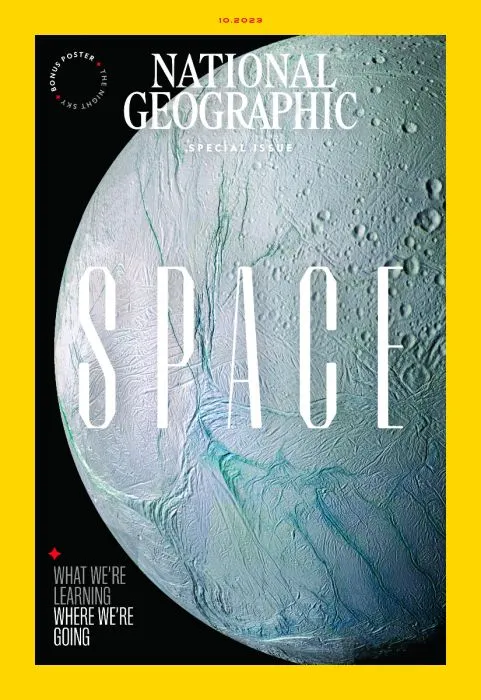
National Geographic Magazine (October 2023): Space – What we’re learning, Where we’re going…

We’re in Mercury retrograde. Here’s what that really means.

The planet’s apparent backward motion occurs for a few weeks about every four months. Here’s what’s really happening—and how astrology became a modern phenomenon.

Travel & History: National Geographic — August 2023

Image

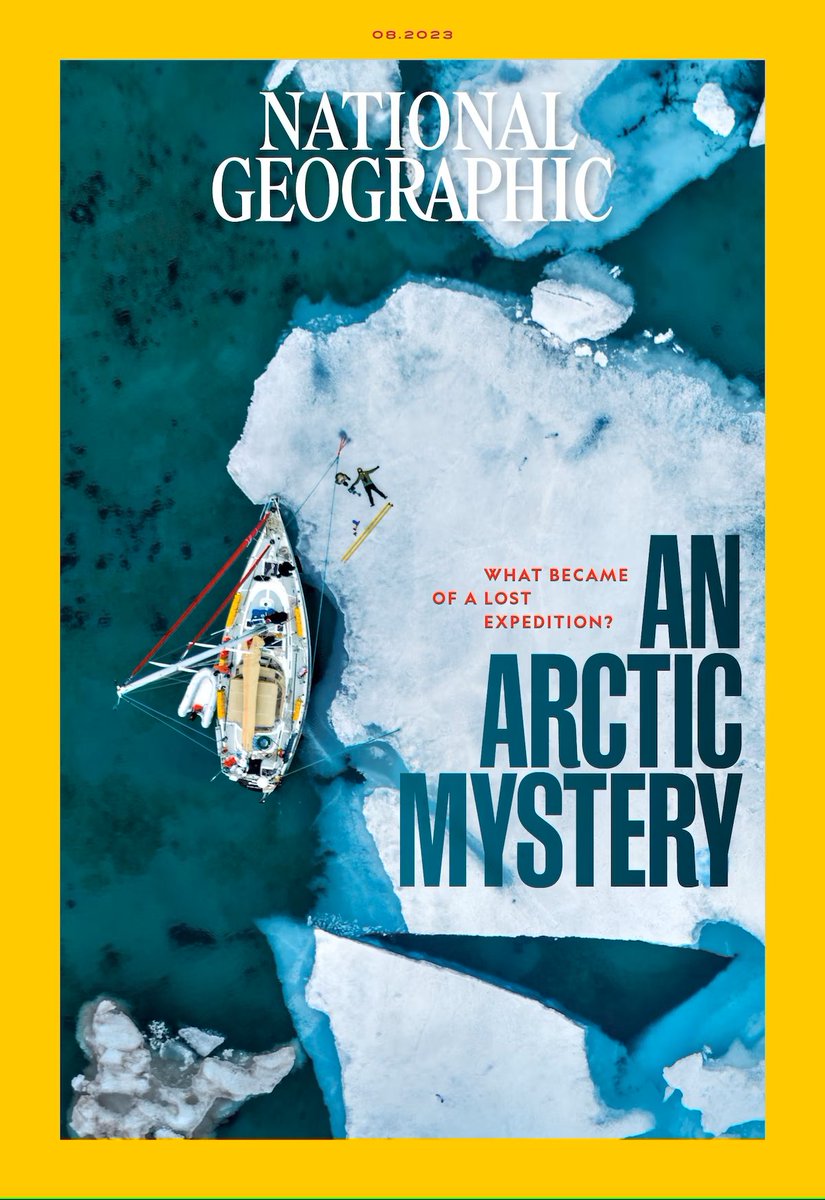
National Geographic Magazine (August 2023):

Seeking to solve the Arctic’s biggest mystery, they ended up trapped in ice at the top of the world

View down on ship deck from mast top.

In 1847, Sir John Franklin and a crew of 128 men disappeared while searching for the fabled Northwest Passage. A National Geographic team sought to find evidence of their fate—but the Arctic doesn’t give up its secrets easily.

BY MARK SYNNOTT

Jacob Keanik scanned his binoculars over the field of ice surrounding our sailboat. He was looking for the polar bear that had been stalking us for the past 24 hours, but all he could see was an undulating carpet of blue-green pack ice that stretched to the horizon. “Winter is coming,” he murmured. Jacob had never seen Game of Thrones and was unaware of the phrase’s reference to the show’s menacing hordes of ice zombies, but to us, the threat posed by this frozen horde was equally dire. Here in remote Pasley Bay, deep in the Canadian Arctic, winter would bring a relentless tide of boat-crushing ice. If we didn’t find a way out soon, it could trap us and destroy our vessel—and perhaps us too.

A MYSTERY LOCKED IN ICE

BY SOREN WALLJASPER,

In 1845, British explorer Sir John Franklin and his crew of 128 men set out in search of the Northwest Passage—a fabled sea route from the Atlantic to the Pacific that would hasten trade between Europe and Asia. None of Franklin’s crew survived. The Norwegian ship Gjøa in 1903-06 made the first successful passage. In 2022, a National Geographic team attempted to retrace Franklin’s expedition to find fresh evidence of its undoing.

Travel & Nature: National Geographic — July 2023

Image

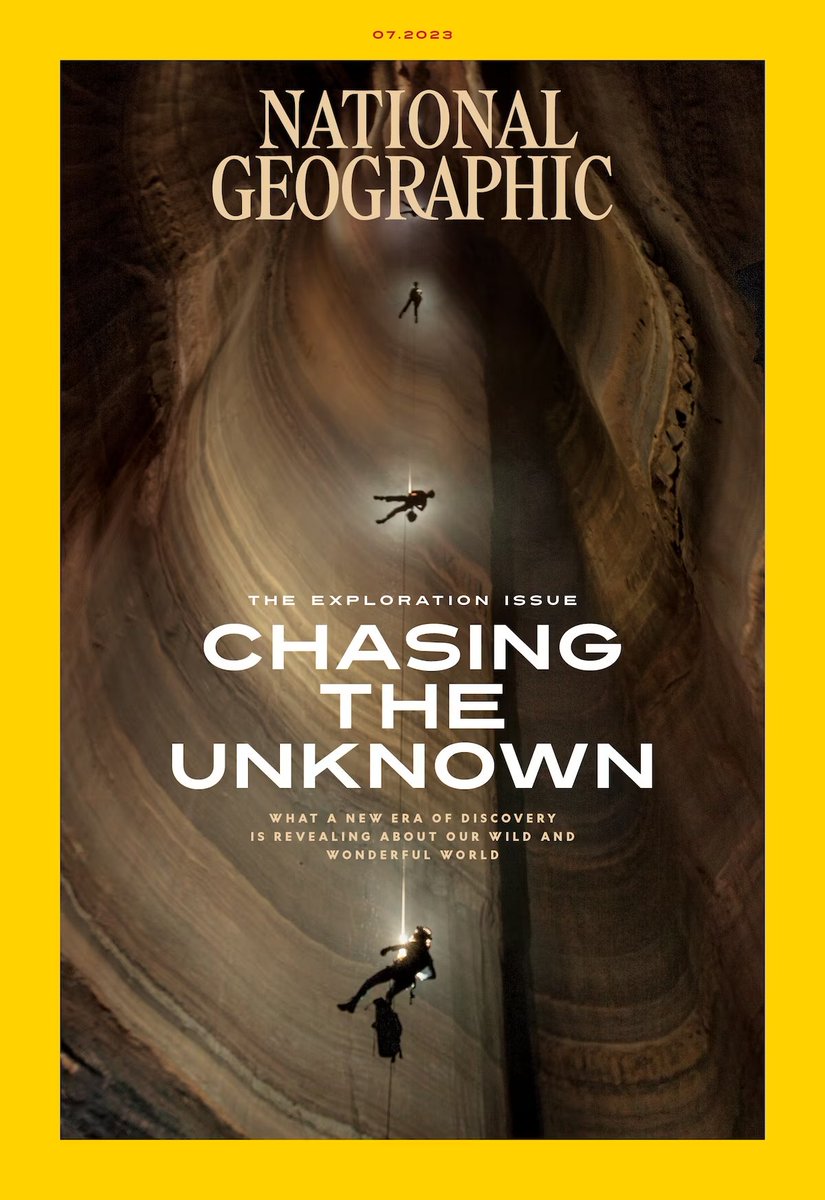
National Geographic Magazine (July 2023): The ‘Exploration Issue’ features ‘Chasing the Unknown – What a new era of discovery is revealing about our wild and wonderful world.

Beyond the Western myth of exploration lies a rich and often overlooked history

The diver in dark blue water in the rays of light from above.

Why do we explore? It’s just what humans do. But how we define it is changing.

BY NINA STROCHLIC

There is only one museum along the old Oregon Trail that tells the story of America’s westward expansion through the eyes of those being expanded into. In a corner of Oregon bordered by Washington and Idaho, this wood-paneled warren of galleries and interactive exhibits celebrates the heritage of Native people and mourns what was destroyed when the pioneers arrived. Walking down a long ramp, visitors enter the brick facade of a replica “Indian training school,” where Native children were forcibly converted and assimilated. A life-size photo of the students stares back from over a century ago; their matching uniforms make them look like tiny soldiers.

Rarely seen cliff art reveals the majesty of the Amazon’s aquatic realm

Picture of

In a two-year expedition, a National Geographic photographer is documenting the mighty river and the greater ecosystem from the Andes to the Atlantic.

STORY AND PHOTOGRAPHS BY THOMAS PESCHAK

Two jaguars leap into the river, lunging at pacas. These oversize rodents, with blotched and striped coats, are agile swimmers. Piranhas, attracted by the commotion, hover nearby.  

I’m photographing this riveting scene, but I’m not underwater as I usually am when I’m on assignment. Instead of diving to see this aquatic life, I’ve climbed to a rocky ledge far above a rainforest. The jaguars, pacas, and piranhas are not flesh and blood; they are prehistoric artworks painted with hematite, a blood-red iron oxide, in exquisite detail. I am in awe, as if seeing the ceiling of the Sistine Chapel for the first time. 

Travel & Nature: National Geographic — June 2023

Image

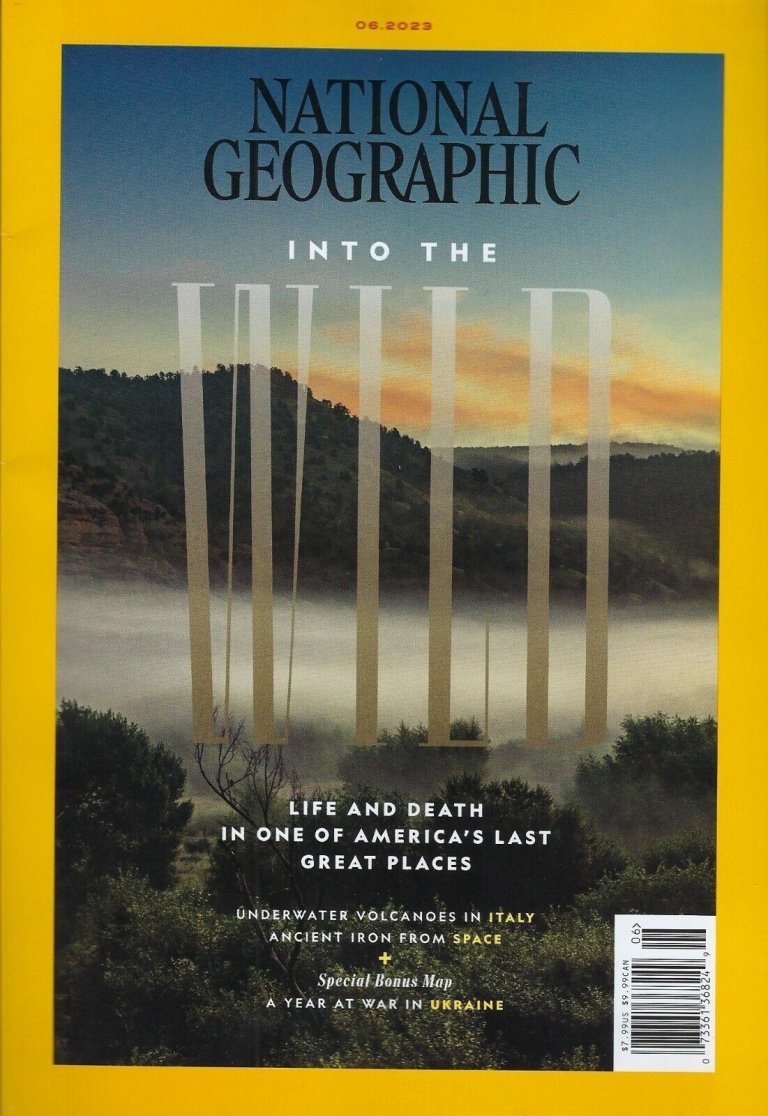
National Geographic Magazine (June 2023): Into The Wild – Life and Death in one of America’s last great places; Underwater volcanoes in Italy; Ancient iron from Space.

These violent undersea volcanoes harbor a secret: life

Off the coast of Italy, the Mediterranean’s most active volcano system is extremely volatile—yet our photographer found that marine life clings on all the same.

How did ancient cultures first discover iron? It fell from the sky.

Early cultures used meteorites to craft weapons and jewelry long before anyone knew how to extract iron from ore.

Travel & Nature: National Geographic — May 2023

Image

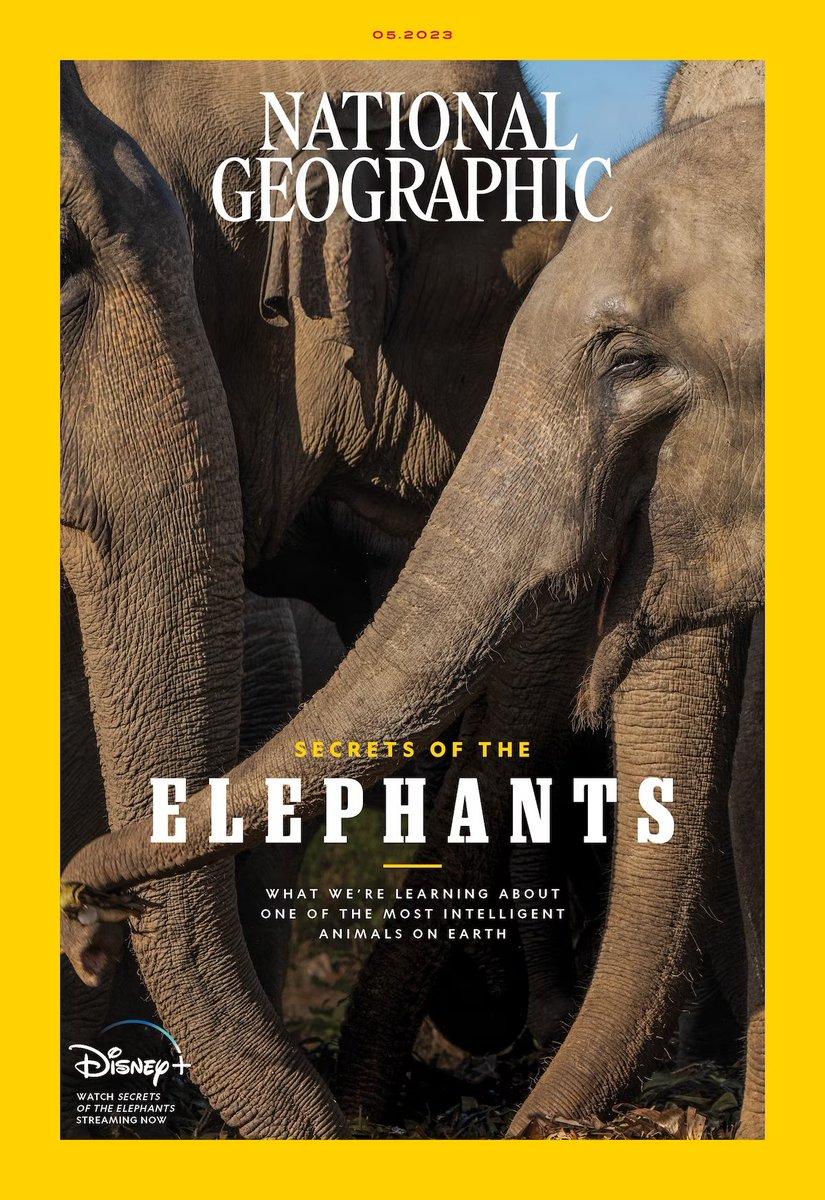
National Geographic Magazine – May 2023: The groundbreaking, award-winning natural history franchise Secrets Of returns with its next installment, Secrets of the Elephants, from Academy Award®-winning filmmaker and National Geographic Explorer at Large James Cameron. 

THE ELEPHANT NEXT DOOR

Secrets Of The Elephants” Clip Released – What's On Disney Plus

ASIAN ELEPHANTS ARE LEARNING TO LIVE WITH US. BUT WILL WE LEARN TO LIVE WITH THEM?

Kosovo wants to decide its future—but will history hold it back?

This small Balkan country won its independence from Serbia 15 years ago, but still waits for justice for wartime victims and global recognition as a new nation.

Photography: National Geographic – January 2023

Picture of an older man skydiving surrounded by a yellow border and the words "Living longer–and better. How science could change the way we age."
At 69, skydiving instructor Arnold Camfferman stays active, one of the keys to longevity. As the world grows older, research into the field is soaring.

National Geographic Magazine – January 2023 issue:

• ​Can aging be cured? Scientists are giving it a try.
• A detailed look at how we age—at the cellular level
• We rallied to save manatees once. Can we do it again?
• How manatees eat 100 pounds of food a day
• This ancient Himalayan kingdom has been isolated from the world—until now
• Inside a 15th-century kingdom’s treasure-filled temple
• Bolivian skateboarders use Indigenous attire to battle discrimination