
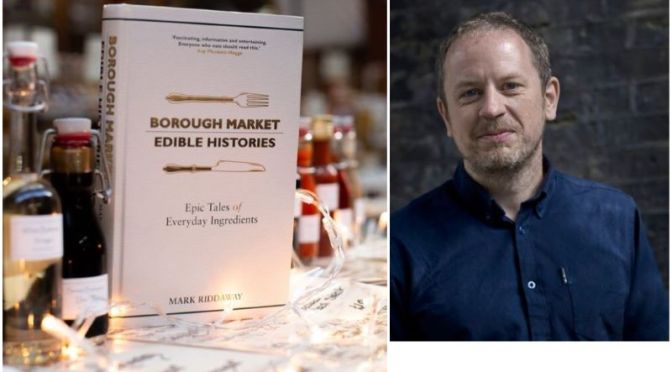

Award-winning food writer Mark Riddaway travels back through the centuries to tell the fascinating, surprising and often downright bizarre stories of some of the everyday ingredients found at London’s Borough Market.
Discover how the strawberries we eat today had their roots in a clandestine trip to South America by a French spy whose surname happened to be Strawberry, why three-quarters of Britain’s late-18th-century intake of tea was sold on the black market, and what Sigmund Freud found so fascinating about eel genitalia.
From the humble apples and onions that we’ve grown on these shores for centuries, to more exotic ingredients like cinnamon and bananas that travel from across the world to finesse our food, Borough Market: Edible Histories offers a chance to digest the charming stories behind every last morsel.
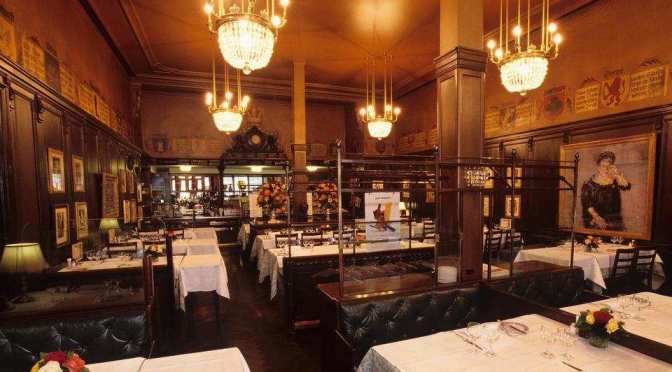
 In 1924, Hulda and Gottlieb Zumsteg took over the erstwhile “Hôtel de la Couronne” on Rämistrasse 4, at the corner of Bellevue in Zurich. They reopened as the Restaurant Kronenhalle. Under the skilled management of restaurateur Hulda Zumsteg it soon became the meeting point of writers and artists.
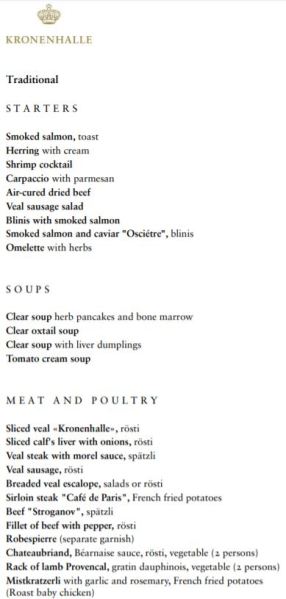 The restaurant became popular with the local establishment and names such as Coco Chanel, Yves Saint Laurent, Pablo Picasso, Alberto Giacometti, James Joyce, Richard Strauss, Max Frisch and Friedrich Dürrenmatt also graced the guest list. The Kronenhalle owes as much to its renowned guests as to Gustav Zumsteg, Hulda’s son, who followed in his mother’s footsteps, while putting his own inimitable stamp on it. His passion for art contributed to the Kronenhalle’s considerable prominence. Since 2005, his estate is being administered by the Hulda und Gustav Zumsteg foundation according to his last will.
 Boomers Daily