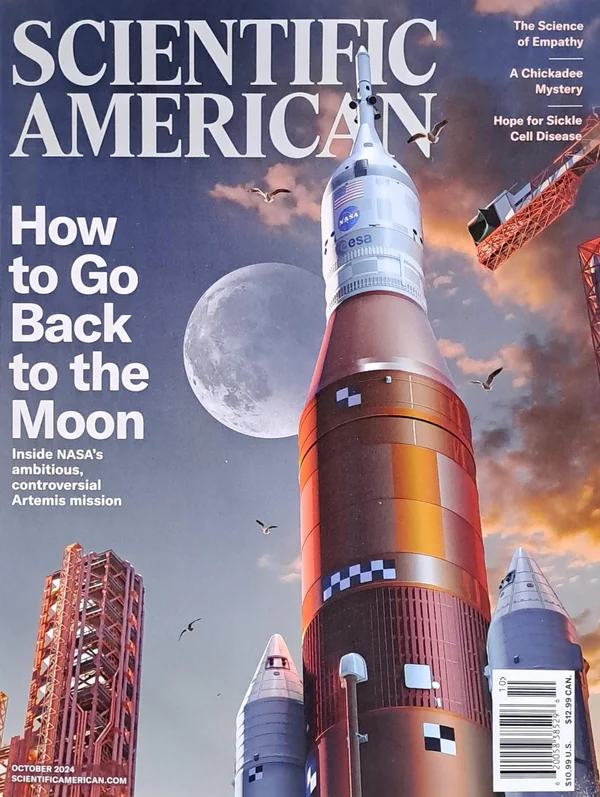
Scientific American (September 16, 2024): The October 2024 issue features ‘How To Go Back To The Moon’ – Inside NASA’s ambitious, controversial Artemis mission; The science of Empathy and Hope for Sickle Cell Disease…

Scientific American (September 16, 2024): The October 2024 issue features ‘How To Go Back To The Moon’ – Inside NASA’s ambitious, controversial Artemis mission; The science of Empathy and Hope for Sickle Cell Disease…
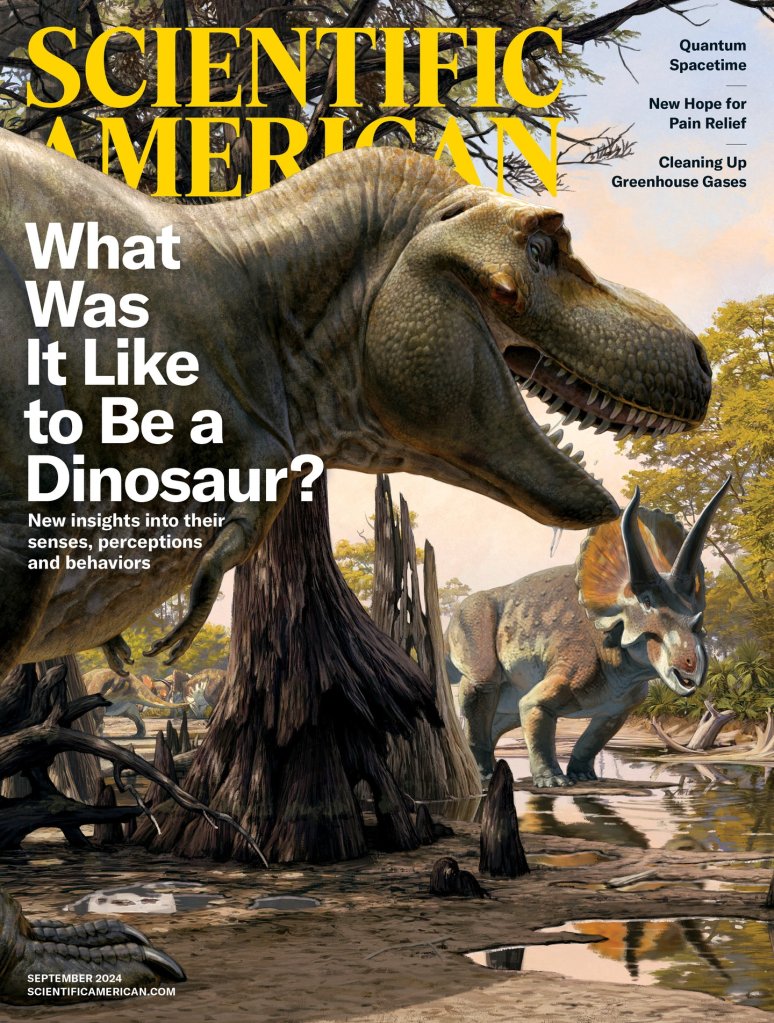
Scientific American (August 21, 2024): The September 2024 issue features ‘What Was It Like To Be A Dinosaur? – New insights into their senses, perceptions and behaviors…
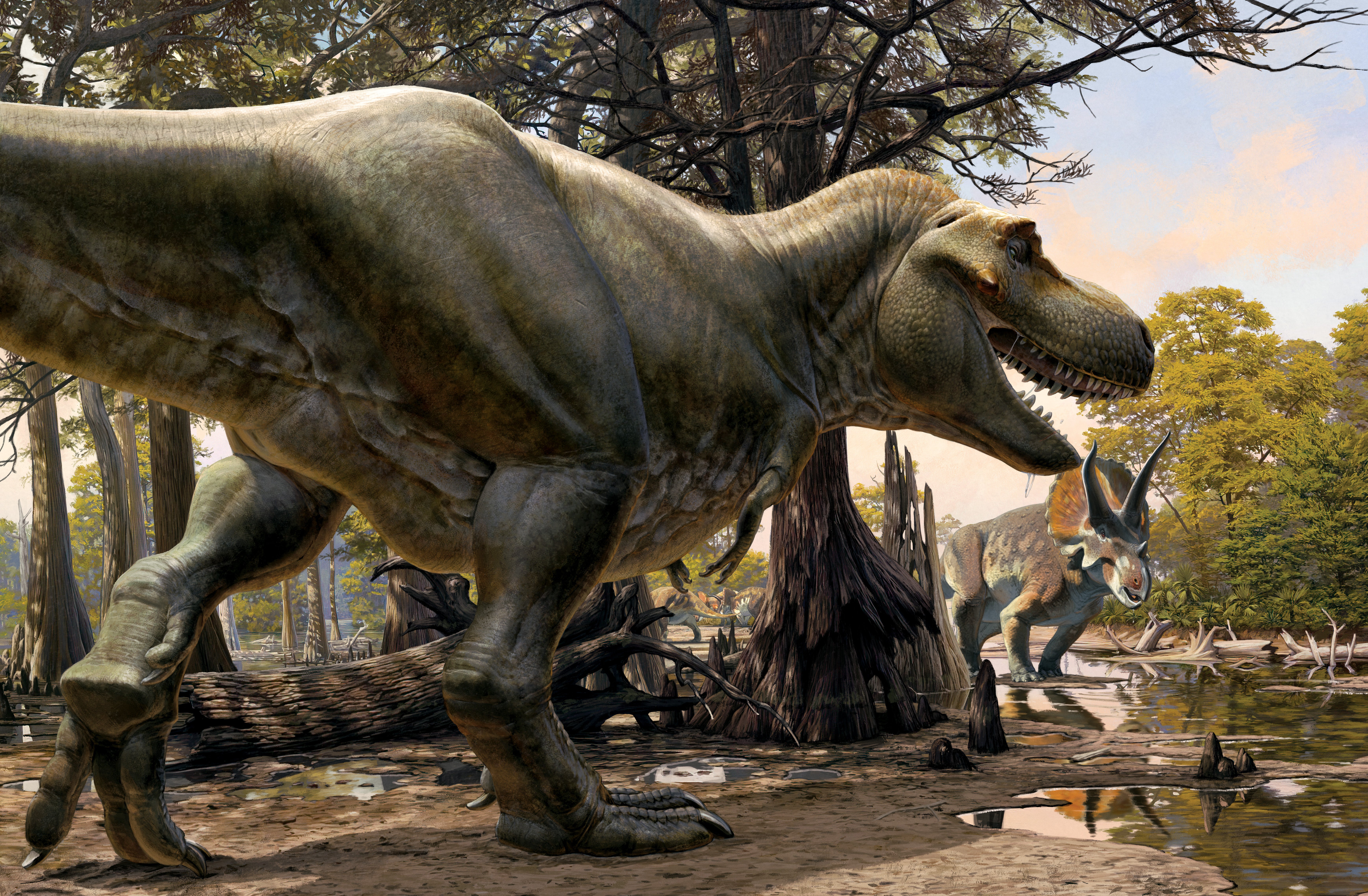
New fossils and analytical tools provide unprecedented insights into dinosaur sensory perception by Amy M. Balanoff, Daniel T. Ksepka
Alone Tyrannosaurus rexsniffs the humid Cretaceous air, scenting a herd of Triceratops grazing beyond the tree line. As the predator scans the floodplain, its vision suddenly snaps into focus. A single Triceratops has broken off from the herd and wandered within striking distance. Standing motionless, the T. rex formulates a plan of attack, anticipating the precise angle at which it must intersect its target before the Triceratops can regain the safety of the herd. The afternoon silence is shattered as the predator crashes though the low branches at the edge of the forest in hot pursuit.
T. rex has hunted Triceratops in so many books, games and movies that the encounter has become a cliché. But did a scene like this one ever unfold in real life? Would T. rex identify its prey by vision or by smell? Would the Triceratops be warned by a loudly cracking branch or remain oblivious because it was unable to locate the source of the sound? Could T. rex plan its attack like a cat, or would it lash out indiscriminately like a shark?

Dark matter has turned out to be more elusive than physicists had hoped by Tracy R. Slatyer, Tim M. P. Tait
Nick Huggett, Carlo Rovelli
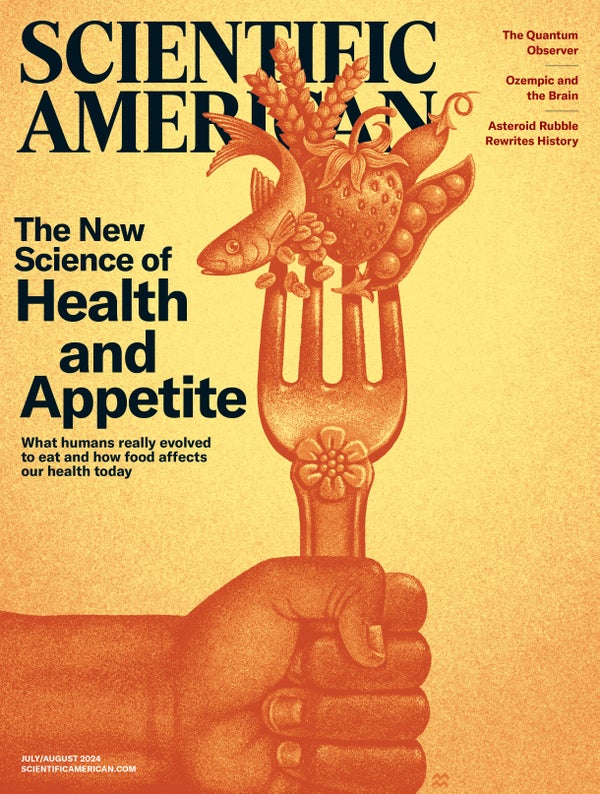
Scientific American (June 26, 2024): The July/August 2024 issue features The New Science of Health and Appetite – What humans really evolved to eat and how food affects our health today…
Nutrition influencers claim we should eat meat-heavy diets like our ancestors did. But our ancestors didn’t actually eat that way
“Heavy and healthy” can be a rare or common condition. But either way it may signal that some excess weight is just fine
Blockbuster weight-loss drugs are revealing how appetite, pleasure and addiction work in the brain
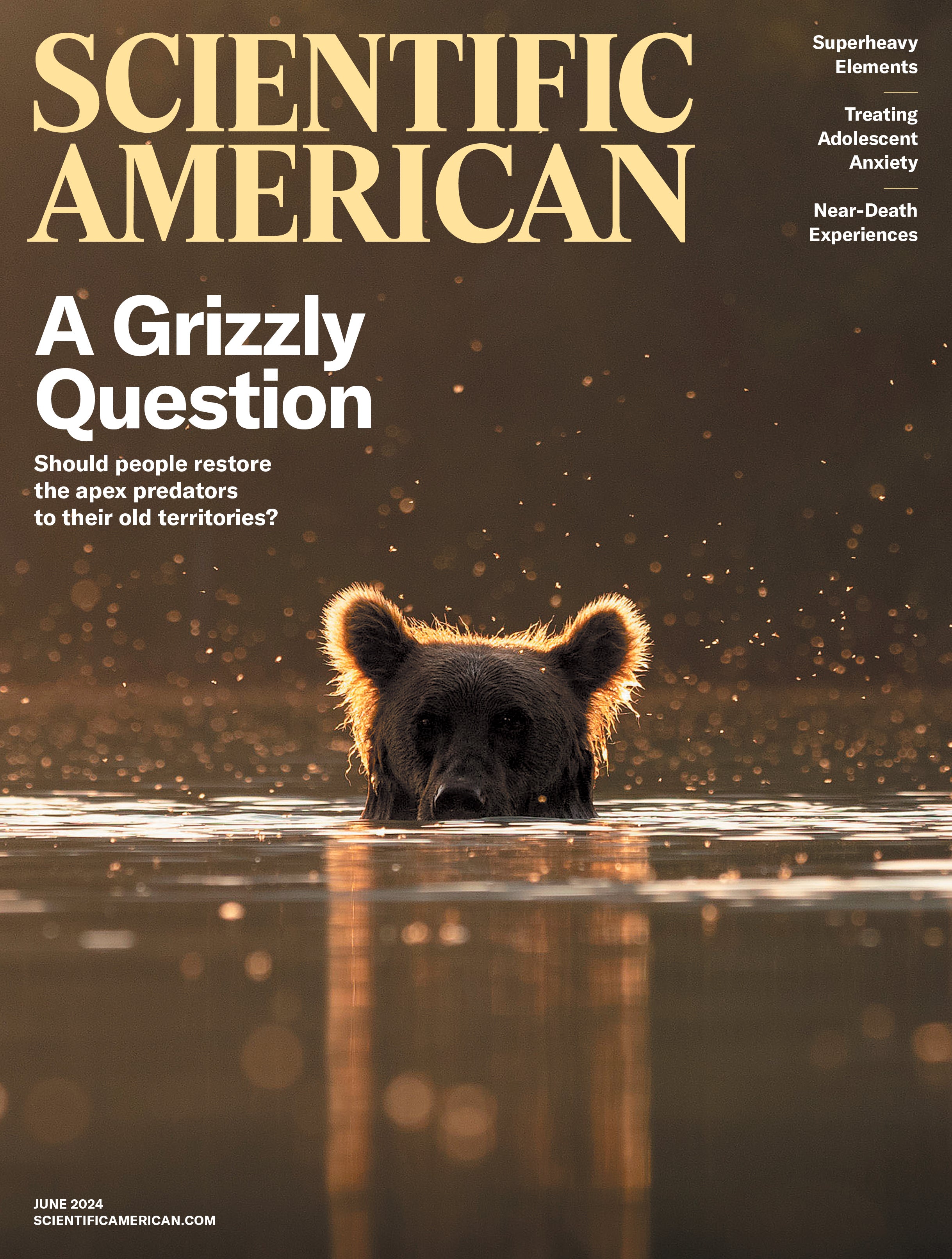
Scientific American (May 15, 2024): The June 2024 issue features:
BENJAMIN CASSIDY
RACHEL NUWER
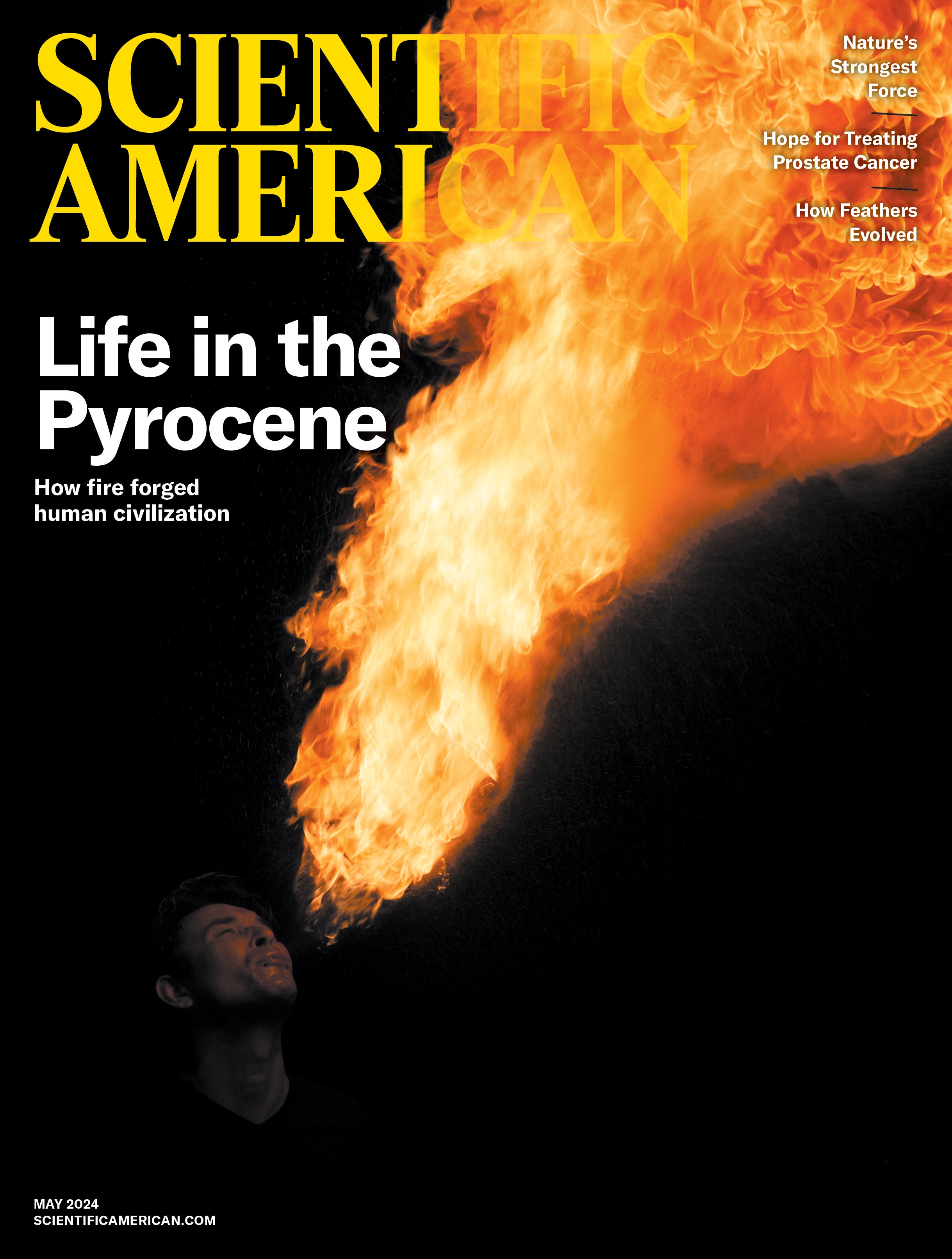
Ancient prophecies of worlds destroyed by fire are becoming realities. How will we respond?
New discoveries demystify the bizarre force that binds atomic nuclei together
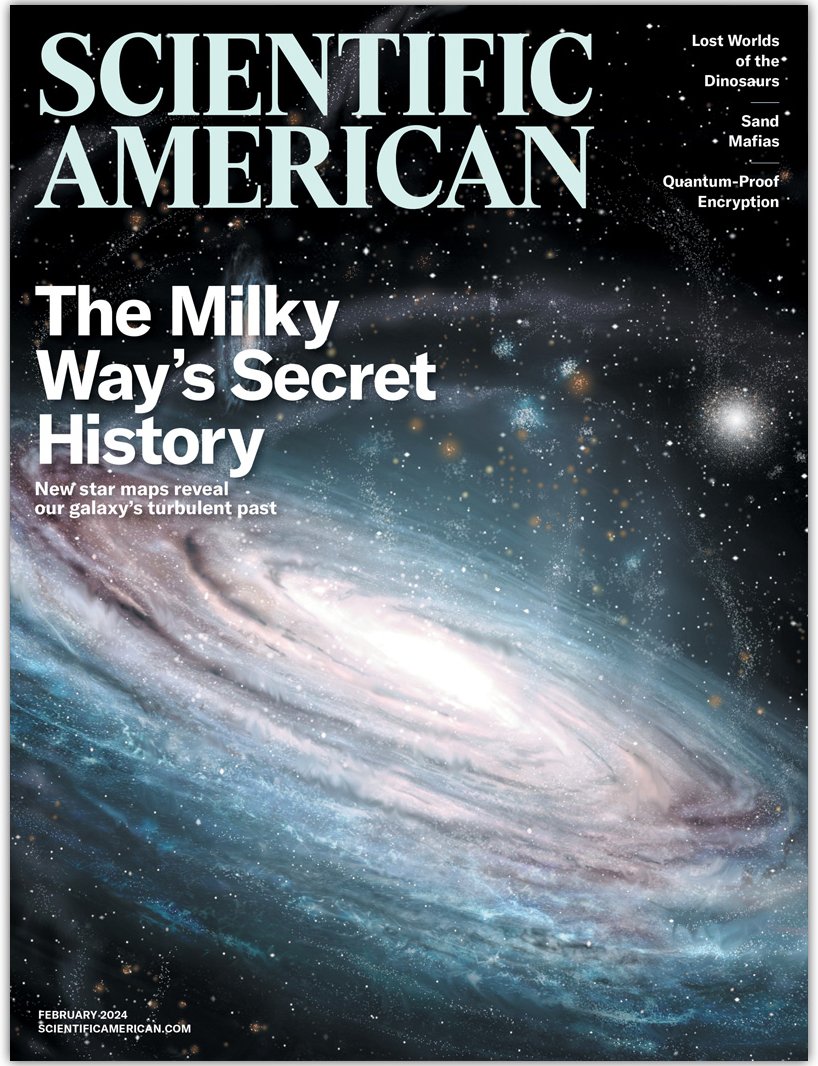
The latest star maps are rewriting the story of our Milky Way, revealing a much more tumultuous history than astronomers suspected
To understand why the universe is made of matter and not antimatter, physicists are looking for a tiny signal in the electron
Special assemblages of minuscule fossils bring dinosaur ecosystems to life
An ancient solar storm helps pinpoint when Vikings lived in the Americas, and using magnets to deftly move non-magnetic metals.
In this episode:
00:53 Pinpointing Viking presence in North America
It’s well-understood that Vikings went to North America around a thousand years ago. However, working out a precise date has proven difficult. Now, thanks to an ancient solar storm, researchers have been able to identify an individual year when Vikings were definitely living on the continent.
Research article: Kuitems et al.
14:57 Research Highlights
How shoulder muscles gave Pterosaurs an aerodynamic edge, and mysterious radio waves coming from near the centre of the Milky Way.
Research Highlight: How ancient reptiles were streamlined for flight
Research Highlight: A mysterious radio signal object is beaming radio waves into the Milky Way
17:45 Magnets move non-magnetic metals
Scientists have created an array of magnets capable of moving non-metallic objects in 6 dimensions. They hope their new approach could one day be used to clean up debris in space.
Research article: Pham et al.
News and Views: Non-magnetic objects induced to move by electromagnets
27:06 What Francis Collin’s retirement means for the US NIH
After 12 years, Francis Collins announced plans to retire from his role as Director of the United States National Institutes of Health. We discuss his legacy and what this means for the world’s biggest public funder of biomedical research.
Editorial: COVID, racism, China: three tests for the next NIH leader
News: Francis Collins to step down at NIH: scientists assess his legacy
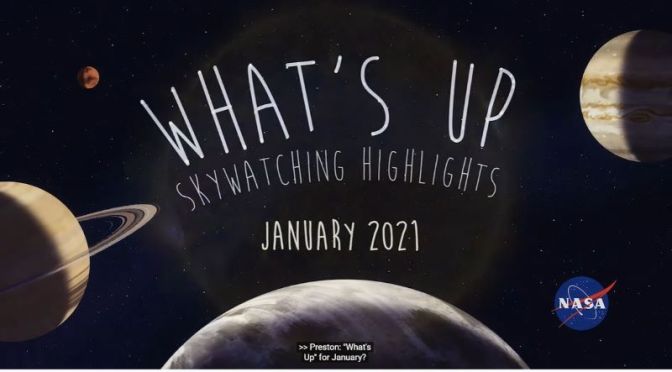
What are some skywatching highlights in January 2021? Mark Earth’s closest approach to the Sun for the year, called perihelion, at the start of the month, then spot a couple of elusive planets: Uranus on Jan. 20th and Mercury throughout the second half of the month. Additional information about topics covered in this episode of What’s Up, along with still images from the video, and the video transcript, are available at https://solarsystem.nasa.gov/whats-up….

Astronomers pin down the likely origins of mysterious fast radio bursts, Covid-19 in schools, octopuses taste with touch and the latest on what the US election means for science.
In this episode:
00:46 The origins of mysterious fast radio bursts
The detection of a brief but enormously-powerful radio burst originating from within the Milky Way could help researchers answer one of astronomy’s biggest mysteries.
Research article: Bochenek et al.; News: Astronomers spot first fast radio burst in the Milky Way
07:59 Coronapod
At the start of the pandemic, there were fears that schools could become hotspots for infections. We discuss the evidence suggesting that this is unlikely to be the case, and the rates of infection in children of different ages.
News: Why schools probably aren’t COVID hotspots
18:34 Research Highlights
Octopuses taste with touch, and a tool to watch dangerously-reactive metals grow.
Research Highlight: How octopuses taste with their arms — all eight of them; Research Highlight: How to make violently reactive metals and watch them grow
21:28 An update on the US election
Although the winner of this year’s US election is unclear, we discuss the current situation and what it might mean for science.
28:58 Briefing Chat
We discuss some highlights from the Nature Briefing. This time, ancient genomes reveal the migration of man’s best friend, and a new polio vaccine looks set to receive emergency approval.
News: Ancient dog DNA reveals 11,000 years of canine evolution; News: New polio vaccine poised to get emergency WHO approval
 Boomers Daily