
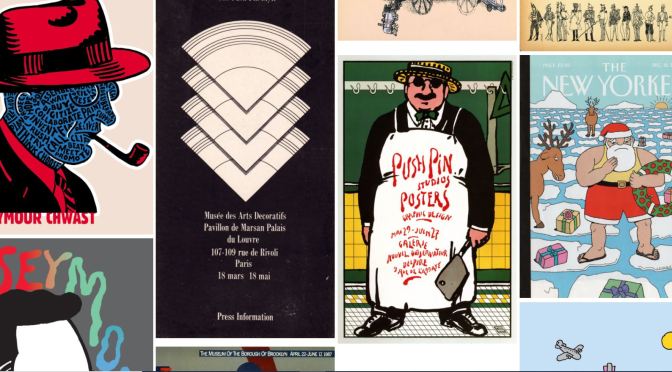
Excerpts from The Revolutionary Seymour, By Steven Heller:
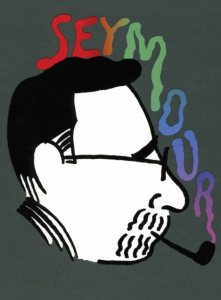 Seymour’s art was postmodern long before the term was coined. Yet it was resolutely modern in its rejection of the nostalgic and romantic representation, as in the acolytes of Norman Rockwell, that had been popular in mainstream advertising magazines at the time. Instead of prosaic or melodramatic tableau, Seymour emphasized clever concept. What makes the very best of his art so arresting, and so identifiable, is the tenacity of his ideas—simple, complex, rational, and even absurd ideas.
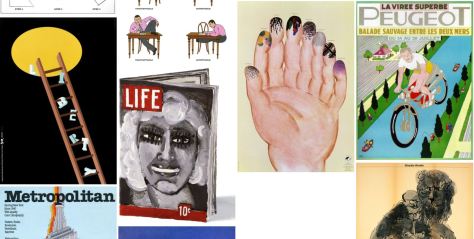
The illustrations for magazines, posters, advertisements, book jackets, record covers, product packages, and children’s books that he created after founding Push Pin Studios with Milton Glaser and Edward Sorel in 1954 directly influenced two generations (statistical fact) and indirectly inspired another two (educated conjecture) of international illustrators and designers to explore an eclectic range of stylistic an conceptual methods.
To read more: http://seymourchwastarchive.com/about/seymour/
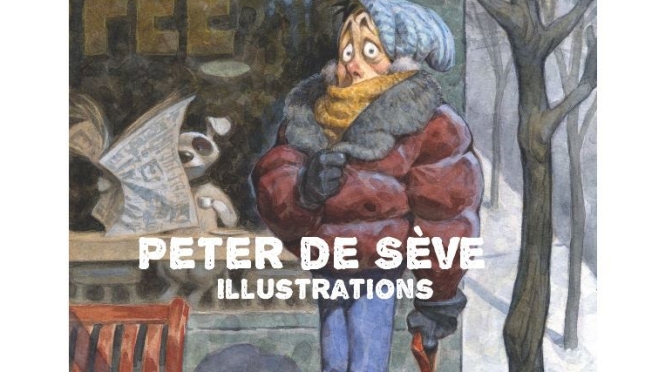
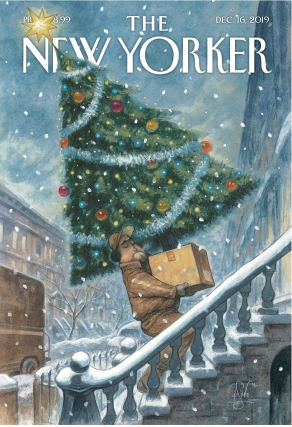 Though Peter de Sève is a regular contributor to the magazine, his most recognizable work comes from his career as a character designer. De Sève has helped create some of the most cherished animation characters of the past few decades, including those in “A Bug’s Life,” “Finding Nemo,” “Robots,” “The Little Prince,” and the “Ice Age” films. We recently talked to the artist about his work and about some of his favorite Christmas traditions.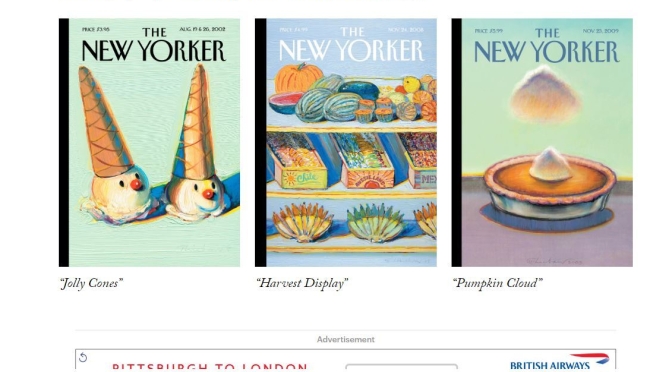
 Since all of my paintings—almost every single one except for the figure paintings—are done from memory, I rely specifically on the memory of working in restaurants, or of visiting farms on which I worked as a young person. I try to recall the look and feel and love of what I have experienced.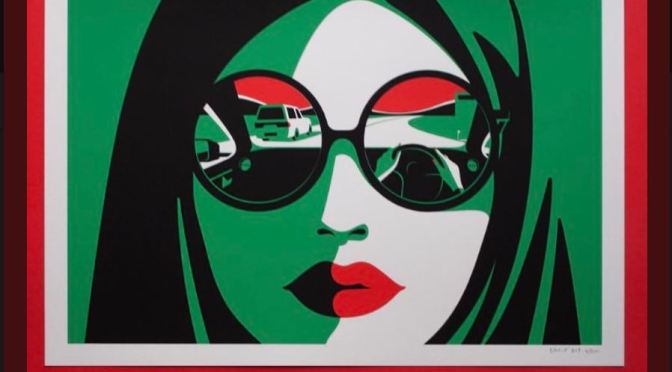
 From the top floor of a 1920s building in Hackney, in the East End of London, Favre’s confidence is at a peak. The bold, graphic style she has developed over the last fifteen years attracts prestigious projects. When she was invited to design the poster for this year’s Montreux Jazz Festival, held every summer in Switzerland since 1967, she became part of a group that includes Milton Glaser, Andy Warhol and Keith Haring. Her poster is full of female silhouettes dancing, the negative spaces between them forming instruments.
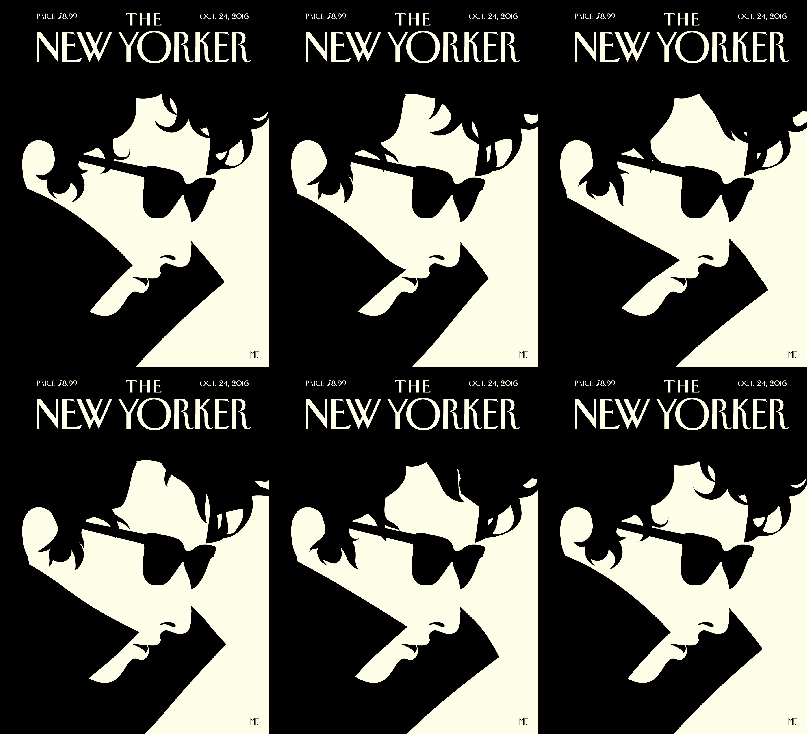 Favre is a French artist based in London.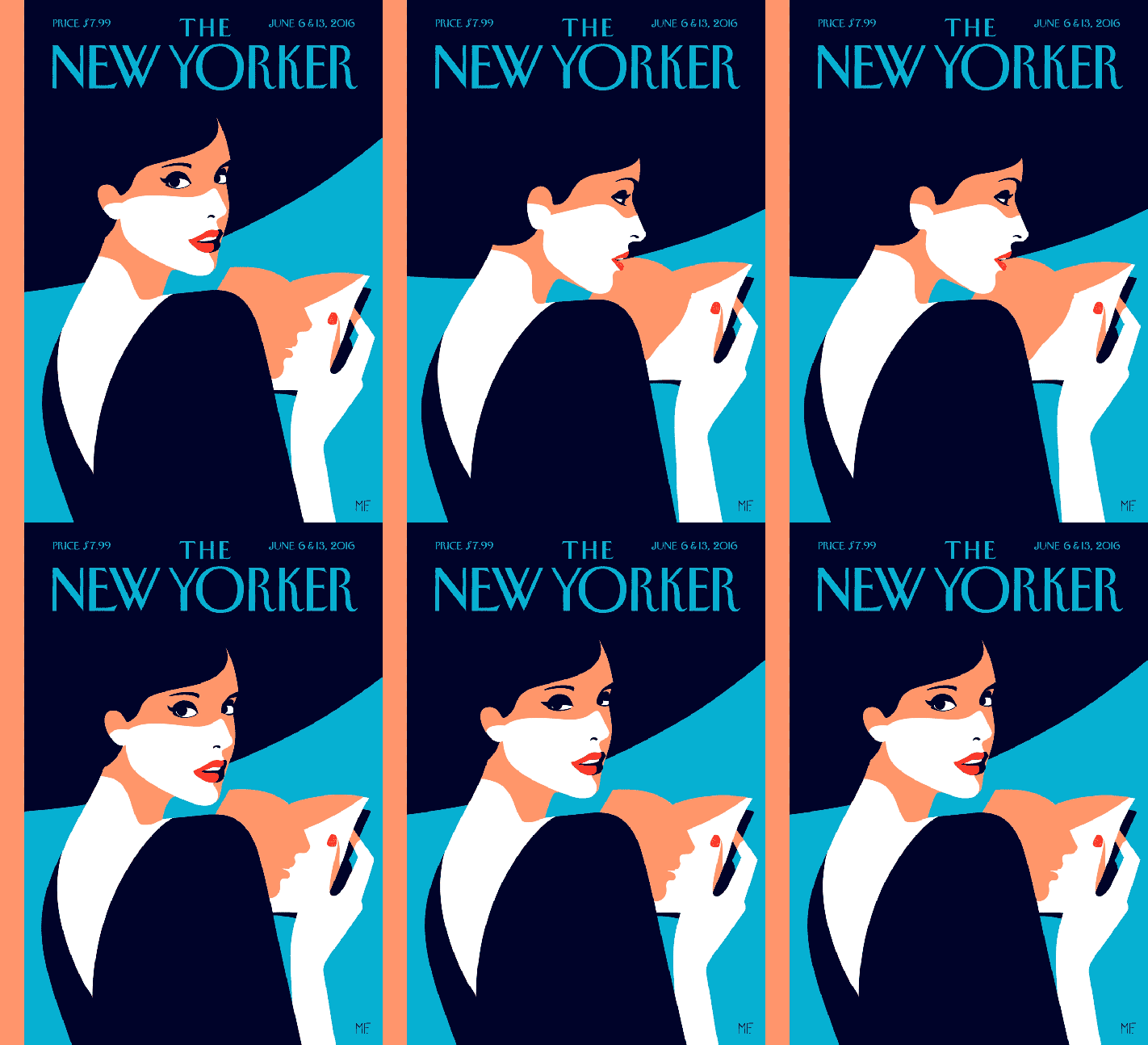
 Boomers Daily