Tag Archives: Home Tours

Cliff Home Tour: La Roque Gageac In France (Video)

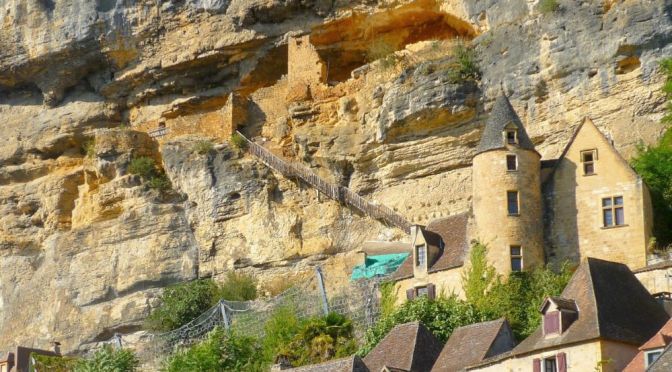
Julien Cohen’s first home was carved into the side of a hill in La Roque Gageac, a troglodytic village stacked against a sheer cliff. He spent 5 years in this sliver of a home where the stone face is everywhere: as the ceiling of his closet and shower, behind the refrigerator, and in the wall looming over the bed. During the Hundred Year’s War,

La Roque Gageac, was one of the few towns that never fell to the English, thanks to a fort perched on the cliff at the top of town whose only access is a tiny staircase (It still stands). The views from the cliff are panoramic perspectives on the Dordogne River and surrounding castles; this is an area Henry Miller called the “Frenchman’s paradise”. Here, Cohen lived for five years until his growing family made the small space too difficult.

La Roque Gageac is one of France’s most beautiful villages. In a stunning position on the north bank of the Dordogne River, and backed by a steep hill / cliff, with little to suggest that much has changed there in the last 300 years, La Roque-Gageac is truly the perfect picture postcard village. It is about 8km from the historic town of Sarlat.
Country Estates: Elton Hall In Peterborough, UK

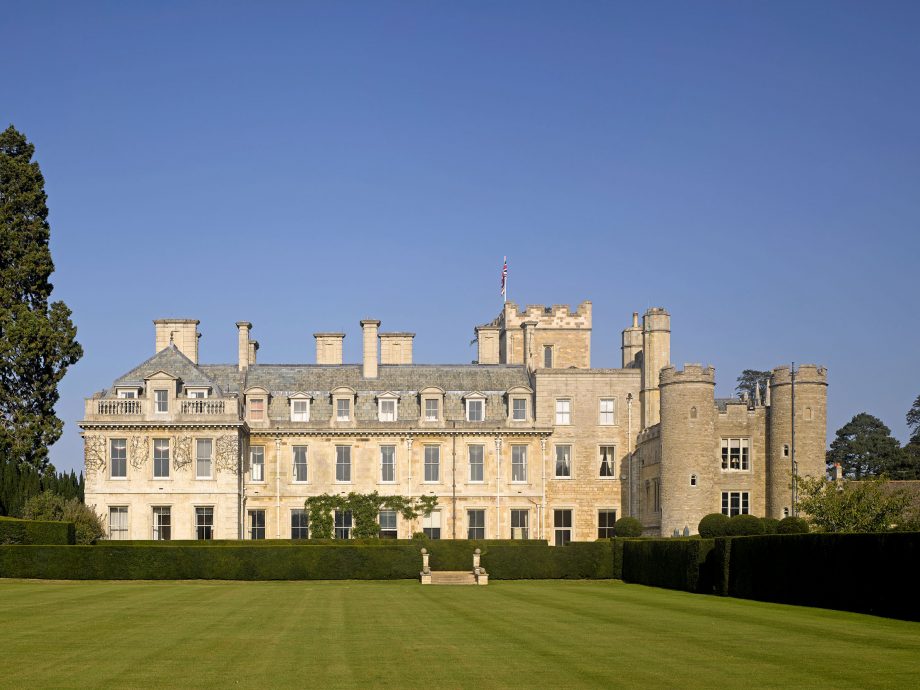
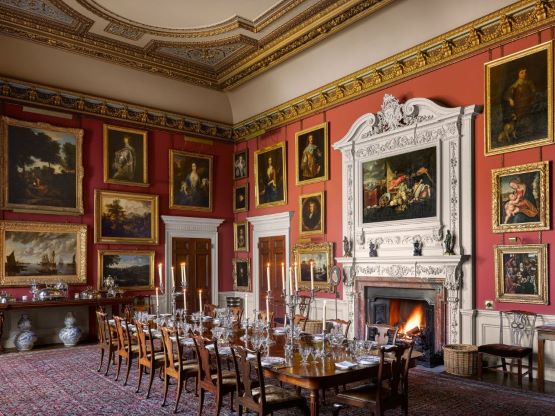
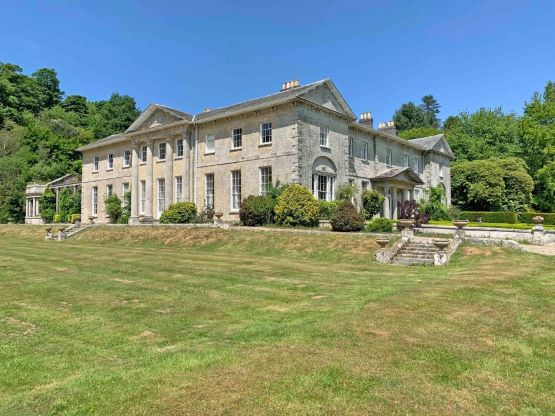
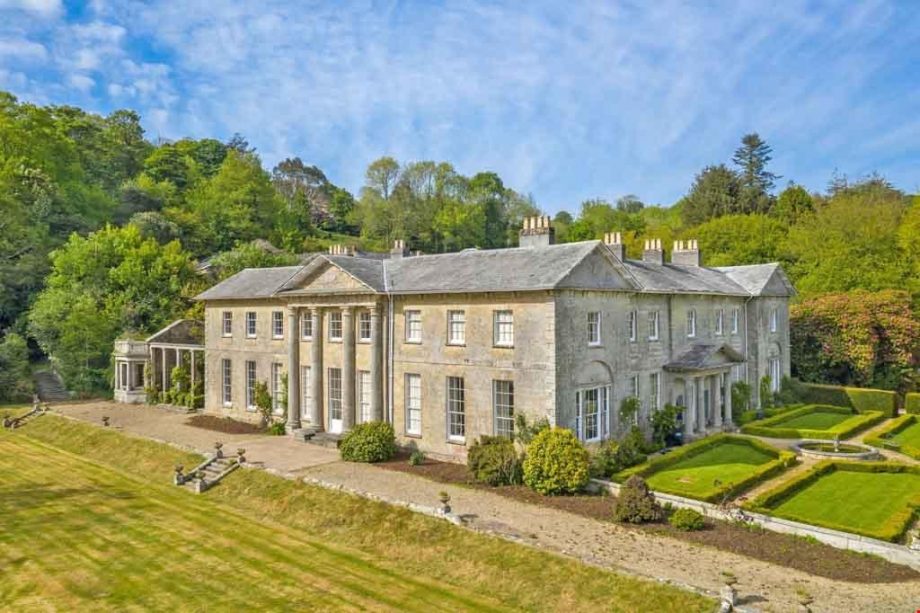
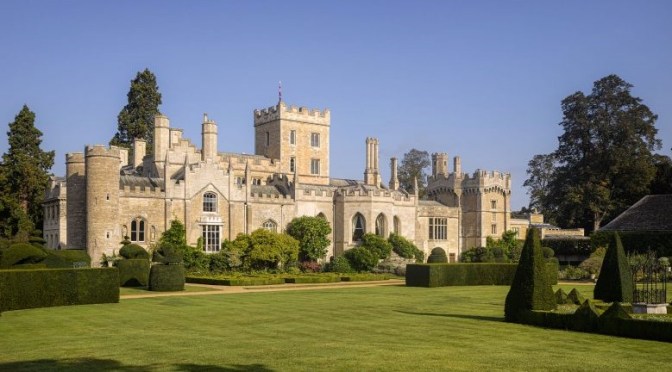
Elton Hall, near Peterborough, is a house of many faces. It is formal and Classical on the approach, yet reveals on inspection a complex architectural history stretching back to the Middle Ages. All this with gardens that extend and frame it with a kind of painterly stillness. Inside, the house has one of the best private art collections in the East of England.

John Goodall June 27, 2021

As it survives today, the house bears the stamp of important changes undertaken from 1857 by Granville Proby, the 3rd Earl of Carysfort, which is remarkable, given that he was 74 when he inherited the estate in 1855. He had grown up on the family’s Glenart estates in Co Wicklow, Ireland, fought at the Battles of the Nile and Trafalgar asa naval officer and later rose to the rank of Admiral. What inspired him to undertake this work is not now clear, but it may have been the poor condition of the building.

The architect he chose was Henry Ashton, a pupil of Smirke who served as an assistant to Sir Jeffry Wyatville from 1828 during the latter’s transformation of Windsor Castle (and who edited Wyatville’s posthumously published Illustrations Of Windsor Castle, 1841). It must have been through Windsor that Ashton caught the eye of the anglophile Willem II (Prince of Orange until 1840), who commissioned him, in 1838, to design a summer palace at the Hague. Nothing came of the project.
Read and see more at Country Life

Tropical Architecture: The Dominican Republic

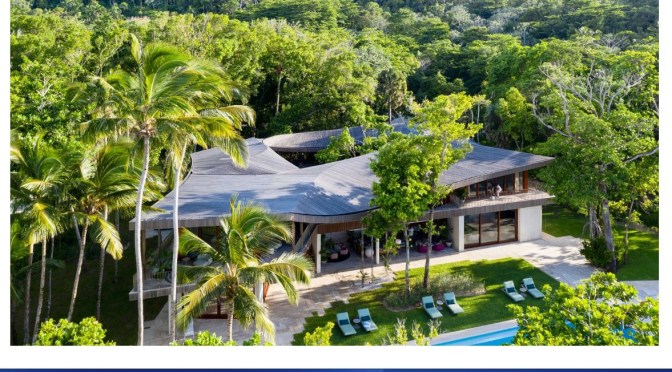
The house reveals itself slowly. On a remote stretch of the Dominican Republic coast, a stone footpath winds its way through a dense landscape of old-growth trees, zamia, and native flowers. Gradually, a timber structure comes into focus, its undulating form seemingly afloat above the jungle floor.

Only upon stepping past that wood-clad volume, under a 70-foot-wide span and up into the central courtyard, do you see the ocean. 

That progression is all expert choreography on the part of architect Bryan Young, principal of the Brooklyn-based studio Young Projects and nowadays very much a name to know. “Every decision facilitates the experience of the landscape,” he notes of the property, which includes two additional houses of his design. One is a low-slung string of four adjoining stucco bungalows, the other a monolithic enigma—chamfered at the corners and covered in graphic, almost pixelated tile, earning it the name Glitch House. Together this trio of buildings provides the ultimate escape, a place for friends and extended family to come together and decompress, as envisioned by his intrepid clients, Mike and Sukey Novogratz, a New York City couple with wellness on the brain.

Read more

English Country Estates: Yarner House – Dartmoor

Yarner House and the adjoining Yarner Wood, a 365-acre block of ancient woodland managed by Natural England as part of the East Dartmoor National Nature Reserve, were both once part of the manor of Bovey Tracey granted by William the Conqueror to Geoffrey de Mowbray, Bishop of Coutances.

Penny Churchill June 22, 2021

On de Mowbray’s death in 1093, his nephew, Robert Mowbray, Earl of Northumberland, inherited, but later defied the king, which led to the seizure of his estates in 1095.

Over time, ownership of the Bovey Tracey estates reverted to the Crown as favourites came and went, until, in the 16th century, a succession of costly wars left Tudor monarchs strapped for cash.

Elizabeth I began to sell off Crown properties and, in 1578, the Yarner estate was bought by Gregory Sprint, a canny lawyer with good Court connections, who swiftly resold it at a profit.

Read more at Country Life Magazine

Country Estates: Albury Park Mansion In Surrey Hills, Southeast England

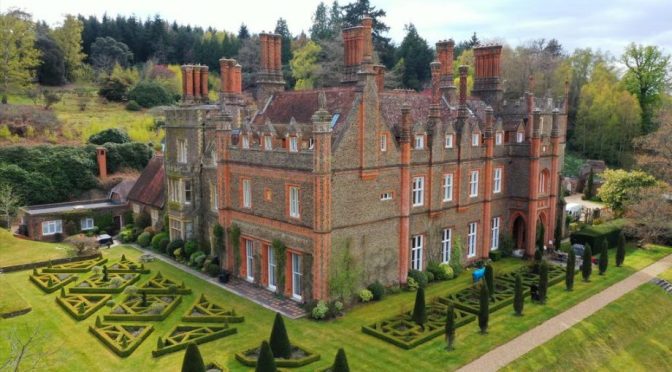
Towering amongst the stunning  parkland setting in the Surrey Hills Area of Natural Beauty is Albury Park Mansion, a magnificent estate that dates back a century — it’s mentioned in the Domesday Book — and which has had a great house at its heart since the early 17th century.

Lydia Stangroom June 18, 2021

The house has evolved over the years, and as it stands now bears the fingerprints of one of the great 19th century architects, Augustus Pugin, who remodelled it for Henry Drummond in the 19th century.

St Paul’s Church, located within the estate grounds, was used as the setting for Four Weddings and a Funeral, during the famous wedding scene between Carrie, played by Andie MacDowell, and Hamish, Corin Redgrave. Episodes of the television series Midsomer Murders have also filmed in the house and grounds on the estate.

Read and see more in Country Life

Architecture: Villa Anguli In Camp de Mar, Mallorca

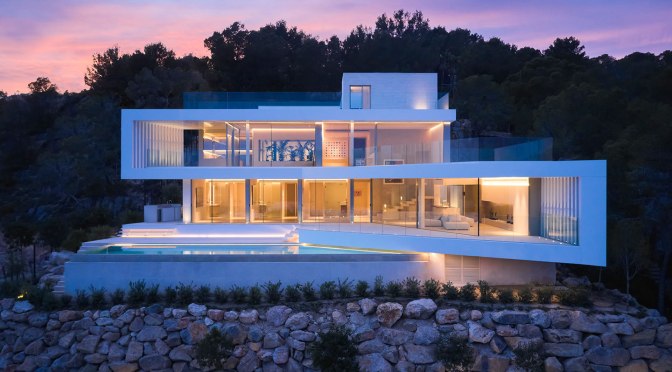
Overlooking Camp de Mar, Villa Anguli is constructed on a unique, south-facing elevated plot of just over 1,000 square metres that is built into the rock on three levels that total 399 sqm of constructed area.

Camp de Mar is a small resort village in the municipality of Andratx on the Spanish Balearic Island of Mallorca. The resort is 20 miles west of the island main airport of Son Sant Joan Airport. The resort’s beach has been awarded a blue flag.

English Country Homes: 17th-Century Urchfont Manor In Wiltshire, UK

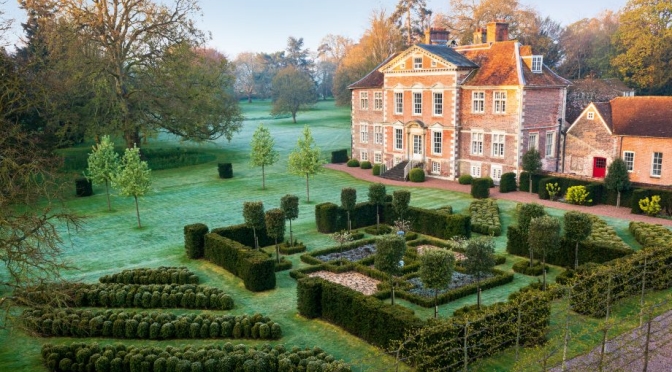
Within a few years of buying Urchfont Manor in 2013, Chris Legg and Eleanor Jones, with the help of a friend, landscape architect Paul Gazerwitz, had given their home a new vista that unites house and garden, as well as evoking the formal Baroque of the house’s late-17th-century past.

George Plumptre June 12, 2021

Their aim was to balance historical integrity with the development of a new garden. Continuity would be kept by preserving the garden’s bones, such as the walled garden and the fine trees beyond open lawn to the south and east. Work began on the rectangular walled kitchen garden.

The architecture on this side of the house is engagingly uneven and this is picked up in the new garden, which is neat and formal, but appropriately domestic in scale. The kitchen garden has been laid out afresh, with 16 rectangular patches divided by narrow gravel paths and with a square of four greengages in the centre. Crops are rotated and, every year, one bed celebrates an unusual plant, such as borlotti beans or root ginger. Elsewhere are nurtured asparagus and strawberry beds and a fruit cage with raspberries and gooseberries.

Read more at Country Life Magazine

Architectural Tour: Casa Voluta, Lagos, Portugal

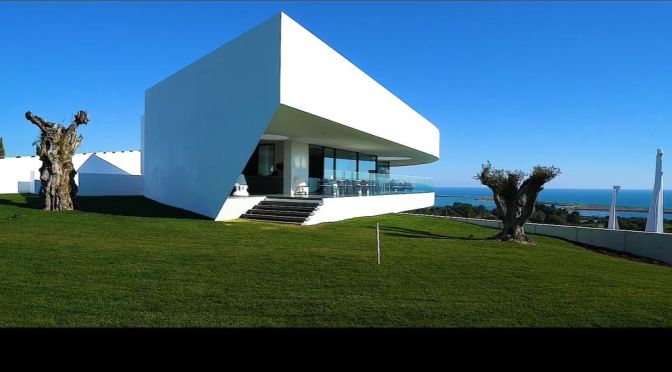
The film portrays a day at ‘Casa Voluta’ by the architect Mário Martins. This house was built by Nobislux, and the film also shows its strong relationship with the exterior space and the landscape.

arquitectura/architecture: Mário Martins Atelier construção/construction: Nobislux filme/film: Building Pictures dirigido por/directed by: Sara Nunes câmara/camera: Sara Nunes edição/edition: Sara Nunes sonoplastia/sound design: André Cardoso

English Country Estates: Glynn House, Cornwall

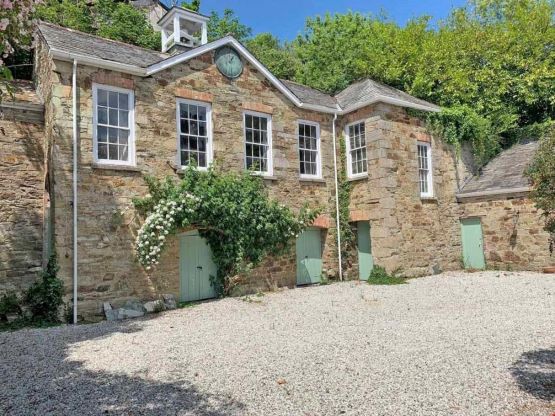
Much of the building as it stands today was completed in 1805 by Edmund Glynn, son of American Independence supporter John Glynn, but its history is much older.

Penny Churchill June 9, 2021

The manor was mentioned in the Domesday Book and was later home to distinguished personages such as Henry II’s Justiciar, Richard de Lucy, and perhaps most extraordinary of all the Earl of Warwick, ‘the Kingmaker’.

In the 18th century, the estate belonged to Waterloo hero Sir Hussey Vivian and, in the 1960s, to Nobel-prize winning chemist Peter Mitchell.

Read more

English Country Homes: Sortridge Manor In Dartmoor National Park

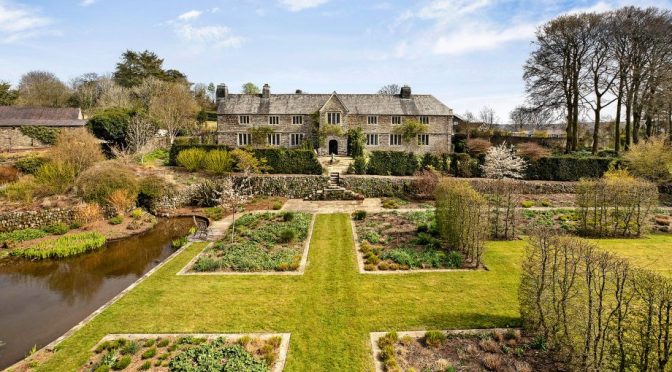
Over in West Devon, the village of Horrabridge in the Dartmoor National Park, four miles south of Tavistock, grew up around an ancient crossing over the fast-flowing River Walkham, a famous salmon river, its 15th-century bridge one of the oldest in Devon.

In the late 1800s/early 1900s, the south wing of the original Elizabethan building was rebuilt after ‘three successive fires’ destroyed ‘the hall and one wing’.

In the late 1800s, three sisters sold the 400-acre Sortridge estate to a Plymouth stockbroker who immediately sold it again in lots, thereby doubling his money.

The manor and 140 acres of land were bought by Col Marwood Tucker, whose widow sold the property to George Porter Rogers in 1955. In November 1961, Mr Rogers sold the manor with three acres of grounds for £5,500 to Cmdr C. R. Smythe, who sold it in turn to Cmdr Stubley.

Read and see more