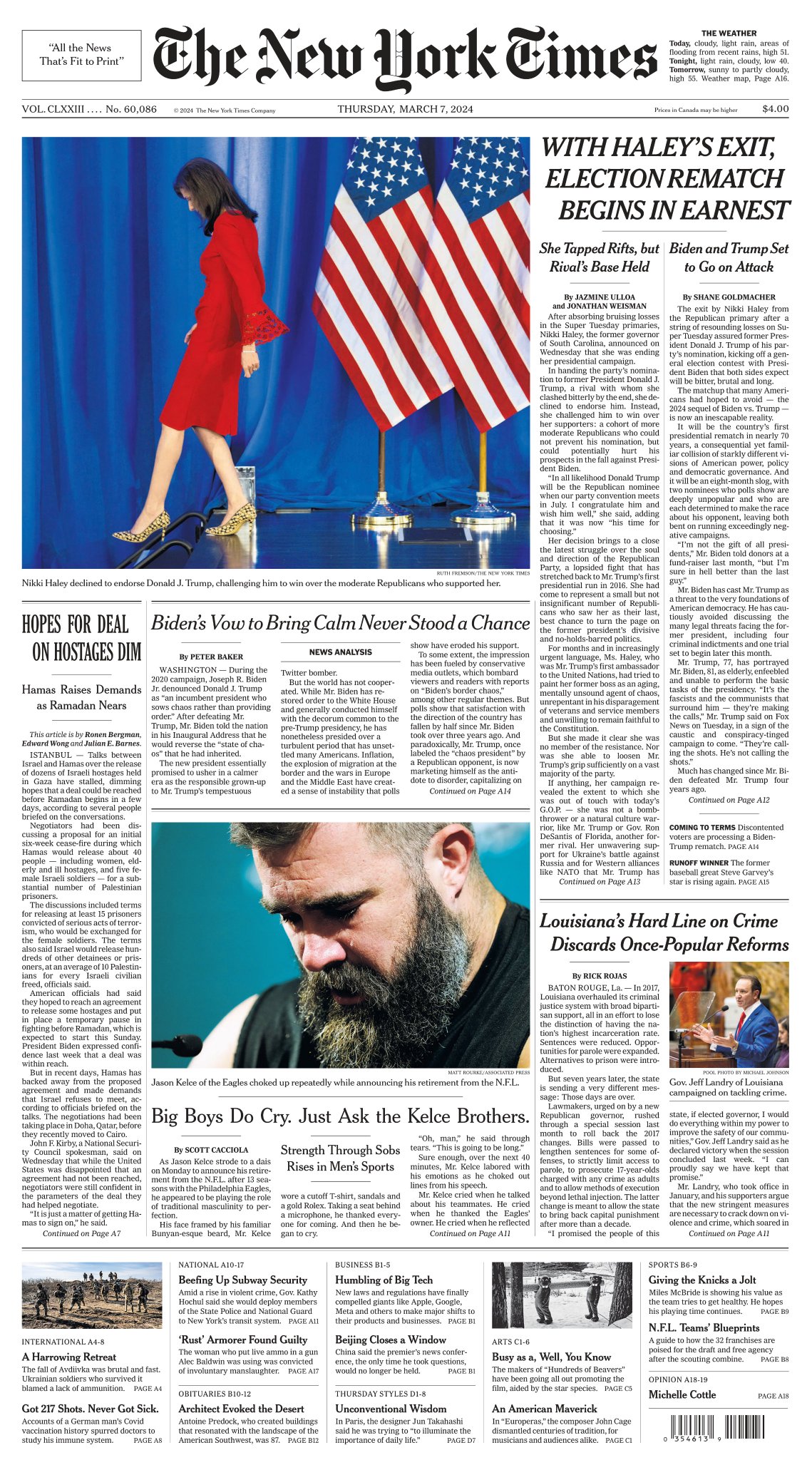
Donald Trump swept yet another early nominating contest, delivering Nikki Haley a crushing home-state loss at the hands of voters who were arguably the most familiar with her politics.
After nearly two years and only scraps of information, a Ukrainian family still hopes their son, a marine captured by the Russians in Mariupol, will come home soon.
Monocle on Sunday, February 24, 2024: Emma Nelson, Tina Fordham and David Schlesinger on the weekend’s biggest talking points. We also speak to Monocle’s editorial director, Tyler Brûlé, in Zürich, before he flies to Porto and Gwen Robinson, Monocle’s correspondent in Sri Lanka.
Plus: Andrew Mueller joins us from the Munich Security Conference.
The proposal, which calls for indefinite Israeli military control and buffer zones in the territory, rankled Arab nations and was rejected by Palestinians.
Veterans of the conservative, grass-roots movement see the state’s presidential primary as a fight between a “crazy uncle” and a “snowflake niece.” They’ve made their choice.
A court ruling declaring frozen embryos to be legally considered children has set off a scramble among leaders in both parties to preserve access to a crucial reproductive treatment.
N.R.A. Stung by Corruption Verdict Tied to Millions of Misspent Dollars
A Manhattan jury found that the National Rifle Association’s former leader, Wayne LaPierre, had used the group’s funds to pay for lavish personal expenses, including vacations and luxury flights.
Odysseus was the first privately built vehicle to make it to the moon, and points to a future in which NASA, companies and others rely on commercial lunar delivery services.
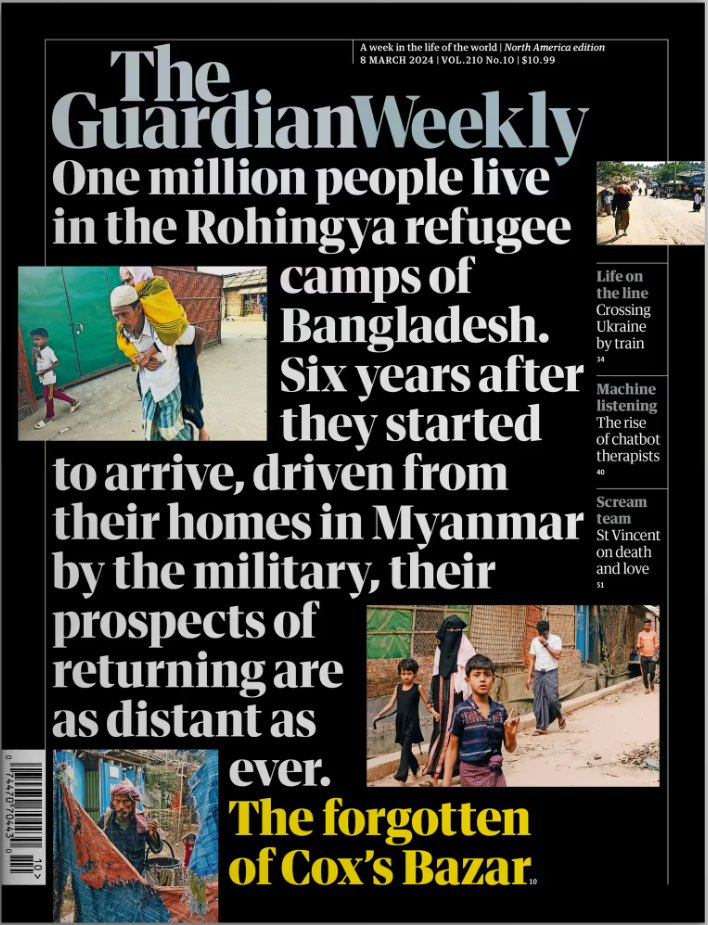
The Guardian Weekly (February 22, 2024) – The new issue features ‘Ukraine’s Lonely Road’ – After two years, is there a way out of Putin’s war?…
Shaun Walker reports on this week’s big story, the fall of the strategic town of Avdiivka to Russian troops has come at a grim time for Ukraine’s president, Volodymyr Zelenskiy. While the army is struggling to hold ground, war fatigue is setting in among parts of the population and disagreements among the leadership have been spilling into the open.
At the same time, the death of the jailed Russian critic Alexei Navalny last week – widely seen as another political assassination – appears to emphasise the strengthening hand of Vladimir Putin, who is expected to secure another six-year term as Russia’s president in tightly controlled elections next month. Amid a familiar wave of international outrage, our Russia affairs reporter Pjotr Sauer asks what Putin might do next.
Coupled with the possibility of a Donald Trump victory in the US elections later this year, it all makes for a deeply worrying outlook for Ukraine, reflected in the Kyiv-based illustrator Sergiy Maidukov’s haunting cover artwork for the magazine this week.
“This war is the hardest test of my life, similar to an endless ultramarathon,” writes Sergiy. “It is good to try to not think about the finish when running long distance. This is important knowledge to endure.”
Russian aggression and American wavering reveal just how ill-equipped the continent is
Russia is becoming more dangerous, America is less reliable and Europe remains unprepared. The problem is simply put, but the scale of its solution is hard to comprehend. The security arrangements based on nato that emerged from the second world war—and have prevented a third—are so much part of Europe’s fabric that remaking them will be an immense task. European leaders urgently need to jettison their post-Soviet complacency. That means raising defence spending to a level not seen in decades, restoring Europe’s neglected military traditions, restructuring its arms industries and preparing for a possible war. The work has barely begun.
The action under consideration could prevent people from making asylum claims during border crossing surges. The White House says it is far from a decision on the matter.
The Maricopa County attorney in Arizona said she would fight to keep a man who authorities believe bludgeoned a woman to death in a New York City hotel.
The United States said the resolution could have disrupted its negotiations to free hostages and secure a temporary cease-fire, but its vote drew outcry from many diplomats and aid workers.
The decision, along with an order this month declining to block West Point’s admissions program, suggests that most justices are not eager to immediately explore the limits of its ruling from June.
The international police organization has toughened oversight of its protocols, which autocrats have used to pursue dissidents. But the autocrats have adapted.
Wife, Protector and Now Political Heir: Yulia Navalnaya Rallies Russians
The wife of Russia’s most famous opposition leader long shunned the spotlight, but his death in prison may make that impossible. “I have no right to give up,” she said.
Trump. Indian food. Matthew Perry. And books, books, books. Excerpts from letters obtained by The Times show Mr. Navalny’s active mind, even amid brutal prison conditions.
Toward the end of Russia’s long assault, hundreds of civilians still remained in Avdiivka. Those who escaped in the last weeks spoke of relentless devastation.