
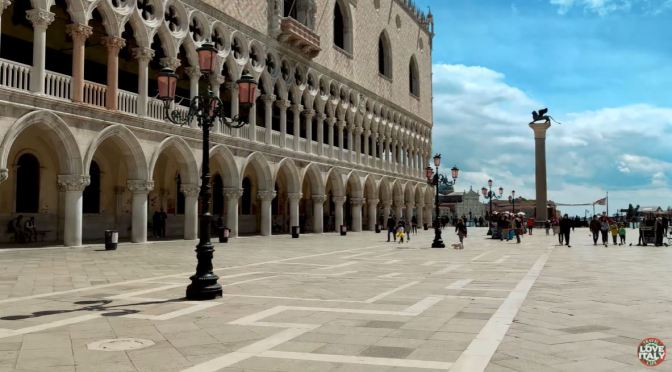
The central square, Piazza San Marco, contains St. Mark’s Basilica, which is tiled with Byzantine mosaics, and the Campanile bell tower offering views of the city’s red roofs.

The central square, Piazza San Marco, contains St. Mark’s Basilica, which is tiled with Byzantine mosaics, and the Campanile bell tower offering views of the city’s red roofs.

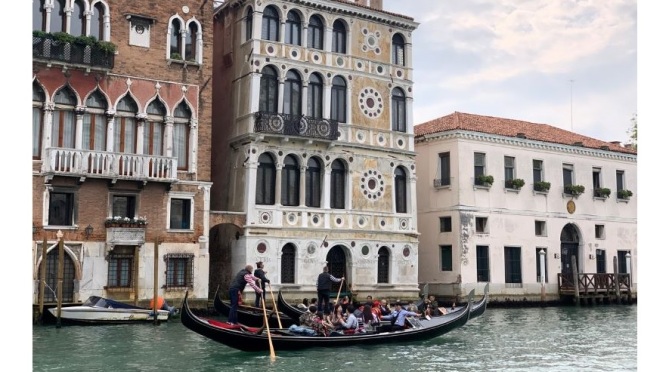
In the heart of Venice, a stone’s throw from the Peggy Guggenheim Collection and the Basilica of Santa Maria della Salute, Ca’ Dario is one of the most famous historic buildings overlooking the Grand Canal.
A masterful example of the Venetian Gothic style mixed with Renaissance elements, the palace is an imposing building of 1,000 sqm on five floors embellished with original decorations and unique elements. The hidden gem of the palace is the 170-sqm private garden at the back of the building.
THIS 500-YEAR-OLD VENETIAN GOTHIC PALACE, also known as Ca’ Dario, has claimed a host of unlucky victims, including the rich and famous. It’ said that the people who owned the building or stayed there for more than 20 days died, committed murder, or became bankrupt. Even local fisherman don’t dare cast their ropes by the cursed palazzo, which has been dubbed “the house that kills.”
The house was built in 1479 for aristocrat Giovanni Dario. His daughter Marietta and her husband Vincenzo later inherited the house. Vincenzo was stabbed to death, and Marietta died by suicide in the Grand Canal not long after. Shortly after these tragedies, their son Vincenzo Jr. was killed in Crete by assassins.
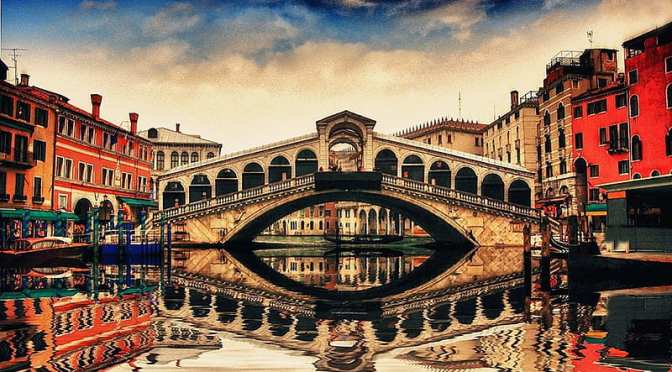
The Rialto bridge is one of the four bridges, together with the Accademia bridge, the Scalzi bridge and the Constitution bridge, that cross the Grand Canal, in the city of Venice. Of the four, the Rialto bridge is the oldest. According to the chronicles, the first passage on the Grand Canal consisted of a bridge of boats.
The growing importance of the Rialto market, on the eastern bank of the canal, increased the traffic on the floating bridge. Around 1250, it was replaced by a wooden bridge. In the first half of the 15th century, two rows of shops were built along the sides of the bridge; the proceeds from the rents, collected by the State Treasury, contributed to the maintenance of the bridge.
In 1310 the bridge was damaged during the retreat of the rioters led by Bajamonte Tiepolo. In 1444, however, it collapsed under the weight of the large crowd gathered to witness the passage of the procession of the bride of the Marquis of Ferrara. In 1503 the construction of a stone bridge was proposed for the first time.
In the following decades, several projects were evaluated. The work was completed in 1591, with the help of the architects Antonio and Tommaso Contin, who were his nephews, as sons of his son-in-law Bernardino Contin.
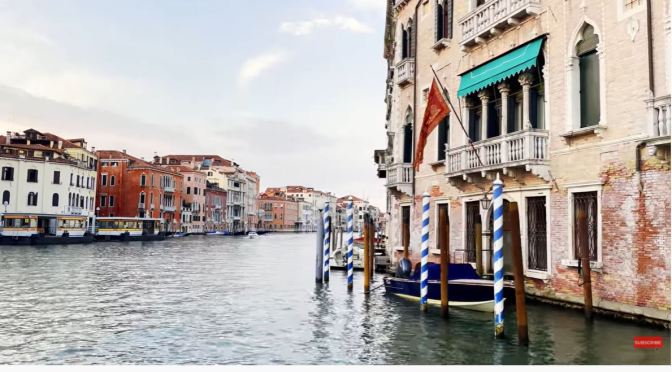
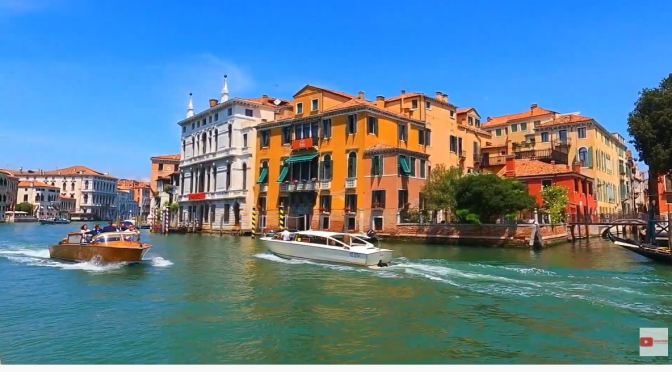
Grand Canal, Italian Canale Grande, main waterway of Venice, Italy, following a natural channel that traces a reverse-S course from San Marco Basilica to Santa Chiara Church and divides the city into two parts.
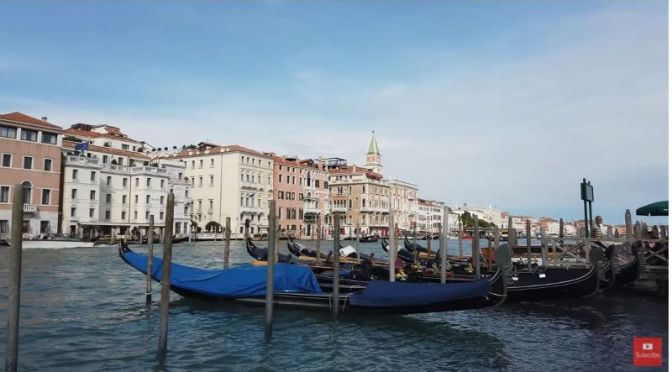
Slightly more than 3 km (2 miles) long and between 30 and 70 metres (100 and 225 feet) wide, the Grand Canal has an average depth of 5 metres (17 feet) and connects at various points with a maze of smaller canals. These waterways carry the bulk of Venetian transportation, as automobiles are banned throughout much of the city. Traditional poled gondolas are a favourite with tourists but are now vastly outnumbered by motorized public-transit water buses (vaporetti) and private water taxis. Siren-equipped boats belonging to the police, fire, and emergency medical services traverse the Grand Canal at high speed, and barges are responsible for the delivery of goods throughout the city. The connection between Venetians and their city’s main thoroughfare does not end at the grave: funeral barges can be seen transporting the dead to Isola di San Michele, an island northeast of the city that has been the site of Venice’s largest cemetery since the early 19th century.
Experience Venice from afar with the latest instalment in our Postcard series. Cruise down the Grand Canal on a vaporetto water bus or gondola; wander the rustic calles and around palazzos, stopping off at some of our favourite insider spots including the Royal Gardens; and marvel at the magnificent architecture of the Basilica di Santa Maria Della Salute and Basilica di San Marco. Plus, see snippets of breakfast at The Gritti Palace, lunch at Terrazza Danieli and aperitivi at The St Regis. Watch now and be transported to Italy’s City of Water.
In this video tour you can see:
1.- The 4 Bridges Crossing the Canal Grande in Venice: Ponte de Rialto, Ponte dell’Accademia, Ponte degli Scalzi, Ponte della Costituzione. 2.- Most famouse attraction along the Grand Canal: St Mark Square, Doge Palace, Santa Maria della Salute Church, Peggy Guggenheim Colletion (Ca’ Venier dei Leoni), Palazzo Corner della Ca’ Grande, Ponte dell’Accademia and the Academy of Fine Arts, Ca’ Rezzonico, Ca’ Foscari, Rialto Bridge, Fondaco dei Tedeschi, Ca’ da Mosto, Fish Market, Ca’ d’Oro, Ca’ Pesaro, Fondamenta Turchi and the Natural History Museum, Constitution Bridge.
Video timeline: 00:00 St. Mark and Doge Palace from Grand Canal 01:50 First stop S. Marco (Line 1 vaporetto) 02:33 Punta della Dogana and Santa Maria della Salute Church 03:43 Hotel Bauer 5 stars 03:57 Palazzo Treves 04:08 Santa Maria della Salute Church 04:38 Palazzo Contarini Fasan 07:31 The Gritti Palace Hotel 5 stars 09:20 Palazzo Corner della Ca’ Granda 09:40 Casina delle Rose 10:13 Palazzi Barbaro 10:17 Palazzo Cavalli-Franchetti 10:24 Accademia bridge 13:15 Palazzo Malipiero 19:28 S. Angelo vaporetto 24:58 Rialto vaporetto stop 26:43 T Fondaco dei Tedeschi by DFS 31:15 Ca’ D’Oro vaporetto stop 34:51 Casino’ Venice 37:47 Church of san geremia 40:27 Ponte degli Scalzi 40:48 Ferrovia vaporetto stop 42:28 Traun station “Santa Lucia” 43:29 Ponte della Costituzione
Venice, the capital of northern Italy’s Veneto region, is built on more than 100 small islands in a lagoon in the Adriatic Sea. It has no roads, just canals – including the Grand Canal thoroughfare – lined with Renaissance and Gothic palaces. The central square, Piazza San Marco, contains St. Mark’s Basilica, which is tiled with Byzantine mosaics, and the Campanile bell tower offering views of the city’s red roofs.
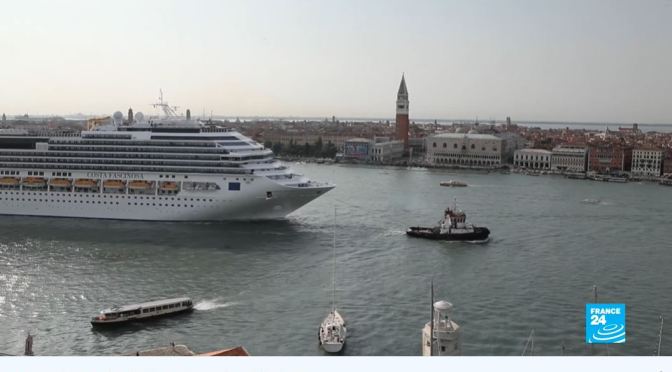
Italian authorities have approved a ban on cruise ships entering the historic centre of Venice.
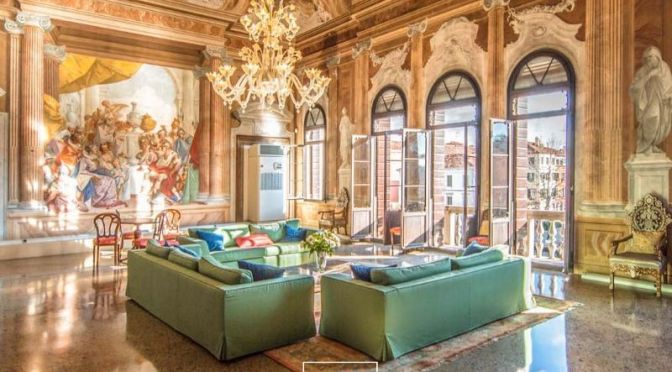
In sestiere Cannaregio, on the banks of the Canal Grande and two steps from Santa Lucia train station, majestic 430-sqm luxury apartment on the first floor of a restored historic palazzo. The property, finely restored and maintained, currently hosts three bedrooms (one of which overlooking the Canal Grande), three bathrooms and a beautiful hall decorated with plaster and frescoes. The palazzo is located a few steps from the Ponte degli Scalzi and enjoys quick access to the most renowned monuments of Venice.
Venice, the capital of northern Italy’s Veneto region, is built on more than 100 small islands in a lagoon in the Adriatic Sea. It has no roads, just canals – including the Grand Canal thoroughfare – lined with Renaissance and Gothic palaces. The central square, Piazza San Marco, contains St. Mark’s Basilica, which is tiled with Byzantine mosaics, and the Campanile bell tower offering views of the city’s red roofs.
Filmed in September 2020
 Boomers Daily