
To outsiders, Turkmenistan is one of the world’s least known countries. For the first time in ten years, a film crew has been free to visit spectacular excavation sites and follow international researchers into areas that have long been off-limits. Once considered the poorest part of the Soviet Union, oil and natural gas have brought new wealth to Turkmenistan today.
A little known fact in the West is that 4,000 years ago, the country was home to one of the ancient world’s centers of power. Although it flourished around the same time as the advanced civilizations of Mesopotamia and Egypt, the Margiana empire was later largely forgotten. But recently, archaeologists have discovered palace buildings and magnificent burial treasures at the site of the capital, Gonur Depe, in the Karakum Desert. Incredible aerial photography shows the dimensions of the lost metropolis. An international team of researchers also unearthed monumental fortifications in neighboring Ulug Depe.
The ruined cities of Merv and Kunya-Urgench have been declared UNESCO World Heritage Sites. Suddenly, historians and the media are paying much more attention to Central Asia. Why has Turkmenistan seen powerful empires rise and fall since the Bronze Age? DNA analysis shows a highly mobile population, whose contacts reached as far as India, the Urals and the Mediterranean Sea. The Silk Road between China and Europe was the world’s most important trade route for thousands of years, lending Turkmenistan great historical significance. Since the fall of the Soviet Union, the country has been slowly opening up to international researchers, and its astounding cultural heritage is coming to light.
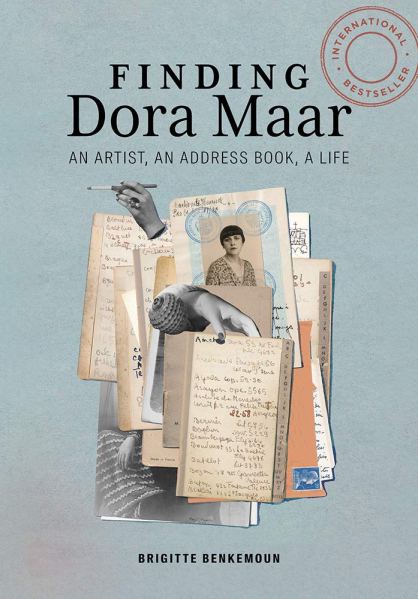 In search of a replacement for his lost Hermès agenda, Brigitte Benkemoun’s husband buys a vintage diary on eBay. When it arrives, she opens it and finds inside private notes dating back to 1951—twenty pages of phone numbers and addresses for Balthus, Brassaï, André Breton, Jean Cocteau, Paul Éluard, Leonor Fini, Jacqueline Lamba, and other artistic luminaries of the European avant-garde.
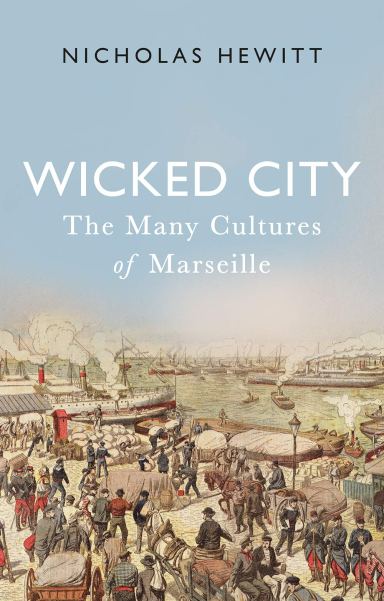 The Toulousain Charles Dantzig wrote, ‘I find the Marseillais tiresome, especially those who, as soon as you speak to them, start to bang on about the uniqueness of being Marseillais, adding with a particular sort of whining machismo that no one likes them and everyone defames them. Their humour is nothing more than pitiable braggadocio.’ Régis Jauffret, who grew up there, is pithier: ‘Marseille is a tragic city. It formed my imagination.’ (It’s an imagination of peerless bleakness.)
 Nicholas Hewitt died in March, less than a month after completing the text of Wicked City. It’s a fine monument to his curiosity, compendious knowledge, resourcefulness and measured enthusiasm. He calls it ‘a series of snapshots’, which is perhaps too modest. If they are snapshots, they have been photoshopped and retouched to accord with his vision of the city and its well-rehearsed mythology of outsiderdom and exceptionalism, edginess and banditry. And his aspiration to explore Marseille’s hold on the ‘nation’s imagination’ is also too modest. The ‘international imagination’ would be more apt.
 Boomers Daily