Tag Archives: City Walks

Travel: 7 Great ‘City Walks’

Zadar: A Loop Through History

An ancient cylindrical building of pale stone is surrounded by other ancient buildings, among them a very old, slender, five-story stone building with a tall, steep roof. A wall of stones extends halfway across this scene. Above, the blue sky is cloudless.

A nearly two-mile walk circumnavigating Zadar’s Old Town is a journey across a timeline that spans nearly every stage of Croatian history. And it’s a long history, dating back to the 9th century B.C., when the Liburnians first settled this peninsular spit of land on Croatia’s spectacular Dalmatian coast.

Dozens of people sit on the shallow, wide, pale stone steps that start at a plaza and go right into the lapping sea. In the background are trees and a vista of red-roofed, pale stone buildings of several stories.

Start your stroll on the northwest corner of the peninsula at the Morske Orgulje, or Sea Organ: a set of 35 pipes spread under a 230-foot section of the city’s seaside promenade, known as the Riva. Awarded the 2006 European Prize for Urban Public Space, the Morske Orgulje plays beautifully discordant melodies as the Adriatic laps the stone and pushes air through the pipes beneath — converting the walkway into an invisible, ethereal orchestra.

Marrakesh: A Spider Web of Passageways

A group of women in long, colorful, traditional Moroccan robes and head coverings, congregate in a plaza with a surface of geometrically arranged pale brown tiles. There are covered market stalls in the background, more people and various buildings.

The wail of snake charmers’ horns will lead you to your departure point: Jemaa El Fna. This carnivalesque, open-air market in the medina — the ancient neighborhood where Marrakesh was born — brims with juice stands, restaurants and souvenir shops, to say nothing of musicians and performers.

The double doors of two busy storefronts in an old orange-brown stucco building have been thrown open to shoppers. One displays posters of barely clothed, muscular men. The other is packed with shelves stacked with containers of colorful candy; bags of yellow, pink, black and white soccer balls in a big plastic bag; stacks of plastic bottles of water; and various snacks tended to by a young man wearing a circular cap, tan jeans and a yellow-and-white-striped T-shirt.

Before you embark on this meandering 2.2-mile walk, you should have water and sunscreen (summer temperatures can pass 100 degrees Fahrenheit in this Moroccan city); outfits that cover most of your skin (doubly useful in Islamic societies, which discourage revealing clothes); and a willingness to lose your bearings. Nearly twice the size of Central Park, the medina enfolds a vast spider web of passageways that seem designed to disorient outsiders.

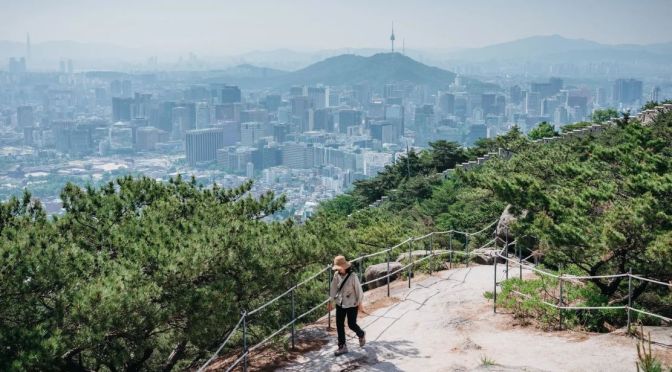
Seoul: Following the Fortress Wall

People walk along two adjacent paths, divided by a long patch of lush grass in the daytime. Bordering the path on the right is a low fortress wall. Over the wall, houses can be seen in the distance below.

To walk along the Seoul City Wall is to walk in the footsteps of scholars of bygone centuries, trace scars of war and take in the modern behemoth of a city built around it all. Its history stretches back to 1396, to when present-day Seoul first became the capital of what was then a kingdom called Joseon.

Inwangsan, a mountain in central Seoul, offers sweeping downtown views.

Then, the wall encircled an area that’s but a small fraction of today’s sprawling city, incorporating the slopes of the four mountains that afforded natural fortification. Like Seoul itself, the wall has been destroyed and rebuilt several times — and after restorations in recent decades, it’s become a popular urban walk.


READ MORE

City Walks: Thessaloniki In Northern Greece (2023)

Tourister (March 8, 2023) – Thessaloníki, formerly Salonika, historically Thessalonica, city and dímos (municipality), Central Macedonia (Modern Greek: Kendrikí Makedonía), on the western Chalcidice (Chalkidikí) peninsula at the head of a bay on the Gulf of Thérmai (Thermaïkós). An important industrial and commercial centre, second to Athens (Athína) in population and to Piraeus as a port, it is built on the foothills and slopes of Mount Khortiátis (Kissós; 3,940 feet [1,201 metres]), overlooking the delta plains of the Gallikós and Vardar (Axiós or Vardaráis) rivers.

Founded in 316 BCE and named for a sister of Alexander the Great, Thessaloníki after 146 was the capital of the Roman province of Macedonia. As a military and commercial station on the Via Egnatia, which ran from the Adriatic Sea east to Byzantium (i.e., Constantinople), it grew to great importance in the Roman Empire. Two letters written by the Apostle Paul were addressed to its inhabitants (Thessalonians), and its first bishop, Gaius, was one of Paul’s companions. The city prospered in the Byzantine Empire despite repeated attacks by Avars and Slavs in the 6th and 7th centuries. In 732, two years after he prohibited icons, the Byzantine emperor Leo III (reigned 717–741) detached the city from papal jurisdiction and made it dependent on the patriarch of Constantinople. During the iconoclastic regimes of Leo and his successors, the city defended the use of icons in worship and acted to save some of these art treasures.

Walking Tour: Glasgow In Southwestern Scotland

Tourister (January 2023) – Glasgow, Gaelic Glaschu, city, west-central Scotland. It is situated along both banks of the River Clyde 20 miles (32 km) from that river’s mouth on the western, or Atlantic, coast. Glasgow is Scotland’s largest city, and it forms an independent council area that lies entirely within the historic county of Lanarkshire.

The city occupies much of the lower Clyde valley, and its suburbs extend into surrounding districts. Most important commercial and administrative buildings lie north of the Clyde. Area council area, 68 square miles (177 square km).

New York Walks: Bleecker Street, Greenwich Village

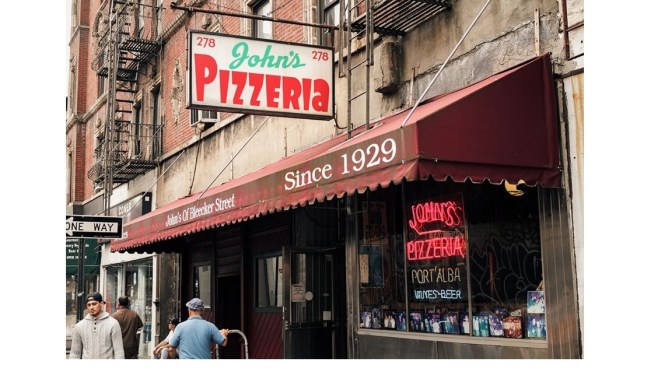
4K WALK (December 2022) – Bleecker Street is an east–west street in the New York City borough of Manhattan. It is most famous today as a Greenwich Village nightclub district. The street connects a neighborhood today popular for music venues and comedy, but which was once a major center for American bohemia.

The street is named after the family name of Anthony Lispenard Bleecker, a banker, the father of Anthony Bleecker, a 19th-century writer, through whose family farm the street ran.] Bleecker Street connects Abingdon Square (the intersection of Eighth Avenue and Hudson Street in the West Village) to the Bowery and East Village.

Autumn Walks: Naples In Southwestern Italy (4K)

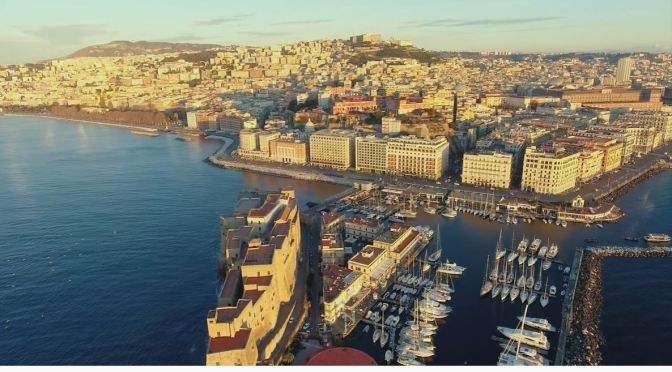
Naples, or Napoli for Italians, is a major port city in the south of Italy in the Campania region. With 4.4 million inhabitants (‘Neapolitans’), it is the third largest city in Italy. The chaotic city has everything for an inspiring city trip because of the rich history, the Italian cuisine and especially in the field of art and culture, the city has a lot to offer. In addition, a short distance from the city of Naples are famous places of interest such as PompeiiHerculaneum and the Vesuvius volcano. South of the city lies the colorful and beautiful coastal strip of the Amalfi Coast and you can easily reach the beautiful islands such as Capri off the coast of Naples by ferry. 

City Walking Tours: Brno In The Czech Republic (4K)

Brno is a city in the Czech Republic. It’s known for its modernist buildings, like the restored Villa Tugendhat, completed in 1930 by architect Mies van der Rohe. The medieval Špilberk Castle houses a city museum, gardens and a former prison with vaulted tunnels. The Cathedral of St. Peter and Paul has baroque altars, a 14th-century statue of the Madonna and Child, and city views from its steeple.

Filmed in November 2022.

Amsterdam Walks: The De Pijp Neighborhood (2022)

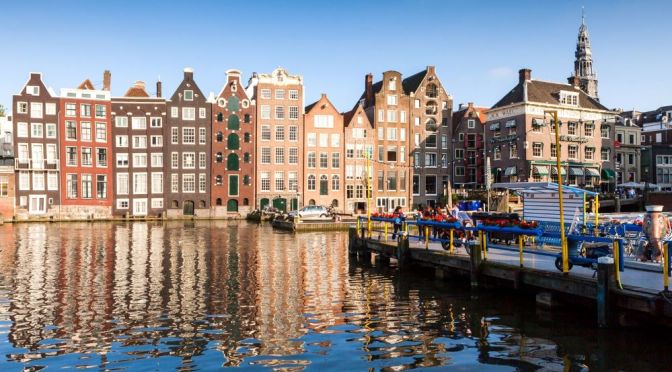
A walking tour of De Pijp (English: The Pipe), a neighbourhood of Amsterdam, Netherlands. It is located directly south of Amsterdam’s city centre and it is part of the borough Amsterdam-Zuid, in a part of the city known as the Old South (Oud Zuid). It is served by De Pijp metro station. Most streets in De Pijp are named after Dutch painters, like Jan Steen, Frans Hals, Ruysdael and Vincent van Gogh. Diamantbuurt, Nieuwe Pijp and Oude Pijp are the three districts composing the area.

The busiest street market of the Netherlands, the Albert Cuyp Market, is located in De Pijp. It is open six days per week and attracts tourists. The former Heineken brewery is also a local tourist attraction; the former town hall of Nieuwer-Amstel is one of De Pijp’s most notable monuments. Next to the former Heineken brewery is the Marie Heinekenplein, which has a number of bars and cafes. Along the canal Ruysdaelkade, there is a small red-light district.

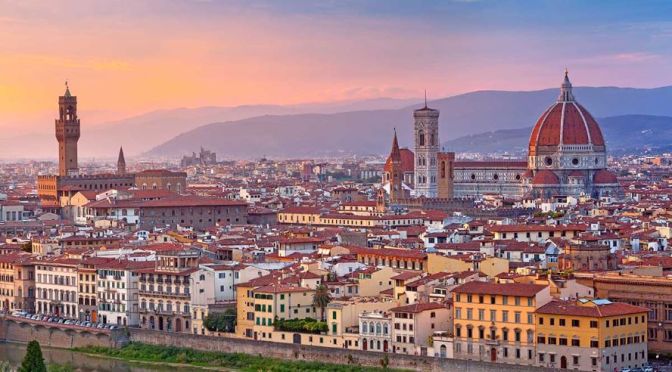
City Views: A 360° Walking Tour Of Florence, Italy

Florence, Italian Firenze, is the capital of Firenze provincia (province) and Toscana (Tuscanyregione (region), central Italy. The city, located about 145 miles (230 km) northwest of Rome, is surrounded by gently rolling hills that are covered with villas and farms, vineyards, and orchards. Florence was founded as a Roman military colony about the 1st century BCE, and during its long history it has been a republic, a seat of the duchy of Tuscany, and a capital (1865–70) of Italy. During the 14th–16th century Florence achieved preeminence in commerce and finance, learning, and especially the arts.

Florence
Florence

The present glory of Florence is mainly its past. Indeed, its historic centre was inscribed on UNESCO’s World Heritage List in 1982. The buildings there are works of art abounding in yet more works of art, and the splendours of the city are stamped with the personalities of the individuals who made them. The geniuses of Florence were backed by persons of towering wealth, and the city to this day gives testimony to their passions for religion, for art, for power, or for money. Among the most famous of the city’s cultural giants are Leonardo da VinciMichelangeloDanteMachiavelliGalileo, and its most-renowned rulers, generations of the Medici family.

Filmed in October 2022

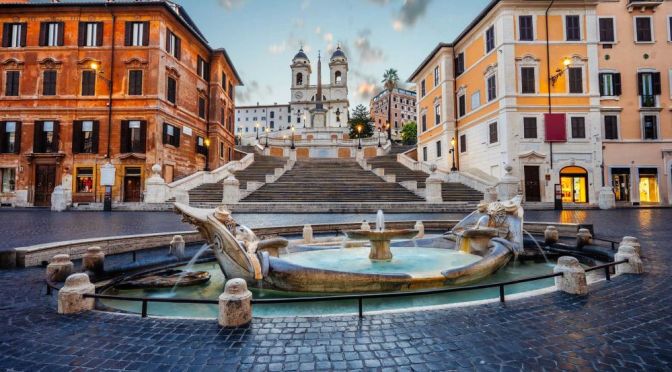
2022 Walks: Streets And Piazzas Of Rome, Italy

Filmed in October 2022.

Rome was called the “Eternal City” by the ancient Romans because they believed that no matter what happened in the rest of the world, the city of Rome would always remain standing. Exploring the city centre by foot surrounded by glorious monuments and colossal remains takes you back in time to the “glory that was Rome”.

With its unparalleled history, Rome is the third most visited city in Europe and the fourteenth worldwide. It attracts visitors from all over the world who are impatient to discover the city’s impressive monuments and archaeological sites; not to mention its renowned cuisine and its lively atmosphere.

When exploring the Colosseum, visitors will easily imagine how the gladiators fought for their life in the arena, cheered by the crowd. In the Circus Maximus, travelers will picture the chariots crashing into each other in order to be first in the race, and in the Roman Forum visualise what the Roman public life was like.

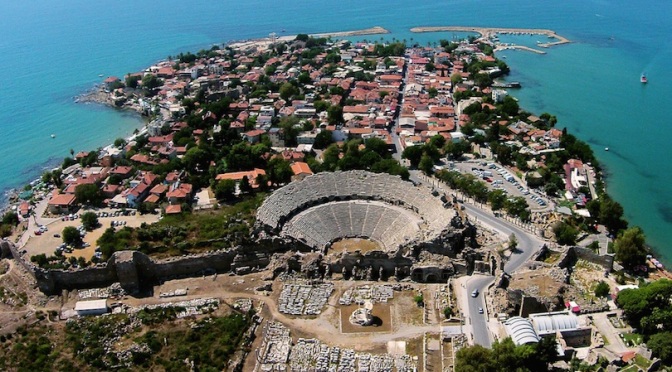
Walking Tours: Side In Southern Turkey (4K)

Side is a resort town on Turkey’s southern Mediterranean coast. An ancient port city, it’s known for long beaches and Greco-Roman ruins. In the center are the remains of the 2nd-century Antique Theater, which seated up to 15,000. The white marble columns of the Hellenistic Temple of Athena stand near the harbor. Other sites are sprinkled throughout, with finds housed at the Side Museum, a restored Roman bath complex.