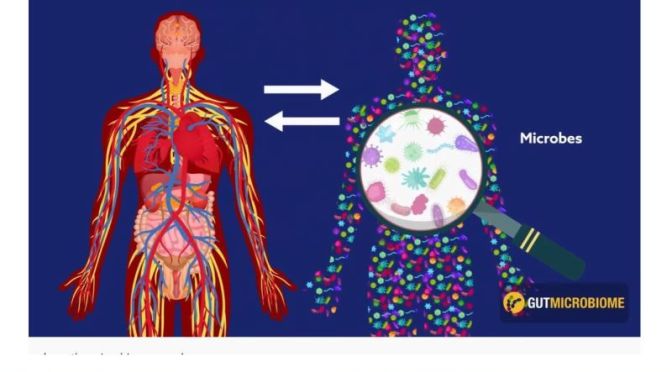
Do you have good or bad microbiome? Or do you have the microbiome you deserve?
Gut Microbiome, the new Open Access journal from Cambridge University Press and The Nutrition Society has published its first papers, including the animated abstract above from the paper: Hill, C. (2020) “You have the microbiome you deserve,” Gut Microbiome, Cambridge University Press, 1, p. e3.
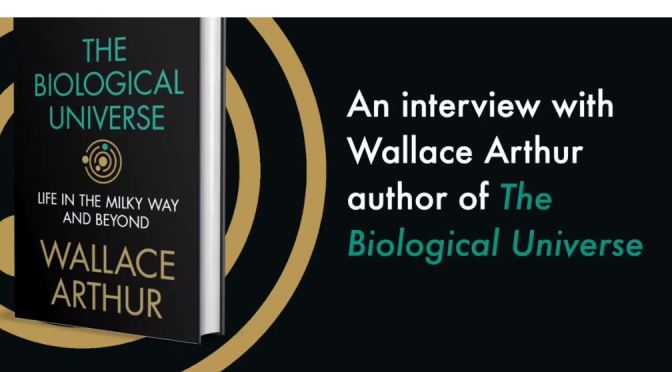
Are we alone in the Universe, or are there other life-forms ‘out there’? Recent discoveries of planets beyond the solar system (more than 4000 of them) suggest that the question is not ‘whether?’ but ‘where?’. This book enables general readers to understand current endeavours to answer this question and the related one of ‘what kind?’
Wallace Arthur is an evolutionary biologist and science writer. He is Emeritus Professor of Zoology at the National University of Ireland, Galway. His most recent book is The Biological Universe: Life in the Milky Way and Beyond, published by Cambridge University Press in 2020.
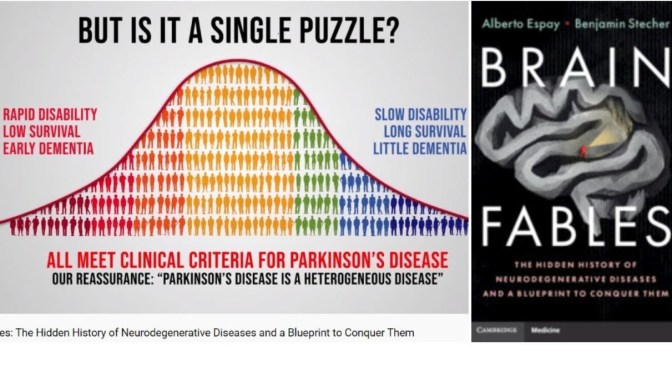
An estimated 80 million people live with a neurodegenerative disease, with this number expected to double by 2050. Despite decades of research and billions in funding, there are no medications that can slow, much less stop, the progress of these diseases. The time to rethink degenerative brain disorders has come. With no biological boundaries between neurodegenerative diseases, illnesses such as Parkinson’s and Alzheimer’s result from a large spectrum of biological abnormalities, hampering effective treatment.
Acclaimed neurologist Dr Alberto Espay and Parkinson’s advocate Benjamin Stecher present compelling evidence that these diseases should be targeted according to genetic and molecular signatures rather than clinical diagnoses. There is no Parkinson’s or Alzheimer’s, simply people with Parkinson’s or Alzheimer’s. An incredibly important story never before told, Brain Fables is a wakeup call to the scientific community and society, explaining why we have no effective disease-modifying treatments, and how we can get back on track.
Aging, Duration, and the English Novel argues that the formal disappearance of aging from the novel parallels the ideological pressure to identify as being young by repressing the process of growing old. The construction of aging as a shameful event that should be hidden – to improve one’s chances on the job market or secure a successful marriage – corresponds to the rise of the long novel, which draws upon the temporality of the body to map progress and decline onto the plots of nineteenth-century British modernity.
The rapid onset of dementia after an illness, the development of gray hair after a traumatic loss, the sudden appearance of a wrinkle in the brow of a spurned lover. The realist novel uses these conventions to accelerate the process of aging into a descriptive moment, writing the passage of years on the body all at once.

 Aging, Duration, and the English Novel argues that the formal disappearance of aging from the novel parallels the ideological pressure to identify as being young by repressing the process of growing old. The construction of aging as a shameful event that should be hidden – to improve one’s chances on the job market or secure a successful marriage – corresponds to the rise of the long novel, which draws upon the temporality of the body to map progress and decline onto the plots of nineteenth-century British modernity.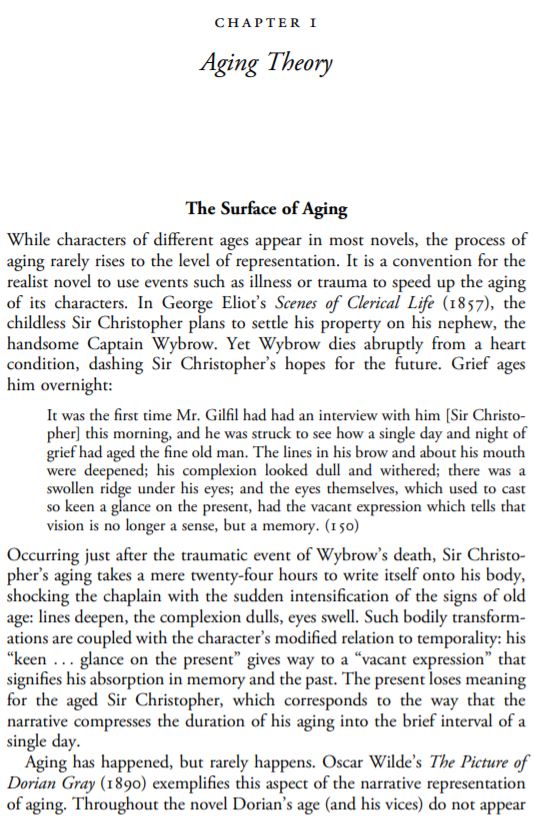
 Boomers Daily