

From a Yale News online review:
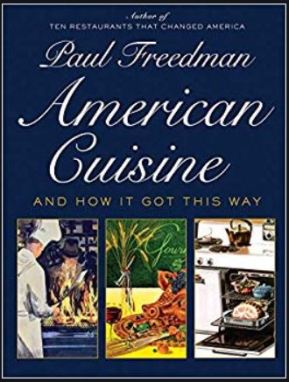 One way to understand American cuisine is through its regions — and the regional traditions that underlie the history of American cuisine. New England, the South, and New Orleans Creole are the regional cuisines of America. Examples of New England cuisine are “Yankee Pot Roast,” the lobster roll, and clam chowder. Southern favorites include grits, collard greens, okra, fried tomatoes, and sweet potato pie. Louisiana’s signature creole dishes are jambalaya, gumbo, and étouffée.
The compensation for that standardization — or at least what the food companies and the food and restaurant industry have offered — is variety. In my opinion, variety is what the food companies offer you in lieu of quality. At least in certain aspects, quality is impossible in an industrial food system.
In his new book, “American Cuisine: And How It Got This Way,” Yale historian Paul Freedman gives readers a window into understanding American history through cuisine spanning more than 200 years, debunking the myth that American cuisine does not, in fact, exist.
Freedman, the Chester D. Tripp Professor of History, approaches his study of American cuisine not by identifying a list of specific national or regional dishes, but rather by looking at the interactions among regionalism, standardization, and variety.
To read more: https://news.yale.edu/2019/10/15/yale-historian-pens-book-defining-what-exactly-american-cuisine

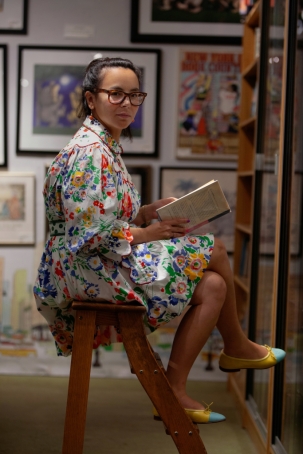 A Booklover’s Guide to New York, by Cleo Le-Tan, with drawings by Pierre Le-Tan (Rizzoli)
 “Agent Running in the Field” is narrated by Nat, a 47-year-old spy for British intelligence—known not as “the Circus” of yore but, more prosaically, as “the Office”.
 Whereas most Wright biographies build from one structure to the next, this one caroms from one digression to the next. Mr. Hendrickson spins miniature biographies of the people who commissioned Wright to build their homes and office buildings. An array of midcentury figures appears: e.g., Glenway Wescott, the novelist and poet who rubbed shoulders with Gertrude Stein in Paris and whose sister commissioned one of Wright’s homes; and Clarence Darrow, the renowned lawyer, who waded into the murk of Wright’s personal life when a disgruntled housekeeper attempted to use the Mann Act to have Wright arrested. We also meet the little-known residents of various structures. Seth Peterson, for instance, dreamed of living in a Wright home so powerfully that he camped out in the one he commissioned as it was being built.
 At first glance, Stephen Wilkes’ photographs look like a single moment in time. It is only upon closer inspection that viewers discover that each of his works is actually the result of shooting thousands of photographs from a stationary position over the course of a day and stitching them together digitally to create one cohesive panorama. The painstaking task of editing all of this information and whittling it down into one image can take months to complete, but the results capture a sense of place that can’t be expressed by a single frame alone.
 Quichotte opens with a brilliant parody of Cervantes’s first sentence: ‘There once lived, at a series of temporary addresses across the United States of America, a travelling man of Indian origin, advancing years, and retreating mental powers.’ The temporary addresses are a fine revision of Cervantes’s pretending not to remember the name of the place where Quixote lived – literally, he says he doesn’t want to remember. But in spite of this and many other echoes, Quichotte is not all that close to the original Don Quixote in style or mood, and doesn’t seek to be. The leading character chooses his pseudonym because a recording of Massenet’s opera Don Quichotte was his father’s favourite LP, and echoes of the musical Man of La Mancha, with the obligatory ‘impossible dream’, are all over the place.
 He wondered whether lithium could have the same tranquillizing effect on his patients. After trying it out on himself to establish a safe dose, Cade began treating ten people with mania. In September 1949, he reported fast and dramatic improvements in all of them in the Medical Journal of Australia (
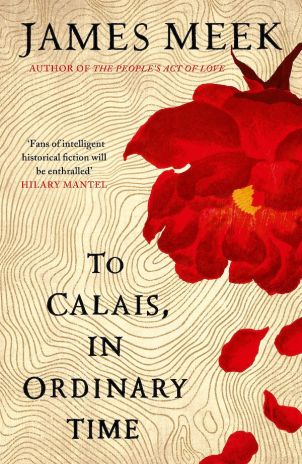 “Fans of intelligent historical fiction will be enthralled by a story so original and so fully imagined. Meek shows the era as alien, which it is, and doesn’t falsify it by assimilating it to ours. But his characters are recognisably warm and human”
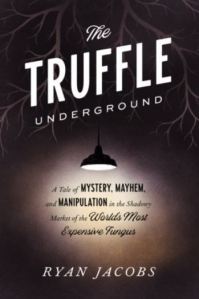 “Asking even seasoned chefs and truffle-industry insiders to describe what the fungus tastes or smells like,” Jacobs writes, “is a bit like asking a priest why he believes in God.” Readers not familiar with the pungent, one-of-a-kind flavor will come away even more intrigued. Those of us whose most frequent encounter with the fabled fungus is through truffle oil will also be disappointed. As Jacobs discovers, nearly all truffle butter and truffle oil sold in America is manufactured using chemicals rather than the real thing.

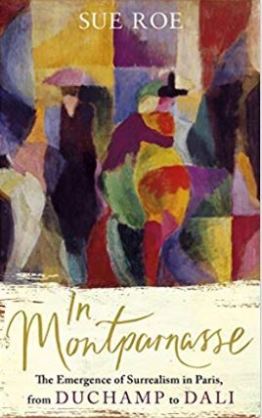 In Montparnasse begins on the eve of the First World War and ends with the 1936 unveiling of Dalí’s Lobster Telephone. As those extraordinary years unfolded, the Surrealists found ever more innovative ways of exploring the interior life, and asking new questions about how to define art. In Montparnasse recounts how this artistic revolution came to be amidst the salons and cafés of that vibrant neighborhood.
 Boomers Daily